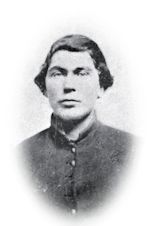
Moscow, Sunday, Nov. 23. Laid in tent all day. Mail arrived in the afternoon. Received two very welcome letters from home and Thomas L.
November 2012

NOVEMBER 23TH—The cars which came in from the North last night brought a great many women, children, and negroes from Fredericksburg and its vicinity. The benevolent and patriotic citizens here had, I believe, made some provision for their accommodation. But the enemy had not yet shelled the town.
There is a rumor that Jackson was to appear somewhere in the rear of the enemy, and that the Federal stores which could not be moved with the army had been burnt at Manassas.
Yesterday the President remitted the sentence of a poor lad, sentenced to ball-and-chain for six months, for cowardice, etc. He had endured the penalty three months. I like this act, for the boy had enlisted without the consent of his parents, and was only sixteen years of age.
J. R. Anderson & Co. (having drawn $500,000 recently on the contract) have failed to furnish armor for the gun-boats—the excuse being that iron could not be had for their rolling-mills. The President has ordered the Secretaries of the Navy and War to consult on the propriety of taking railroad iron, on certain tracks, for that purpose.

November 23. [Chattanooga] —Lieutenant Chamberlain of the Twenty-fourth Alabama Regiment brought us a box of clothing, a donation from the Mobile Military Aid Society.
The day has been very beautiful. I went to the Presbyterian Church in the morning; the Episcopal Church is still closed. I regret this, as the town is full of soldiers, and churches are much needed.
November 23.—Lieutenant Cushing, in command of the United States steamer Ellis, proceeded up New-River, N. C, on a reconnoitring expedition. At Jacksonville, he captured two schooners, and in returning down the river, succeeded in running his own vessel on a shoal and losing her.—(Doc. 33.)
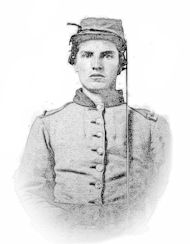
Saturday, 22d.—2 P. M. On guard, guarding prisoners. Guns loaded and capped, with orders to keep them, dead or alive.
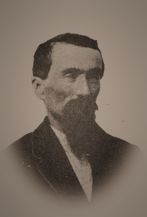
November 22 — This afternoon it was reported that the Yankees were advancing from the direction of Harper’s Ferry. Immediately after the report reached camp we moved to Rippon, on the Charlestown and Berryville pike. We remained there about an hour, then moved to Berryville, where we arrived at dusk, and camped. The Yankees advanced to Charlestown this afternoon.
Saturday, 22d—It is dry and the weather is quite pleasant. After the regular drills we cleaned up camp for inspection. There is no news, but the report in camp is that the division will start for the front in four or five days.
Saturday, 22nd. Took a blue pill and three quinine powders during the day. Kept very quiet. Went to bed early and rested well. Still did my usual duties. Letter from home.
Near Falmouth, Nov. 22nd, 1862.
My dear Mother:
We are still overlooking the city of Fredericksburg, which the enemy has not evacuated, disregarding our warnings. I suppose the shelling of the city will commence to-morrow, unless regard be shown by our Commanders for the Sabbath day. I must say the attack on Fredericksburg is a thing I greatly dread. The field of battle with all its horrors is redeemed somewhat by the thought that the dead on both sides have fallen in a cause sacred in their own eyes at least, and this redeems them, but wanton destruction of property and all the probable results of a successful siege develop only the most devilish propensities of humanity. To see women and children, old men, the weak and the feeble insulted and injured, makes one hate war and distrust one’s cause, and yet with the lax discipline maintained in our armies, we have too frequent examples of such outrage, the efforts of officers to check them being completely neutralized by the accursed conduct of the Press with its clamor for a vigorous prosecution of the war. In this way Pope prepared his troops for defeat. Burnside is a nobler nature, and will do what he can to prevent such stains on our honor, but he even cannot wholly arrest the effect of the savage appeals of our journals at home. You ask me what I think of McClellan. I cannot answer for myself, I have been too little under his command, but by his old soldiers — by those in whose judgment I place confidence, he is trusted as the ablest General in our army. Granting even that he is slow, they believe he had the power to have brought the war successfully to a close, had he been allowed to execute his plans without the assistance of our Executive’s wisdom. I fear we have no great soldiers in our army. Probably we had a good mediocre one in McClellan. It is doubtful whether we have that now. Poor old . . . Abe has put down his big clumsy foot —and God help us! We don’t look for assistance either to old Abe or the collective wisdom of his advisers. We hardly look to the people of the North wearied with repeated disappointment. In our wretched army system we have not much more to hope. What then? We must trust in God, and conquer. This alone can help us now. To this is our pride humbled. In hoc signo vinces. I do not despair, but hope — and while I live, will never despair — but my hopes will rise when a sincere effort shall be made to check the license and marauding propensities of our troops, when thieves and robbers shall receive speedy and terrible justice, when, in a word, we shall deserve to conquer. A righteous indignation toward the authors of the rebellion may be a good thing, but it is very likely to be confounded with a desire to pamper one’s belly at the expense of the helpless. It may be a good thing to use severe measures to bring deluded men to a sense of their errors. Still I think, were low ignorant ruffians to visit my home while I was away fighting, burn my house, lay waste my property, insult mother and sisters, beggar the little children I might love, taunt the gray hairs I might respect, leave starvation in the place of plenty, I should feel singularly strengthened in my early delusion. Yet this is a truthful picture of what the _____ and its school mean by a vigorous prosecution of the war. Cromwell’s troops were terrible soldiers — a scourge to the enemy — and they conquered because they were forbidden to stain their cause with robbery and wrong. I heard two soldiers disputing to-day, one of them belonged to the 18th Ind. Vols., the other to the 8th Ohio Vols. They were contending as to which Regiment should be entitled to the credit of having collected and sent home the greatest amount of plunder. I heard a Michigan soldier boasting that his Regiment had foisted thousands of dollars worth of counterfeit money on the people of Virginia in exchange for little luxuries. A poor woman lived near us. A party of cowards entered her house to search for booty. She implored them to leave the little that she had for her children’s sake. The brutes thrust her out of the door, until they had ransacked the poor dwelling, and then left a weak woman and feeble little children to go supperless to bed. The great, hulking, cowardly brutes! But I have no wish to point the finger further at our disgrace. I have said I do not despair, but at sight of such things I cannot but despond.
Give my best love to all my dear friends — God bless them and protect them.
Very affec’y.,
Will.
Written from the Sea islands of South Carolina.
[Diary] November 22.
This morning before breakfast Mr. Sam Phillips came. He called so early so as to see me before we went to school, and came with a beautiful bunch of camellias and rosebuds from his garden. I went down to the parlor; he sprang up and advanced so warmly, and gladly took my hands in both of his, and seemed overjoyed to get back. His mother and Sophy[1] are friends, and he looks upon me as his auntie in this far-away place. He told us much about the North, said he was so glad to get back to his people. They surrounded him when he came and fairly cried for joy over him, and this touched his good, kind heart. He has done a great deal for them. The children at our school are never tired of telling what he has done, of how he taught them, and of showing the much-prized books and slates he gave them. They seem to love him far more than any one from the North — indeed, than any one on earth, outside of their families. He is pale and thin. The doctor and his mother thought him not well enough to return, but he said he could not stay away longer.


