Following the American Civil War Sesquicentennial with day by day writings of the time, currently 1863.

Tuesday, January 1, 2013

January 1st [1863]. The long expected negro dinner did not come off. Banks has forbidden all public demonstrations. During Butler’s reign a great many wooden figures, painted black and wearing chains, were made for exhibition on this occasion. The programme was a procession bearing along these figures, which were to be met by the goddess of liberty, who was to break their chains. One may imagine the scene if it had only been acted out. The Ogden girls in from Greenville. Lizzie in much distress; came to tell a tale which she did not wish us to hear from others. It seems a young naval officer, attracted towards the girls from having met them on the cars, has got the family physician, Doctor Campbell, to take him to the judge’s house. The judge met the gentleman on the railroad, and, though hating the sight of a Federal officer, was weak enough to express no disapprobation of his visits. The girls fearing to hurt the old doctor’s feelings, entertained the officer to the best of their ability. The young gentleman came every day; brought books, also some of his naval friends. The judge was in distress and the girls, no matter how they felt, knew that friendly intercourse with those against whom four of their brothers are in arms, was not proper. Remarks were made by the neighbors and the Harrison family especially had been very bitter, she said. Jule, who reads novels, asserted defiantly that “no one had a right to speak of what they pleased to do; indeed, she had read of instances where passages of romantic love had passed between rebel ladies and English officers (always officers) in our first revolution.” “This is a war for the union, Lizzie,” said I, “therefore we should avoid carefully any show of entertaining union feelings; besides it is scarcely decorous to take a hand in friendship which is red with Confederate blood. If Lieutenant Hale had been a gentleman he would not have entered your house as he did, knowing that true Southerners are compromised by receiving Federals. In the next place I don’t think he would have brought you Harper’s illustrated papers, in which the Confederates come off second best, to say the least of it. If Lieutenant Hale was ill and needed help I would not hesitate to give it to him, but as a guest I would not receive him. No woman’s smile should cheer these invaders. There is a latent disrespect of us when they force their way into our houses, and we make tacit acknowledgment of want of self-respect when we receive them. I would not be rude, for rudeness in a woman is always vulgar, but you can freeze those young gentlemen with such glances and quicken them with such politely pointed remarks, that they will not wish to come again.” This I said because she was afraid they would injure their father if he should forbid them the house. The girls have little knowledge of character, but are kind and good and have all the soft instincts of a lady. Mary Harrison was in; reports a larger camp in Greenville than ever before. We told her of the supposed bitterness to the Ogdens’. It was, as I thought, a misunderstanding.

Reports of Confederate victories fill the town. There is great excitement and many women are jubilant. I, too, am glad that we are safe from conquest and desolation; each victory makes this assurance doubly sure, yet even a great victory to one’s own side is a sad thing to a lover of humanity. I accept a bloody triumph only as the least of two evils. My friends, I think, look upon me as half Yankee. They say my state of feeling is unnatural. Men’s suffering always excites me, let the men be who they may. When it comes to “oath-of-allegiance” taking, I am staunch; let me lose what I may by refusing. Only yesterday I held argument with some that they should not accept their slaves on the plea that Louisiana is a “loyal” State. I wouldn’t take mine on such a plea, because it should be our individual pride now to prove that Louisiana is not a loyal State. This is called romance. I plead with my acquaintances last summer to resist the unlawful taxation which Butler ordered. I tied up my few relics to bear to prison with me, when he ordered the police to report each inmate of households who had not taken the oath with as good faith as I ever had done anything in my life. When I see these officers I do not hide the scorn I feel. I cannot condescend to smile or render more than a haughty politeness, even though I lose my object by it, yet I am thought wavering in my faith to the Confederate cause because I can still pity the slain foe and the sufferings of the living—and because I cannot hurrah for a victory. Of course I rejoice that the Fredericksburg and Vicksburg heights have not been carried, but my heart bleeds inwardly at the bloody reports. These men have many to mourn them at home, and their love of life was as ours. It is true they need not have joined in such unholy war, yet numbers perhaps have not been moved by evil motives. There is no infatuation so baleful that good men by artful tongues cannot be brought within its influence. The human mind is a strange thing—professing forever to seek happiness and truth, it constantly immolates one and crushes out the other. Oh, these are sad days and I regret that I ever lived to see them. I hope our country will be spared an other revolution, but I doubt it. Bad politicians will never be wanting to stir up evil for the sake of gain. Since the Constitution of our forefathers has been forgotten, the security seems to have gone from everything.
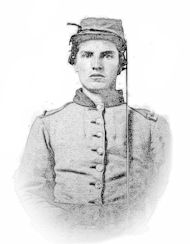
January 1st.—Left banks of the Tennessee and marched up Sand Mountain.

Washington Thursday Jan’y 1st 1863. Diary.

The New Year has opened beautifully, it has been a mild and bright day. The Departments of the Govt have been (as usual) closed, and the whole City (Males) went at 12 o’clock to pay their respects to the President. The Foreign Ministers and the officers of the Army and Navy paid their respects before 12. I met Genl Halleck at Mr Sec’y Chases, Genl Heintzelman and Genl Meigs at Mr Sewards, Comodore Smith and Admiral Foot at Mr Sec’y Stantons, “lesser lights” of both Army and Navy were quite plenty. The expected Proclamation is “out” tonight in the “Star.” It carries out the one issued a hundred days ago. Mr Lincoln looks quite as well as he did a year ago. I have seen him frequently during the year. In the summer he used to ride out with a body guard of ten or twelve horsemen (Cavalry) round his carriage. I think he has dispensed with that of late. That was not done at his desire but at the desire of friends who feared for his life. Mr Seward receivedin State.” Six Policemen at and near the Door & Hall, and a “Gentleman Usher” at the parlor door anounced the name of each visitor in a loud voice as he entered the room. I suppose it was “done up” in the English style. No particular news today but indications of Army movements and more Battles. Assisted some today at an extra and realy luxurious Dinner given to the Patients at the Ascension Church Hospital. No choicer Bill of fare was to be found on any table in the City. The men were feasted on the greatest delicacies to their hearts content. I was in at “Willards” this evening, counted forty pairs of Shoulder Straps there at one time. It is quite disgusting to see (every night) such neglect of duty!!!

January 1st. When off picket duty try to keep comfortable by the picket fires and chopping wood for the large camp fire just outside the church. No place in the church for fires.

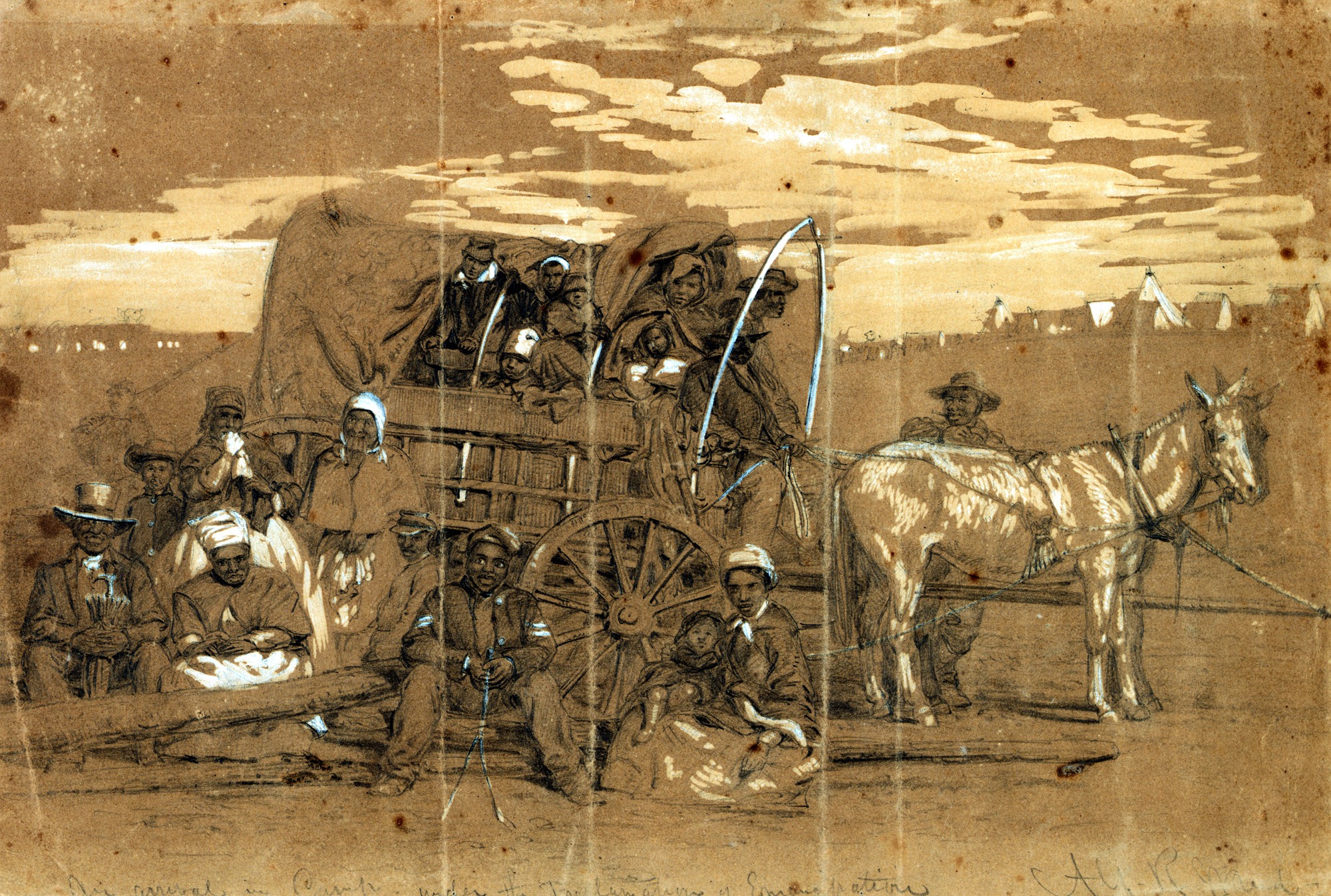
An arrival in Camp–under the Proclamation of EmancipationAlfred Waud worked up this sketch from a photograph, probably made in his presence by David B. Woodbury on January 1, 1863. It was published in Harper’s Weekly, January 31, 1863, p. 6.

Library of Congress image.

..

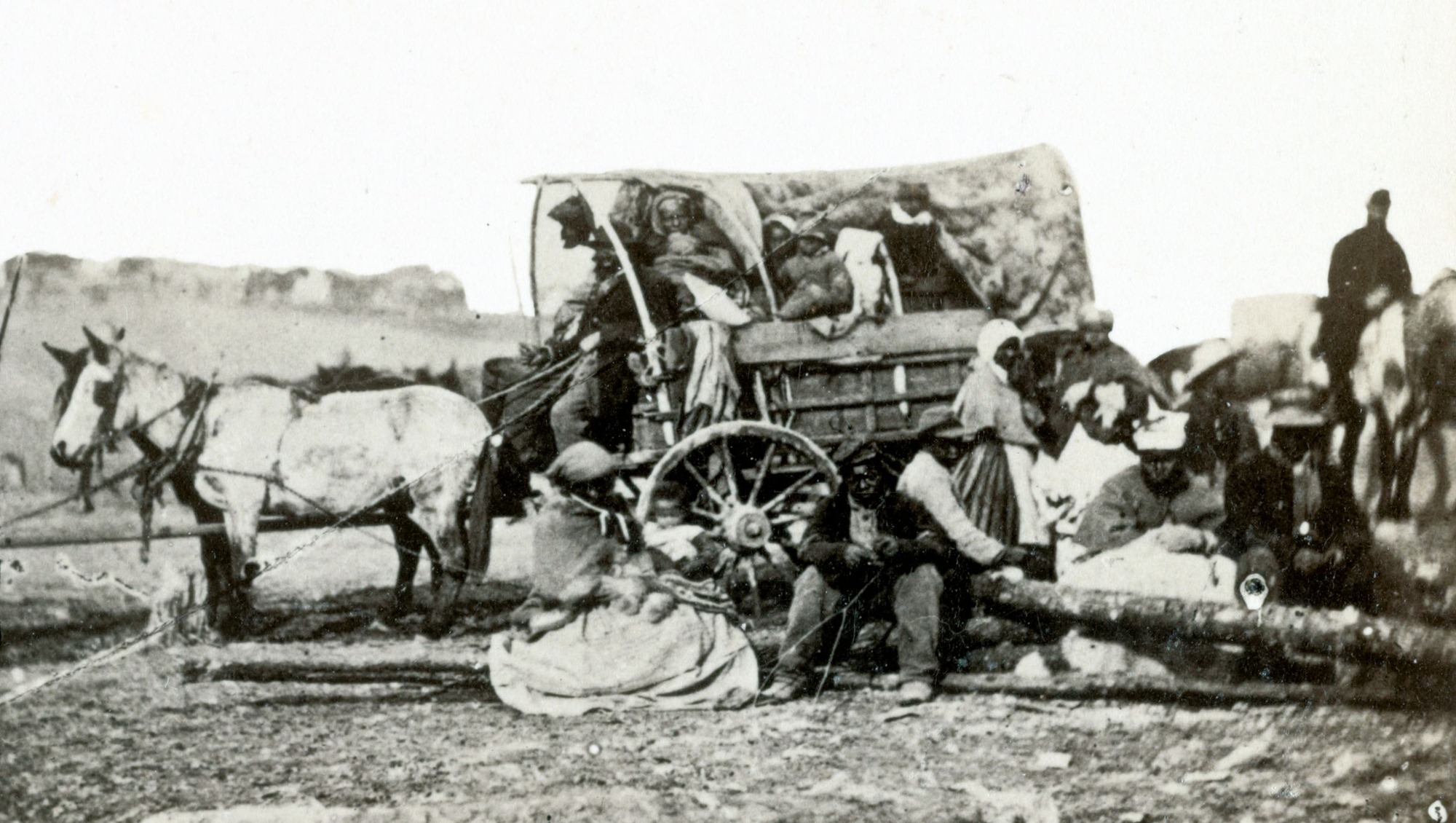
When compared with the photograph, it shows that the photo is actually an reversed stereograph.

A Negro family coming into the Union lines

Photo shows African American men, women, and children seated in front of and inside a mule-drawn covered wagon. Artist Alfred Waud worked up a sketch from this photograph, probably made in his presence by David B. Woodbury on January 1, 1863. The drawing, called “An arrival in Camp–under the Proclamation of Emancipation” was published in Harper’s Weekly, January 31, 1863, p. 6 and is now at the Library of Congress.

Library of Congress image.

New Orleans, January 1st, 1863. Nothing of importance has occurred this day.

January 1st, Thursday, 1863.

1863! Why I have hardly become accustomed to writing ’62 yet! Where has this year gone? With all its troubles and anxieties, it is the shortest I ever spent! ’61 and ’62 together would hardly seem three hundred and sixty-five days to me. Well, let time fly. Every hour brings us nearer air freedom, and we are two years nearer peace now than we were when South Carolina seceded. That is one consolation. . . .

I learn, to my unspeakable grief, that the State House is burned down.

January 1, 1863, Thursday. The New Year opens with a bright and brilliant day. Exchanged congratulations at the Executive Mansion with the President and colleagues, at eleven this morning. The usual formalities. Officers of the Army and Navy came in at half-past eleven. I left before twelve.

The Emancipation Proclamation is published in this evening’s Star. This is a broad step, and will be a landmark in history. The immediate effect will not be all its friends anticipate or its opponents apprehend. Passing events are steadily accomplishing what is here proclaimed.

The character of the country is in many respects undergoing a transformation. This must be obvious to all, and I am content to await the results of passing events, deep as they may plough their furrows in our once happy land. This great upheaval which is shaking our civil fabric was perhaps necessary to overthrow and subdue the mass of wrong and error which no trivial measure could eradicate. The seed which is being sown will germinate and bear fruit, and tares and weeds will also spring up under the new dispensation.

Blair mentioned at my house a few evenings since that General McClellan assumed command of the Army of the Potomac last September without orders; that, finding military affairs in a disordered and confused condition, he sought an interview with the President, Stanton, and Halleck respectively, and also called to see him (Blair), but he was absent; that he then called his staff and left, but met me, to whom alone he communicated whither he was going and his purpose. This, Blair tells me, is the statement made by McClellan to Governor Dennison, who has been stopping with Blair. I well remember meeting him at that time, but my understanding has been that McC. received command of the Army by order of the President on recommendation of Halleck.

January 1—This month we have done nothing but move our camp once, and drill. Had to send all our baggage away. Hereafter nothing more will be hauled for us in wagons. There are rumors flying about that we will soon leave here.