Following the American Civil War Sesquicentennial with day by day writings of the time, currently 1863.

Tuesday, January 15, 2013

Washington Thursday Jan’y 15th 1863

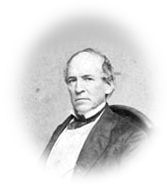
I have reason to be thankful that my health is so good. Today I have felt extremely well and have been quite busy all day although I have not done much on the “Board.” Josephine (Maj E Ps wife) and Mrs H P Knowles called upon me at my office about noon and I spent a couple of hours with them showing them round the Pat office, and Dead Letter office. We also visited Mr McGuires Picture Gallery on E st. The ladies were much pleased with all they saw. I promised to go out to Fort Gaines tomorrow and return their “Call.” I [c]onfess that I have not been very neighborly with my Lyons Friends of the 138th, never having been out to Fort Gaines. But it is difficult getting there on foot after leaving the cars & “Bus.” Spent an hour with Chas & Sallie. The Ascension Hospital is broken up. The Surgeon Genl told Chas that he could have his choice of all the Hospitals in the District, and be transfered to which he chose. He decides tomorrow. The baby is growing finely on the bottle. She has never nursed it much. Called at Doct Munsons and staid till past 9. Mr & Mrs White there from Albany, also Mr & Mrs Whitney from Rochester. Heard something from Mis Read (in a very sly way) of a secretLeague” of Loyal Gentlemen now forming in the City to act in support of the Govt &c. I must enquire and find out all about it if I can and perhaps join it. I was a Minuet Man two years ago when we were in great Peril. I will be one now if necessary. No very bad news, a gun Boat and some Transports taken by the Rebels on the Cumberland River. The Army of the Potomac, it is reported, is moving. Called upon Maj Austin, Pay Master from Auburn. Saw Mr Meeker (his Clerk) and Mrs Meeker, also from Auburn NY.
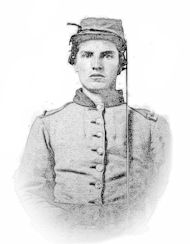
Thursday, 15th.—Cold and rainy last night. Steamboat “Alice Vivian” came up this evening from Mobile. One-half regiment crossed over this evening. Marched through Gainsville; went two miles in prairie and camped in very bad place.

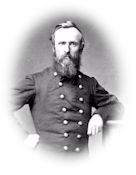
Thursday, 15. — Rained last night; warm and cloudy today, threatening rain. Yesterday warm and sunny but threatening. Captain Gilmore dined with me. Says Colonel Hatfield reported that he was to command the brigade; says he [Gilmore] and his men are mad about it, that they want this brigade commanded as it is.

Lucy and the boys to start today if possible. I hope it will be more cheerful weather when they reach here.

BOOK IV

From my sick bed, this 15th day of January, 1863.
Linwood, Thursday. .

AM I not glad to get another blank book! On Sunday my old one gave out, to my unspeakable distress, and I would have been désolée if I had not had three or four letters to answer, as writing is my chief occupation during my tedious illness. O that unfortunate trip to Port Hudson! Have I not cause to remember and regret it? Two months last Sunday since I have been lying here a cripple, and I am not yet able to take a step. However, on Monday mother sent Dr. Woods as my fourth physician, and I have made up my mind that either he or Nature will effect a cure before long. Wonder how it feels to walk? It makes me weary to see others try it; I always fear that the exertion must be very painful — an absurd idea which I endeavor to keep to myself. . . .

January 15, Thursday. Have been interested for the last two or three days in reading, when I had time, letters that were taken from the intercepted mail. Most of them are from intelligent writers in the best circles at Richmond. In these communications, freely written in friendly confidence, there [crops] out a latent feeling of hope for peace and restoration of once happier days. There is distress and deprivation; the spirit of hate engendered by strife is there, but no happiness nor inward satisfaction over the desolation which active hostilities have caused. Strange that so many intelligent beings should be so madly influenced.

A number of Senatorial elections have recently taken place. Cameron has not succeeded even by corruption, and it is well he did not. I felt relieved when I heard he was defeated, though I did not rejoice in the success of his opponent, whose sympathies are reputed to be with the Secessionists.

15th. Thursday. The Buglers went down town and were mustered out. I was not there to get the promised oysters. The others did. D. and John called on Melissa.

January 15th [1863]. It stormed all night. I lay awake and thought of the poor, poor soldiers. I thought, too, much of the fall of Ft. Donelson, where the flag of the Confederacy went down in storm and blood. How sadly I recall my feeling of horror the night an “extra” made known to us that tragic event! How much blood shed since! Lincoln calls the slaughter of Fredericksburg an accident—some new road to Richmond is to be proposed, his troops are not to go into winter quarters. This will keep our poor Southern boys also exposed, and now, even in this latitude, the cold wind is singing its melancholy song, both by night and day. God help them all, and the poor anxious women who are watching.

Mrs. Blinks’conversed with a gentleman who had spoken with four different ship owners at the North; each had lost a vessel at nearly the same time, and each loser reported himself to have been robbed by the Alabama, Captain Semmes. He and others think that we have several privateers out; the Arrieto lately ran the blockade at Mobile. I have just read the captures of the Ariel by the Alabama, and the speech of Captain Semmes to the frightened crew. “We are gentlemen, not pirates,” and “We gentlemen of the Alabama harm no one,” are speeches which especially took my fancy. In answer to a voice which cried,” You nearly sunk our ship just now with your shot,” he said, “That is our duty; we war upon the sea.” He is no pirate, he claims, but carries a Confederate State’s commission. He is a gallant fellow, and I am glad he comes from Maryland. These Southern soldiers often stir a vein of poetry in my heart which I had thought belonged exclusively to the knights of old. I remember when Bradley Johnson rode into Fredericktown, Maryland, he cried out to the timid, “We come to harm no one; we are friends, we are not robbers, but Southern gentlemen.” The Northern people have not shown their boasted civilization in the progress of this war. Robbery, house-burning, and every species of depredation has marked the course of the Northern armies. Our soldiers at least respect woman, but even in this town helpless females have been driven from their houses without their personal effects, and insulted in the grossest manner. I hear that our Louisiana boys often go into a fight with cries of “New Orleans and Butler.”

Negroes are starving in the streets, though the Federals have taxed all citizens here who have had anything to do with the war for the support of the poor. They boast of feeding our poor, but the city furnishes the means; they do not contribute a penny themselves, but sell their provisions at the highest rate. Butler boasted to the last of having fed this starving city.

Thursday, 15th—It turned cold during the night and the rain of yesterday turned into snow which continued all day. Our camp is in a frightful condition, there being six inches of snow on mud a foot deep. Half the men of the Sixth Division go into town over night. The Eleventh Iowa received two months’ pay this afternoon, and now only a few of us remain in camp, the most of the boys putting up in the city instead. We are expecting any moment to receive orders to break camp here.

January 15th, 1863.

Our shanties are completed, and we moved in yesterday. They are warm and dry, and cannot but affect the health of the men favorably. I received a letter from home last night, and great was my astonishment to see, on reading it, an indictment against one dearer to me than life, and in whose behalf I plead “Not guilty.”

My poor, wounded, suffering wife; what could have put such thoughts into your mind? Have you not always been the most tender, the most loving, of wives? Have you not always been by my side to advise, assist, uphold and sustain me? Have you not watched over me, in sickness and in health, and nursed me with more than a mother’s tenderness? Have you not borne poverty without a murmur for my sake; and still, as a wife, you are a failure? Oh, banish such thoughts from your mind, for, I do assure you, they come of an over-sensitive imagination. You say you have always been a clog to my feet. No, no! I have been my own clog. The error was in the start. Youthful ignorance and folly added to the advice of men in whom I confided, but whose council proved a snare started me in the wrong direction, and I have continued to float downward with the tide. But, dear, I have no regrets. My life has been happy beyond the lot of most men, and what, my beloved, has made it so? Certainly not the pleasures of wealth or honors conferred by man. What, then, but the never failing, self-sacrificing power of love which you have always lavished on your husband that has bound him to you with cords stronger than bands of steel? The only things I craved when I was sick were the tender accents of your voice and your dear hand upon my brow.

There seems to be a bond of sympathy between us that knows no bounds—is not confined by space. Many times since I left home have I visited you, or received your visits, and the impression left was that of reality. Last night, after I retired to rest—before 1 went to sleep, for the boys were gathered around the fire and I could hear their jests and laughter—I held your hands in both of mine, trying to comfort and console you, and it was real as reality itself. There is so much hollow-heartedness and deceit practiced here by men who, under the false guise of patriotism, seek wealth and position, that, had I all the world can bestow, I would give it all to enjoy with you one how of social intercourse.

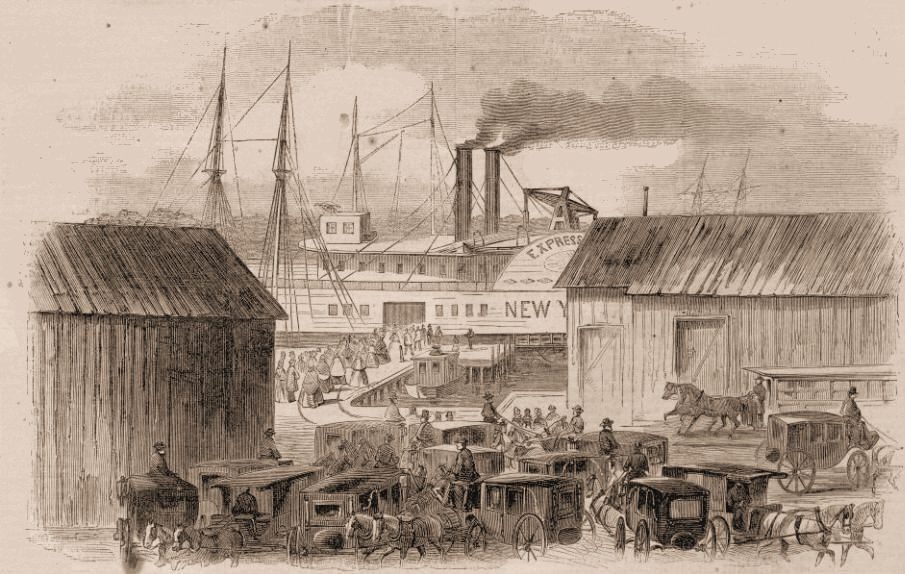
The Departure of Secesh Women for Richmond

One day last week the steamer New York took 450 women and children from Washington to the realms of Secessia. They all had, or claimed to have, friends or relatives in Jeff Davis’s kingdom, and were sent South at Government expense. Among the number were several young women whose departure from the Federal capital will lighten the duties of the provost-marshal. The Washington Star says:

Had their baggage passed without inspection they would have added much also to the necessities of the Southerners in dry goods, shoes, medicines, and many other articles and goods much required at the present time in Jeff Davis’s domains. Eight officers were engaged all last night in examining the baggage that had been sent down. In many of the trunks were found dress goods of various kinds and textures, pins, needles, thread, etc., which articles were, of course, excluded.

In one very large trunk a sufficient quantity of dry goods was found to fully stock a country store. Some of the trunks had ten, fifteen, and as high as twenty-five. pairs of shoes. No passenger, however, was allowed to take more than two pairs. One lady, when asked why she desired to take so many, replied that she generally wore out two pair per month! All this morning the wharf and the neighborhood of Sixth Street was crowded with ladies and gentlemen, who resorted there to witness the departure and for the purpose of saying farewell to friends.

Judging from the expressions we heard in the crowd secesh sympathizers predominated. A gentleman asked an old lady who was going off whether she was pleased at her departure. She replied, “Yes, thank God! it is a great pleasure to get to a Government conducted by gentlemen, and not by Yankee boors.” A crowd immediately gathered around, and then commenced expressions of contempt from fair lips for the United States Government generally, and the President and Cabinet in particular. One young lady remarked to a friend as she bade her good-by, “Be sure and write quickly; you know how to get the letter through.” Another lady remarked that she hoped to return ere long, but with the victorious Confederate army.

(Published January 24, 1863, in Harper’s Weekly.)