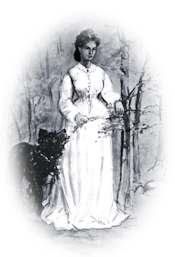
February 18th [1863]. General Banks and the planters met to-day. A series of resolutions has been made. The amount of the whole matter is that General Banks promised to do what he could, though fettered by his Government, to send the slaves back to the plantations, and he has received a great many compliments in return for his promise. Many people, myself among the number, disapprove of the whole affair. No agreement should be entered with our enemies or the Government which sends them here. Our dear boys are fighting for our rights and many of their papas are entering into terms with their armed invaders.
February 2013
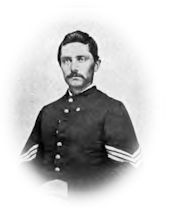
Wednesday, 18th—We came in from picket this morning. The day is warm but cloudy. News came that another one of our gunboats accompanying a barge loaded with hay ran the blockade at Vicksburg.
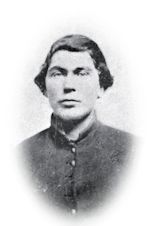
Memphis, Wednesday, Feb. 18. Raw and windy. Health not very good.
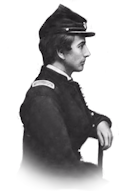
February 18th. When my man met me yesterday with my gray, a horse I had always considered unequaled in appearance, both horse and man looked shabby, and as I looked them over, and the great number of muddy soldiers everywhere about, I am afraid I wished myself back again in New York. Why I should see through such jaundiced eyes, I scarcely know, for the army has been my home and delight for the past two years. I think I shall not apply for any more leaves of absence. I noticed yesterday what an immense accumulation of stores had been collected on the sheltered ground, where the trains stop. The spot is admirably adapted to the purpose, entirely out of sight, although so close to the river the abrupt hills afford the most complete protection. There are no visible roads now. The trains just cut across the country to the various camps the shortest way, resulting in the whole district becoming a quagmire. One must see this muddy country in winter to know how bad it really is.
Colonel Zook is going to leave us in the morning for a twenty days’ leave, and Frank is to remain in command of the brigade, keeping his own regimental quarters, however, and I am to run the brigade for him. I hope Colonel Zook will return on time. It makes so much difference when he is absent; we are always busy when he is in command.
La Valley of the Fifty-seventh, who for many months was acting brigade commissary, most unaccountably disappeared, and has been dropped from the muster rolls. This is a great surprise to us. A French Canadian, well educated, unusually bright, served in the regular army, and is a capital soldier and boon companion, we had always considered him the soul of honor, and would have trusted him with all we had. Lieutenant C. B. Curtiss, a scholar and man of attainments, has been promoted to be captain of his Company K, at one time the best company in the regiment, and perhaps so now. Captain L. L. Rose, A. C. Subsistence, has been assigned to the brigade permanently. He is a peculiar genius of first rate ability, and possessed of more than the usual amount of common sense, but has many weak points. He is about fifty years of age, a great gambler and I think an experienced one; is a lover of poetry, and can recite from memory from his favorite author, Burns, by the hour, and takes great pleasure in entertaining us. He keeps good horses, is a most accommodating and excellent commissary, and genial companion. Our quartermaster, Leffingwell, we see little of. He is a typical Yankee, unsociable and uninteresting, but a good quartermaster and seldom at headquarters, living almost wholly with his train. The assistant inspector general, Captain James D. Brady of the Sixty-third, is a brave, accomplished, and very bright officer. He is an Irishman, American born, and hails from Portsmouth, Va. He has recently been assigned to us.
FEBRUARY 18Th.—Mr. H_____s, another of Gen. Winder’s detectives, has gone over to the enemy. He went on a privateering cruise from Wilmington; the vessel he sailed in captured a brig, and H_____s was put in command of the prize, to sail into a Confederate port. Instead of this, however, H_____s sailed away for one of the West India islands, and gave up his prize to Corn. Wilkes, of the United States Navy.
One or two of the regiments of Gen. Lee’s army were in the city last night. The men were pale and haggard. They have but a quarter of a pound of meat per day. But meat has been ordered from Atlanta. I hope it is abundant there.
All the necessaries of life in the city are still going up higher in price. Butter, $3 per pound; beef, $1; bacon, $1.25; sausage-meat, $1; and even liver is selling at 50 cents per pound.
By degrees, quite perceptible, we are approaching the condition of famine. What effect this will produce on the community is to be seen. The army must be fed or disbanded, or else the city must be abandoned. How we, “the people,” are to live is a thought of serious concern.
Gen. Lee has recommended that an appeal be made to the people to bring food to the army, to feed their sons and brothers; but the Commissary-General opposes it; probably it will not be done. No doubt the army could be half fed in this way for months. But the “red tape” men are inflexible and inscrutable. Nevertheless, the commissaries and quartermasters are getting rich.
February 18.—At Charleston, S. C, General Beauregard issued the following proclamation: “It has become my solemn duty to inform the authorities and citizens of Charleston and Savannah that the movements of the enemy’s fleet indicate an early land and naval attack on one or both cities, and to urge that persons unable to take an active part in the struggle shall retire. It is hoped, however, that this temporary separation of some of you from your homes will be made without alarm or undue haste, thus showing that the only feeling which animates you in this hour of supreme trial is the right of being able to participate in the defence of your homes, your altars, and the graves of your kindred. Carolinians and Georgians! the hour is at hand to prove your country’s cause. Let all able-bodied men from the sea-board to the mountains rush to arms. Be not too exacting in the choice of weapons. Pikes and scythes will do for exterminating your enemies, spades and shovels for protecting your firesides. To arms, fellow-citizens! Come to share with us our danger, our brilliant success, or our glorious death.”—About noon to-day ten wagons sent out on a foraging expedition from Memphis, were attacked and captured in Nonconnah Bottom, by a party of one hundred and fifty rebel cavalry.
—Secretary Chase transmitted to Congress to-day a report of Hiram Barney, Government cotton agent at New-York, the footings of which showed that he had sold at public auction since the blockade commenced, three thousand three hundred and twenty-five bales of sea island and upland cotton, and one thousand seven hundred and seventy-nine bales of unginned cotton, valued at six hundred and ninety-six thousand five hundred and sixty-two dollars.
—The siege of Vicksburg was commenced to-day by the Union mortar-boats, which threw a number of shells into the city. The rebels opened three batteries of heavy guns on the boats, but their shot fell short, and did no injury.
—By order of General R. B. Mitchell, commanding the National forces at Nashville, Tenn., G. W. Donegan and W. H. Calhoun, two wealthy citizens of that place, were arrested and confined in the State penitentiary, as hostages for the safe return within the National lines of John A. Galty and T. T. Tabb, Union men held by the rebels at Chattanooga.—Clifton, Tenn., was captured and destroyed by a detachment of the Third Michigan cavalry under the command of Captain Cicero Newell.—Philadelphia Inquirer.
—A Democratic Convention which met to-day at Frankfort, Ky., for the purpose of nominating candidates for State officers for the ensuing August election, was broken up and dispersed by Colonel S. A. Gilbert, under orders received from Brigadier-General Q. A. Gillmore, commanding the district. The members of the Convention were said to be avowed rebel sympathizers.
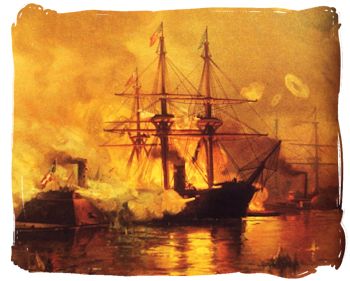
Feb. 17th. To-day the U. S. steamer Mississippi got under way with a schooner in tow and proceeded up the river.
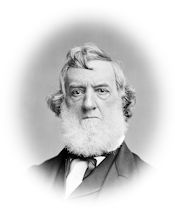
February 17, Tuesday. The President read to the Cabinet a correspondence between himself and Fernando Wood. The latter wrote the President on the 8th of December last that he had good reason to believe the South desired a restoration of the Union, etc. The President replied on the 12th of December that he had no confidence in the impression, but that he would receive kindly any proposition. Wood’s letter was confidential; the President made his so. All was well enough, perhaps, in form and manner if such a correspondence was to take place. Wood is a Representative and his letter was brought to the President by Mayor Opdyke[1]. Mayor Opdyke and ex-Mayor Wood are on opposite extremes of parties, — so opposite that each is, if not antagonistic, not very friendly inclined to the President. Wood now telegraphs the President that the time has arrived when the correspondence should be published. It is a piece of political machinery intended for certain party purposes.
Chase says that Howard and Trumbull of the Senate were dissatisfied with their vote in favor of his bank bill, which they had given under the impression it was an Administration measure, but they had since understood that Usher and myself were opposed to it. I told him that my general views were better known to him than them, that I had no concealment on the subject; I had, however, no recollection of ever exchanging a word with either of those Senators concerning his measures; that I had given his financial questions little or no attention, had never read his bill, had but a general conception of his scheme; that, so far as I was informed, it was not in conformity with my old notions, as he well knew, for I had freely communicated with him early, though I had not been consulted recently and matters had taken such a shape I was glad I had not been, and that the whole subject had been committed to him and Congress. I had neither time nor inclination to study new theories, was wedded to old doctrines and settled principles. Usher said he had electioneered for the measure with sundry Congressmen, whom he named. I told him I had not with any one and did not intend to.
___________
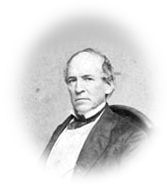
Washington Tuesday Feb. 17th 1863.
Today we have a real old “fashioned Snow Storm.” It has snowed all day. The weather is mild and the snow melted fast, but it is about seven inches deep tonight on a level, a greater body of snow than we have had this three or four years. The side walks are deep with “spash” and I have not been out since I came in about four o’clock. I went from the office on to 7th St and staid an hour at Ballentines Book Store looking over the books, Maps, and Photographs, did not buy anything. Came to my room with feet somewhat wet, but a good fire soon made “all right.” There is no news of any fighting just now. The weather and the roads are not favorable for such amusements on land. An important Bill passed the Senate last night to enrol the whole Militia force of the U.S. No one exempt but governors of States, all betwen 20 & 45 included and liable to draft. It passed unanimously. The Rebellion is to be put down at any cost of men and money. I am over “forty five” by 12 years but am not realy older than many men of fifty. I may volunteer yet if necessary. I am a volunteer now. The members of the “Union League” are all “Minute Men” “armed to the teeth” and always ready. We have pledged our lives in support of the Govt. Let Traitors South or North beware. There will soon be an irresistable power in the land, ready for all emergencies. I think myself that the Rebellion is near crushed out now than it has been for six months past.


