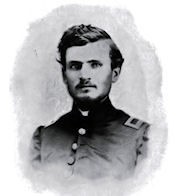
17th. After breakfast fixed up a little and went to town to see Melissa and get second volume of “Life of Washington.” Received an excellent letter from the fair Rowena. In the P. M. and evening wrote to Ella Clark and a little to Fannie. I like Ella Clark very much. She is talented and good and true, I guess.
February 2013
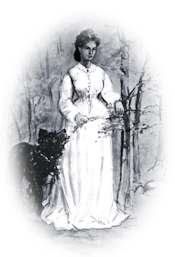
February 17th [1863]. Mrs. Dameron and Mrs. White came to the gate late and found Mary Jane outside talking with other negroes, after having locked it, or pretending to do so, and bringing the key in to Mrs. Norton. This deception in a girl in whom she has had so much confidence made Mrs. Norton anxious and nervous all night. She got her money, pistols and other defences near her and kept the light burning. So many horrible things have happened that one can not be too careful, but I do not think Mary Jane meant to do more mischief than to leave the gate open so that she might have company within or go out at will. The deception was what was to have been expected of a negro. I do not feel fear for others now—I never did for myself—now that Banks is here; he does not throw people in prison without a trial on the testimony of a negro, as Butler did. Mrs. Dameron came in because a gentleman who had run the blockade had brought her news of Mr. D——. All well outside.
No fight at Port Hudson yet; Farragut and his flagship, the Hartford, still here. The town is filled with rumors and our friends who are always trooping here, keep us well plied with them. I do not record them all, because I forget them.
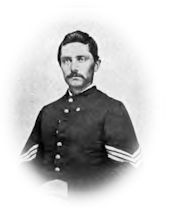
Tuesday, 17th—Another all night rain, which continued all day today. Our camp is again becoming very muddy. Company E went on picket duty today. Our camp guard has been taken off.
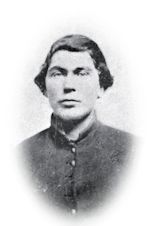
Memphis, Tuesday, Feb. 17. Wet and cloudy. A dismal and dreary day for me. Kept inside nearly all day. Burnt up all my letters which by this time had accumulated, so as to encroach too much on the room of my crowded valise. It was a difficult task. They seemed to be a connecting link between me and the dear ones. I read the anxious words over, and then with a sigh consigned them to the flames. Burnt up 17 of T. L.’s, 18 of J. L.’s, 11 of M. L.’s and 15 from Albion.
SEVERAL days were allowed to elapse before anything more than routine guard and picket duty was ordered, as the officers surviving the battle were fully occupied in making out their reports and accounting for their lost men and material.
At brigade headquarters we were equally full of business, and Swartz, our head clerk, and his assistants were kept busy till late into the night every day.
I shall only put down here the official report of Colonel Zook. The losses were heavy, but nothing like what was at first reported. They were all of veterans, and amongst them many of our very best officers. Lieutenant-Colonel Bull of the Sixty-sixth was killed while with the engineers on the 11th, at the same time Lieutenant-Colonel Chapman was wounded. He was a rough, energetic officer, always ready for a fight, and to be found in the foremost ranks, and was highly esteemed at our headquarters, and will be a notable loss to a good regiment. Major Throop, who took the Fifty-seventh into action, was seriously wounded, and is not expected to recover. My friend, a very agreeable officer of Spanish descent, Lieutenant Pou, was killed at the very front and his body not recovered. He was an intelligent, well educated young man and a good officer. The adjutant of the Fifty-second New York was killed. He was on the fence climbing over with me, when it was struck by a round shot and smashed all to pieces. He fell and never spoke. I was reported killed, too, because some one saw me sprawling down with the others, but I was only astonished and jarred a little, and had no trouble in keeping on with my two regiments. Of the wounded, they were very numerous, Alcoke of the Fifty-seventh, who lost an arm, being amongst them. The regiment, after Throop was wounded, was in command of Captain Britt, who makes the official report of the battle for that regiment. Colonel Zook, always very sparing of praise, says in his official report: “Seeing General French’s last regiment filing out past the railroad depot, I directed the Fifty-third Pennsylvania Volunteers and Twenty-seventh Connecticut Volunteers to pass out by the same route. The Sixty-sixth and Fifty-seventh New York, conducted by Lieutenant C. H. H. Broom, aide-de-camp, moved out through the next street to the eastward, and the Second Delaware and Fifty-second New York, conducted by Lieutenant J. M. Favill, aide-de-camp, marched by the street next that taken by Lieutenant Broom. All these commands filed to the right at the outskirts of the town and formed line of battle, with the Fifty-third Pennsylvania Volunteers resting on Hanover street and the Fifty-second on the railroad. The brigade then advanced rapidly over the crest of the hill nearest the enemy’s line under a very heavy fire of artillery from the heights, and musketry from a stone wall, sunken road, and numerous rifle pits, charging over the division of its former commander, General French, and taking a position that was not passed by any other line during the day, though some of Kimball’s men reached it. The regiments of the brigade fought in line, and were commanded as follows: The Fifty-third Pennsylvania Volunteers, Colonel John R. Brooke, Twenty-seventh Connecticut Volunteers, Colonel Richard A. Bostwick, Sixty-sixth New York, Captain Julius Wehle, killed, Fifty-seventh New York, Major N. G. Throop, wounded, Second Delaware, Colonel W. P. Bailey, slightly wounded, and Fifty-second New York, Colonel Paul Frank. To my staff I am under great obligations for valuable assistance, especially to Lieutenants Favill and Broom, for the handsome manner in which they aided in taking the brigade into action. The loss of the brigade was in the action of the thirteenth, seven commisioned officers killed and thirty-one wounded, fifty-two enlisted men killed and three hundred and ninety-five wounded and forty-two missing. Total five hundred and twenty-seven.”
General Sumner reviewed the brigade a week after the action and on finding the Sixty-sixth commanded by a second-lieutenant, asked the reason of it, and was told every superior officer was either killed or wounded, and that he was now the ranking officer. The general seemed lost in astonishment at first, and then said to the lieutenant: “If I had found myself when a second lieutenant in command of so fine a regiment, I should have considered my fortune made.”
A very serious problem is the filling up of the decimated regiments. They are now not much more than companies and by the requirement of the War Department, a complete stop is put to promotion and mustering. The aim of the Government would seem to be to encourage officers to keep their commands out of dangerous places, for their chances of promotion are lessened in exact proportion as they lose their men by fighting. It is all wrong, and some intelligent system of filling up regiments should be adopted. We have just had a new regiment assigned to us, one thousand strong, and not a single officer in it familiar with his duties. The material is of the best, and the officers are gentlemen, but not military men, and every one of them has been ordered to attend my drills for officers, and so I am become instructor of infantry tactics to quite a respectable school. We drill every morning, and the officers, being anxious to learn get along famously.
The commands are being reorganized to a considerable extent, a new brigade is forming for Colonel John R. Brooke, who, however, has not received any additional rank. It takes away from us the colonel’s own regiment, the Fifty-third Pennsylvania Volunteers, the Second Delaware, Colonel Bailey, and Twenty-seventh Connecticut Volunteers. Colonel Bostwick gets the Sixty-fourth New York and Forty-fifth Pennsylvania Volunteers from elsewhere, making an excellent command, and will be known as the Fourth brigade. Our brigade, the old Third, has the original Fifty-second, Fifty-seventh and Sixty-sixth New York and the new One Hundred and Fortieth Pennsylvania Volunteers. A few days after the organization of the Fourth brigade, by direction of General Hancock, our brigade was relieved by it, and ordered to the rear into winter quarters. On Sunday morning last we marched out very regretfully over the telegraph road, a distance of perhaps a mile and a half turned off to the left and some distance to the north and east of the John Washington house (General Hancock’s headquarters.) Here we selected a position in line with the remainder of the division, and laid out a regular camp. Heavy details were made for chopping down trees, and the men built a series of little log huts on either side of their company streets, affording not only protection from the weather, but a great deal of solid comfort. The roofs were made of the men’s shelter tents, chimney and fire place of mud and wood, and ultimately doors and floors of cracker boxes. As we had abundance of firewood, the men enjoyed their little log houses immensely, four in each hut, and were soon reconciled to the change from the town. Our headquarters were built after the men had completed their own huts. There were four good split log foundations about three feet high, upon each of which a wall tent was set up, securely fastened to firmly fixed high rails on either side resting on posts with crotches well let into the ground. The chinks were filled with mud. Very good fireplaces also built of mud and sticks, and eventually regular little doors. When the bunks were put up, each holding two men, our swords and sashes hung on the sides, and a cheerful blaze in the little fireplace, there was nothing left to be desired in the way of solid comfort. Colonel Zook lived alone, Broom and I, Captains Brady and Rose; and Leffingwell, the quartermaster, by himself. There was also a similar arrangement for an office in which the two clerks lived. We had scarcely got into our new quarters, when General Hancock went home on a leave of absence and Zook, as the senior officer in the division, took command. Colonel Frank nominally assumed command of the brigade, but I really ran it, the colonel preferring to remain at his own headquarters, and coming over once a day to sign whatever documents we had ready for him. One of the curiosities of the late campaign is the ruffled state of affairs amongst the great moguls, the superior generals. On the 25th of January the commander of the army issued an order dismissing General Hooker from the service for insubordination, subject to the approval of the President, of course, and General Franklin from the command of his corps. Two days afterwards in General Order No. 20, War Department, Adjutant General’s office, dated January 25, 1863, the President of the United States directed,
1st. That Major General A. E. Burnside, at his own request, be relieved from the command of the army of the Potomac.
2d. That Major General E. V. Sumner, at his own request, be relieved from duty in the army of the Potomac.
3d. That Major General W. B. Franklin be relieved from duty in the army of the Potomac.
4th. That Major General Hooker be assigned to the command of the army of the Potomac.”
And so the officer, dismissed by Burnside, finds himself in command, and our late commander, let us hope, disappears for good from active service. General Sumner retires for old age and its infirmaties. He is a good man, an excellent soldier and good corps commander, and we shall miss him; he has practically brought us up from civil life to well trained, veteran soldiers, and is very proud of his work. In taking leave of us, he was most pathetic and complimentary, and I am sure he will take with him the respect of every man in the old division at least. All the changes are no doubt for the good of the service, and as we have almost all the work still before us, that is the important thing.
Since the battle of Frederickburg, leave of absence for the officers, and furloughs for the men, have been liberally granted. Almost half the surviving officers have been allowed leave, so that it became contagious and I found myself making application for a fifteen days’ leave, which was the maximum allowed. It was readily granted, and for the first time since 1861, I found myself in New York City again, amongst my friends, untrammeled by autocratic rules. What a luxury it was! I left camp on February 2d and was obliged to be back there on the 17th, so I had no time for hesitancy, and plunged directly into a round of gaieties. I called immediately upon H___, at the hotel on Fifth avenue, and found my status unimpaired, although no correspondence had passed between us. We visited the Russian warships then in port, and without any interruption, kept busy sight seeing, going to theaters, operas, etc., etc. The time seemed abominably short, and when the evening of the 16th arrived, and I had to take my leave for an unknown period and unknown vicissitudes, I was very desolate, but it was necessary to brace up, so I kept the faith and took my train, and rushed back to my home and duties with the grand old army in the field, carrying along a brand new uniform, new overcoat, boots, etc., and a very empty pocket book. I landed on the afternoon of the 17th in rear of the hills, just in front of Fredericksburg, where the train stopped, and the stores were all landed. Stepping on the ground I looked about me, hardly recognizing the country. All the trees for miles had been cut down for the use of the army, and it looked like a wilderness of stumps and mud. My man Green was on hand with the gray, and together we rode over the desolate country. It was cold and cheerless and I felt no enthusiasm in returning.
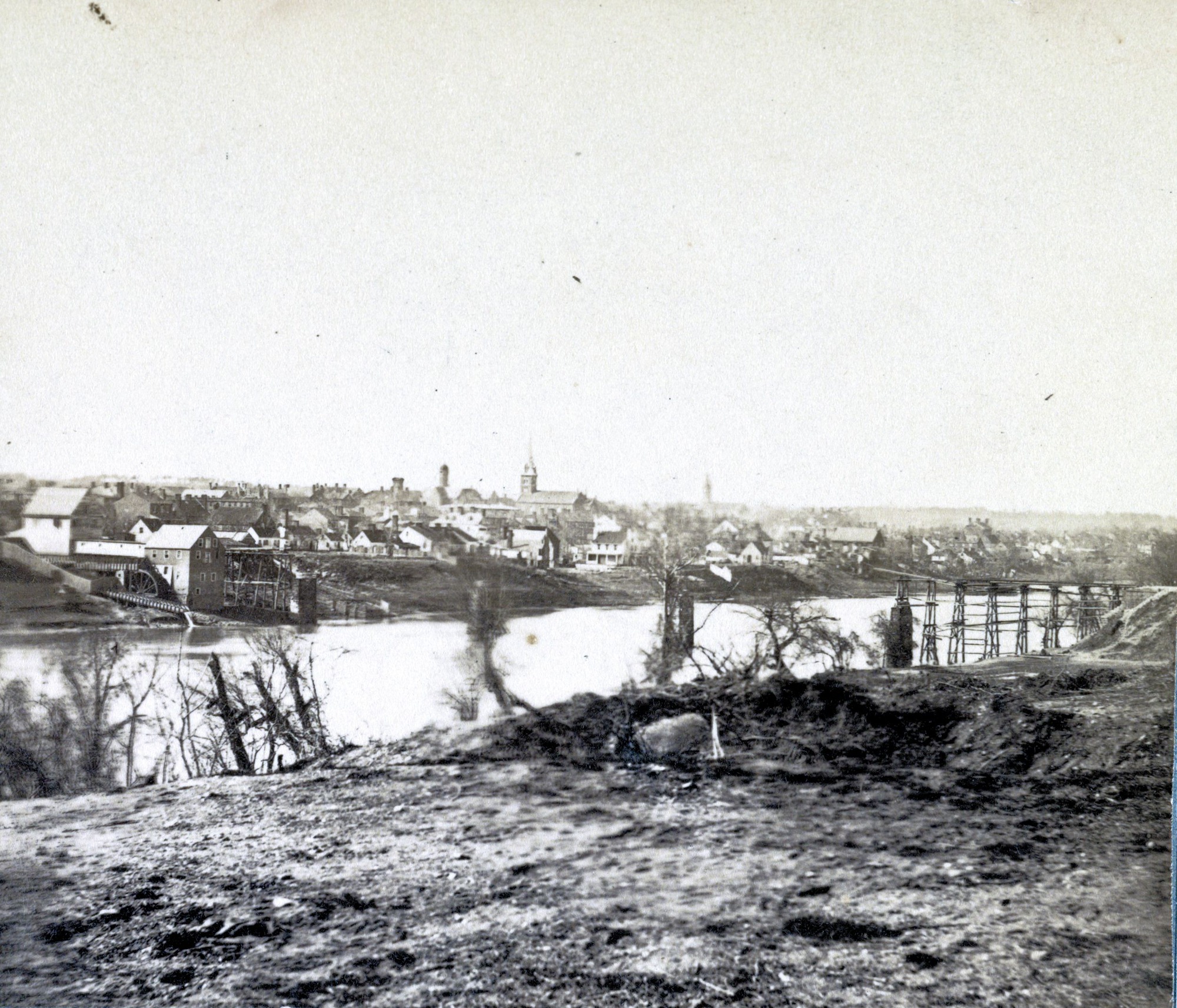
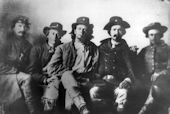
Tuesday, 17th—Received twenty-four boxes, saddles, bridles, halters, etc. Sent to Camp. Got a detail and put them all in a house and locked them up. “We took charge of the Clerk’s Office to sleep in, tied our horses in Court Yard and got our forage from the farmers around. Secured boarding at Maj. Holden’s, a clever gentleman and nice family; has one grown daughter, Miss Emma, a nice young lady. Remained here Wednesday, 18th—Monday, 23rd. During this time had nothing to do but write letters, visit MY GIRL THAT PAWS IVORY, and make acquaintances. Among them Miss Lou Hill I prize highest. We had prayer meeting and church. I purchased four books and left them with Miss Emma: Mormon’s at Home, Pilgrim’s Progress, Bayard Taylor’s Travels and Bible Union Dictionary.
FEBRUARY 17TH.—Gen. Lee is not sending troops to Charleston. He is sending them here for the defense of Richmond, which is now supposed to be the point of attack, by land and by water, and on both sides of the James River. Well, they have striven to capture this city from every point of the compass but one—the south side. Perhaps they will make an attempt from that direction; and I must confess that I have always apprehended the most danger from that quarter. But we shall beat them, come whence they may!
February 17.—In the British House of Commons Mr. Bentick rose to ask the noble Lord at the head of the government whether the government were in possession of any official information on the subject of the reported defeat by the rebels of the blockading squadron off Charleston; and if so, whether that information was of a character to raise the question of the legality of the future blockade of that port . Lord Palmerston replied that Her Majesty’s government had had no information with regard to the transaction other than that which had been conveyed by the telegrams. They simply state that the blockade was raised on the morning of one day, and reimposed on the succeeding day. With regard to the application of the general law of nations to a transaction of that kind, his lordship would give no opinion, because, he said, the application of that law depended so much upon the circumstances of the case, that until it was well known what had really happened, it would be improper in Her Majesty’s government to commit themselves to any opinion as to the effect which this occurrence might have.
—At a point five miles west of Romney, Va., a forage train under an escort composed of companies from the One Hundred and Sixteenth and One Hundred and Twenty-third Ohio infantry, was captured by a party of rebels who escaped with the train, after paroling the Nationals, who were allowed to return to Romney.—Pittsburgh Chronicle.
February 17.—By order of General Grant all restrictions imposed on the circulation of the Chicago Times, were rescinded.—The steamer Hercules was burned by guerrillas this day at a point a few miles above Memphis, Tenn.—A heavy snow-storm prevailed on the Rappahannock and its vicinity.
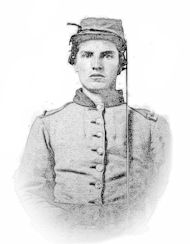
Monday, 16th.—Rained all day; P. M., regiment went to town. One regiment of our brigade has to be in town every night, so that if the fleet should attack the city, could man the ditches at once.


