Following the American Civil War Sesquicentennial with day by day writings of the time, currently 1863.

April 2013

All Quiet on the Roanoke.

April 24. The noise of the battle is over and we are no longer harassed by war’s dread alarms, but can now sit down, eat our fresh shad and herring and drink our peach and honey in peace and quiet.

A Broker’s Office.

Our provost marshal, Major Bartholomew of the 27th Massachusetts, has opened a broker’s office, where he is exchanging salt and amnesty for allegiance oaths, and as this is the fishing season, he is driving a right smart business. The natives for miles around come in droves, take the oath, get their amnesty papers and an order for salt, and after being cautioned not to be found breaking their allegiance they go away happy. There are probably some honest men among them who would like to do about right if they dared to, but the whole thing looks ludicrous, for there is evidently not one in a hundred of them who would ever think of taking the oath were it not for the hope of obtaining a little salt. The boys call it the salt oath.

Camp 103d Illinois Infantry, Lagrange, Tenn.,

April 24, ’63.

We have just returned from the hardest and yet by far the most pleasant scout in which I have up to this time participated. We started from here one week ago to-day, Friday, and my birthday (how old I am getting) on the cars. We were four and a half regiments of infantry, one six-gun battery and no cavalry. At 3 o’clock p.m. we were within seven miles of Holly Springs and found two bridges destroyed. We worked that p.m. and night and finished rebuilding the bridges by daylight the 18th. We had only moved two miles further when we reached another bridge which we found lying around loose in the bed of the stream. The general concluded to abandon the railroad at this point, so we took up the line of march. We passed through Holly Springs at 12 m. I don’t believe that I saw a human face in the town. A more complete scene of desolation cannot be imagined. We bivouacked at dark, at Lumpkin’s mill, only one mile from Waterford. At 9 p.m. a dreadful wind and rain storm commenced and continued until 1. We were on cleared ground, without tents, and well fixed to take a good large share of both the wind and water. I’m positive that I got my full portion. ‘Twas dark as dark could be, but by the lightning flashes, we could see the sticks and brush with which we fed our fire, and then we would feel through the mud in the right direction. Nearly half the time we had to hold our rubber blankets over the fire to keep the rain from pelting it out. After the storm had subsided I laid down on a log with my face to the stars, bracing myself with one foot on each side of my bed. I awoke within an hour to find that a little extra rain on which I had not counted, had wet me to the skin. That ended my sleeping for that night.

Nineteenth.—We went down to Waterford and then turned westward, which course we held until nearly to Chulahoma. When we again turned southward and reached the Tallahatchie river at “Wyatt,” where we camped for the night. Our regiment was on picket that night and an awful cold night it was. We marched through deep, yellow mud the 19th nearly all day, but I don’t know that I marched any harder for it. Up at 3 o’clock and started at 4, the 20th, and marched 25 miles southwest, along the right bank of the Tallahatchie. Our rations were out by this time and we were living off the “citizens.” The quartermaster with a squad of men he had mounted on contraband horses and mules would visit the chivalric planters, take their wagons, load them with their hams, meal and flour, and when we would halt for dinner or supper, issue the chivalries’ eatables to us poor miserable Yankees. While the quartermaster attended to these principal items the “boys” would levy on the chickens, etc., including milk and cornbread. Gen. W. S. Smith commanded and the butternuts failed to get much satisfaction from him. The first night out a “citizen” came to him and complained that the soldiers had killed nine of his hogs, and asked what he should do to get his pay. “My dear sir,” said the general, “you’ll have to go to the boys about this matter, they will arrange it satisfactorily to you, I have no doubt.” “Citizen didn’t go to the boys though. Another one came to ask pay for his hams. “Your hams, why everything in this Mississippi belongs to these boys, a great mistake, that of your’s, sir.” The men soon found out what kind of a general they had and whenever a butternut would appear among us they would greet him with a perfect storm of shouts of, “here’s your ham, here’s your chicken,” etc., and often a shower of bones of hams or beef would accompany the salute. On the 20th the general decided to make some cavalry, and on the 21st at night we had nearly 400 men on “pressed” horses and mules. These soldiers would just mount anything that had four legs, from a ram to an elephant, and the falls that some of the wild mules gave the boys would have made any man laugh that had life enough in him to breathe. How the women would beg for a favorite horse! I saw as many as five women wringing their hands and crying around a little cream-colored mare on whose head a soldier was arranging a rope bridle as coolly as though he was only going to lead her to water. You could have heard those women a quarter of a mile begging that cuss of an icicle to leave the pony, and he paid no more attention to them than he would have done to so many little chickens. An officer made the man leave the animal and I think the women took her in the house. I saw two girls, one of them perfectly lovely, begging for a pair of mules and a wagon a quartermaster was taking from their place. They pushed themselves in the way so much that the men could hardly hitch the animals to the wagon. But we had to take that team to haul our provisions. The night of the 20th at 8 o’clock, the general called all the officers up to his quarters and told us that we would have a fight with General Chalmers before breakfast the next morning. He ordered all the fires put out immediately and gave us our instructions for defense in case we should be attacked during the night. After he was through I, with eight other officers, was notified that we should sit at once as a court martial to try the adjutant of the 99th Indiana, for straggling and conduct unbecoming an officer and a gentleman in taking from a house sundry silver spoons, forks, etc. I’ll tell you our sentence after it is approved. That kept us until 11 o’clock. At 1 o’clock a.m. we were wakened without bugles or drums, stood under arms, without fires until 3, and then marched northwest. At this point we were only eight or nine miles from Panola, Miss. We marched along through Sardis on the Grenada and Memphis R. R. and northwest about 15 miles to some cross roads, which we reached just 20 minutes after the Rebels had left. ‘Twas useless for our infantry to follow their mounted men, so we turned homeward with 75 miles before us. Just look over and see how much sleep I got in the last four nights. We marched through the most delightful country from the time we left Wyatt. I think it will almost compare favorably with Illinois. We saw thousands of acres of wheat headed out which will be ready to harvest by the 15th or 20th of May. Some of the rye was as tall as I am. Peaches as large as filberts and other vegetation in proportion. There seemed to be a plenty of the necessaries of life, but I can assure you that eatables are not so plentiful now as they were before we visited the dear brethren. We reached the railroad at Colliersville last night. That is 26 miles west, making in all some 175 miles in eight days. The guerrillas fired on one column a number of times but hurt no one until yesterday, when they killed two of the 6th Iowa, which regiment was on another road from ours, the latter part of the trip. We took only some 20 prisoners but about 400 horses and mules. They captured about a dozen of stragglers from us and I am sorry to say two from my company, Wilson Gray and Stephen Hudson. The last three days we marched, every time that we would halt ten minutes one-fourth of the men would go to sleep. You should have seen the boys make bread after their crackers gave out; some lived on mush and meal, others baked cornbread in cornshucks, some would mix the dough and roll it on a knotty stick and bake it over the fire. It was altogether lots of fun and I wouldn’t have missed the trip for anything.
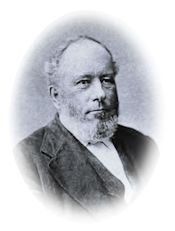
by John Beauchamp Jones

APRIL 24TH.—We lost five fine guns and over a hundred men on the Nansemond; and we learn that more of the enemy’s gun-boats and transports have passed Vicksburg! These are untoward tidings. Gens. Pemberton and French are severely criticised.

We had a tragedy in the street to-day,, near the President’s office. It appears that Mr. Dixon, Clerk of the House of Representatives, recently dismissed one of his under clerks, named Ford, for reasons which I have not heard; whereupon the latter notified the former of an intention to assault him whenever they should meet. About two P.M. they met in Bank Street; Ford asked Dixon if he was ready; and upon an affirmative response being given, they both drew their revolvers and commenced firing. Dixon missed Ford, and was wounded by his antagonist, but did not fall. He attempted to fire again, but the pistol missed fire. Ford’s next shot missed D. and wounded a man in Main Street, some seventy paces beyond; but his next fire took effect in Dixon’s breast, who fell and expired in a few moments.

Many of our people think that because the terms of enlistment of so many in the Federal army will expire next month, we shall not have an active spring campaign. It may be so; but I doubt it. Blood must flow as freely as ever

April 24.—Tuscumbia, Ala., was occupied by the National forces under General Dodge, after he had succeeded in driving from the place the rebels under Colonel Chalmers.—Four rebel schooners were captured off Mobile, Ala., by the gunboat De Soto, and two were captured while endeavoring to run into New-Inlet, N. C, by the United States steamer State of Georgia.—Colonel Phillips encountered and defeated a party of rebels at Weber Falls, Ark., capturing all their camp equipage.—Skirmishing still continued in the vicinity of Suffolk, Va.—Philadelphia Inquirer, April 29.

—A body of rebels under Imboden and Jackson attacked a small Union force at Beverly, Va., the extreme outpost held by General Roberts. The place — which is in Tygert Valley, east of Rich Mountain—was garrisoned by about one thousand Virginia loyalists, under Colonel Latham. The town is approached by two roads, known as the Buckhannon and Philippa pikes, from the west and north-west, and the Huttonsville road from the south. The enemy came in on the Huttonsville road, and when near the town, a part passed to the left flank and occupied the road leading to Buckhannon, thus cutting off all communication between Colonel Latham and General Roberts. The fight commenced about two o’clock in the afternoon, and lasted until night, when Colonel Latham, finding himself unable to maintain his position against such a superior force, determined to withdraw by way of the Philippa road. He succeeded in withdrawing his command, including his two small field-pieces and all his supplies, although he was followed by the enemy, in strong force, over eight miles on the road.

—The ship Oneida was captured and destroyed, in lat. 1° 40′ south, long. 29° 10′ west, by the rebel privateer Florida, under the command of Captain Maffit.

Millikens Bend, Friday, April 24. Very warm. Drill in morning and afternoon. Sergt. J. B. Jackson and P. Walport, heroes of Corinth, returned to the Battery. Preparations to leave to-morrow.

Friday, April 24th. Forgot to say in my diary yesterday that I met Mrs. Conrow, of Waco, and her son, Frank Harris, on their way to Arkadelphia; got up this morning and after breakfast walked up town; loafed about until 10 o’clock; engaged passage in the stage to Alexandria; went to boarding house and wrote a letter to my precious wife and one to my sister, Mrs. Mary West Blair, at Austin; came to town again, and have been witnessing a few games of billiards between Lieutenant Ochiltree and Devoussy, the daguerrean. I am bored to death and want to get away. Lieutenant Ochiltree let me have $35.00, which I am to pay over to Major T. S. Bass, of the First Texas, when I get to Richmond; I am not speaking of Tom Ochiltree, but Lieutenant W. B. Ochiltree, Adjutant Culberson ‘s Eighteenth Regiment, Walker’s Division.

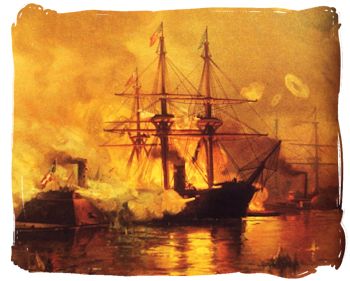
April 23d. At six A. M. weighed anchor, got under way, and steamed down the river, Albatross and ram Switzerland in company, bringing up the rear. On our way down came to several times, for the purpose of destroying some flat boats which we came across in the river, and which were used in the transportation of sugar, molasses, &c., across the river to the rebel forces at Port Hudson. At two P. M. brought ship to anchor, five miles above the batteries at Port Hudson. Engaged signalizing (by means of army signals) from masthead to lower fleet.

Thursday, 23rdFriday, 24th—Remain in camp this morning, all day nothing of interest.

23rd. In the morning Dod killed the beef. Issued some rations. Received letters from home and Lucy Randall, also one from Charlie Crandall. Does me good to hear of him, an old schoolmate. Pitched quoits with Henry Drake. In the evening played three games of chess with Capt. Nettleton, all success.

London, April 23, 1863

Troubled times! troubled times! My own opinion is that our bed here is getting too hot for comfort and I don’t much care how soon we are out of it.

The last storm really amounts to very little, but serves to show the temper of the people here, or rather, of the business men. I had not sent my last to you when it burst, and you would have thought the devil was loose. Ecoute, mon chéri.

The cursed blockade-runners got up a lovely scheme of trading to the Rio Grande, a few months ago, and to insure success they made a contract with J. D. at Richmond to furnish cotton at half price on the spot, etc., etc., and in accordance with the program, a steamer called the Peterhoff was sent out, which Admiral Wilkes very properly bagged, and deserves the thanks of the Government for doing so. But the owners had covered the transaction under the appearance of a trade with Mexico and Matamoras, and finding their whole game spoiled and the officers refusing at any price to insure their ships or any ships to Matamoras, they set up a tremendous cackle, and the Times and the Telegraph and all the newspapers cackled, and deputations of blockade runners went to the Foreign Office and in short the whole blockade-breaking interest, the insurance Companies and underwriters, the ship-owners, and all and every their relations, friends and acquaintances, were exasperated and acrimonious.

Meanwhile two Americans named Howell and Zerman had been some time here engaged in purchasing articles on account of the Mexican Government, but mostly with British money. The capture of the Peterhoff suddenly destroyed their chance of insurance. In great disgust they went to the Minister and asked him for a certificate of loyalty, on which they might act. The Minister saw his chance of hitting the Peterhoffers a hard blow, and at the same time of helping Mexico, and so wrote the letter which you have probably already seen in the newspapers. Of course it was secret, for its publication would necessarily destroy the insurance, but it was intended for the gentlemen at Lloyd’s. It had the intended effect. The policy was to have been executed the next day, when one of the very underwriters made public a copy of the letter which his clerk had surreptitiously taken in short-hand as he himself read it aloud to the other four underwriters; within an hour a deputation had gone up with it to Earl Russell; the Exchange was raving mad; the Times next day thundered at the Minister for his insolent attempt to license British trade; the Standard cried for his dismissal; the public cursed and threatened; even our friends were frightened, and all thought that at last salt had been deposited upon the caudal appendage of a very venerable ornithological specimen.

The Minister was grand. I studied his attitude with deep admiration. Not all the supplications of his friends could make him open his mouth either to put the public right on his letter or on the gross falsehoods told about the Peterhoff. The time had not come. Of course he was cursed for his obstinacy, but he is used to that. We remained perfectly silent while the storm raged and laughed at it. But you can’t conceive how bitter they were in the city, and the matter was twice brought up in Parliament, though nothing was said there, nor shown, except a strong desire to get hold of the Minister. Luckily Lord Russell was firm and his course irritated the Peterhoffers so as to draw off a large portion of indignation upon him. Meanwhile the man who betrayed the letter in the hope of getting revenge for being called “dishonest and fraudulent,” and of stirring up hostility to our Government, honorably refused to proceed with the insurance and was blackguarded in his own office like a thief by Howell. To complete their discomfiture, a letter of the Minister to a London firm is published this morning, coolly putting it right as to the licensing business, and referring British subjects to their own Government for protection. When the whole Peterhoff story is told we shall reverse everything and overwhelm these liars, I hope, but meanwhile the storm seems to have blown itself out and we are still steady and going straight ahead. But England is not comfortable with such Irish rows.

April 24

You may judge the state of feeling here by the debate in Parliament last night, where much bad temper was shown, but no case. You will observe that our friends kept silence and left the Government to manage the matter. As to Lord Russell’s declaration about the Minister’s course and the complaint at Washington, it is of course annoying and hurts us here, but I believe it to be only the result of the outside pressure, and I do not believe he expects really to affirm that the American Government has no right to protect its own citizens against its own fleets. One thing however is certain. There is great danger in this feeling of irritation on both sides and a rupture is highly probable. But then, if we can weather it and turn the current, as I hope we may do, if the Peterhoff case is a strong one, we shall have plain sailing for another spell. Meanwhile we still bear up and steer right onward. Another debate comes on tonight and our friends will have their innings on the Alabama case. You will probably see this in our papers, but I shan’t be able to send it to you….