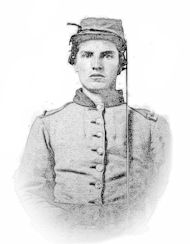
Thursday, 23d.—Last night about midnight, several gunboats passed the batteries, and the scene of the night of the 17th was repeated with greater fury. Regiment called out and remained until morning. Orders to have everything ready to move at any time.
April 2013
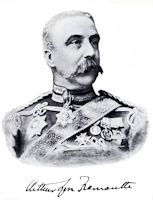
23d April (Thursday).—The wily Mr Sargent drove the animals down to the mud-hole in the middle of last night, and so stole a march upon Ward.
Our goat’s flesh having spoiled, had to be thrown away this morning. We started at 5.30 A.M., and reached “Rocky” at 7.30.; but before this two of Ward’s horses had “caved in,” which completely restored our driver’s good-humour.
Rocky consists of two huts in the midst of a stony country; and about a mile beyond it we reached a pond, watered our mules, and filled our barrels. The water was very muddy to look at, but not bad to drink.
The mules were lazy to-day; and Mr Sargent was forced to fill his bucket with stones, and pelt the leaders occasionally.
At 8 A.M. we reached an open, undulating prairie, and halted at 10.30. Mr Sargent and I killed and cooked the two chickens.
He has done me the honour to call me a “right good companion for the road.” He also told me that at one time he kept a hotel at El Paso — a sort of half-way house on the overland route to California— and was rapidly making his fortune when the war totally ruined him. This accounts for his animosity to “Uncle Abe.” [1]
We hitched in again at 3 P.m., and after pushing through some deepish sand, we halted for the night only twenty-four miles from San Antonio. No corn or water, but plenty of grass; our food, also, was now entirely expended. Mr Ward struggled up at 8.15, making a desperate effort to keep up with us, and this rivalry between Sargent and him was of great service.
This was our last night of camping out, and I felt almost sorry for it, for I have enjoyed the journey in spite of the hardships. The country through which I have passed would be most fertile and productive (at least the last 150 miles), were it not for the great irregularity of the seasons. Sometimes there is hardly any rain for two and three years together.
[1]General Longstreet remembered both Sargent and the Judge perfectly, and he was much amused by my experiences with these worthies. General Longstreet had been quartered on the Texan frontiers a long time when he was in the old army.—August 1863
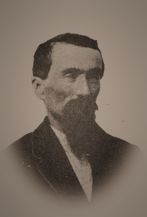
April 23 — I slept in a little mountain barn last night. It rained nearly all night and a greater part of to-day. We renewed our march this morning toward Moorefield. Early in the day we passed Howard’s Lick, or more properly the Hardy White Sulphur spring, which is situated four miles from Lost River and at the eastern base of Branch Mountain. It is a beautiful spring, boxed with white marble slabs, and the water is as clear as the purest virgin crystal, and very sulphury. The surrounding mountain scenery is wild, grand, and magnificent; spurs of the Branch Mountain and long wooded ridges thickly clad with laurel and ferns rise around the spring and its neighborhood in every direction which bounds the view of the beholder. On one side not more than fifteen or twenty feet from the spring a steep bank rises almost perpendicularly, covered with mossy rocks and mountain fern, all darkly shaded by overhanging spruce and pine, foot-noted by the ever present shiny green of mountain laurel. About a hundred yards from the spring is an old hotel, weatherstained, gray with age, and embowered with giant oaks that have swayed their spreading branches in a thousand mountain storms, and no doubt often looked down on the stealthy Indian hunter as he silently kindled his camp-fire to prepare his frugal evening meal beneath their own sheltering canopy that caught the evening dew; and at early dawn heard the sharp twang of the bow-string as it sped the deadly arrow to the heart of unsuspecting game. A dark heavy fog hung on Branch Mountain all day, at some places so dense that we could not see fifty yards, and the fog looked like wool packed among the trees and shrubbery. After we had been some four or five hours in the damp, dense, cloud-like fog that hung around and hugged the rugged steeps, the rain ceased and the clouds partially broke away. We suddenly descended below the fog line on the western slope of the mountain, and the beautiful Moorefield Valley lay before us in all its smiling splendor, with its wheat fields, pasture lands, and grass fields all arrayed in different hues of living green. Gentle spring had already trailed her bright emerald robe along the grassy hillside and scattered the fragrant children of the sunshine along its balmy track. The South Branch and South Fork meandered with sweeping bends through the rain-cleaned landscape like bands of silver woven in a divers green carpet. Moorefield, almost in the center of the picture, looked in the evening glow like a bright jewel with an emerald setting. All of which was a delicious feast for eyes that have been befogged for four or five hours in the gloom of a wet, dripping mountain.
We forded the South Fork three times this evening; it is swollen considerably from the recent rains. The fords are deep and rough and the current so rapid that at one ford it swept some of us down stream. We marched till an hour after dark, then camped on South Fork, a mile and a half above Moorefield.

April 23.—There is a report that there is fighting at the front.
We have numbers of the Thirty-sixth and Thirty-eighth Alabama Regiments very sick. I suppose the sickness is caused by the change in coming so far south. Lieutenant Robinson, of Mobile, has been to call on some of his men.
I have received a letter from a friend in Mobile, requesting me to buy some dry goods and children’s shoes for her. There is not a pair of the latter in the whole place. Calico is three dollars and fifty cents per yard, and white domestic four.
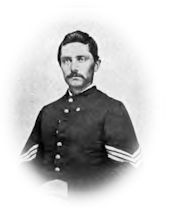
Thursday, 23d—Brig. Gen. M. M. Crocker took command of our brigade today. I got a pass to go down to the landing to buy bread for the officers’ mess in my charge. Our troops are encamped by the thousands all along the Mississippi river, for thirty miles up from Vicksburg. There is much sickness among the new troops in camp here, caused by using the river water and by camping on the low ground. Many of them have already died and their bodies have been buried upon the levee instead of in the low ground. It is reported that five of our transports loaded with supplies for the army below ran the blockade last night. One of the transports when almost past was hit by a solid shot and sunk.
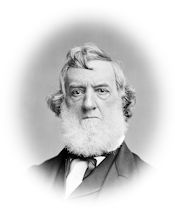
April 23, Thursday. Favorable, though not very important, news from lower Virginia and North Carolina.
My letter of the 2d and telegram of the 15th to Porter have been effective. The steamers have run past Vicksburg, and I hope we may soon have something favorable from that quarter.
Senator Sumner called this P.M. to talk over the matter of the Peterhoff mail. Says he has been examining the case, that he fully indorses my views. Seward, he avers, knows nothing of international law and is wanting in common sense, treats grave questions lightly and without comprehending their importance and bearings. He calls my attention to the opinion of Attorney-General Wirt as to the rights of the judiciary.
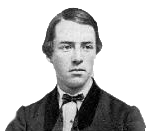
Headquarters Engineer Brigade,
Camp near Falmouth, April 23, 1863.
Dear Father, — It rained all last night, and for the third time we have had our move postponed. I hope the rain may not last long, as it will stop operations, which are now going on.
The plan of movement as far as I can see is as follows. The main body of the army will cross near where General Franklin crossed last December, about two miles below Fredericksburg. Here there are to be three bridges. One mile below this point there are to be two bridges. On these five bridges the main part of our army will cross, as I think. Then there are two bridges to be thrown across the river at Bank’s Ford or near there, to cause a diversion. This movement, together with that of our cavalry, who crossed the river at Rappahannock Station yesterday, will bring a large force of the enemy up the river. Then a division marched down the river yesterday to Port Royal, where some of them will cross to create a diversion there. Of course I am not sure that such is the plan, but so it seems to me. The weather, however, may interfere seriously with us, as it has several times already. It really seems as if everything went against us.
I get along very well with General Benham, and give him no possible chance to catch me napping, or disregarding orders. He is unfortunately very quick-tempered, and pitches into officers without giving them the slightest chance to tell their side. The consequence is that he is very unpopular and has created a great many enemies for himself. He is a man that I have no respect for at all. He loses his temper and becomes so violent that it is ludicrous to see him. The other day he called me out of my tent and showed me a paper that a colonel had just sent in to him. The colonel had, through mistake, and acting on the advice of one of the general’s staff, the inspector-general, sent in a paper which was not strictly correct. The general worked himself into a terrible rage, swore that it was a piece of damned impertinence, and finally tore the paper to pieces. I tried to explain to him that the colonel was acting in good faith and that he meant nothing impertinent. He would not hear a word, however, and on seeing him tear the paper, I could not help feeling disgusted, both at his folly and anger. If he wanted to convict the colonel of impertinence, it was foolish to tear the paper up. I turned right round and left him, saying, “Well, sir, I had nothing to do with the matter.” That day at dinner, when he had recovered his good temper, he said to me, “I am not quite such a d — d fool as you think I am. I saved those pieces and put them together again.” He said this laughing, and he evidently knew what I thought of him. He is a man of good ability, and it seems too bad that he should go through life making any number of enemies and doing so little good, all from his bad temper. Luckily I can get along with any one and so don’t mind him much.
I was ordered to bring up a pontoon train from Hope Landing the other day, some fifteen miles from here. I stuck to the train until I got it through, although I had a great deal of trouble and labor in doing so. I think that he was pleased at my doing so. However, I shall be careful and always do as I am ordered, and hope to escape all blame by so doing. I have had three chances to go on other staffs since I have been down here, but do not like to do so until I am absolutely compelled to leave General B. It does not look well for an officer to change much. The enemy are being heavily reinforced opposite us, and will doubtless make a strong resistance. A few days ago they were reported to have but 40,000 men opposite here.
April 23. — It rained all day, thus putting off any movement for some days. General Benham, I hear, is blamed for not sending down the material with the canvas boats, for making a bridge at Port Royal. His orders, however, were to send the boats only. The teams were ordered to be returned from the pontoon trains, and the trains parked. Everything looks as if the whole plan for the movement was changed. I went over to headquarters in the afternoon. John Perry and Henry Abbott were over here in the afternoon.
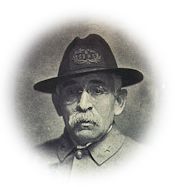
April 23—Raining hard all day and night. No shelter. We got as wet as drowned cats.
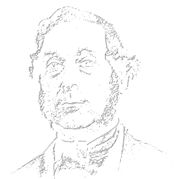
by John Beauchamp Jones
APRIL 23D.—The President’s health is improving. His eye is better; and he would have been in his office to-day (the first time for three weeks) if the weather (raining) had been fine.
The expenses of the war amount now to $60,000,000 per month, or $720,000,000 per annum. This enormous expenditure is owing to the absurd prices charged for supplies by the farmers, to save whose slaves and farms the war is waged, in great part. They are charging the government $20 per hundred weight, or $400 per ton for hay! Well, we shall soon see if they be reluctant to pay the taxes soon to be required of them—one-tenth of all their crops, etc. If they refuse to pay, then what will they deserve?


