Following the American Civil War Sesquicentennial with day by day writings of the time, currently 1863.

April 2013

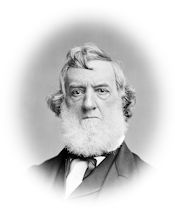
April 9, Thursday. A yearning, craving desire for tidings from Charleston, but the day has passed without a word. They send us from the front that there is great repose and quiet in the Rebel camp, which is a favorable indication, for when they have successes there is immense cheering. Again I have a dispatch from the President at Headquarters this evening. He has a Richmond paper of to-day and sends me the contents. The ironclads have crossed the bar. The paper speaks with assurance, yet there are forebodings of what is to be apprehended. Says Charleston will be a Saragossa.

A desperate stand will be made at Charleston, and their defenses are formidable. Delay has given them time and warning, and they have improved them. They know also that there is no city so culpable, or against which there is such intense animosity. We shall not get the place, if we get it at all on this first trial, without great sacrifice. There are fifty-two steamers for the work and the most formidable ironclad force that ever went into battle. These great and long-delayed preparations weigh heavily upon me. As a general thing, such immense expeditions are failures. Providence delights to humble man and prostrate his strength. For months my confidence has not increased, and now that the conflict is upon us, my disquietude is greater still. I have hope and trust in Du Pont, in the glorious band of officers that are with him, and in the iron bulwarks we have furnished as well as in a righteous cause.

The President, who has often a sort of intuitive sagacity, has spoken discouragingly of operations at Charleston during the whole season. Du Pont’s dispatches and movements have not inspired him with faith; they remind him, he says, of McClellan. Fox, who has more naval knowledge and experience and who is better informed of Charleston and its approaches, which he has visited, and the capabilities and efficiency of our officers and ships, entertains not a doubt of success. His reliant confidence and undoubted assurance, have encouraged and sustained me when doubtful. I do not believe the monitors impregnable, as he does, under the concentrated fire and immense weight of metal that can be thrown upon them, but it can hardly be otherwise than that some, probably that most of them, will pass Sumter. What man can do, our brave fellows will accomplish, but impossibilities cannot be overcome. We must wait patiently but not without hope.
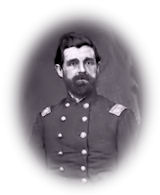
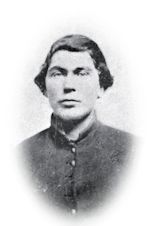
Letters from Colonel Lyon.

Fort Donelson, April 9, 1863.—At present there seems to be no considerable force of rebels in our vicinity, and we are resting very quietly.

We held an election on Tuesday for Chief Justice.

Our nine companies have cast 385 votes, of which Dixon received 357 and Cothren 28; majority for Dixon, 329. Our other company is at Hickman, Ky.

We are doing much work upon the fortifications here and will soon have a strong fort in a strong position.

A few days ago, April 3d, some gunboats were fired upon with artillery above here, under circumstances that led us to apprehend an attack here. We sent off our sick, and all our women packed up ready to start, but no enemy came.

On Moon Lake, Thursday, April 9. Warm day. Entered Moon Lake 7 A. M. and at 9 A. M. we were once more landed on the sand bar from whence we started 18 days ago. Accomplished nothing. What and where next? “Armada” and “White Rose” are the only boats here beside our own. All the horsemen came ashore in order to clean up.

9th April (Thursday).—Captain Hancock and Mr Anderson left for Bagdad in Mr Behnsen’s carriage at noon.

I crossed over to Brownsville at 11.30, and dined with Colonels Luckett, Buchel, and Duff, at about one o’clock. As we were all colonels, and as every one called the other colonel tout court, it was difficult to make out which was meant. They were obliged to confess that Brownsville was about the rowdiest town of Texas, which was the most lawless state in the Confederacy; but they declared they had never seen an inoffensive man subjected to insult or annoyance, although the shooting-down and stringing-up systems are much in vogue, being almost a necessity in a thinly-populated state, much frequented by desperadoes driven away from more civilised countries.

Colonel Luckett gave me a letter to General Van Dorn, whom they consider the beau ideal of a cavalry soldier. They said from time immemorial the Yankees had been despised by the Southerners, as a race inferior to themselves in courage and in honourable sentiments.

At 3 P.M. Colonel Buchel and I rode to Colonel Duffs camp, distant about thirteen miles. I was given a Mexican saddle, in which one is forced to sit almost in a standing position. The stirrups are very long, and right underneath you, which throws back the feet.

Duff’s regiment is called the Partisan Eangers. Although a fine lot of men, they don’t look well at a foot parade, on account of the small amount of drill they have undergone, and the extreme disorder of their clothing. They are armed with carbines and six-shooters.

I saw some men come in from a scouting expedition against the Indians, 300 miles off. They told me they were usually in the habit of scalping an Indian when they caught him, and that they never spared one, as they were such an untamable and ferocious race. Another habit which they have learned from the Indians is, to squat on their heels in a most peculiar manner. It has an absurd and extraordinary effect to see a quantity of them so squatting in a row or in a circle.

The regiment had been employed in quelling a counter revolution of Unionists in Texas. Nothing could exceed the rancour with which they spoke of these renegadoes, as they called them, who were principally Germans.

When I suggested to some of the Texans that they might as well bury the body of Mongomery a little better, they did not at all agree with me, but said it ought not to have been buried at all, but left hanging as a warning to other evil-doers.

With regard to the contentment of their slaves, Colonel Duff pointed out a good number they had with them, who had only to cross the river for freedom if they wished it.

Colonel Buchel and I slept in Colonel Duffs tent, and at night we were serenaded. The officers and men really sang uncommonly well, and they finished with “God save the Queen!”

Colonel Duff comes from Perth. He was one of the leading characters in the secession of Texas; and he said his brother was a banker in Dunkeld.

Thursday, 9th—The Eleventh Iowa received four months’ pay today, I receiving $3.00 a month here and father drawing $10.00 a month at home. The boys of our regiment send a large amount of their money home every pay day.

Thursday, 9th—I, Tom Taylor and Stroud came on to Alexandria and shod our horses. The Regiment passed on and left us. We came on and got our dinner at Mr. Neal’s living near Mrs. Grandstaff’s and came on to Camp at Spring Creek.

April 9—We were relieved this morning by the 32d Regiment, and marched to Bellevue, where the balance of our brigade is. At 11 o’clock to-night we were ordered to march. We went fifteen miles. There was a fight there to-day. Marched all night without resting.

9th.—On Monday saw B. removed from the bed of suffering, on which he had been lying four months, put on a stretcher, and carried to the canal-boat. His countenance was full of joyful anticipations of home. His arm, which should have been amputated on the field, hangs lifeless by his side; and yet fit expects to return to his post, that of Major of artillery, as soon as he is strong enough. Poor fellow, it is well for him to amuse himself with the idea, but he will never again be fit for any duty but that at a post. He has been the recipient of kindnesses from Mr. and Mrs. P. and others, which could only be experienced in this dear, warm-hearted Southern country of ours, and which he can never forget to his dying day. That night I spent with my kind friend Mrs. R., and next morning made such purchases as were absolutely necessary for our; comfort. I gave for bleached cotton, which used to be sold for 12½ cents, $3.50 per yard; towelling $1.25 per yard: cotton 50 cents a spool, etc. Nothing reconciled me to this extravagance but that I had sold my soap for $1 per pound!!

The enemy has retired from Vicksburg, their canal having proved a failure. Where they will reappear nobody knows. Another ineffectual attempt upon Charleston on the 7th and 8th.

by John Beauchamp Jones

APRIL 9TH—Nothing additional has occurred at Charleston, the enemy not having renewed the attack. At Vicksburg all was quiet, and the enemy abandoning their canal. Such news must have a depressing effect upon the North. They will see that their monitors and iron-clads have lost their terrors. They have lost some twenty war steamers within the last few months; and how many of their merchantmen have been destroyed on the ocean, we have no means of knowing.

British and French capitalists have taken a cotton loan of $15,000,000, which is now selling at a premium of four per cent. in those countries. Our government can, if it will, soon have a navy of Alabamas and Floridas.

But we are in danger of being sold to the enemy by the blockade-runners in this city. High officers, civil and military, are said, perhaps maliciously, to be engaged in the unlawful trade hitherto carried on by the Jews. It is said that the flag of truce boats serve as a medium of negotiations between official dignitaries here and those at Washington; and I have no doubt many of the Federal officers at Washington, for the sake of lucre, make no scruple to participate in the profits of this treasonable traffic. They can beat us at this game: cheat us in bargaining, and excel us in obtaining information as to the number and position of troops, fortifications, etc.

April 9.—Colonel N. U. Daniels, of the Second regiment of Louisiana National volunteers, with one hundred and eighty of his men, left Ship Island on an expedition to Pascagoula, Miss. He reached that place and landed his force at nine o’clock in the morning; took possession of the hotel, and hoisted the National flag. Immediately after this, he was attacked by a body of rebel cavalry, supported by one company of infantry, and after a severe fight, in which twenty of the rebels were killed and a large number wounded, he succeeded in repulsing them, and capturing three prisoners and their colors. Colonel Daniels held the place until two o’clock in the afternoon, when, hearing that large reinforcements for the enemy were coming up the Pascagoula River, he withdrew his men and returned to Ship Island.—(Doc. 165.)

—A large war meeting was held at Chicago, Ill., at which speeches were made by William A. Howard, of Michigan, Senator Trumbull, and others.—A sharp fight took place at Blount’s Mills, N. C.—(Doc. 166.)