April 6 — This morning one gun was ordered down the river to the cavalry picket post. The detachment started with the gun, but before it got to the post the order was countermanded and it returned to camp. The Yankees fell back toward Winchester to-day.
April 2013
April 6.—Have met with a serious accident; I had the “blues” (that is what being discontented is called), and wished I had a book (Longfellow’s Poems); I went to Mrs. Henderson’s to try to procure it; while there one of the largest dogs I have ever seen jumped at me, and caught the elbow of my left arm in his mouth; I made sure from the crunch he made that the bone was broken. I was very much frightened, and believe, if a negro woman and Mrs. R.’s little girl had not been there, I should have been torn to pieces. What I most regret is that I shall not be able to visit the wards for some weeks, as we have so much erysipelas about, and it flies to wounds immediately. I have known nurses to take it from a scratch.
In the evening Mrs. H. (she was out when I received the bite) and a Mrs. Major Higgins called. They sympathized with me a great deal.
Monday, 6th. Got into Cincinnati at 8 A. M. Stopped a mile from the depot. Watered and fed horses. Then marched down town to the market. Dismounted and were given a very good dinner and breakfast. Election in the city. Crossed the river and passed through Covington to the barracks. Dod and I stayed at the stables in an old building.
April 6, Monday. Great interest is felt the result of the Connecticut election, one of the most animated and exciting elections ever known. Issues broad and distinct. Thousands will vote for Seymour under the discipline and delusion of party who have not the remotest thought of being disloyal.
Senator Sumner called upon me this P.M. and gave a curious narrative concerning my letter to Seward on the subject of letters of marque, and of the difficulty the President had in getting it. When finally obtained, he informed and called in Sumner, and the two sat down and the President deliberately read it aloud. They then criticized it carefully, and when they were through, Sumner says the President spoke complimentarily of the letter and very complimentarily of me.
Rumors are current and thick respecting Charleston, but they are all conjectural. A movement against the place is expected about these days, but there has not been time to hear of it. I have great anxiety and great apprehension. Operations have gone on slowly and reluctantly.
The report of the “Committee on the Conduct of the War” is to-day published. This method of supervising military operations by legislative committee is of more than questionable utility. Little good can be expected of these partisan supervisors of the Government at any time. They are partisan and made up of persons not very competent to form correct and intelligent opinions of Army or Navy operations, or administrative purposes. In this instance, I think, from a slight look into a few pages, there is more truth from them than usual in these cases.
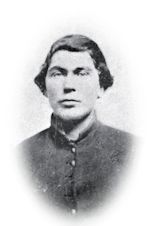
On the Yazoo, Monday, April 6. Started early and troubled with but little hindrance, made good headway. Tied up at night near a pretty mansion with an air of luxury. As the boat struck shore a rush was made for land, and they made for the door-yard, but they were halted by the Colonel who put a guard to prevent their coming in, and put the anxious ones to work carrying rails. Health good.
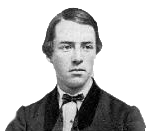
April 6. — I went over to General Sickles’s headquarters this morning with a letter from General Benham in regard to the difficulty of passing our picket line. General S. sent his compliments to General Benham, and said he would issue a general order on the subject. After leaving there, I went over to the cavalry review of General Stoneman’s corps. It was a fine sight, and almost every one who had a horse was present. As the President came in sight he was saluted with the usual number of guns. General Steinwehr, Major-General Sickles, Meade, Reynolds, Hooker, and Slocum, and Brigadier Generals Pratt, Kane, etc., were present. I saw Waldo Merriam, Scott,[1] Phillips, Martin,[2] Colonel Vincent, and numerous other friends of mine there. Five hundred of our brigade were out on fatigue duty, clearing a space for the infantry review to-morrow.
The President looked very thin and pale, so much so that many people remarked that there was a fair chance of Hamlin being our President soon. We had brigade guard-mounting for the first time to-clay, and I officiated as assistant adjutant-general. A few days’ experience will make the whole thing go off quite successfully. In the evening I went over to General Hooker’s headquarters.
[1] Henry B. Scott, my classmate.
[2] Augustus P. Martin.
April 6. — I went over to General Sickles’s headquarters this morning with a letter from General Benham in regard to the difficulty of passing our picket line. General S. sent his compliments to General Benham, and said he would issue a general order on the subject. After leaving there, I went over to the cavalry review of General Stoneman’s corps. It was a fine sight, and almost every one who had a horse was present. As the President came in sight he was saluted with the usual number of guns. General Steinwehr, Major-General Sickles, Meade, Reynolds, Hooker, and Slocum, and Brigadier Generals Pratt, Kane, etc., were present. I saw Waldo Merriam, Scott,[1] Phillips, Martin,[2] Colonel Vincent, and numerous other friends of mine there. Five hundred of our brigade were out on fatigue duty, clearing a space for the infantry review to-morrow.
The President looked very thin and pale, so much so that many people remarked that there was a fair chance of Hamlin being our President soon. We had brigade guard-mounting for the first time to-clay, and I officiated as assistant adjutant-general. A few days’ experience will make the whole thing go off quite successfully. In the evening I went over to General Hooker’s headquarters.
[1] Henry B. Scott, my classmate.
[2] Augustus P. Martin.
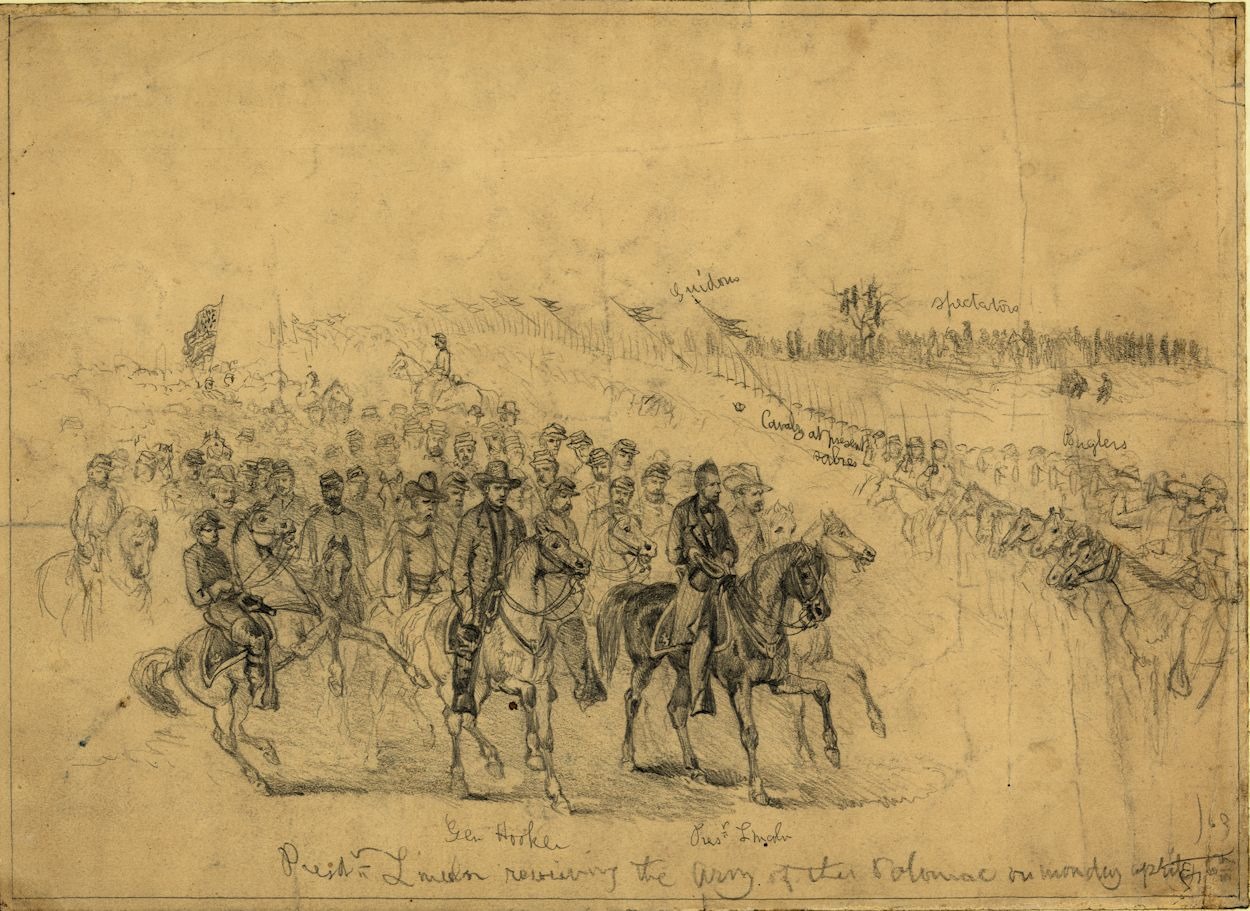
President Lincoln reviewing the Army of the Potomac on Monday, April 6, 1863; artist: Edwin Forbes.
Library of Congress image.
___________
Lincoln Reviewing the Army–April 1863 products from Exit78 at zazzle.com
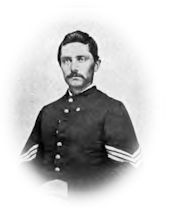
Monday, 6th—Four loads of sanitary goods from Iowa were landed today for the Eleventh Iowa. Colonel Hall arrived this morning from home and the boys were glad to see him. One year ago today he commanded the Eleventh Iowa at the battle of Shiloh. The boys are all in fine spirits. The Sixteenth Iowa received their pay today. It is reported that our cutting of the levee at Lake Providence will prove of no avail, as the channel of the Tensas river is so narrow, and it is impossible to cut out the big overhanging trees, so as to make it wide enough for a fleet to pass through. The project will have to be given up as impracticable.
6th April (Monday).—Mr Behnsen and Mr Colville left for Bagdad this morning, in a very swell ambulance drawn by four gay mules.
At noon I crossed to Brownsville, and visited Captain Lynch, a quartermaster, who broke open a great box, and presented me with a Confederate felt hat to travel in. He then took me to the garrison, and introduced me to Colonel Buchel of the 3d Texas Regiment, who is by birth a German, but had served in the French army; and he prepared cocktails in the most scientific manner. I returned to Matamoros at 2.30 P.M.
Captain Hancock and Mr Anderson (the paymaster) arrived from Bagdad in a most miserable vehicle, at 4 P.M. They were a mass of dust, and had been seven hours on the road, after having been very nearly capsized on the bar.
There was a great firing of guns and squibs in the afternoon, in consequence of the news of a total defeat of the French at Puebla, with a loss of 8000 prisoners and 70 pieces of cannon.
Don Pablo, who had innocently hoisted his British flag in honour of Captain Hancock, was accused by his brother merchants of making a demonstration against the French.
After dinner we called on Mr Maloney, whose house is gorgeously furnished, and who has a pretty wife.


