
Good-Friday.—The Bishop preached for us to-day most delightfully from the text: “Jesus Christ and Him crucified.” In the afternoon Mrs. S. had the inexpressible pleasure of welcoming her son, Mr. A. S., from the Western Army. He thinks that Vicksburg and Port Hudson are both impregnable. God grant that it may be so!
April 2013

Group in front of post office tent at Army of the Potomac headquarters, Falmouth, Virginia, April 1863; photographed by Timothy H. O’Sullivan.
Library of Congress image.
________
Headquarters Post Office products from Exit78 at zazzle.com
London.
New York, April 3, 1863.
My Dear Baron,—During my visit to Cuba I was very sorry to see the open aid and sympathy shown by the British Vice-Consul and other officials of Her Majesty at Havana to the rebel cause.
Young Crawford, who acts as Vice-Consul during the absence of his father, the British Consul-General, expresses himself not only at all times openly in favor of the rebels, but he is known to be himself actively engaged in carrying on a contraband trade with the South, and is said to have made a good deal of money by running the blockade.
Nearly all the vessels which run between Havana and the blockaded ports, are flying the English colors when they enter port, though being mostly small fishing smacks and schooners, they are undoubtedly owned at the South.
It is known that Crawford uses his official position to place these vessels under the British flag.
While I was at Havana, Mr. Helm, the Southern agent and commissioner, though in no official manner recognized by the Spanish government, gave a ball, and the captain of the British war steamer Immortality, Mr. Hancock, did not only attend with his whole staff, but he also sent his military band, which played during the whole evening. The room was decorated with the Confederate flag, and the musical performances, by a band of a British man-of-war, wearing Her Majesty’s uniform, began by the rebel air of Dixie.
There was hardly anybody present except Southerners, the officers of the Immortality, and the British Vice-Consul, with some of his friends, the Cubans not dancing during Lent.
Apart from the questionable taste of such proceedings, there cannot be any doubt of their being in direct violation of the Queen’s proclamation of neutrality.
They are not at all in accordance with the position assumed during this struggle by Her Majesty’s government, and must meet with the disapproval of your ministry.
I hope you may have an opportunity to direct the attention of Lord Palmerston or Russell, to these facts, for the veracity of which I can vouch. They are calculated to produce a very bitter feeling among our people, while I am sure that the best interests of both governments call for a mutually kind and friendly policy, so ardently desired by all well-thinking men on both sides of the Atlantic.
We have nothing new in a military point of view, but it is generally believed that the attack on Charleston is near at hand, and it is hoped that it will be successful.
I find, on my return, a feeling for a vigorous prosecution of the war stronger than ever, and a complete unanimity of feeling against foreign intervention and any peace except upon the basis of a reconstruction of the Union.
The violent language of Jefferson Davis and his organs has produced quite a reaction at the North, and has silenced entirely the few peace-at-any-price men, who had sprung up after the elections of last November.

by John Beauchamp Jones
APRIL 3D.—Gen. D. H. Hill writes from North Carolina that the business of conscription is miserably mismanaged in that State. The whole business, it seems, has resolved itself into a machine for making money and putting pets in office.
No account of yesterday’s riot appeared in the papers to-day, for obvious reasons. The mob visited most of the shops, and the pillage was pretty extensive.
Crowds of women, Marylanders and foreigners, were standing at the street corners to-day, still demanding food; which, it is said, the government issued to them. About midday the City Battalion was marched down Main Street to disperse the crowd.
Congress has resolved to adjourn on the 20th April. The tax bill has not passed both Houses yet.
Gen. Blanchard has been relieved of his command in Louisiana. He was another general from Massachusetts.
April 3.—Secretary Welles issued an order, naming such of the petty officers, seamen, and marines of the United States Navy, as were entitled to receive the Medal of Honor authorized by Congress, to be given to such as should most distinguish themselves by gallantry in action, and other seamanlike qualities, during the present war.—(Doc. 156.)
—The British steamer Tampico was captured off Sabine Pass, Texas, by the United States gunboat New-London.—Phillip Huber and three others, having been arrested at Reading, Pa., on a charge of being connected with a treasonable organization known as “Knights of the Golden Circle,” were taken to Philadelphia and placed in prison. Considerable excitement existed at Reading in regard to the affair.—Philadelphia Press.
—Governor Bonham, of South-Carolina, sent a message to the Senate and House of Representatives of that State, informing them that the spirit of speculation had made such alarming strides in the State as to render their interposition necessary to arrest the evil. Large sums were invested in flour, corn, bacon, and other articles of prime necessity, to the monopoly almost of such articles in certain sections of the country; and that they were withheld from market, or were exported beyond the limits of the State, to the great enhancement of prices, and to the manifest injury of the consumer. He there fore recommended the passage of an act to arrest the purchase and monopoly of articles of prime necessity, even when it was not intended to export them beyond the limits of the State.— (Doc. 157.)
—Captain J. J. Worthington, with two companies of the First regiment of loyal Arkansas cavalry, returned to Fayetteville, Ark., from a scout in Carroll County, in that State. He had four skirmishes with the rebels, and succeeded in killing twenty-two and taking seven prisoners. Captains Smith and McFarland of the rebels were killed, and Captain Walker was taken prisoner. The National casualty was one man wounded.—General Curtis’s Despatch.
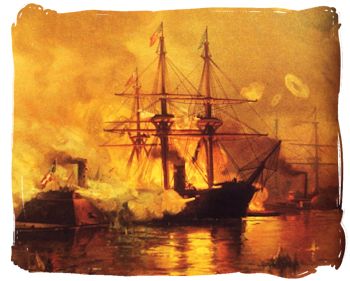
April 2nd. We are still lying quietly at our anchorage at the mouth of Red River; weather quite warm.
Stoneman, April 2, 1863.
Dear Cousin L.:—
You come out so hard on O. M. I’ve a good mind to side with him just because he is the weaker party. Perhaps, too, I did him injustice in representing that his opinions had changed. I supposed that, from his education, he would think very much as you do, but if he left home with such opinions I shouldn’t wonder if he came back with a couple of contraband servants, his own property, so much does contact with the system change northern minds. I am changed, too. I used to be quite an abolitionist, as you know, but see how hard-hearted I’ve become. I had been chopping wood enough to last me two or three days and left it to help the postmaster (my tent mate) tie up the letters for the mail. A great lazy nigger whom the general had sent to cut wood for his cook, took advantage of my absence, and instead of cutting any wood, carried all mine into the cook’s tent. Now I suppose you out of sympathy for the oppressed, would have said nothing about it, but cut some more wood. I couldn’t see it in that light. I persuaded the darkey to correct his mistake and pile the wood under my bed, and I fear I chuckled some over my good fortune in getting my wood in for nothing. If it had been a white man now, larger than myself, I should have forgiven him. but not a “nigger.”
The question for discussion at the club to-night is, “Which is the more consistent editor, Horace Greeley or James Gordon Bennett?” Which side do you think will (not should) gain the decision?
Nothing will do, I see, but to tell you all about my office. I haven’t got any office and don’t expect to have. The nearest approach to it is being my own hostler, for I have a horse, and my principal business now is petting and taking care of him. I wrote a pass once for Private Norton and took it to the general to sign. He wrote at the bottom with an “N. B.”. “Private Norton is my Brigade Bugler.” He seemed to think there might be a difference, but I am a color bearer, too. I carry the brigade colors on my horse with the staff in my stirrup, a la Lancers. Perhaps this is the change I may have hinted, for I’ve only had the colors since the battle of Fredericksburg. I have a splendid horse. His only fault is that he can only keep two feet on the ground at a time.
Don’t be in a hurry about our moving. We shall go when Joseph “gets a good ready.”
We had a snow storm on the 31st of March and it will take a few days to dry that off. To-day is a glorious day for that purpose, though, the wind blows almost a hurricane. It has taken half the roof off my house since I commenced writing. If such a thing should happen to your house, I suppose you wouldn’t write any more that day. However, it did not disturb me much. It only took about five minutes to fix it.
I’ve half a mind to denounce you as a dangerous person, and have you sent to Fort Lafayette. “You don’t want to see the Union on its old basis.” Well, I do; that’s just what I came here for. My word for it, you are quite a secessionist. You are very frank about it—why didn’t you “define your position” with an if some way? You don’t want the Union if slavery is not abolished. Candidly, now, I don’t like slavery a bit better than you do, but I think it is done for by this war, and I want the Union and the old Constitution.
Yesterday was “All Fools'” day, and it was generally observed in the army. Our camp was in a roar from sunrise till “tattoo” with the cracking of practical jokes. One of the tallest was perpetrated by our adjutant general. A captain in the Twelfth New York has been trying to secure the colonelcy of a negro regiment, and Captain Estes (adjutant aforesaid) made out an order purporting to come from the Secretary of War, discharging him from service and tendering him the commission. It was done up in good style, red inked in the right places and regularly signed, all right. He was overjoyed, bought several bottles “elixir vitae” to treat his brother officers and wet his promotion. He then went to Corps Headquarters to get his transportation ticket, and there the officers who had been posted by Captain Estes let grimalkin out of the reticule. Captain E. sent another order to a thick-headed lieutenant, the butt of the regiment, to report to Colonel Stockton as Aide-de-Camp in the absence of Lieutenant Jewett. He reported, and was coolly informed that Lieutenant J. was not absent, and when his services were required the colonel would send him a mule.
2nd. After issuing bread, got out Rowena and tried her at jumping. Did first rate. Charlie came over and read me Delos’ Journal. Enjoyed it well. In the evening attended class and played three games of chess. Was beaten once and beat twice.
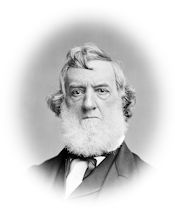
by Gideon Welles
April 2. Had a call last evening and again to-day from Senator Sumner. Our conversation was chiefly on our foreign relations, the unfortunate condition of public affairs, the inexcusable attitude of England, and the question of letters of marque. On the latter subject he is much dissatisfied with Mr. Seward. He informs me that he was opposed to the passage of the law at the late session, and is, I am glad to see, quite sensitive on the subject. I thought the law well enough as a precautionary measure, a warning to the mischievous spirits abroad, an authorization to the President in case of necessity, and especially as a weapon to coerce England into propriety. The power granted was extraordinary and to be used with discretion, but Mr. Seward, having obtained the authority, is disposed to exercise it. The merchants having been loud and profuse in their complaints and promises, he has taken it for granted that they would at once avail themselves of the law, and make a rush in a random search for a couple of lean and hungry wolves that are abroad, which would be difficult to catch and valueless when caught. I have questioned whether he could beguile merchants into such an investment, and he begins to feel uneasy that none have come forward as he expected.
In a letter which I commenced some days since and finished Saturday night, I put upon paper some of the suggestions, views, and doubts I have from time to time expressed in our discussions. This letter I gave out to be copied, and it was on my table for signature when I returned yesterday from Cabinet council. The English news was such that I laid it aside unsigned, and it was lying on the table when Sumner came in. He stated, among other things, he had been to the State Department and that Seward had given him the substance of the last dispatches. He asked if I had seen them. I answered that I had, and was so disgusted with them that I had laid by a letter which I had prepared in opposition to the current feeling which prevailed on the subject of letters of marque. He wished to read it, and after doing so complimented the letter with emphasis, and begged I would sign and send it.
[The letter referred to above was signed and sent with date of March 31. It read as follows:]
NAVY DEPARTMENT,
31 Mar., 1863.
SIR ,
When discussing the regulations concerning “Letters of Marque,” &c a few days since, I made certain suggestions, and you invited me to communicate any views I might entertain, in writing.
I have felt some delicacy, I may say disinclination, to take any active part in this matter, because I have from the beginning of our difficulties discouraged the policy of privateering in such a war as this we are now waging. The rebels have no commercial marine to entice and stimulate private enterprise and capital in such undertakings, provided the policy were desirable. We, however, have a commerce that invites the cupidity, zeal and spirit of adventure, which, once commenced, will be difficult to regulate or suppress. A few privateers let loose among our shipping, like wolves among sheep, would make sad havoc, as the Alabama and the Florida bear witness.
It is proposed to encourage private enterprize to embark in undertaking to capture the two wolves or privateers that are abroad devastating the seas, and it is said, in addition to the wolves they may be authorized to catch blockade runners. The inducement, I apprehend, will not meet a favorable response. There may be vessels fitted out to capture unarmed prizes, but not of sufficient force to meet and overcome the Alabama; if not, the great end and purpose of the scheme will fail of accomplishment.
To clothe private armed vessels with governmental power and authority, including the belligerent right of search, will be likely to beget trouble, and the tendency must unavoidably be to abuse. Clothed with these powers reckless men will be likely to involve the Government in difficulty, and it was in apprehension of that fact, and to avoid it, I encountered much obloquy and reproach at the beginning of the rebellion, and labored to institute a less objectionable policy.
Propositions for privateers, for yacht squadrons, for naval brigades, volunteer navy, &c., &c. were, with the best intentions in most instances, pressed upon the Dep’t, regardless of the consequences that might follow from these rude schemes of private warfare. It was to relieve us of the necessity of going into these schemes of private adventure, that the “Act to provide for the temporary increase of the Navy,” approved July 24, 1861, was so framed as to give authority to take vessels into the Naval service and appoint officers for them, temporarily, to any extent which the President may deem expedient. Under other laws, seamen may be enlisted and their wages fixed by executive authority; and the officers and men so taken temporarily into the Naval service are subject to the laws for the government of the Navy. An “Act for the better government of the Navy,” approved July 17, 1862, grants prize money to “any armed vessel in the service of the United States,” in the same manner as to vessels of the Navy.
These laws, therefore, seem, and were intended to provide all the advantages of letters of marque, and yet prevent in a great measure the abuses liable to spring from them. Private armed vessels, adopted temporarily into the. Naval service, would be more certainly and immediately under the control of the government, than if acting only under a general responsibility to law.
It will be necessary to establish strict rules for the government of private armed vessels, as to some extent they will be likely to be officered and manned by persons of rude notions and free habits. Congress after authorizing Letters of Marque in the War of 1812, adopted the necessary legislation for the vessels bearing them, by the Act of June 26th of that year. This act has not been revived. The recent “Act concerning letters of marque” &c. &c. authorizes the President to “make all needful rules and regulations for the government and conduct of private armed vessels, furnished with letters of marque.” In pursuance of this authorization, the “regulations” have been prepared, embracing the provisions of the statute enacted during the War of 1812. These regulations establish, as the statute did, a penal code. They impose fines and assume to authorize punishments, including even capital punishment.
As suggested in our interview, I question the validity of such proceedings. Can Congress delegate this power of penal legislation to the President? and if to the President, why may it not to any branch of the Executive?
If it can be granted for this special purpose — the government of private armed vessels — why not for any other purpose? And if it can delegate the power of penal legislation, why could it not delegate any other power, or powers, to the President, to Commissioners, or even to a Committee of its own body, to sit during the recess? Why could it not delegate to the Secretary of the Treasury to legislate respecting imports and foreign trade, or to the Post-Master General full power of legislation respecting post offices and post routes?
The power of imposing penalties and inflicting punishments is the essence of legislative power, for it is the penalty of transgression that gives force to law. These regulations also establish rewards as well as penalties. They provide that a large bounty shall be paid to private armed vessels in certain cases. But no fund is appropriated for the purpose by the Act, nor has any provision elsewhere been made for it. Can Congress delegate to the President the power to appropriate the public moneys, or to take them without specific appropriation, or pledge the public faith at his discretion for an indefinite amount?
As I have already said, I have doubts in these particulars. They are expressed with some reluctance, because in the uneasy condition of the public mind, growing out of the lawless depredations of the semi-piratical cruisers that are abroad, I am unwilling to interpose anything which may be construed into an obstacle, to repress public indignation, which is so justly excited. I did not regret that Congress enacted a law authorizing letters of marque; because I verily believe that, with it, England can be made to prevent her mercenary citizens from making war on our commerce under a flag that has no recognized nationality. If the police of the sea is to be surrendered, and rovers built by English capital and manned by Englishmen are to be let loose to plunder our commerce, let England understand that her ships will suffer, and her commerce also be annoyed and injured by private armed ships. With her distant and dependent colonies, no nation has greater cause to oppose maritime robbery and plunder, such as is being inflicted on us by Englishmen and English capital, than Great Britain.
The West Indies are, notoriously, harbors of refuge for the corsairs that are plundering our merchants, as well as for the infamous and demoralizing business of running our blockade, to encourage the insurgents who are waging war on our government. Of these ports, those of England are the worst, and a vast amount of English capital is engaged in illicit traffic, and her people and authorities exhibit sympathy for, and afford aid to, the insurgents and their abettors, and corresponding opposition to this Government.
The English ship-yards are filled with vessels built and building for the rebel service, and if measures are not taken to prevent, these will soon swarm the seas to capture, condemn and destroy American property, without a port into which they can send their captures for adjudication. Enjoying greater advantages than the corsairs and sea-rovers that once infested the ocean, because protected, harbored, & sheltered by governments in alliance with, and professedly friendly to us, while ordinary pirates are outlaws, this species of lawless outrage cannot be permitted to go on.
England should be warned that we cannot permit this indirect war to continue with impunity — that it will provoke and justify retaliation, and that if her people and government make war upon our commerce, by sending abroad rovers with no nationality, to prey upon the property of our citizens, it will be impossible to restrain our people from retaliatory measures.
I am, respectfully,
Your Obdt. Servt.
GIDEON WELLES,
Secty. of Navy.
HON. WM. H. SEWARD,
Secty. of State.
Informed Admiral Foote that the Secretary of State desired he should go to New York in the service of the State Department, on the subject of letters of marque. He expressed his readiness to obey orders, but asked the object of detailing him. I gave him an outline of proceedings and what appeared to be the purpose of Mr. Seward, which was not very clear, or could not be plainly stated. No doubt he believes it will give importance to the Secretary of State to have a naval officer of the standing of Foote attached to the State Department and acting under its orders.
The President called at my house this evening, chiefly to see the letter which I had prepared concerning letters of marque. Senator Sumner had gone directly from the Navy Department to him, and so made known his gratification at my views and the manner in which I had stated them that the curiosity of the President was excited and he desired to read the letter. I informed him that the last thing I did before leaving the Department was to sign and send it to the Secretary of State; that I perhaps should not have done it, though, as he (the President) was aware, I had differed with him and others on this subject and looked upon it as a dangerous step, but since reading the last English dispatches, I was less opposed to the measure than I had been.
The opportunity being favorable and he disposed to converse and apparently interested in my remarks, I took occasion to enlarge upon the topic more fully than I had done in our Cabinet discussions. I started out with the proposition that to issue letters of marque would in all probability involve us in a war with England. [I said] that I had so viewed this question from the beginning, though he and Mr. Seward had not; that I was not prepared to deny that it might not be best for us to move promptly with that object in view, though it had not yet been urged or stated; but that if we were to resort to letters of marque we should do it understandingly and with all the consequences before us. The idea that private parties would send out armed ships to capture the Alabama and one, possibly two, other rovers of the Rebels was too absurd to be thought of for a moment. If privateers were fitted out for any purpose it would be to capture neutral vessels intended to run the blockade or supposed to be in that service. It was not difficult for us to foresee that such a power in private hands would degenerate into an abuse for which this Government would be held responsible. The Rebels have no commerce to invite private enterprise. So far as the Rebels were concerned, therefore, I had been opposed to committing the Government to the measure. But the disclosures recently made had given a different aspect to the question. There was little doubt the British Government and British capital were encouraging the rebellion; that that Government intended to interpose no obstacle to prevent the sending out of privateers from British ports to depredate upon our commerce; that these privateers, though sailing under the Confederate flag, would be the property of British merchants; that the rich plunder would repay the lawless English adventurer, knowing he had the sanction of his Government; that this combination of British capital with Rebel malignity and desperation would despoil our commerce and drive it from the seas. Our countrymen would not quietly submit to these wrongs and outrages, and allow Englishmen to make war upon us in disguise under the Rebel flag. We ought, therefore, to have an immediate and distinct understanding with the English Government. It should be informed in terms that could not be mistaken or misunderstood that if this policy was persisted in we should in self-defense be under the necessity of resorting to reprisals. In this view the law which authorized letters of marque had appeared to me proper, and might be made useful as a menace and admonition to England; and I repeated what I had said to the Secretary of State in reply to a remark of his that we must make more extensive naval operations against the Rebels by issuing letters of marque to annoy them, —that letters of marque, instead of annoying them, destitute as they were of commerce, would aid them, for that step would involve war with England. If the Secretary of State would be less yielding and more decisive in asserting our rights with that power, it would, I thought, be better for the country.
I then opened on the subject generally.England is taking advantage of our misfortunes and would press upon us just as far as we would bear to be pressed. She rejoiced in our dissensions and desired the dismemberment of the Union. With this rebellion on our hands we were in no condition for a war with her, and it was because we were in this condition that she was arrogant and presuming. A higher and more decisive tone towards her will secure a different policy on her part. A war with England would be a serious calamity to us, but scarcely less serious to her. She cannot afford a maritime conflict with us, even in our troubles, nor will she. We can live within ourselves if worse comes to worse. Our territory is compact, facing both oceans, and in latitudes which furnish us in abundance without foreign aid all the necessaries and most of the luxuries of life; but England has a colonial system which was once her strength, but is her weakness in these days and with such a people as our countrymen to contend with. Her colonies are scattered over the globe. We could, with our public and private armed ships, interrupt and destroy her communication with her dependencies, her colonies, on which she is as dependent for prosperity as they on her.
I was therefore in favor of meeting her face to face, asking only what is right but submitting to nothing that is wrong.
If the late dispatches are to be taken as the policy she intends to pursue, it means war, and if war is to come it looks to me as of a magnitude greater than the world has ever experienced, — as if it would eventuate in the upheaval of nations, the overthrow of governments and dynasties. The sympathies of the mass of mankind would be with us rather than with the decaying dynasties and the old effete governments. Not unlikely the conflict thus commenced would kindle the torch of civil war throughout Christendom, and even nations beyond. I desired no such conflict in my day, and therefore hoped and believed the policy and tone of England might be modified, but it would require energy, resolution, and a firm determination on our part to effect it.
The President listened, for I did most of the talking, as he evidently wished, and showed much interest and accord in what I said. He assented consequently to most that I uttered and controverted nothing. It was evident I suggested some ideas that had not before occurred to him, and I am not without hope that the tone of our foreign affairs, particularly with England, may be different.
The President spoke, as he always has done with me, doubtingly of Porter’s schemes on the Mississippi, or rather the side movements to the Yazoo on the east and Red River on the west. Said the long delay of Du Pont, his constant call for more ships, more ironclads, was like McClellan calling for more regiments. Thought the two men were alike, and said he was prepared for a repulse atC harleston.
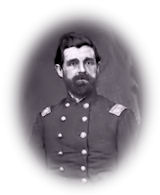
Letter from Colonel Lyon.
Fort Donelson, April 2, 1863.—You have heard, no doubt, that the balance of the 22d Regiment (Colonel Utley), is ‘gobbled’. What a poor, unfortunate regiment it has been and is! There is, however, no stain of dishonor upon it. When it passed up the Cumberland in February last the men appeared dejected, and the regiment was not, for some cause or other, in a good shape. Now it is ruined. I would go down to a bloody grave, oh, so cheerfully, rather than live to see the 13th in the condition that the 22d is in.


