Following the American Civil War Sesquicentennial with day by day writings of the time, currently 1863.

May 2013

Before Vicksburg, Saturday, May 30. Warm and dull. Nothing to do and nothing to read so lay down and slept most of the day. Awake at 10 o’clock at night with orders to hitch up, and at quarter to eleven o’clock the pieces and limbers started to the left and front, down through the valley, past sutler shops and baggage wagons, then up a steep bluff, where it required five teams to haul the pieces up; then passed through the advance line of artillery and through a passage dug in the hill, hiding us from view for about six rods, then down into an abrupt ravine. The cannoneers obliged to hold back with prolongs to keep it [the piece] from running down unmanageable.

We were soon at the bottom of the ravine. On the top of the hill the pieces were to be planted. It was 3 A. M. when the artillery on each side and behind us opened a hot cannonading over our heads, grazing the top of the hill so close that we dared not go in position, and we lay at the bottom while they whistled and screeched over our heads. The fiery track of the fuze-shell could easily be tracked through the dark, and the roar of pieces as they echoed was deafening for half an hour, when we put our pieces in position, took the limber under the hill and unhitched.
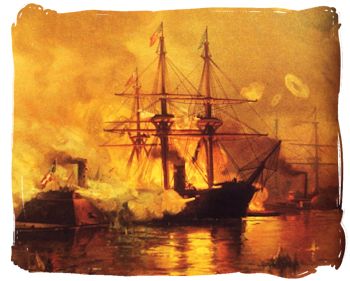
May 30th. Commences with pleasant weather. This morning, early, sent the body of Michael Walsh, marine, on shore for burial; he died at ten o’clock in the evening of yesterday, after a brief illness. During the afternoon of this day the steamer General Price, of upper fleet, came down from Vicksburg, bringing a mail for us, and the information that Major-General Grant is fighting hard at Vicksburg, and gaining ground; at four forty-five P. M., the General Price started back up the river, taking our mail; at eleven fifteen the mortar fleet below opened fire upon Port Hudson.

May 30 — Day dawned and the sun rose in its undimmed splendor this morning and all is quiet and still around old Vicksburg — not even the firing of a gun can be heard around our line. Those boats spoken of yesterday are still in sight above town — anchored out. 7 o’clock p.m. Mortars shelling us from the other side of the river and the gunboat dropping a shell occasionally from below.

May 30.—This morning, at about half-past ten, the rebels attacked a train of sixteen cars from Alexandria, loaded with forage, about a mile and a half from Kettle Run, toward Warrenton Junction, Va. The Third brigade, under Colonel De Forrest, was stationed at Kettle Run, and the pickets were first notified of the enemy’s presence by hearing heavy firing. A force was immediately sent in the direction of the firing, but too late to save the train, which was utterly demolished, the locomotive being pierced by two six-pound cannon-balls.—(Doc. 203.)

—Great excitement existed at Harper’s Ferry, Md., and its vicinity, on account of the reported approach of the rebel General Lee, with a view of entering Maryland.—The Thirtieth regiment of New York volunteers, under the command of Colonel William M. Searing, returned to Albany from the seat of war.—A rebel camp near Carthage, Tenn., was surprised by a party of the Twenty-sixth Ohio regiment, who captured twenty-two prisoners, and thirty-five horses, besides destroying all the camp equipage.— Cincinnati Commercial.

—A large meeting was held at Newark, N. J., “by the Democracy of that city, to express their opposition to the recent arrest and banishment of Mr. Vallandigham. There were six thousand persons present, and the sentiments uttered by the various speakers were heartily applauded.” Speeches were made by A. J. Rogers, Eli P. Norton, Judge A. R. Speer, and General Theodore Runyon.—New-York Daily News.

—The town of Tappahannock, on the right bank of the Rappahannock River, Va., was this day captured by four Union gunboats. A party of troops landed and carried off and destroyed a large amount of rebel stores, etc. They also captured a large quantity of personal property, and a number of negroes.

by John Beauchamp Jones

MAY 30TH—The newspapers have a dispatch, to-day, from Jackson, Miss., which says the enemy have fallen back from the position lately occupied by them in front of Vicksburg, It adds, that they will be forced to retire to the Big Black River, for want of water. Gen. G. A. Smith, who is here, and who resigned because he was not made lieutenant-general instead of Pemberton, says he “don’t know how to read this dispatch.” Nevertheless, it is gen­erally believed, and affords much relief to those who appreciate the importance of Vicksburg.

Mr. Botts was offered $500 in Confederate States notes, the other day, for a horse. He said he would sell him for $250 in gold, but would not receive Confederate notes, as the South would certainly be conquered, and it was merely a question of time. This inform­ation was communicated to the Secretary of War to-day, but he will attach no importance to it.

Among the papers sent in by the President, to-day, was a com­munication from Gov. Vance, of North Carolina, inclosing a letter from Augustus S. Montgomery, of Washington City, to Major-Gen. Foster, Newbern, N. C., found in a steamer, captured the other day by our forces, in Albemarle and Chesapeake Canal. It informed Gen. F. that a plan of servile insurrection had been adopted, and urged his co-operation. All the Yankee generals in the South would co-operate: they were to send smart negroes from the camps among the slaves, with instructions to rise simultane­ously at night on the 1st August. They were to seize and destroy all railroad bridges, cut the telegraph wires, etc., and then retire into the swamps, concealing themselves until relieved by Federal troops. It is said they were to be ordered to shed no blood, ex­cept in self-defense, and they were not to destroy more private property than should be unavoidable. The writer said the corn would be in the roasting-ear, and the hogs would be running at large, so that the slaves could easily find subsistence.

The President thanked Gov. Vance for this information, and said our generals would be made acquainted with this scheme ; and he commended the matter to the special attention of the Secretary of War, who sent it to Gen. Lee.

Friday, 29th.—Very heavy cannonading from 7 to 8 A. M., along the center. Gunboats came up and shelled the woods in our front; throwing some shells from mortars across the peninsula, but doing little damage.

May 29.— Had a letter from Frank Balch this morning, and also one from Father in regard to George Weld’s commission. Day pleasant. Lieutenant Nares came over in the evening. Amused myself pitching quoits.

Friday, 29th—We started on the move early this morning and after marching about ten miles came upon the rebel pickets. We drove them in and forming a line of battle advanced towards them about two miles, our batteries throwing a few shells. But the rebels refused to take a stand and finally withdrew altogether. It was a small detachment of Johnston’s army. We lost one killed and two wounded. Our regiment went out on picket.

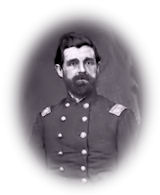
Colonel Lyons.

Fort Donelson, May 29, 1863.—The Ewing has finally got here and will go down about Sunday. We get rumors of disaster to Grant at Vicksburg, but refuse to believe it yet. I learn that some of the troops at Fort Heiman have been ordered down there. If we were in that department now we should probably be sent, too. We may be as it is. They have had bloody work down there, and I tremble for the old Eighth where I have so many good friends. We get reports that Bragg’s army has disappeared from Rosecrans’ front, but know nothing definite.

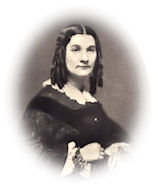
Mrs. Lyon’s Diary.

May 29.—We took the cars for Chicago. When out a few miles I wished Rachel to come into our car. They would not let her at first, but I spoke to the conductor, and he said if she belonged to me she might come into our car. I told him that she belonged to me as much as one human being could belong to another, any way I was taking her home with me. He went into the other car for her and found two men claiming her, who were going to take her off at the next stopping place. She denied ever having seen them before, but they insisted that she belonged to one of them and that he should take her off; but I stopped them by saying that she belonged to me, and I suppose that I looked black enough to be a Southern woman; so they let her alone and I took her into the ladies’ car. She was going to one of the Chicago suburbs, and when we got to the junction she bade us good bye. The train stood by the side of the one she was going to take, but a little while after we started the conductor brought her back to us. She had gone down a few cars and got on again. We had a good laugh with her, but she was out of danger now and could go back at any time.