21st. Breakfasted and were off at 6. Rained a little. Crossed over to the Jamestown road. Found the roads over the mountain very rough indeed. Hills very steep and rugged. Several hills capped with high pinnacles of rocks. Rested at a house on the creek. One intelligent girl, but secesh. Reached Traversville at 4 P. M. Several houses but no occupants. Grazed our horses, camped. Scouting party went near Jamestown. Bathed in creek.
June 2013
21st June (Sunday).—We got the horse shod with some delay, and after refreshing the animals with corn and ourselves with bacon, we effected a start at 8.15 A.M. We experienced considerable difficulty in carrying my small saddle-bags and knapsack, on account of the state of our horses’ backs. Mine was not very bad, but that of Norris was in a horrid state. We had not travelled more than a few miles when the latter animal cast a shoe, which took us an hour to replace at a village called Sperryville. The country is really magnificent, but as it has supported two large armies for two years, it is now completely cleaned out. It is almost uncultivated, and no animals are grazing where there used to be hundreds. All fences have been destroyed, and numberless farms burnt, the chimneys alone left standing. It is difficult to depict and impossible to exaggerate the sufferings which this part of Virginia has undergone. But the ravages of war have not been able to destroy the beauties of nature—the verdure is charming, the trees magnificent, the country undulating, and the Blue Ridge mountains form the background.
Being Sunday, we met about thirty negroes going to church, wonderfully smartly dressed, some (both male and female) riding on horseback, and others in waggons; but Mr Norris informs me that two years ago we should have numbered them by hundreds. We soon began to catch up the sick and broken-down men of the army, but not in great numbers; most of them were well shod, though I saw two without shoes.
After crossing a gap in the Blue Ridge range, we reached Front Royal at 5 P.M., and we were now in the well-known Shenandoah Valley—the scene of Jackson’s celebrated campaigns. Front Royal is a pretty little place, and was the theatre of one of the earliest fights in the war, which was commenced by a Maryland regiment of Confederates, who, as Mr Norris observed, “jumped on to” a Federal regiment from the same State, and “whipped it badly.” Since that time the village has changed hands continually, and was visited by the Federals only a few days previous to Ewell’s rapid advance ten days ago.
After immense trouble we procured a feed of corn for the horses, and, to Mr Norris’s astonishment, I was impudent enough to get food for ourselves by appealing to the kind feelings of two good-looking female citizens of Front Royal, who, during our supper, entertained us by stories of the manner they annoyed the Northern soldiers by disagreeable allusions to “Stonewall” Jackson.
We started again at 6.30, and crossed two branches of the Shenandoah River, a broad and rapid stream. Both the railway and carriage bridges having been destroyed, we had to ford it; and as the water was deep, we were only just able to accomplish the passage. The soldiers, of whom there were a number with us, took off their trousers, and held their rifles and ammunition above their heads. Soon afterwards our horses became very leg-weary; for although the weather had been cool, the roads were muddy and hard upon them. At 8.30 we came up with Pender’s Division encamped on the sides of hills, illuminated with innumerable camp-fires, which looked very picturesque. After passing through about two miles of bivouacs, we begged for shelter in the hayloft of a Mr Mason: we turned our horses into a field, and found our hayloft most luxurious after forty-six miles’ ride at a foot’s pace.
Stonewall Jackson is considered a regular demigod in this country.
Sunday, 21st—Things are quite still all along the lines today, but the mortar boats continue to throw shells day and night. Our chaplain preached a sermon to us this afternoon; his text was from John, fourteenth chapter and second verse. It was the first sermon our regiment has heard for nearly six months.
Before Vicksburg, Sunday, June 21. Pleasant day. Not much artillery firing, but sharp musketry. 3 horses wounded. Called on guard in the afternoon; guarding five platoon drivers for grazing without permission; they were put on extra duty. Paid off to the 1st of May. The officer forgot his allotment roll. Received full pay here. Expressed $20.00 home.
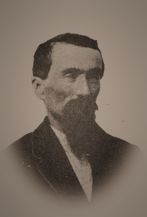
June 21 — This Sabbath morning, instead of the peaceful tones of the church bells floating out on the quiet air, the deep harsh roar of booming cannon rolled over the hills and fields of Loudoun and proclaimed the opening of the butcher business for the day. The enemy advanced on us this morning from the direction of Middleburg, with cavalry and artillery. We fell back from Union and moved in the direction of Upperville, as the Yankees were advancing on the Upperville road too, with infantry, cavalry, and artillery. When we arrived within one mile of Upperville we encountered the enemy strongly posted on our right. Our cavalry made a bold and gallant charge on their position, but the Yanks received the charge stubbornly and did not give way in the least nor budge from their position, but in turn made a desperate charge on our cavalry, and soon after the fight became general all over the field. Sabers flashed all around us and the fire of small arms was raging all over the field and growing fiercer every minute.
It looked to me like as if the mixed-up men on both sides were charging in every direction, and at one time our battery came so near being captured that I thought we were goners. But as soon as the shock of the first charge had subsided and the cavalry unmixed themselves, we put our guns in battery and opened a rapid fire on the Yankee horsemen. Then their dismounted sharpshooters opened a heavy fire on us, and it seemed to me that the bullets flew at us from every direction, thick and fast.
The enemy drove us back slowly all day. Several times to-day I saw our shell plunge right in their advancing line, break their ranks, and check for a moment the oncoming host, but they quickly closed up and came at us again. They were certainly the bravest and boldest Yanks that ever fought us on any field. But I think that the cause of their prowess was more in their belief in strength of numbers than in the efficacy of cool courage, as they had a great many more men engaged than we had.
During the last part of the cavalry fight the Yankee infantry flanked round on our right and attempted to cut us off from Ashby’s Gap in the Blue Ridge. But we caught the gentlemen at their sly little game, put our guns in position and gave them a few drastic and effective doses of shell, which checked them completely and wound up the flanking business for the day.
While we were being driven back this afternoon, at one place the Yankee cavalry made a charge, and one of our guns had to go through a gap in a stone fence that was under the fire of a line of dismounted sharpshooters; but our gun dashed through at the top speed in horse artillery style, under the fire of the sharpshooters, which however was not very sure on a snap shot, as our boys came through the fence unscathed. After our gun passed the stone fence and got on a little rising swell in the next field it was whirled in position in the twinkling of an eye and we fired a few shell in quick succession into the line of cavalry that was still pressing on in hot pursuit. The shell broke their charge, and their line faltered, when our cavalry, which had kept up a running fight, made a bold stand, redoubled their fire and held the Yanks in check and saved our gun. We had one man of our company killed there. He was shot through the head by a sharpshooter.
It was nearly night when the fight ended, and we moved back to Paris, which is about a mile from where we did the last firing, and camped for the night.
Some of General Longstreet’s infantry came to our relief late this evening. However, they were not engaged in the fight, but were stationed on different slopes of the Blue Ridge commanding the Ashby Gap road.
Paris is a small village situated halfway up the eastern side of the Blue Ridge, and on the Ashby Gap road, on the north corner of Fauquier County.

Sunday, June 21st.
How about that oath of allegiance? is what I frequently ask myself, and always an uneasy qualm of conscience troubles me. Guilty or not guilty of perjury? According to the law of God in the abstract, and of nations, Yes; according to my conscience, Jeff Davis, and the peculiar position I was placed in, No. Which is it? Had I had any idea that such a pledge would be exacted, would I have been willing to come? Never! The thought would have horrified me. The reality was never placed before me until we reached Bonfouca. There I was terrified at the prospect; but seeing how impossible it would be to go back, I placed all my hopes in some miracle that was to intervene to prevent such a crime, and confidently believed my ill health or something else would save me, while all the rest of the party declared they would think it nothing, and take forty oaths a day, if necessary. A forced oath, all men agree, is not binding. The Yankees lay particular stress on this being voluntary, and insist that no one is solicited to take it except of their own free will. Yet look at the scene that followed, when mother showed herself unwilling! Think of being ordered to the Custom-House as a prisoner for saying she supposed she would have to! That ‘s liberty! that is free will! It is entirely optional; you have only to take it quietly or go to jail.
That is freedom enough, certainly! There was not even that choice left to me. I told the officer who took down my name that I was unwilling to take the oath, and asked if there was no escaping it. “None whatever” was his reply. “You have it to do, and there is no getting out of it.” His rude tone frightened me into half-crying; but for all that, as he said, I had it to do. If perjury it is, which will God punish: me, who was unwilling to commit the crime, or the man who forced me to it?
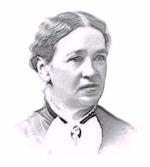
[Diary] June 21.
To-day Mr. Fairfield ordered the boy Josie to get off a horse which he had no right to ride, as Mr. F. had forbidden the boys riding after the cows and racing them home, which Josie was doing. Josie refused. Mr. F. then ordered him into the house. When Josie had gotten the cows in the pen, he came to the yard and dismounted. Mr. F. again ordered him in, and when the boy refused and was impudent, he took hold of him and tried to compel him. Josie struggled and both fell. This happened more than once, when Mr. F., getting uppermost, planted his knee on Josie’s chest and caught hold of his throat. Big Jerry was standing near by and was growing more and more threatening. He kept telling Mr. F. to let Josie go, he had no right to choke him. I was afraid Jerry would proceed to blows, so I went down the steps and warned him not to interfere, and said that Mr. F. would not hurt Josie. The boy was finally dragged to the steps, but there got firm hold and Mr. F. could not stir him. He was white and trembling with exertion and rage, and Josie was as angry. Finally, at my persuasions, Josie got up and came into the house of his own accord. Mr. Fairfield shut him up in the cornhouse.
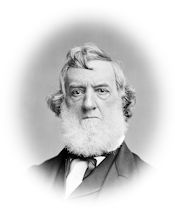
June 21, Sunday. I have three telegrams from Dr. Whelan to-day, all of the same tenor. The last, at 4 P.M., says Admiral Foote continues much the same, — insensible and slowly sinking. Dahlgren, who left New York yesterday, says the case is hopeless, that Foote told him it was the last of this world and he was prepared for the event.
We have pretty authentic reports of a protracted fight at Aldie. The War Department is not communicative, and I apprehend for the reason that it is not better advised than the rest of us, as yet. A train of ambulances passed this evening, going, I doubt not, for the wounded.
The Richmond papers speak of the capture of the steamer Fingal by our ironclads. This is important, and I am inclined to credit it. John Rodgers has written his family that he was in Nassau Sound, having been ordered there to watch the Fingal. The Richmond report corresponds with this, and states she was captured after a fight of thirty minutes with the monitors.
I had to-day a full and unreserved talk with Dahlgren. Told him it was now evident Foote could not go on the service to which he was ordered, — at all events, if he survived, not for the present; I should therefore designate him to relieve Du Pont. This would, to some extent, involve the selection of a new staff, for it was not likely that Foote’s confidants were his confidants. [I remarked] that not unlikely some of the elder officers who had seen great sea service would feel disinclined to remain on the station under him; that in giving him this command I was consulting the wishes of the President; that to supersede Du Pont, under any circumstances, involved some risk and responsibility to both the Department and the recipient; that he could not be unaware his promotion had caused some discontent, and that it would not be lessened by this command. If any of his seniors in past times desired to be transferred, they must be permitted to do so, without prejudice.
I stated that this appointment was a specialty, imposed upon the Department by Admiral Foote’s affliction when on his way to assume these duties; that this interruption made prompt action necessary; that he had sought the privilege of leading in the assault on Sumter under Du Pont; that I had proposed him as an assistant and second to Foote; that he was to go for a particular purpose, and his absence from the Bureau would therefore be temporary. In the mean time, Commander Wise, the assistant who had been associated with him, could take charge of and go forward with the ordnance duties as well as, and perhaps better than, any one else. To all this he assented, but expressed a strong wish that a new appointment might be made, and he entirely relieved from the Bureau. I replied that I could not for a moment think of relieving him of charge of the ordnance, nor ought he to ask, or be willing, to relinquish it; that was his place, to which he had been educated and for which he had aptitude, and it was my wish he should retain his position as Chief of the Ordnance Bureau during my connection with the Department.
As related to any demonstration on Charleston, should any be made, he was to consider himself clothed with full powers, and to prescribe details, communicating at all times and without reserve to the Department; to let me have not only all the good news but any bad news, and to tell me frankly at any time of embarrassments, change of views, or difficulties of any kind.
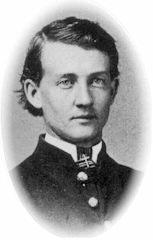
JUNE 21ST.—To-day again church bells at the North are calling good people to worship, and to hear words of cheer and comfort to the soul. The prayers of our patriotic mothers and fathers that will go up to-day for the suppression of this rebellion will surely have a hearing.
We had inspection of arms and quarters at nine this morning. Of course everything was in good order, but if such a thing should take us by surprise some time, our beds might be found not made, and things in general upside down. When notice of this inspection was given, or rather an order to prepare for it, one of our boys remarked, “This must be Sunday;” and he added, “I guess I won’t wait for this inspection,—I’ll take my girl to church.” If his girl had been here the whole company would doubtless have wanted to go to church, too. “Though lost to sight, to memory dear.” We can talk to the sweet creatures only through the dear letters exchanged; but a love letter brings a very bright smile to a warrior’s face, and the sunshine that prevails in camp after the reading of the mail from home, is quite noticeable. Dear girls, do not stop writing ; write letters that are still longer, for they are the sweetest of war’s amenities, and are the only medicine that has kept life in the veins of many a homesick soldier. When the mail comes I cannot help wishing everybody may get a letter; but alas! some must miss hearing their names read, and oh! the sadness that creeps over them when the last name has been called and the last letter handed out to some one else. They are sadder than if wounded by a bullet. If wounded, a surgeon may prescribe; but what prescription for the failure of a letter from home? Our mail is by no means daily, and if it comes at all, its favors are few and far between. Indeed, each time it comes we get to feeling as if it may never come again. And so it may prove, in fact. The disappointed one carries his strangled hope into the next day’s fight, falls, and dies, perhaps, from some wound that otherwise might prove slight, for his heart is broken.
This afternoon I stood on a little hill just back of a regiment adjoining, talking with a friend there, when crash through his brain went a rebel bullet. He had just alluded to the horrors of the daily strife. Relieved from further duty here, he went to answer roll-call in a better army, to which his honorable discharge from this ought surely to admit him. He answered the first call of his country, and had served faithfully through two years of hardship and danger. I personally know that he fought well, and his name should not fail to be enrolled somewhere in the records of his country.
Sunday, 21st—Came over to Old Fosterville to picket.


