Following the American Civil War Sesquicentennial with day by day writings of the time, currently 1863.

June 2013

June 3, Wednesday. Wrote Du Pont that Foote would relieve him. I think he anticipates it and perhaps wants it to take place. He makes no suggestions, gives no advice, presents no opinion, says he will obey orders. He is evidently uneasy, — it appears to me as much dissatisfied with himself as any one. Everything shows he is a disappointed man, afflicted with his own infirmities. I perceive he is preparing for a controversy with the Department, —laying out the ground, getting his officers committed, —and he has besides strong friends in Congress and elsewhere. He has been well and kindly treated by the Department. I have the name and blame of favoring him by some of the best officers, and have borne with his aberrations passively.

The arrest of Vallandigham and the order to suppress the circulation of the Chicago Times in his military district issued by General Burnside have created much feeling. It should not be otherwise. The proceedings were arbitrary and injudicious. It gives bad men the right of questions, an advantage of which they avail themselves. Good men, who wish to support the Administration, find it difficult to defend these acts. They are Burnside’s, unprompted, I think, by any member of the Administration and yet the responsibility is here unless they are disavowed and B. called to an account, which cannot be done. The President — and I think every member of the Cabinet—regrets what has been done, but as to the measures which should now be taken there are probably differences.

The constitutional rights of the parties injured are undoubtedly infringed upon. It is claimed, however, that the Constitution, laws, and authorities are assailed with a view to their destruction by the Rebels, with whom V. and the Chicago Times are in sympathy and concert. The efforts of the Rebels are directed to the overthrow of the government, and V. and his associates unite with them in waging war against the constituted authorities. Should the government, and those who are called to legally administer it, be sustained, or should those who are striving to destroy both? There are many important and difficult problems to solve, growing out of the present condition of affairs. Where is the constitutional right to interdict trade between citizens, to blockade the ports, to seize private property, to dispossess and occupy the houses of the inhabitants, etc., etc.? In peaceful times there would be no right to do these things; it may be said there would be no necessity. Unfortunately the peaceful operations of the Constitution have been interrupted, obstructed, and are still obstructed. A state of war exists; violent and forcible measures are resorted to in order to resist and destroy the government, which have begotten violent and forcible measures to vindicate and restore its peaceful operation. Vallandigham and the Chicago Times claim all the benefits, guarantees, and protection of the government which they are assisting the Rebels to destroy. Without the courage and manliness to go over to the public enemy, to whom they give, so far as they dare, aid and comfort, they remain here to promote discontent and disaffection.

While I have no sympathy for those who are, in their hearts, as unprincipled traitors as Jefferson Davis, I lament that our military officers should, without absolute necessity, disregard those great principles on which our government and institutions rest.

3d June (Wednesday). — Bishop Elliott left for Savannah at 6 A.M., in a downpour of rain, which continued nearly all day. Grenfell came to see me this morning in a towering rage. He had been arrested in his bed by the civil power on a charge of horse-stealing, and conniving at the escape of a negro from his master. General Bragg himself had stood bail for him, but Grenfell was naturally furious at the indignity. But, even according to his own account, he seems to have acted indiscreetly in the affair of the negro, and he will have to appear before the civil court next October. General Polk and his officers were all much vexed at the occurrence, which, however, is an extraordinary and convincing proof that the military had not superseded the civil power in the Southern States; for here was an important officer arrested, in spite of the commander-in-chief, when in the execution of his office before the enemy. By standing bail, General Bragg gave a most positive proof that he exonerated Grenfell from any malpractices.[1]

In the evening, after dark, General Polk drew my attention to the manner in which the signal beacons were worked. One light was stationary on the ground, whilst another was moved backwards and forwards over it. They gave us intelligence that General Hardee had pushed the enemy to within five miles of Murfreesborough, after heavy skirmishing all day.

I got out of General Polk the story of his celebrated adventure with the —— Indiana (Northern) regiment, which resulted in the almost total destruction of that corps. I had often during my travels heard officers and soldiers talking of this extraordinary feat of the “Bishop’s.” The modest yet graphic manner in which General Polk related this wonderful instance of coolness and bravery was extremely interesting, and I now repeat it, as nearly as I can, in his own words.

“Well, sir, it was at the battle of Perryville, late in the evening—in fact, it was almost dark when Liddell’s Brigade came into action. Shortly after its arrival I observed a body of men, whom I believed to be Confederates, standing at an angle to this brigade, and firing obliquely at the newly arrived troops. I said, ‘Dear me, this is very sad, and must be stopped;’ so I turned round, but could find none of my young men, who were absent on different messages; so I determined to ride myself and settle the matter. Having cantered up to the colonel of the regiment which was firing, I asked him in angry tones what he meant by shooting his own friends, and I desired him to cease doing so at once. He answered with surprise, ‘I don’t think there can be any mistake about it; I am sure they are the enemy.’ ‘Enemy!’ I said; ‘why, I have only just left them myself. Cease firing, sir; what is your name, sir?’ ‘My name is Colonel ——, of the ——Indiana; and pray, sir, who are you?’

Then for the first time I saw, to my astonishment, that he was a Yankee, and that I was in rear of a regiment of Yankees. Well, I saw that there was no hope but to brazen it out; my dark blouse and the increasing obscurity befriended me, so I approached quite close to him and shook my fist in his face, saying, ‘I’ll soon show you who I am, sir; cease firing, sir, at once.’ I then turned my horse and cantered slowly down the line, shouting in an authoritative manner to the Yankees to cease firing; at the same time I experienced a disagreeable sensation, like screwing up my back, and calculating how many bullets would be between my shoulders every moment. I was afraid to increase my pace until I got to a small copse, when I put the spurs in and galloped back to my men. I immediately went up to the nearest colonel, and said to him, ‘Colonel, I have reconnoitred those fellows pretty closely—and I find there is no mistake who they are; you may get up and go at them.’ And I assure you, sir, that the slaughter of that Indiana regiment was the greatest I have ever seen in the war.”[3]

It is evident to me that a certain degree of jealous feeling exists between the Tennesseean and Virginian armies. This one claims to have had harder fighting than the Virginian army, and to have been opposed to the best troops and best generals of the North.

The Southerners generally appear to estimate highest the north-western Federal troops, which compose in a great degree the armies of Grant and Rosecrans; they come from the states of Ohio, Iowa, Indiana, &c. The Irish Federals are also respected for their fighting qualities; whilst the genuine Yankees and Germans (Dutch) are not much esteemed.

I have been agreeably disappointed in the climate of Tennessee, which appears quite temperate to what I had expected.


[1] I cut this out of a Charleston paper some days after I had parted from Colonel Grenfell: Colonel Grenfell was only obeying General Bragg’s orders in depriving the soldier of his horse, and temporarily of his money:—

“Colonel St Leger Grenfell.—The Western army correspondent of the ‘Mobile Register’ writes as follows :—The famous Colonel St Leger Grenfell, who served with Morgan last summer, and since that time has been Assistant Inspector-General of General Bragg, was arrested a few days since by the civil authorities. The sheriff and his officers called upon the bold Englishman before he had arisen in the morning, and after the latter had performed his toilet duties he buckled on his belt and trusty pistols. The officer of the law remonstrated, and the Englisher damned, and a struggle of half an hour ensued, in which the stout Britisher made a powerful resistance, but, by overpowering force, was at last placed hors de combat and disarmed.[2] The charges were, that he retained in his possession the slave of a Confederate citizen, and refused to deliver him or her up; that meeting a soldier coming to the army leading a horse, he accused him of being a deserter, dismounted him, took his horses and equipments and money, stating that deserters were not worthy to have either horses or money, and sent the owner thereof off where he would not be heard of again. The result of the affair was, that Colonel Grenfell, whether guilty or not guilty, delivered up the negro, horses, and money to the civil authorities. If the charges against him are proven true, then there is no doubt that the course of General Bragg will be to dismiss him from his staff; but if, on the contrary, malicious slanders are defaming this ally, he is Hercules enough and brave enough to punish them. His bravery and gallantry were conspicuous throughout the Kentucky campaign, and it is hoped that this late tarnish on his fame will be removed; or if it be not, that he will.”

[2] This is all nonsense—the myrmidons of the law took very good care to pounce upon Colonel Grenfell when he was in bed and asleep.

[3] If these lines should ever meet the eyes of General Polk, I hope he will forgive me if I have made any error in recording his adventure.
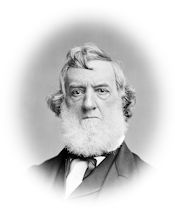
View of Capt. Mac's battery, Port Hudson, La.

Captain Albert G. Mack’s Union soldiers with cannons behind breastworks.

photographic print : albumen silver.

Image of War Volume IV by William C. Davis, p. 75: The 18th New York Artillery used cotton bales, shielding their 20-pounder Parrott rifles.

Library of Congress image.

__________

digital file from b&w film copy neg.Note – This image has been digitally adjusted for one or more of the following:

  • fade correction,
  • color, contrast, and/or saturation enhancement
  • selected spot removal.

3rd. Day passed much as usual. Played a little chess with Thede and Johnny. Called on the Capt. Found him about the same. Stomach much out of order and some fever. Called for bread at Widow Vickery’s. Permission to borrow some books.

Before Vicksburg, Wednesday, June 3. Nothing of importance until about 3 P. M. when the enemy opened with artillery all along the line, which soon brought the cannoneers to their post, and rapid firing of twenty minutes convinced them that they had better quit. The shells flew very thick for a few minutes. One 24-pounder dropped into the second piece’s bastion, taking out the eye of Fred Baker, the first man wounded by rebs. Received mail.

June 1 and 2—Nothing new.

June 3—Saw my brother Morris several times.

June 3. During the early part of this day, or even the whole morning, all was quiet at Port Hudson and on the Mississippi. During early part of the afternoon the steamer General Sterling Price arrived from Vicksburg; fighting still going on in that quarter; at five thirty the steamer Price and Gen. Banks went up the river. Heard heavy cannonading going on at Port Hudson, between the two contending armies, and I am not aware as yet who’s who, or who is getting the best of it; at six thirty P. M. ram Switzerland came down the river, and anchored, communicating with us. She returned up the river, again. Mortar vessels below, commenced about nine o’clock, and continued firing during the watch, three of the enemy’s guns at the same time firing inland upon our army in rear of Port Hudson, and continuing their firing until a late hour; at eleven P. M.; quick discharges of musketry heard in rear of Port Hudson, and two rockets seen sent up from that vicinity. It is reported as being true, that Banks has lost, up to the present time, from his late engagements with the enemy, some two thousand men in killed and wounded. Of one negro regiment, numbering a thousand men, when they charged the rebel works on the morning of the 27th of May last, six hundred remain to tell the fate of their comrades. This speaks well for their bravery.

July 3d, 1863.

We are encamped six miles from Haines Bluff, on a ridge of ground, in a perfect wilderness. I have hardly seen level ground enough, in this State, for a regiment to camp on. I find blackberries in abundance, and, therefore, am content. They have formed a large share of my diet, and have been both food and medicine. Scurvy and diarrhea have entirely disappeared. That which we most need and cannot get is pure water. The streams have all run dry, and unless it rains soon, every spring within reach of us will fail. Water is now so scarce every regiment except the Seventeenth has placed a guard over its own spring, and will not allow others to use it. If we stay here long, we will be compelled to dig wells.

We are now twelve miles from Vicksburg and eight miles from the Big Black. I can still hear the thunder of artillery, morning and eve, at the former place. If Grant celebrates the Fourth inside of Vicksburg, as report says he intends to do, he must do something decisive soon. He may be doing that very thing this minute. When I began writing, his cannon kept up a continual roar. It has almost ceased. Perhaps he is now storming their works.

Our men are still throwing up fortifications. The whole country for fifteen miles around Vicksburg is little less than a fortification. The inhabitants around here did not run away at our approach. Most of them are intensely loyal just now. The reports of want and destitution with which the papers are filled, and which I doubted, are true. Many families draw all their supplies from our Quartermaster. Soon all must do so.

June 3 — All is quiet this morning. 3 o’clock p.m. — Gun boats are now shelling us. Charley Graves was wounded a few minutes ago by one of those shells. His leg will have to be amputated.

4 o’clock p.m. — Heavy cannonading at this hour on the back line — musketry can also be heard. It is reported that Johnson will attack the enemy on Friday the 5th.

8 o’clock p.m. — We left our trenches and moved up the line to the left, to support a weak point near the Hauls Ferry road. Heavy cannonading is now going on at that point.

9 o’clock p.m. — The gunboats have now come up and are now shelling the bottoms in the direction of town rapidly. They continued an hour, then calmed down and we got to sleep a little. W.R.C.

by John Beauchamp Jones

JUNE 3D.—Gen. Lee communicates to the department to-day his views of the Montgomery letter to Gen. Forrest, a copy of which was sent him by Governor Vance. He terms it “diabolical.” It seems to have been an official letter, superscribed by “C. Marshall, Major and A. A. G.” Gen. Lee suggests that it be not published, but that copies be sent to all our generals.

Hon. R. M. T. Hunter urges the Secretary, in a lengthy letter, to send a cavalry brigade into Essex and the adjacent counties, to protect the inhabitants from the incursions of the “Yankees.” He says a government agent has established a commissary department within six miles of his house, and it will be sure to be destroyed if no force be sent there adequate to its defense. He says, moreover, if our troops are to operate only in the great armies facing the enemy, a few hostile regiments of horse may easily devastate the country without molestation.

Gov. Vance writes a most indignant reply to a letter which, it seems, had been addressed to him by the Assistant Secretary of War, Judge Campbell, in which there was an intimation that the judicial department of the State government “lent itself” to the work of protecting deserters, etc. This the Governor repels as untrue, and says the judges shall have his protection. That North Carolina has been wronged by calumnious imputations, and many in the army and elsewhere made to believe she was not putting forth all her energies in the work of independence. He declares that North Carolina furnished more than half the killed and wounded in the two great battles on the Rappahannock, in December and May last.

By the Northern papers we see the President of the United States, his wife, and his cabinet are amusing themselves at the White House with Spiritualism.