Saturday, 27th—Our company is still on picket here about five miles southeast of Vicksburg, while the other companies of the regiment are with our brigade out on the Big Black river. There is no telling when we shall be relieved from picket; yet our boys are pretty well satisfied, for we have plenty of blackberries and we drew three days’ rations today.
June 2013
Before Vicksburg, Saturday, June 27. Rather sore from yesterday’s fatigue. The hot sun pouring his fiery arrows down with such force as almost to overcome us. Rebs threw many 20-pound shells (Parrott) into this hole or building, but they were uncharged, which took away much of their terror. They were aimed at the disputed fort (which they look at as much ours as theirs, I should judge). They also opened fire with a heavy siege gun this morning, but were soon quieted. The 12th Wisconsin Battery blowed up a limber while silencing it.

Headquarters Right Wing,
Camp near Middleton, June 27, 1863.
Dear Father, — We arrived here this afternoon, and found that the rebels had marched on through Hagerstown towards Pennsylvania yesterday. I imagine that they have possession of Harrisburg by this time. We have them now just where we want them, and with decent generalship we ought to seize the whole party. Our men will fight desperately and give the rebels fits.
General Reynolds has still command of three infantry corps, and of General Stahl’s cavalry. It is only a temporary affair, however. I dated my letter to Hannah yesterday one day too early. . . .
It may be some time before you hear from me again, and you must not be alarmed if you do not hear from me for some time. We are within three miles of South Mountain, where the fight occurred last year.
I am perfectly well.
June 27.—Started early in the morning for Middleton. The day was cloudy and rainy part of the time. Reached Middleton and went to General Howard’s headquarters. Learned that the rebels had gone through Hagerstown to Pennsylvania yesterday, Longstreet’s corps being the last to move. General Lee went through Hagerstown yesterday at 12 o’clock. Our tents were pitched just behind the town. I went on as officer of the day this evening.
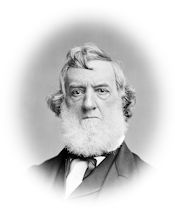
June 27, Saturday. A telegram last night informed me of the death of Admiral Foote. The information of the last few days made it a not unexpected event, yet there was a shock when it came. Foote and myself were schoolboys together at Cheshire Academy under good old Dr. Bronson, and, though three or four years younger than myself, we were pursuing some of the same studies, and there then sprang up an attachment between us that never was broken. His profession interrupted our intimacy, but at long intervals we occasionally met, and the recollection of youthful friendship made these meetings pleasant.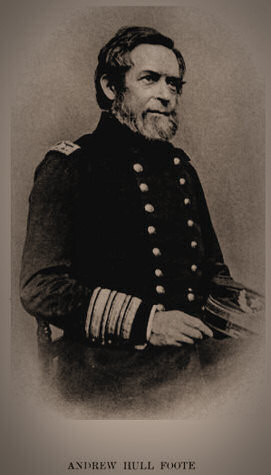
When I was called to take the administration of the Navy Department, he was Executive Officer at the Brooklyn Navy Yard, and wrote me of the pleasure my appointment gave him. He soon visited Washington, when I consulted with him and procured in friendly confidence his estimate of various officers. This was before the affair of Sumter, and, like many others, he shortly after expressed a sad disappointment in regard to some he had commended. In fitting out in those early days the expeditions to Fort Sumter and Fort Pickens he exhibited that energy and activity which more fully displayed itself the following autumn and winter in creating and fighting the Mississippi Flotilla. His health became there impaired and his constitution was probably undermined before he took charge of the Bureau of Equipment and Recruiting. Our intercourse here was pleasant. His judgment in the main good, his intentions pure, and his conduct correct, manly, and firm. Towards me he exhibited a deference that was to me, who wished a revival and continuance of the friendly and social intimacy of earlier years, often painful. But the discipline of the sailor would not permit him to do differently, and when I once or twice spoke of it, he insisted it was proper, and said it was a sentiment which he felt even in our schoolday intercourse and friendship.
Shortly after the demonstration of Du Pont at Charleston, when I think Foote’s disappointment was greater than my own, he tendered his services for any duty afloat. Some premonition of the disease which ended his life was then upon him, and made him believe more active employment than the Bureau afforded would conduce to his physical benefit. His wife, after he had once or twice alluded to the subject, which she did not favor, gave her consent that he should go wherever ordered, except to the Mississippi. Foote expressed regret that she should have made any exception.
He did not wish to supplant Du Pont, whom he admired, or take any part against that officer. He was not unaware, however, that the Department and the public would turn to him as the successor of the hero of Port Royal, should there be a change of commanders. I was desirous that both he and Dahlgren should go to that squadron, and it was finally so arranged, but Providence has ordered differently. I have been disappointed. Foote had a name and prestige which would have carried him into the place assigned him on the tide of popular favor, whatever might have been the intrigues and assaults on one or both of us from any quarter.
General Wool, Governor Morgan, and Mayor Opdyke make a combined effort to retain the Roanoke at New York, and write me most earnestly on the subject. The idea that New York is in danger is an absurdity, and, with a naval force always at the navy yard and in the harbor, and with forts and military force, is such a remote contingency that the most timid lady need not be, and is not, alarmed. Morgan and Opdyke, Governor and Mayor, have responsibilities that are perhaps excusable, but not General Wool, who feeds on panic and fosters excitement. It is made the duty of the military at all times to defend New York. The Army is sensitive of Navy interference in this specialty, but the Navy will render incidental aid, do all that is necessary; but the Army assumes the guardianship of the ports as the exclusive province of the military, independent of the Navy.

June 27.—I was congratulating myself that my brother, who had received a furlough and gone home, would miss this battle. To my surprise he arrived this morning. I asked him why he came, he replied, he could not think of being absent from the expected battle. I tried to persuade him to remain here, as from all accounts our army is retreating, but failed in doing so, and he has gone to the front. He is much improved in health. He enjoyed himself very much while in Mobile, but thought the people too gay for these war times. Mrs. May came back with him; she could not have come at a time when her services were more required; she will assist Mrs. Snow who has a great deal to do.
We have a great many wounded; the same old story—men mutilated in every possible way. In one place there are three men lying along side of each other; each has lost a leg. One has just died. I am sick at heart at these scenes, and there seems to be little prospect of a change.
Last week we had a German die, named Massinger. He left over two hundred dollars with me, to give to a friend, Robert Bolt, a member of the Twenty-fourth Texas Regiment. He gave his watch to his nurse, Mr. Byrne, who had been very kind to him.
We have been busy lately making blackberry cordial and blackberry preserves. I have made about twenty-five gallons of the cordial. I never was any place where there were such quantities of blackberries. The country people bring them in by the bushel.
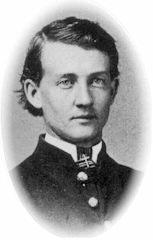
June 27TH.—A number of our boys went a few miles, blackberrying, and picked quite a quantity to bring home, when we heard the sound of horses’ hoofs, and suddenly concluding we had berries enough, we beat a hasty retreat for camp and got there safely.
The weather is not quite as hot here as it was in our close quarters at the front, but while we enjoy that change we would much prefer remaining at our post there, until the end of the siege.
Some of the boys have had to boil their pants—the only process which is sure death to an enemy lurking there which we find most troublesome. While our pants are boiling the owner leans over the kettle anxiously, for it is probably his only pair. Well, it is now summer time, and, it will do to sun ourselves an hour or two. These little pests lurking in our pants become very annoying when they go foraging. These creatures are about the only war relics from which I have not gathered specimens to send home. I have, in fact, gathered enough of them, but with no view to a museum or cabinet. It is fun to see a fellow get into a pair of boiled pants. The boiling has shrunk them till they fail to reach the top of his brogans by some inches, and accordingly he bends over to try to pull them down to a junction, when the contrary things seem to recoil still further ; and the only satisfaction left to him at last—and it is no mean one, either—is that they are at least clean, and he himself is once more their sole occupant. How long he will remain so, however, it is hard to say.
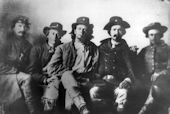
Friday, 26th—Saturday, 27th—Came to Bell Buckle this morning and from there to Wartrace, our infantry falling back to Tullahoma. Went a short distance beyond Wartrace; 11th Texas and 4th Georgia skirmished with them a little; a few wounded. We came to Duck River and camped.
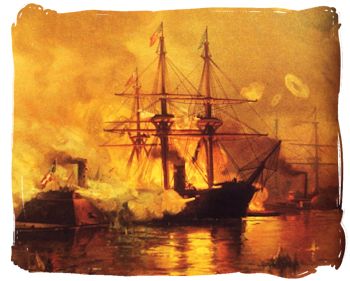
June 27th. At seven thirty A. M., steamer Bee came down from Bayou Sara. Cannonading going on at Port Hudson all this day.
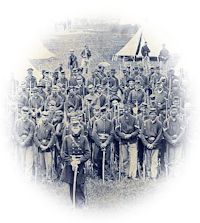
June 27th, 1863.
A letter from home—the first since April 25th, and written by my beloved wife. On receiving it I sought my tent with eager haste and perused its welcome pages. over and over again. Well may my darling say, “God has been better to me than my fears,” for we have been spared to each other, and our children to us both.
I do not believe my darling’s dream was all a dream. On that same day, the 9th of June, I was on my way from Louisville to Cairo. We went directly north to Seymour, Indiana. Almost home, it seemed to me, where we changed cars for the southwest. I was cast down, discouraged, more so than at any other period of my life. My thoughts and affections were drawn out to my sorrowing wife with an intensity that was agonizing. I had given up hope of her ever becoming reconciled to our fate, and believed she would mourn her life away for him who would gladly have given his own to save his wife. I felt I could do no more. Under the circumstances was I not permitted to visit her, that my spiritual presence might cheer, comfort and encourage her by the assurance that she was not forsaken; that, though far away, her husband was still present, even to her outward senses. I believe my darling has often visited me, and I love to cherish the fond thought. Every nerve and fiber of my soul has thrilled with joy unspeakable at the familiar touch of her dear hand upon my brow.


