Sunday, 26th.—Left Tensaw on train, at 1 A. M.; at Pollard 6 A. M.; Montgomery, 10 P. M. Rained on us all day, being in open cars.
July 2013
Vicksburg, Sunday, July 26. Several of our boys attended divine service at the M. E. Church. Very warm and oppressive. Indications of rain, much needed to settle the choking dust. Health is very good so far in spite of wind and weather. Received mail.

July 26. Sunday. — Lieutenant Jackson started for Washington this morning. We gave him various commissions to execute for us. Robinson’s division went up to Bealeton to protect the railroad, etc. Day pleasant.

by John Beauchamp Jones
JULY 26TH.—Letters were received to-day from Gens. Beauregard, Mercer, Whitney, and S. Jones.
It appears that Beauregard has some 6000 men of all arms, and that the enemy’s force is estimated to be, or to have been (before losing some 3000), about 10,000. It is true the enemy has the benefit of his floating batteries, but we have our stationary ones. I think Charleston safe.
Gen. Mercer squeaks for the fate of Savannah, unless the government impresses slaves to work on the fortifications. All our generals squeak when an attack is apprehended, for the purpose of alarming the government, and procuring more men and material, so as to make success doubly sure.
And Gen. Whiting is squeaking loudly for the impressment of a thousand slaves, to complete his preparations for defense; and if he does not get them, he thinks the fall of Wilmington a pretty sure thing.
And Gen. Jones squeaks from the West, asking that the 3000 infantry he was at last compelled to send to Gen. Lee, near Winchester, be returned to him to oppose the enemy’s raids. But what were they sent to Lee for, unless he meant to give battle? Such may be his intention, and a victory now is demanded of him to place him rectus in curio.
Beauregard says FortWagner, which has made such a successful defense on MorrisIsland, was located by Gen. Pemberton, and this is evidence of some military skill. But all the waters of Lethe will not obliterate the conviction of the people that he gave his army in the West to the enemy. If he had not been Northern born, they would have deemed him merely incompetent. Hence the impolicy of the government elevating Northern over Southern generals. All generals are judged by the degree of success they achieve, for success alone is considered the proof of merit, and one disaster may obliterate the memory of a dozen victories. Even Lee’s great name is dimmed somewhat in the estimation of fools. He must beat Meade before Grant comes up, or suffer in reputation.
Gov. Bonham has demanded the free negroes taken on MorrisIsland, to be punished (death) according to the State law.

Sunday, 26th—We were relieved by an Iowa brigade from Sherman’s army, which just arrived, but we remained in bivouac all day, awaiting orders. One of General Sherman’s foraging trains came in; they are going to forage for oats. News came that there was fighting going on at Charleston, South Carolina. It was quite hot this morning, and in the afternoon we had a hard rainstorm. A great many of the boys in camp here are sick with the chills, while others are almost worn out by the hard service.
July 25, Saturday. Colonels Roes and Morris, commanding two of our Connecticut regiments, came to see me. Each is of opinion that few men will be obtained in that State under the draft. I fear the subject has not been managed with much skill, and that it has been done without much consultation or advice. Possibly one or two members of the Cabinet have run to the War Department and volunteered their views. I have not.
July 25.—The rebel steamers Merrimac and Lizzie were captured by the National gunboat Iroquois, they having run the blockade of Wilmington, N. C., the evening previous. — The rebel steamer Beauregard, after attempting to run the blockade of Charleston, S. C., returned to Nassau, N. P.—Jefferson Davis, “regarding the furloughs granted the paroled prisoners from Vicksburgh of too great duration in the present condition of the country, with the exception of those of men most distant” from the camp of General Pemberton, at Demopolis, ordered that they be reduced, and an order to that effect was issued by General Pemberton.
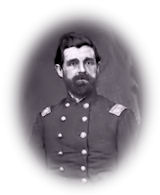
Colonel Lyons.
Fort Donelson, July 25. 1863.—I fear I can not get a leave of absence at all, as the orders are very strict now, and none are granted except to save life or prevent permanent disability. It is a sore disappointment, but this I suppose is one—and not the least, either—of the sacrifices that I am called upon to make in this war.
I see no signs of our being moved from here, yet there may be some change of program towards fall. Of course, we do not know anything about our future movements.
July 25 — It was late to-day when we left our camp on Fisher’s Hill, yet we marched twenty-five miles up the Valley pike. We passed through Woodstock, Edenburg, and Mount Jackson, and marched till ten o’clock to-night. Camped on Rude’s Hill three miles south of Mount Jackson.
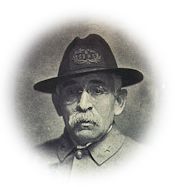
July 25—Left this morning at 7 o’clock, halted at 3 in the afternoon—sixteen miles.


