July 16.— Started from Burkettsville and marched about four miles, when we encamped for the day. Our headquarters were at Mr. West’s house, our tents being pitched in a pleasant, shady spot in his front yard.
July 2013
by John Beauchamp Jones
JULY 16TH. —This is another blue day in the calendar. Nothing from Lee, or Johnston, or Bragg; and no news is generally bad news. But from Charleston we learn that the enemy are established on MorrisIsland, having taken a dozen of our guns and howitzers in the sand hills at the lower end; and that the monitors had passed the bar, and doubtless an engagement by land and by water is imminent, if indeed it has not already taken place. Many regard Charleston as lost. I do not.
Again the Enquirer, edited by Mitchel, the Irishman, is urging the President to seize arbitrary power; but the Examiner combats the project defiantly.
Mr. Secretary Seddon, who usually wears a sallow and cadaverous look, which, coupled with his emaciation, makes him resemble an exhumed corpse after a month’s interment, looks to-day like a galvanized corpse which had been buried two months. The circles round his eyes are absolutely black! And yet he was pacing briskly backward and forward between the President’s office and the War Department. He seems mach affected by disasters.
The United States agent of exchange has sent a notice to our agent that the negroes we capture from them in battle must be exchanged as other soldiers are, according to the cartel, which said nothing about color; and if the act of Congress in relation to such soldiers be executed, the United States would retaliate to the utmost extremity.
Captains H. W. Sawyer and John Flinn, having been designated by lot for execution in retaliation for two of our captains executed by Gen. Burnside for recruiting in Kentucky, write somewhat lugubriously, in bad grammar and execrable chirography, that, as they never served under Burnside, they should not be made to suffer for his deed. They say we have two of Burnside’s captains at Atlanta (and they give their names) who would be the proper victims.
I saw a paper to-day, sent to the department, with a list of the United States officers at Memphis who are said to have taken bribes; among them is Col. H—r, of Illinois, Provost Marshal General (Grant’s staff); Col. A—, Illinois, ex-Provost Marshal; Capt. W—, Illinois, Assistant Provost Marshal; Capt. C— (Gen. Herbert’s staff), and “Dan Ross,” citizen of Illinois, procurer.
On the 9th instant Gen. D. H. Hill (now lieutenant-general, and assigned to Mississippi) asks if troops are to be sent to cover Lee’s retreat; and fears, if the enemy establish themselves at Winchester, they will starve Lee to death. Speaking of the raid of the enemy to the North Carolina Railroad, he said they would do the State infinite service by dashing into Raleigh and capturing all the members of the legislature. He also hits at the local newspapers here. Their mention of his name, and the names of other officers in the campaign round Richmond, informed the enemy that we had no troops at Goldsborough and Weldon, and hence the raid. And, after all, he says the enemy were not more numerous than our forces in the recent dash at Richmond. He says it was no feint, but a faint.
To-day an order was issued for the local troops to deliver up their ammunition. What does that mean?
And to-day the President calls for the second class of conscripts, all between eighteen and forty-five years of age. So our reserves must take the field!
Vicksburg, Thursday, July 16. Now that we are fixed up and the officers over their big spree (generally speaking) we broke up camp and went into park about two miles to the right on a pretty slope. The battery parked, the tents were put in its rear regularly by sections. All the shades, bunks etc. were hauled over from the old camp, which was accomplished by night, and put up.
Wednesday, 15th—A train of provisions and ammunition arrived from Vicksburg this morning. Late in the afternoon they finished loading the wagons with the provisions and ammunition for Jackson, and our regiment was ordered to accompany them. We started late and after marching six miles stopped for the night. We received orders to keep a sharp lookout for the rebels’ cavalry, as they had crossed the Pearl river and had captured and burned a part of the train just ahead of ours.
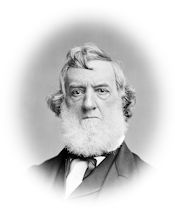
July 15, Wednesday. We have the back mails this morning. The papers are filled with accounts of mobs, riots, burnings, and murders in New York. There have been outbreaks to resist the draft in several other places. This is anarchy, — the fruit of the seed sown by the Seymours and others. In New York, Gov. Horatio Seymour is striving — probably earnestly now — to extinguish the flames he has contributed to kindle. Unless speedy and decisive measures are taken, the government and country will be imperiled. These concerted outbreaks and schemes to resist the laws must not be submitted to or treated lightly. An example should be made of some of the ringleaders and the mob dispersed. It is reported that the draft is ordered to be stopped. I hope this is untrue. If the mob has the ascendency and controls the action of the government, lawful authority has come to an end. In all this time no Cabinet-meeting takes place.
Seward called on me to-day with the draft of a Proclamation for Thanksgiving on the 29th inst. With Meade’s failure to capture or molest Lee in his retreat and with mobs to reject the laws, it was almost a mockery, yet we have much to be thankful for. A wise Providence guards us and will, it is hoped, overrule the weakness and wickedness of men and turn their misdeeds to good.
I have dispatches this evening from Admiral Dahlgren with full report of operations on Morris Island. Although not entirely successful, his dispatch reads much more satisfactorily than the last ones of Du Pont.
We hear through Rebel channels of the surrender of Port Hudson. It was an inevitable necessity, and the rumors correspond with our anticipations.
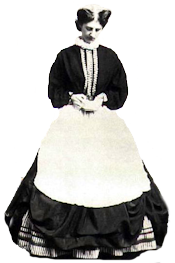
Caroline Carson Woolsey to Abby Howland Woolsey.
Astoria, July 15th, 1863.
We left in such a hurry we had no time to leave directions for the servants, except to close the house early, and be very particular about fastening the doors and windows. . . . While driving out here we heard distinctly the cannon at Harlem. We have had no real trouble here from the mob, but were threatened last night and the night before. About two hundred men and boys, principally from Harlem and the upper parts of the city, were careering round the village. They went to Mr. M—’s, and made him come out and speak against the draft, and announced their intention of visiting Messrs. Wolcott, Woolsey and Howland among others. Groups of them were gathering in the afternoon as we drove through the village. Uncle Edward was a good deal excited as night came on, and had a man placed in the stable with directions to cut the horses loose should any alarm be made. Robert had his carriage, or rather his horses, harnessed and ready to pack the children in. Uncle Edward had a pile of fire-arms loaded and placed conveniently near the window. Aunt Emily put her rings on and her valuables in a safe place, and we pocketed our purses and laid Mother’s camel’s-hair shawls, which we brought with us, where we could easily seize them in case of sudden chill, caused by the draft! . . . But nothing turned up, and things have quieted down. The militia regiments are (five of them) coming home; the ryth has already arrived.
Hatty adds:—
One of the Ball & Black firm came the next morning to ask Uncle E. if he could hide some treasure on his place. He lives in 86th Street and his house had been threatened. Uncle E. said he might take his three or four trunks through the woods to the “black lodge,” but of course it was at his own risk, as no one was to be trusted on the place. They were all kept safe in Margaret’s hands, and he came back and got them in a few days. Isn’t it shameful that the fiends should have sacked Mrs. Gibbons’ house?—everything destroyed and all her little things carried off. Uncle E. is perfectly indignant and in a state of suppressed rage at the Irish, but he agrees with Aunt E. in not allowing a word said against them at table, or within reach of any of the servants’ ears.
July 15.—Foreigners of every age and sex crowded the office of the provost-marshal, in Richmond, “anxious to get passports to go North, by way of the blockade. The Jew, whose ample pockets were stuffed with confederate money; the Germans, with hands on pockets tightly pressed; Italians, with the silvery jargon; and the Irish woman, with ‘nine children and one at the breast,’ all beset the office and wanted passports to leave the country.” This was on account of the late conscription proclamation of Jefferson Davis. “It is not fair,” said the Richmond Enquirer, “that those who have drained the very life-blood of our people, should be let off thus quietly, and not made to shed the first, at least, if not the last, drop of blood for the Government which protected them in the collection of their hoarded pelf.”—Vallandigham arrived at Niagara Falls, Canada West, and issued an address to the people of Ohio.— (Doc. 129.)
—General John G. Parke, with a body of National troops, was attacked by a legion of South Carolina troops, near Jackson, Miss. After an engagement of half an hour the rebels retreated with a loss of three hundred, leaving the Nationals in possession of the field.
—The draft riot continued at New-York City. Mayor Opdyke issued a proclamation announcing that the riot, which for two days had disgraced the city, had been in a good measure subjected to the control of the public authorities.—Drafting commenced in New-Haven, Ct, Springfield, Mass., and Philadelphia, and passed off quietly.—The National cavalry overtook and engaged the rebels on their retreat, near Charlestown, Va., and captured near one hundred prisoners.—A riot broke out at Portsmouth, N. H., but was suppressed without casualty.
A party of rebel cavalry entered Hickman, Kentucky, and pillaged all the stores in the town.—Joel Parker, Governor of New-Jersey, owing to the excitement consequent upon the draft, issued a proclamation calling upon the citizens of the State “to avoid angry discussions, to discourage large assemblies of the people, and use every effort to preserve the peace.”—Great excitement was caused among the rebels in Central Mississippi, by the movements of General Sherman, with the National forces. Large numbers of negroes, cattle, horses and mules were run across the Tombigbee River, at every ferry.
—Jefferson Davis issued a proclamation calling out, under the rebel conscription act, all white men between the ages of eighteen and forty-five, to serve for three years, under penalty of being punished for desertion in case of disobeying the cal. They were offered the privilege of joining volunteer organizations before the enrolment The Columbia (Ga.) Times estimated ninety-five thousand, three hundred and twenty-four, as the number that would be obtained under this proclamation.—(Doc. 39.)
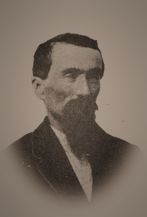
July 15 — Early this morning we were ordered to Charlestown, as the Yankees were pressing our cavalry there yesterday evening, which caused an urgent demand for artillery and our presence. When we arrived at Charlestown our cavalry was there waiting for us. We immediately proceeded about a mile below town, on the Harper’s Ferry pike, and put our guns into position ready for fight. We were not in position very long before the Yankees advanced on us with cavalry and dismounted sharpshooters. Their line of sharpshooters advanced first and opened fire on us with long-ranged rifles, and kept up a lively fire for about ten minutes directed at my gun,— which I had ready for action, but reserved my -fire for bigger and more important game,— for at the same time the Yankee cavalry, which was about a mile away in our front, was preparing for a charge on our position. After they had formed their column to charge and were ready to go into active business I opened fire on them with my piece, and the first shell I fired exploded in their ranks and played regular scatteration with the blue-coated column that was prepared and ready to charge us. My shell completely stopped and broke up the show, their line of sharpshooters also ceased firing and fell back, and when our cavalry advanced the enemy retreated toward Harper’s Ferry. We remained in battery until nearly night, then moved back about four miles south of Charlestown on the Berryville pike, and camped.
Wednesday, July 15th.
It is but too true; both have fallen. All Port Hudson privates have been paroled, and the officers sent here for exchange. Aye! Aye! I know some privates I would rather see than the officers! As yet, only ten that we know have arrived. All are confined in the Custom-House. Last evening crowds surrounded the place. We did something dreadful, Ada Peirce, Miriam, and I. We went down to the confectionery; and unable to resist the temptation, made a détour by the Custom-House in hope of seeing one of our poor dear half-starved mule and rat fed defenders. The crowd had passed away then; but what was our horror when we emerged from the river side of the building and turned into Canal, to find the whole front of the pavement lined with Yankees! Our folly struck us so forcibly that we were almost paralyzed with fear. However, that did not prevent us from endeavoring to hurry past, though I felt as though walking in a nightmare. Ada was brave enough to look up at a window where several of our prisoners were standing, and kept urging us to do likewise. “Look! He knows you, Sarah! He has called another to see you! They both recognize you! Oh, look, please, and tell me who they are! They are watching you still!” she would exclaim. But if my own dear brother stood there, I could not have raised my eyes; we only hurried on faster, with a hundred Yankees eyes fixed on our flying steps.
My friend Colonel Steadman was one of the commissioners for arranging the terms of the capitulation, I see. He has not yet arrived.
• • • • • • • •
Dreadful news has come of the defeat of Lee at Gettysburg. Think I believe it all? He may have been defeated; but not one of these reports of total overthrow and rout do I credit. Yankees jubilant, Southerners dismal. Brother, with principles on one side and brothers on the other, is correspondingly distracted.
July 15—We marched five miles to-day, and were compelled to halt, as our wagon trains had to get in our front. I and two of our mess killed three turkeys, took them with us to one mile from Martinsburg, Va., where we camped, and the bones of those turkeys were left behind.


