Following the American Civil War Sesquicentennial with day by day writings of the time, currently 1863.

August 2013

Waiting to be Relieved.

We keep a small camp guard during the night and this duty is assigned to the artillery detail, each gun’s company taking its turn, which brings us on every third night. There are only four posts, the guns and magazine, and as they only go on at tattoo and come off at reveille, the duty is not very arduous. The guard is divided into two reliefs, one going on the first part of the night and the other the latter part; the duty is simply to keep their ears open for any disturbance among the pickets out in the woods and alarm the camp. The reliefs sleep in their quarters and are called when wanted. The sergeant or corporal on duty occupies a small wall tent, in which a candle is kept burning through the night. Having my choice of time and it not making any difference to the corporal, I take the latter part, as I prefer sleeping the first part. I have a splendid corporal, I think the best in the service; we go along together, and agree first rate. He is willing to do all the work and I am willing he should. He posts the first relief and then keeps his eyes open until it is time to post the second relief, when he posts them and then comes and calls me, when I relieve him. My work is now all done; all I have to do is to lie down and go to sleep or busy myself with my reading or writing, and call off the relief at reveille. If I am too busy to attend to that duty (which I generally am), they take the responsibility of relieving themselves, which is a great help to me and relieves me of a great burden of care.

One night while on this duty the officer of the day came in and inquired if I would like to take a stroll and make a round of the pickets. I replied that I should. We started out making the round and not being in a hurry did not get back till daylight. I laid down and went to sleep, feeling that everything was all safe and quiet on the Pamlico. About 7 o’clock I was called up and told I was wanted at the magazine. I went out and there stood Charley, a Roman sentinel amid the wreck of worlds. I admired his fidelity, but I really couldn’t commend his judgment and no explanation or excuses of mine availed in the least; he was going to he relieved officially, and after he had got through with me I don’t think there were many more cuss words left in him. I certainly felt relieved if he didn’t.

The Rover.

Capt. Foss somewhere picked up an old boat and with Jed’s assistance put it in good repair, rigged up a sail, rated it A 1, and named it the Rover. The captain is skipper and Jed sailing master. She is a long, clipper-built craft, with a large spread of canvas and a carrying capacity of ten or twelve persons. With a spanking breeze she walks up and down the river like a thing of life and makes nothing of sailing right around the little steamer Undine. She makes frequent trips to Rodman’s and occasionally to town. The captain selects the party he wants to take out and I am sometimes honored with an invitation. We usually run alongside the gunboat that lays here and take aboard the second assistant engineer, who is a genial, good-natured old fellow, full of his fun and stories, and then put for Rodman’s. We stop there an hour and start for home. On the return trip, the old engineer’s inventive powers will be a good deal quickened and he will suggest various alterations in the rig and sail of the craft, which will improve her sailing qualities, all of which Jed readily accepts and is going to forthwith adopt, but the next day the improvements are all forgotten and never thought of again until another return trip from Rodman’s. A few days ago a small party of us made a halt at Rodman’s and found Sergeant Martin in command. He did the honors, showing us about the camp and extending hospitalities in a manner that would have done credit to a prince. To my notion Sergeant Martin has got the correct idea of holding a command, not to go dry himself nor let his friends.

Big Jim.

Big Jim, as he is called, is a character; genial, charitable, good-natured, humorous and generous to a fault. He is quite a theatrical character and loves to deal in romance and tragedy, and he caters to the mirthful and fun-loving among the boys. He does not amount to much as a soldier, but that is more his misfortune than from any unwillingness. He is of enormous proportions and very fat, tipping the scale at 250 pounds. He is sorely troubled with chafing when drilling or on the march, and for that reason is excused from pretty much all duty. He is a sort of independent corps, doing duty when he feels like it; he will often go out in the woods and relieve a man on picket who happens to be taken sick. He sometimes has a feeling come over him that he would like to get away from the noise and bustle of the camp, and be alone by himself. At such times he takes his rifle and goes to the little point, some 100 rods down the river, where there is a picket post. Here he will stay two or three days at a time, caring for no company except at night, and amuses himself with fishing, reading and writing. He has become so enamoured of this kind of life, that he has taken the contract to do the picket duty at that post and has made it his permanent residence, coming up to camp only two or three times a week to see the boys and get his rations. He has opened a trading post down there, and trades with the natives who touch there as they come in their boats from up the bay or cove which sets back from there. He has built himself a log house, and a sign over the door reads “Cash paid for coon skins,” of which and other peltries he has collected quite a quantity, and intends sending them to Boston, markets.
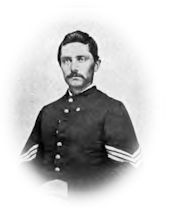
Saturday, 15th—This is my birthday—twenty-one years old today. I was detailed to help dig a grave for the body of Rufus C. Walter, of Company G, who died last night. He had been wounded and lived here in camp in a hammock which was tied to trees, or to posts set in the ground when there were no trees.

Vicksburg, Saturday, Aug. 15. Evie and I did our washing before breakfast. Swam my horse in the pond this morning with fifty others. Good fun. David Evans and myself rode over to the hospital in the afternoon; most of the boys doing well with the exception of G. R. Jones. He is very low, weak and emaciated. I am afraid he will not live long. Poor boy, he is very anxious to go home. After supper sent by Sergeant Dixon in search of my off horse, having strayed while I was sick. Had a pleasant ride over the hills and through gorges, but no event.

August 15th, 1863. So hot to-day that none but necessary duties have been ordered. Palm leaf fans were in demand, and most of the day we lay upon our beds under the awnings, in very primitive attire, making industrious use of them. There is little of military interest to note. Lee apparently is resting from his labors, and we are doing the same, besides trying to do something to fill up the old regiments. Several of them have been ordered home to see if their renown will not be an inducement for men to join them. Crosses’s old regiment, the Fifth New Hampshire, is amongst them. Volunteers are not to be had now in any number, and these big bounty men and substitutes are not worth having, as they very generally desert the first chance they get. It is too bad the enthusiasm should have waned so seriously. Our armies in the last two months have won great victories. Gettysburg with nearly twenty thousand loss to the enemy. Vicksburg said to be thirty thousand, and two hundred guns, Port Hudson a couple of thousand men, besides minor affairs, aggregating a tremenduous reduction in the enemy’s force, and immense loss of territory. If we could just get enough men to bring the old regiments up to their original strength, the war would soon be ended.

About 12 M. orders came from corps headquarters to issue three days’ rations, and have the troops in readiness for an immediate movement.

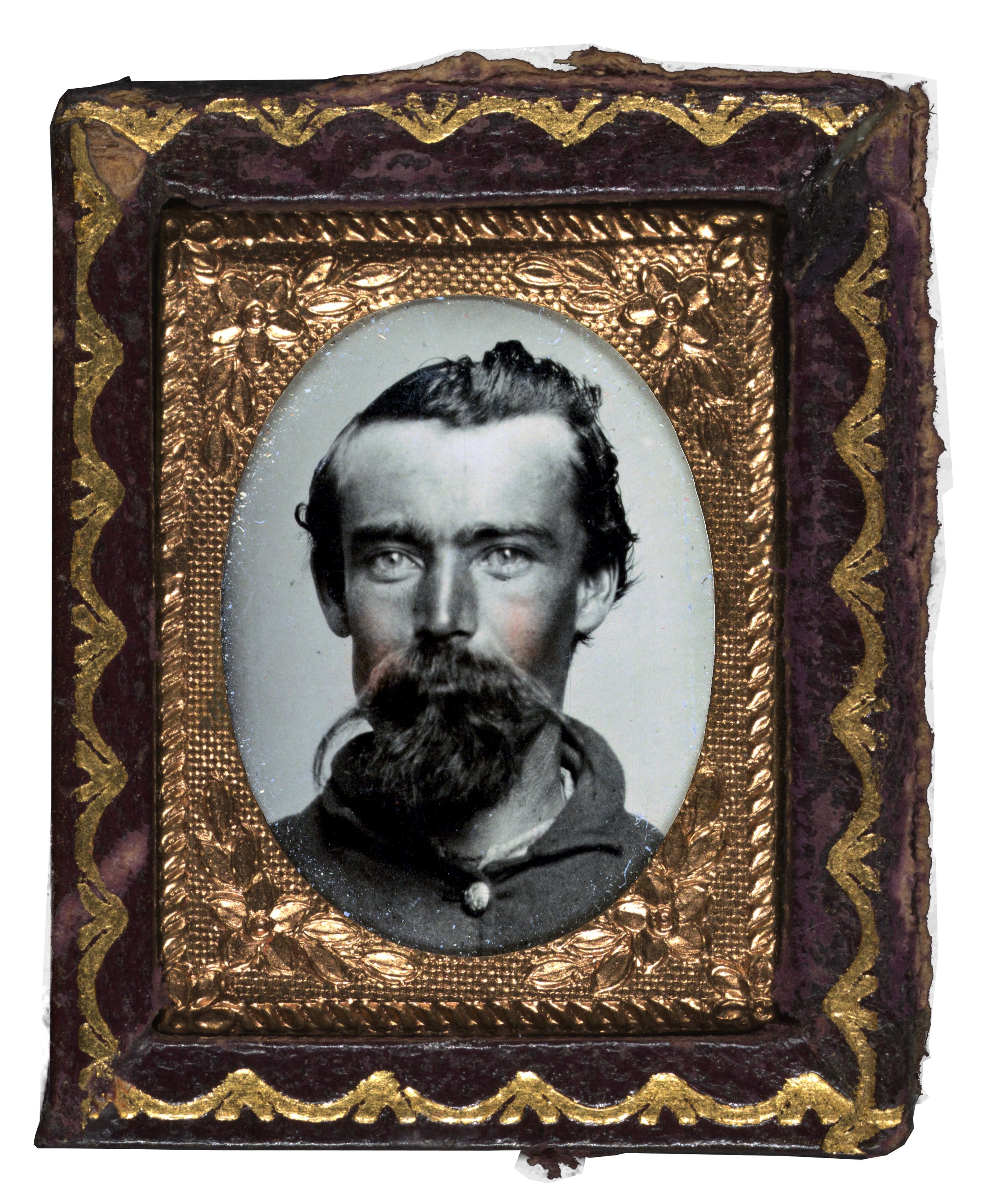
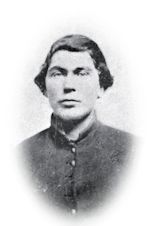
Unidentified soldier in Union uniform in photo caseUnidentified soldier in Union uniform.

__________

Gem plate tintype, hand-colored ; 3.3 x 2.7 cm (case)

Deposit by Tom Liljenquist; 2012

Liljenquist Family Collection of Civil War Photographs; Ambrotype/Tintype photograph filing series; Library of Congress Prints and Photographs Division.

Record page for image is here.

__________

digital file from original item Note – This image has been digitally adjusted for one or more of the following:

  • fade correction,
  • color, contrast, and/or saturation enhancement
  • selected spot and/or scratch removal
  • cropped for composition and/or to accentuate subject matter
  • straighten image

Civil War Portrait 059

Camp White, August 15 (Saturday afternoon), 1863.

Dearest: — Hottest day yet. All busy trying to keep cool. A dead failure all such attempts. A year ago today we set out for Maryland and east Virginia. A swift year.

You don’t write often these days. You don’t love me so much as you did. Is that it? Not much! You are as loving as ever, I know, only it is a bore to write. I know that. So it’s all right and I am as fond of you as I was when you were only my sweetheart. Yes, more too. Well, write when you can comfortably.

I am going to inspect the Thirteenth at Coal’s Mouth tomorrow; take the band along for the fun of it.

I ride about, read novels, newspapers, and military books, and sleep a power. We shall go up to Lewisburg, I guess, in two or three weeks to see after the Rebels in that quarter. All quiet in our borders now. . . . Love to all.

Yours, with great warmth,

R.

Mrs. Hayes.

August 15.—Major-General Rosecrans issued an order, holding the citizens in the Department of the Cumberland responsible for guerrilla operations.—(Doc. 150.)

by John Beauchamp Jones

            AUGUST 15TH.—I learn an order has been issued to conscribe all commissary and quartermasters’ clerks liable to military service. There will be, and ought to be, some special cases of exemption, where men have lost everything in the war, and have women and children depending on their salaries for subsistence; but if this order be extended to the ordnance and other bureaus, as it must be, or incur the odium of injustice, and the thousand and one A. A. G.’s, there will soon be a very important accession to the army.

            Major Joseph B_____, who was lately confined with over 1000 of our officers, prisoners, on Johnson Island, Lake Erie, proposes a plan to the Secretary of War whereby he is certain the island can be taken, and the prisoners liberated and conveyed to Canada. He proposes that a dozen men shall seize one of the enemy’s steamers at Sandusky, and then overpower the guards, etc. It is wild, but not impracticable.

            We hear nothing to-day from the enemy on the Rappahannock or at Fortress Monroe.

            Our army in Western Louisiana captured some forty Yankee cotton-planters, who had taken possession of the plantations after driving their owners away. The account states that they were “sent to Texas.” Were they not sent into eternity?

We only enjoyed our camp near the Potomac for a few days, when marching orders were received, to report at Hagerstown, Maryland, about ten miles from Sharpsburg, or about eight from our camp. At Hagerstown the Seminary and the grounds were used for a rebel prison and hospital, where we were to do guard and picket duty. Many of the poor fellows confined there died from wounds and disease. While the duty was not very laborious, it was not very pleasant. This is a fine section of Maryland, scenery fine. A large spring, walled in, in the center of the city, from which we obtained water. Quite a large number were confined here as prisoners of war. Here we also came in contact with an army of pedicules, which kept us very busy fighting them. Our boys claimed they bore on their backs the letters C. S. A., Confederate States America. The Seminary and grounds covered quite a tract of land. Our camp was placed as far as could be and still be on the grounds enclosed.

August 15th. A field hospital and camp was established to the north on the Chambersburg road, about two miles from town. A fine location. Plenty of good, clear, running water. The change was not only good for us but very beneficial to all the prisoners, and they enjoyed it very much. Good air and grounds for them to walk about. A provost guard was on duty in town to preserve the peace and protect the town. We were on the alert all the time. Reports of cavalry raids from Virginia into Maryland caused us to turn out in the night and double the line of pickets on the road to Williamsport, near the ford crossing the Potomac. We have very pleasant recollections of Hagerstown. Nothing very serious happened while we were there. Some of the people were very strongly in sympathy with the South. The 4th Connecticut Regiment was at that town a year before we were. They left a good impression there and were well spoken of by the people. We became well acquainted in Hagerstown and vicinity. We traded with farmers coffee, sugar, and hardtack, for eggs, butter, and vegetables. We lived well at that place. All things come to an end. Marching orders received. The prisoners were ordered to be sent to Chambersburg, Penn. At this camp we conquered the army of the pedicules, and became free of the pest.

August 14, Friday. Had a call from Governor Tod of Ohio, who says he is of Connecticut blood. Governor Tod is a man of marked character and of more than ordinary ability; has a frank and honest nature that wins confidence and attaches friends.

General Meade called at the Executive Mansion whilst the Cabinet was in session. Most of the members, like myself, had never met him. Blair and he were classmates at West Point, but they have never met since they graduated until to-day. He has a sharp visage and a narrow head. Would do better as second in command than as General-in-Chief. Is doubtless a good officer, but not a great and capable commander. He gave some details of the battle of Gettysburg clearly and fluently. Shows intelligence and activity, and on the whole I was as well or better pleased with him than I expected I should be, for I have had unfavorable impressions, prejudiced, perhaps, since the escape of Lee. This interview confirms previous impressions of the calibre and capacity of the man.

Seward leaves to-day for a rambling excursion with the foreign ministers. Stanton did not come to the meeting whilst I remained. Chase left early, followed by Mr. Bates and myself.