Friday, 11th—We moved our camp to the south of Vicksburg, two miles, just within the fortifications. The ground is low and level here, and the water is scarce. It is not a good place for the sick to get back their health. But there is danger of a raid by the rebels’ cavalry from this point.
September 2013
Camp White, September 11, 1863.
Dearest: — Glad to get letters both from you and Mother last night. Bless the boys, how they must enjoy their first family visit to their new home! I would be as happy as any of them to be there.
We hear good news from Burnside in Tennessee. If true it makes it more desirable that you should come here soon. If he moves along the railroad into southwestern Virginia, we are likely to push forward to cooperate, in which case we shall probably get too far into Dixie for our families to winter with us. I will notify you if anything occurs to make it imprudent for you to be here a couple of weeks hence. This is the month in which the Rebels can come into the valley with the least difficulty on the score of supplies, but I don’t think they will come. If there is a probability of it, I will telegraph Uncle Scott in time to stop your coming, or have Captain Zimmerman stop you at Gallipolis. I do not decide against the boys coming, but as you will be compelled to come to Gallipolis by railroad and stage (steamers don’t run on the Ohio now) and will perhaps only remain a fortnight or so, it will perhaps be as well not to bring them. If after you reach here it turns out that we shall winter in the valley, I shall send for Mother Webb and all the boys and keep house, or you can go back after them. In that case you can rent the house, or if you prefer to winter at Fremont or in Chillicothe, in case you can’t do so here, you may rent the house at once.
My reason for wanting you to come here as soon as you are through visiting at Fremont, is, that perhaps we shall be ordered forward as soon as east Tennessee is firmly in our possession. I think, however, the chances are in favor of our wintering on the Kanawha.
Get me a lot of silk handkerchiefs and about three or four pair stockings, not very heavy, but so-so. You can get them at Fremont and do it before you forget.
Mrs. Comly is greatly pleased with the prospect of your coming so soon. Mrs. Ellen is expected soon. She is supposed to be on some sandbar between here and Cincinnati on the Ohio, praying for a rise of water. Mrs. Barrett is the only other officer’s wife now here and she talks of going home in a fortnight. . . .
Let me know by telegraph when you will be at Gallipolis and the doctor or some one will come there after you.
Since writing we have further news of gratifying successes in east Tennessee. If all continues to go well there, it increases the chances of a forward movement here, and furnishes additional reason for you to come on soon before it is too late. — Love to all.
Affectionately,
R.
P. S. — You may get me a good pair of gloves — citizens’, not gauntlets — warm.
Mrs. Hayes,
Fremont, Ohio.
September 11.—The steamer Sir William Peel was captured at the mouth of the Rio Grande, by the United States steamer Seminole.

by John Beauchamp Jones
SEPTEMBER 11TH.—A dispatch from Raleigh informs us of a mob yesterday in that city. Some soldiers broke into and partially destroyed the office of the Standard, alleged to be a disloyal paper; after that, and when the soldiers had been dispersed by a speech from Governor Vance, the citizens broke into and partially destroyed the Journal, an ultra-secession paper. These were likewise dispersed by a speech from the Governor.
Gen. Whiting writes that the enemy is making demonstrations against Lockwood’s Folly, 23 miles from Wilmington. He says if 3000 were to pass it, the forts and harbor would be lost, as he has but one regiment—and it is employed on picket service. He says in ten nights the enemy can come from Charleston—and that Wilmington was never so destitute of troops since the beginning of the war, and yet it was never in such great peril. It is the only port remaining—and to lose it after such repeated warning would be the grossest culpability.
The officers of the signal corps report that Gen. Meade has been ordered to advance, for it is already known in Washington that a large number of troops are marching out of Virginia. Lee, however, it is now believed, will not go to Tennessee. They also report that a Federal army of 6400—perhaps they mean 64,000—is to march from Arkansas to the Rio Grande, Texas. If they do, they will be lost.
The engineer corps are to fortify Lynchburg immediately.
The clerks of the Post-office Department have petitioned the Secretary of War to allow them (such as have families) commissary stores at government prices, else they will soon be almost in a state of starvation. Their salaries are utterly inadequate for their support. The clerks in all the departments are in precisely the same predicament. The Postmaster-General approves this measure of relief—as relief must come before Congress meets—and he fears the loss of his subordinates.
It is said by western men that the enemy is organizing a force of 25,000 mounted men at Memphis, destined to penetrate Georgia and South Carolina, as far as Charleston! If this be so—and it may be so—they will probably fall in with Longstreet’s corps of 20,000 now passing through this city.
Thursday, 10th—I went over to Whitehead’s to get some raw hide to cover my saddle. I stopped at Mr. Mobley’s and took dinner, chatted Miss Metta a while and went over to the Mill and on to the tan yard and back to the Mill; found Dr. Neely there. I staid till bout 10 o’clock and came back to Camp. Time passed pleasantly, “on Angels’ wings,” while with Miss Mag.
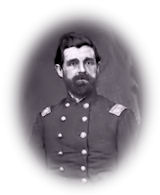
Colonel Lyons.
Nashville, Tenn., Tuesday a. m., Sept. 10, 1863.— Here I am, safe, sound and hearty, writing this letter in Major Bigney’s private room, where I am domiciled for the present.
I arrived at Chicago ‘by due course of mail’ Monday night, and found there Colonel Robbins, Captains Wolf and Redfield, and Lieut. Williams, of the 8th, who were on their way home. Took the Cincinnati Air Line R. R. for Louisville at 8:30 p. m. Went to bed, and got up in the morning at Indianapolis; breakfasted and moved on. Arrived at Louisville at 1 p. m.; remained there until next morning. Left at 8 o’clock, and arrived here at 7 last evening.
I met Lieut. Boone, Colonel Brace’s Adjutant, at Louisville, who informed me that the 13th had been ordered from Columbia to Larkinsville, in Alabama. The regiment left Columbia last Sunday with the 28th Kentucky, formerly at Clarksville. Larkinsville is on the Memphis and Charleston R. R., about twenty miles southwest of Stevenson, where the railroad, running south from Nashville, intersects the M. & C. R. R., and between Stevenson and Huntsville. There is, of course, railroad communication all the way there. It is a few miles north of the Tennessee river.
Now that Chattanooga is evacuated by the Confederates, we probably will remain for some time in that vicinity. The regiment will probaably not reach there before Sunday, and I shall not leave here until Saturday morning, unless I conclude to go down to Murfreesboro tomorrow and spend a day with the 22d Wisconsin. The Major goes to Larkinsville with me on a tour of inspection. He is well and in good spirits, and does everything in his power to make me comfortable. The route yesterday was through a very interesting country, indeed. Along it have been fought several battles during the war. A part of the way the country is mountainous, and the road runs through several tunnels, one seven-eights of a mile long. We passed within a few miles of the great mammoth cave.
About your coming, there is a late order that no citizen can pass Louisville for Nashville and south, without a permit from Major-General Granger; and I learn that these permits are only given to wives of officers and soldiers who are sick and need the attention and care of their wives. That can all be managed, I think, when we get in some safe place with a reasonable prospect of staying awhile. I think there is no chance for much fighting where we go—except bushwhacking.
The regiment had some skirmishing on its march to Columbia, and I hear had one man killed. I don’t know who it was—did not get particulars. Colonel Chapman allowed 136 men to go by way of Nashville, 100 of whom were able to march with the regiment. They were all sent on to Columbia (Jerry and Minerva with them), except some twenty left here in hospital, mostly from Company D. Dr. Evans brought here about six tons of old truck, which he doubtless had to leave at Columbia. How he must have groaned. None of the regiment are left at Fort Donelson except Captain Ruger and the Quartermaster. I believe Captain Woodman went as far as Evansville with his wife on her way home. He has gone on to the regiment.
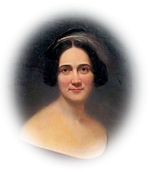
Camden, S. C, September 10, 1863— It is a comfort to turn from small political jealousies to our grand battles—to Lee and Kirby Smith after Council and Convention squabbles. Lee has proved to be all that my husband prophesied of him when he was so unpopular and when Joe Johnston was the great god of war. The very sound of the word convention or council is wearisome. Not that I am quite ready for Richmond yet. We must look after home and plantation affairs, which we have sadly neglected. Heaven help my husband through the deep waters.
The wedding of Miss Aiken, daughter of Governor Aiken, the largest slave-owner in South Carolina; Julia Rutledge, one of the bridesmaids; the place Flat Rock. We could not for a while imagine what Julia would do for a dress. My sister Kate remembered some muslin she had in the house for curtains, bought before the war, and laid aside as not needed now. The stuff was white and thin, a little coarse, but then we covered it with no end of beautiful lace. It made a charming dress, and how altogether lovely Julia looked in it! The night of the wedding it stormed as if the world were coming to an end—wind, rain, thunder, and lightning in an unlimited supply around the mountain cottage.
The bride had a duchesse dressing-table, muslin and lace; not one of the shifts of honest, war-driven poverty, but a millionaire’s attempt at appearing economical, in the idea that that style was in better taste as placing the family more on the same plane with their less comfortable compatriots. A candle was left too near this light drapery and it took fire. Outside was lightning enough to fire the world; inside, the bridal chamber was ablaze, and there was wind enough to blow the house down the mountainside.
The English maid behaved heroically, and, with the aid of Mrs. Aiken’s and Mrs. Mat Singleton’s servants, put the fire out without disturbing the marriage ceremony, then being performed below. Everything in the bridal chamber was burned up except the bed, and that was a mass of cinders, soot, and flakes of charred and blackened wood.
At Kingsville I caught a glimpse of our army. Longstreet’s corps was going West. God bless the gallant fellows! Not one man was intoxicated; not one rude word did I hear. It was a strange sight—one part of it. There were miles, apparently, of platform cars, soldiers rolled in their blankets, lying in rows, heads all covered, fast asleep. In their gray blankets, packed in regular order, they looked like swathed mummies. One man near where I sat was writing on his knee. He used his cap for a desk and he was seated on a rail. I watched him, wondering to whom that letter was to go—home, no doubt. Sore hearts for him there.
A feeling of awful depression laid hold of me. All these fine fellows were going to kill or be killed. Why? And a phrase got to beating about my head like an old song,”The Unreturning Brave.” When a knot of boyish, laughing, young creatures passed me, a queer thrill of sympathy shook me. Ah, I know how your home-folks feel, poor children! Once, last winter, persons came to us in Camden with such strange stories of Captain ——, Morgan’s man; stories of his father, too; turf tales and murder, or, at least, how he killed people. He had been a tremendous favorite with my husband, who brought him in once, leading him by the hand. Afterward he said to me, “With these girls in the house we must be more cautious.” I agreed to be coldly polite to ——. “After all,” I said, “I barely know him.”
When he called afterward in Richmond I was very glad to see him, utterly forgetting that he was under a ban. We had a long, confidential talk. He told me of his wife and children; of his army career, and told Morgan stories. He grew more and more cordial and so did I. He thanked me for the kind reception given him in that house; told me I was a true friend of his, and related to me a scrape he was in which, if divulged, would ruin him, although he was innocent; but time would clear all things. He begged me not to repeat anything he had told me of his affairs, not even to Colonel Chesnut; which I promised promptly, and then he went away. I sat poking the fire thinking what a curiously interesting creature he was, this famous Captain ——, when the folding-doors slowly opened and Colonel Chesnut appeared. He had come home two hours ago from the War Office with a headache, and had been lying on the sofa behind that folding-door listening for mortal hours.
“So, this is your style of being ‘coldly polite,'” he said. Fancy my feelings. “Indeed, I had forgotten all about what they had said of him. The lies they told of him never once crossed my mind. He is a great deal cleverer, and, I dare say, just as good as those who malign him.”
Mattie Reedy (I knew her as a handsome girl in Washington several years ago) got tired of hearing Federals abusing John Morgan. One day they were worse than ever in their abuse and she grew restive. By way of putting a mark against the name of so rude a girl, the Yankee officer said, “What is your name?” “Write ‘ Mattie Reedy’ now, but by the grace of God one day I hope to call myself the wife of John Morgan.” She did not know Morgan, but Morgan eventually heard the story; a good joke it was said to be. But he made it a point to find her out; and, as she was as pretty as she was patriotic, by the grace of God, she is now Mrs. Morgan! These timid Southern women under the guns can be brave enough.
Aunt Charlotte has told a story of my dear mother. They were up at Shelby, Ala., a white man’s country, where negroes are not wanted. The ladies had with them several negroes belonging to my uncle at whose house they were staying in the owner’s absence. One negro man who had married and dwelt in a cabin was for some cause particularly obnoxious to the neighborhood. My aunt and my mother, old-fashioned ladies, shrinking from everything outside their own door, knew nothing of all this. They occupied rooms on opposite sides of an open passage-way. Underneath, the house was open and unfinished. Suddenly, one night, my aunt heard a terrible noise—apparently as of a man running for his life, pursued by men and dogs, shouting, hallooing, barking. She had only time to lock herself in. Utterly cut off from her sister, she sat down, dumb with terror, when there began loud knocking at the door, with men swearing, dogs tearing round, sniffing, racing in and out of the passage and barking underneath the house like mad. Aunt Charlotte was sure she heard the panting of a negro as he ran into the house a few minutes before. What could have become of him? Where could he have hidden? The men shook the doors and windows, loudly threatening vengeance. My aunt pitied her feeble sister, cut off in the room across the passage. This fright might kill her!
The cursing and shouting continued unabated. A man’s voice, in harshest accents, made itself heard above all: “Leave my house, you rascals!” said the voice, “If you are not gone in two seconds, I’ll shoot!” There was a dead silence except for the noise of the dogs. Quickly the men slipped away. Once out of gunshot, they began to call their dogs. After it was all over my aunt crept across the passage. “Sister, what man was, it scared them away?” My mother laughed aloud in her triumph. “I am the man,” she said.
“But where is John?” Out crept John from a corner of the room, where my mother had thrown some rubbish over him. “Lawd bless you, Miss Mary opened de do’ for me and dey was right behind runnin’ me—” Aunt says mother was awfully proud of her prowess. And she showed some moral courage, too!
At the President’s in Richmond once, General Lee was there, and Constance and Hetty Cary came in; also Miss Sanders and others. Constance Cary[1] was telling some war anecdotes, among them one of an attempt to get up a supper the night before at some high and mighty F. F. V.’s house, and of how several gentlefolks went into the kitchen to prepare something to eat by the light of one forlorn candle. One of the men in the party, not being of a useful temperament, turned up a tub and sat down upon it. Custis Lee, wishing also to rest, found nothing upon which to sit but a gridiron.
One remembrance I kept of the evening at the President’s: General Lee bowing over the beautiful Miss Cary’s hands in the passage outside. Miss rose to have her part in the picture, and asked Mr. Davis to walk with her into the adjoining drawing-room. He seemed surprised, but rose stiffly, and, with a scowling brow, was led off. As they passed where Mrs. Davis sat, Miss , with all sail set, looked back and said: “Don’t be jealous, Mrs. Davis; I have an important communication to make to the President.” Mrs. Davis’s amusement resulted in a significant “Now! Did you ever?”
During Stoneman’s raid, on a Sunday I was in Mrs. Randolph’s pew. The battle of Chancellorsville was also raging. The rattling of ammunition wagons, the tramp of soldiers, the everlasting slamming of those iron gates of the Capitol Square just opposite the church, made it hard to attend to the service.
Then began a scene calculated to make the stoutest heart quail. The sexton would walk quietly up the aisle to deliver messages to worshipers whose relatives had been brought in wounded, dying, or dead. Pale-faced people would then follow him out. Finally, the Rev. Mr. Minnegerode bent across the chancel-rail to the sexton for a few minutes, whispered with the sexton, and then disappeared. The assistant clergyman resumed the communion which Mr. Minnegerode had been administering. At the church door stood Mrs. Minnegerode, as tragically wretched and as wild-looking as ever Mrs. Siddons was. She managed to say to her husband, “Your son is at the station, dead!” When these agonized parents reached the station, however, it proved to be some one else’s son who was dead—but a son all the same. Pale and wan came Mr. Minnegerode back to his place within the altar rails. After the sacred communion was over, some one asked him what it all meant, and he said: “Oh, it was not my son who was killed, but it came so near it aches me yet!”
At home I found L. Q. Washington, who stayed to dinner. I saw that he and my husband were intently preoccupied by some event which they did not see fit to communicate to me. Immediately after dinner my husband lent Mr. Washington one of his horses and they rode off together. I betook myself to my kind neighbors, the Pattons, for information. There I found Colonel Patton had gone, too. Mrs. Patton, however, knew all about the trouble. She said there was a raiding party within forty miles of us and no troops were in Richmond! They asked me to stay to tea—those kind ladies—and in some way we might learn what was going on. After tea we went out to the Capitol Square, Lawrence and three men-servants going along to protect us. They seemed to be mustering in citizens by the thousands. Company after company was being formed; then battalions, and then regiments. It was a wonderful sight to us, peering through the iron railing, watching them fall into ranks.
Then we went to the President’s, finding the family at supper. We sat on the white marble steps, and General Elzey told me exactly how things stood and of our immediate danger. Pickets were coming in. Men were spurring to and from the door as fast as they could ride, bringing and carrying messages and orders. Calmly General Elzey discoursed upon our present weakness and our chances for aid. After a while Mrs. Davis came out and embraced me silently.
“It is dreadful,” I said. “The enemy is within forty miles of us—only forty!” “Who told you that tale?” said she. “They are within three miles of Richmond!” I went down on my knees like a stone. ”You had better be quiet,” she said. “The President is ill. Women and children must not add to the trouble.” She asked me to stay all night, which I was thankful to do.
We sat up. Officers were coming and going; and we gave them what refreshment we could from a side table, kept constantly replenished. Finally, in the excitement, the constant state of activity and change of persons, we forgot the danger. Officers told us jolly stories and seemed in fine spirits, so we gradually took heart. There was not a moment’s rest for any one. Mrs. Davis said something more amusing than ever: ”We look like frightened women and children, don’t we?”
Early next morning the President came down. He was still feeble and pale from illness. Custis Lee and my husband loaded their pistols, and the President drove off in Dr. Garnett’s carriage, my husband and Custis Lee on horseback alongside him. By eight o’clock the troops from Petersburg came in, and the danger was over. The authorities will never strip Richmond of troops again. We had a narrow squeeze for it, but we escaped. It was a terrible night, although we made the best of it.
I was walking on Franklin Street when I met my husband. “Come with me to the War Office for a few minutes,” said he, “and then I will go home with you.” What could I do but go? He took me up a dark stairway, and then down a long, dark corridor, and he left me sitting in a window, saying he “would not be gone a second “; he was obliged to go into the Secretary of War’s room. There I sat mortal hours. Men came to light the gas. From the first I put down my veil so that nobody might know me. Numbers of persons passed that I knew, but I scarcely felt respectable seated up there in that odd way, so I said not a word but looked out of the window. Judge Campbell slowly walked up and down with his hands behind his back—the saddest face I ever saw. He had jumped down in his patriotism from Judge of the Supreme Court, U. S. A., to be under-secretary of something or other—I do not know what—C. S. A. No wonder he was out of spirits that night!
Finally Judge Ould came; him I called, and he joined me at once, in no little amazement to find me there, and stayed with me until James Chesnut appeared. In point of fact, I sent him to look up that stray member of my family.
When my husband came he said: “Oh, Mr. Seddon and I got into an argument, and time slipped away! The truth is, I utterly forgot you were here.” When we were once more out in the street, he began: “Now, don’t scold me, for there is bad news. Pemberton has been fighting the Yankees by brigades, and he has been beaten every time; and now Vicksburg must go!” I suppose that was his side of the argument with Seddon.
Once again I visited the War Office. I went with Mrs. Ould to see her husband at his office. We wanted to arrange a party on the river on the flag-of-truce boat, and to visit those beautiful places, Claremont and Brandon. My husband got into one of his “too careful “fits; said there was risk in it; and so he upset all our plans. Then I was to go up to John Rutherford’s by the canal-boat. That, too, he vetoed “too risky,” as if anybody was going to trouble us!
[1] Miss Constance Cary afterward married Burton Harrison and settled in New York where she became prominent socially and achieved reputation as a novelist.

Thursday, 10th September.
O my prophetic soul! part of your forebodings are already verified! And in what an unpleasant way!
Day before yesterday an English officer, not the one who came here, but one totally unknown to me, said at Mrs. Peirce’s he was going to visit the Confederate prisoners. He was asked if he knew any. Slightly, he said; but he was going this time by request; he had any quantity of messages to deliver to Colonel —— from Miss Sarah Morgan. “How can that be possible, since you are not acquainted with her?” Ada demanded. He had the impudence to say that the young lady I have already mentioned had requested him to deliver them for her, since she found it impossible. Fortunately for me, I have two friends left. Feeling the indelicacy of the thing, and knowing that there must be some mistake that might lead to unpleasant consequences, Ada and Marie, my good angels, insisted on hearing the messages. At first he refused, saying that they were entrusted to him confidentially; but being assured that they were really intimate with me, whereas the other was a perfect stranger, and that I would certainly not object to their hearing what I could tell a gentleman, he yielded, fortunately for my peace of mind, and told all.
I can’t repeat it. I was too horrified to hear all, when they told me. What struck me as being most shocking was my distorted explanation about the letters. It now set forth that I was not allowed to write myself, but would be happy to have him write to me; then there was an earnest assurance that my feelings toward him had not changed in the least —
Here I sprang from my chair and rushed to the window for a breath of air, wringing my hands in speechless distress. How a word more or less, an idea omitted or added, a syllable misplaced, can transform a whole sentence, and make what was before harmless, really shocking!
And if it had not been for Ada and Marie —! Blessed angels! they entreated him not to deliver any of his messages, insisting that there must be a mistake, that if he knew me he would understand that it was impossible for me to have sent such a message by a stranger. And although at first he declared he felt obliged to discharge the task imposed on him, they finally succeeded in persuading him to relinquish the errand, promising to be responsible for the consequences.
“Ah me!” I gasped last night, making frantic grimaces in the dark, and pinching myself in disgust, “why can’t they let me alone? . . . O women — women! I wish he could marry all of you, so you would let me alone! Take him, please; but en grâce don’t disgrace me in the excitement of the race!
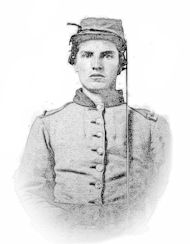
Thursday, 10th.—Remained on train all night. Brother Tom returned to regiment from detail duty on Eastern Tennessee, Virginia and Georgia Railroad. Moved to Walton’s Springs.
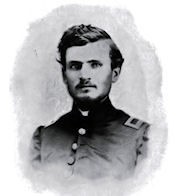
10th. We were notified of the surrender of the Gap and 2500 prisoners and 12 pieces of artillery. Encouraged. Had been talk that we were to storm the works. 32 pounders to be brought by Baptist Gap. Had some chopping before getting to the main road. Saw a good many Ohio boys on the other side. Oh such strong works as those at the Gap—natural fortifications. High bluffs on all sides. Plenty of water. Many rifle pits, and intrenchments. Batteries well planted. Glad we went round. Two N. Carolina regts. One Ga. One Tenn. 5 days’ rations on hand. Gen. Frazier afraid boys wouldn’t fight. Camped near Mr. Patterson’s. Drake ate supper with me. Chose Buell and Barber to go home for conscripts.


