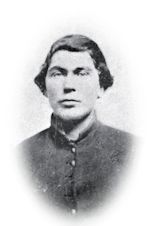
Iuka, Miss., Monday, Oct. 19. Ordered to march at 9 A. M, but as the Division train moved in the center and we were in the rear, we did not get started till 1 P. M. The bottom on each side of Yellow River was very wet, the bridges bad, so there was considerable delay in starting, but after we started we marched very fast and had few halts. The soil was a light sandy loam, poorly timbered, rather hilly. Halted at 4 P. M. The big drum taken forward in the wagon, and we walked through Iuka with the 1st Brigade Band playing lively airs. Found the 2nd Division posted here, the 1st commanded by General Osterhaus, having left this morning. Iuka is, or was, a very pleasant town, larger than Corinth, celebrated for its medicinal springs, two of which are enclosed very tastefully in a beautiful grove of young oaks. Went into camp south of town in a large field with the whole Division quartered in their tents before us. Osterhaus’s Division having left in the morning leaving boards, bunks, etc., we were soon in comfortable quarters. Retired early but were awakened at 9 P. M. to report at roll call, an order having been sent to report all absentees. The Division, as usual, pillaging down-town. Nearly $3000 worth of goods having been stolen, the outlaws being in the shape of a regiment led by a Major “straps and colors” etc. Luckily the artillery boys were all in camp.
Saturday, October 19, 2013
Burnsville, Sunday, Oct. 18. Was on guard last night, and the way it rained while on guard at night relief was enough to drown one inexperienced. 2nd Division, 15th Army Corps, commanded by Gen. G. A. Smith, passed by at 9 A. M., also Major General Blair, who is in command of Corps at present. Also a large wagon train with 5th I [Illinois ?] Cavalry as escort. Ordered to have 200 rounds of ammunition in chest, 300 now in train, and 30 days’ rations. Mother very ill.
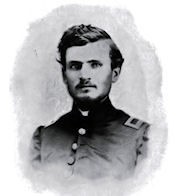
19th. Breakfasted and got under way about nine. People very afraid that we were going to fall back again. Passed through Rheatown, Greenville and reached Bull’s Gap about dark. Got supper with Lt. Pearson. Stopped to see Darling—away visiting. Getting along well. Stopped to make inquiries about the chase. Killed one man, wounded one and killed a horse. Others reported wounded at Greenville. Whole regiment followed us. 150 tried to flank us. 60 or 70 in town from 11 A. M. till 1 P. M.
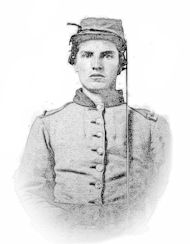
19. —Fever high all day. Continued very sick for several days, and also suffered severely from boil.
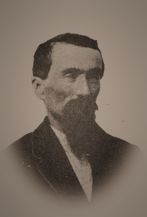
October 19 — Rained fast this morning until ten o’clock, and the remainder of the day was clear and pleasant. Early this morning we moved back toward Warrenton, unpursued by the enemy; we fell back to Auburn Mills on Silver Run five miles east of Warrenton, where we halted and fed our horses.
After we were at Auburn Mills about two hours we heard cannon firing in the direction of Bull Run Mountain; I afterwards learned that the cannon we heard were General Stuart’s guns. As quick as we heard General Stuart’s opening gun we were ordered to move in the direction of its foreboding boom, and when we arrived within about a mile of Buckland we encountered the enemy, with cavalry and artillery posted right on the road. We instantly wheeled our guns in battery and opened a spirited fire on their cavalry, which was drawn up in column in the road. Soon after we opened fire the crash of small arms from our cavalry ran along our line, to which the Yankees responded with promptness, and in a moment after we opened fire the fight was in full bloom, carbines and pistols answering each other all over the field, and bullets zipping and whizzing in every direction; now and then the odious din of the fray was interspersed with the deep boom of cannon. Our cavalry fought valiantly and the enemy did not long withstand the vigorous and determined attack of Fitzhugh Lee’s veterans, but soon began to waver, and at last broke away in full retreat, with our cavalry in hot pursuit. We followed them, and by dusk this evening we had driven them back to their infantry, when we abandoned the chase.
The main fight was near Buckland. General Stuart drew the Yankees after him, then General Fitzhugh Lee came in on their left flank, and as soon as General Stuart heard our guns in the rear of the column of Yanks that was following him he turned and pressed them toward Fitzhugh Lee’s command. General Fitzhugh Lee is a gallant, doughty, and fearless commander, ever careful and always ready to meet the foe and measure swords.
We are camped to-night on the Warrenton and Alexandria pike eleven miles below Warrenton.
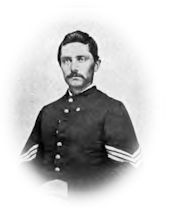
Monday, 19th—We were out this morning for our skirmish drill. The scouting expedition returned from Jackson this afternoon and occupied their old camp, while we had to go into open bivouac for the night. The expedition had little difficulty in routing the rebels at Jackson, but lost five or six men killed and quite a number wounded.
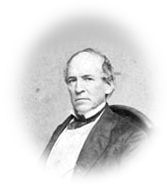
Monday October 19th 1863
Not much of public interest has occured for a week past in the field. There has been almost constant skirmishing over the River within from 30 to 60 miles of here. Our army is now near the old Bull Run Battle ground and another general Battle is expected there or near soon. The Election in the States of Penna, Ohio & Iowa came off on Tuesday last the 13th Inst and resulted in great Union triumphs. The contest was betwen those who were in favor of putting down the Rebellion at all hazzards, for supporting the Administration and carrying on the war, and those who were in open sympathy with the Rebels or in favor of compromising with them and making peace at any rate. The opposition embraced a large share of the old Democratic party who were avowedly in favor of the War, but were willing to embarrass the Administration at a very critical time and whose leaders were too ready to misrepresent the acts of the Govt, and give encouragement to the rebels. The Election in those States has effectualy squelched that party for the present.
We hear nothing from Charleston lately. Genl Gilmore I suppose is getting a good ready. The Armies at Chattanooga Tenn seem to be lying idle after their great fight at Chickamauga. The events of this War have draged along much in the same track for the past year, but we have been making constant progress and the present limits of the “C.S.A.” are greatly circumscribed, but the Rebels are still powerful in the field and even now or during the past week the cannonade has been frequently heard in and near the City being not more than thirty or forty miles distant. The “Guerrillas” have made their “raids” to within three miles of Alexandria the past week, capturing horses, Sutlers stores &c. It is not expected that this state of things is to last long. Gold is up again to 150, has been recently 155, in the summer it was down to 125. The President has just called for 300,000 Volunteers for three years or the War. The recent Draft for 600,000 has proved I think rather a failure. Not more than 100,000 I believe have been obtained by it or will be for it has not yet been put in force in all the States, but it has done one good thing. It has shown that the Govt is Strong enough to enforce it anywhere.
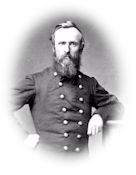
Camp White, October 19, 1863.
Dear Uncle: — You are a prophet. Brough’s majority is “glorious to behold.” It is worth a big victory in the field. It is decisive as to the disposition of the people to prosecute the war to the end. My regiment and brigade were both unanimous for Brough.
Lucy will go to Chillicothe and home this week. She will fix up matters, gather the chickens, and return in two or three weeks, if all things look well, for the winter. She will, in that case, rent the house in Cincinnati. Love to Birch.
Sincerely,
R. B. Hayes.
S. Birchard.
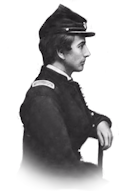
October 19th, 1863. The enemy having withdrawn, preparations were made to recross the stream, and at 6 A. M. our division crossed and marched to Manassas Junction, where they halted for dinner, then continued the march to Bristoe Station, arriving at 5 P. M. and went into bivouac. We found the railroad destroyed, rails were taken up, heated, and twisted, telegraph wires torn down, and the bridge across Broad Run destroyed.
October 19.—The grand-jury of Twiggs County, Georgia, Supreme Court, requested the Court to order a record, called the “Black Roll,” in which the names of all who refuse to take confederate bills, bonds or notes in payment for any debt shall be recorded on this recommendation, and that of each succeeding grand-jury, that the names of such malcontents may be officially handed down to posterity, and their ultimate reward insured.—Major-general W. S. Rosecrans relinquished the command of the Department of the Cumberland, and issued a farewell address to his “brothers in arms.” General George H. Thomas succeeded to the command.— The result of the draft made in July, was made known by Provost-Marshal Fry.


