
24th. Another unpleasant day. Boys drew some boots. Brought in big pile of butter, bacon, potatoes and oats. Receipted to Union man and Confed. money to Reb. Seems good to have the boys back again. In the evening wrote home and to Ella Clark. Feel ashamed of my carelessness. Ordered up with train. After forage remained over night. All glad.
October 2013

Saturday, 24th—The weather is quite cool. I worked all day building a fireplace in my tent, while my bunk-mate was out on duty. The boys are all fixing up for winter just as if we were going to stay here all winter.
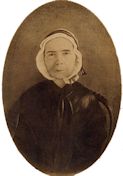
October 24.—Since writing in my diary, our plans have been entirely changed. Our old friend, Mrs. R., offered us rooms in Richmond, on such terms as are within our means, and a remarkable circumstance connected with it is, that they are in the house which my father once occupied, and the pleasant chamber which I now occupy I left this month twenty-nine years ago. It is much more convenient to live in Richmond than in Ashland, so that we have rented the little cottage to another. One room answers the purpose of dining-room and sleeping-room, by putting a large screen around the bed; the girls have a room, and we use the parlour of the family for entertaining our guests. For this we pay $60 per month and half of the gas bill.
But this has been a sad, sad month to me, and I find it very difficult to bring my mind to attend to the ordinary affairs of life. On the 11th of this month, our nephew, Captain William B. Newton, was killed while leading a cavalry charge in Culpeper County. We have the consolation of believing that his redeemed spirit has passed into heaven; but to how many has the earth been left desolate! His young wife and three lovely children; his father, mother, sisters, brothers, uncles and aunts, have seen the pride of their hearts pass away. His country mourns him as a great public loss. The bar, the legislative hall, and the camp proudly acknowledge his brilliant talents. In peace, the country looked to him as one to whom her best interests would hereafter be intrusted; in war, as one of the most gallant officers on the field. An early and ardent Secessionist, he was among the first to turn from the delightful home circle, where he ever sought his happiness, to go to the defence of right. He came into the field as First Lieutenant of the Hanover Troop; shortly after became its Captain, loved and revered by his men; and the commission of Lieutenant-Colonel of his regiment, the Fourth Virginia Cavalry, was on its way to him; but, alas! alas! it reached its destination a few hours too late. God be with my precious and her sweet children! I long and yet dread to go to that once bright home, the light of which has faded forever.
I was shocked to hear that on the fatal Sunday on which my darling William fell, three of our E. H. S. boys had come to a glorious, though untimely end, on the same field— Surgeon John Nelson, Lieutenant Lomax Tayloe, and Private J. Vivian Towles; and at Bristow Station, a few days afterwards, dear little Willie Robinson, son of my old friends, Mr. Conway and Mrs. Mary Susan Robinson. He was but eighteen. I attended his funeral on Wednesday last, and there learned that he was a devoted Christian. These dear boys! Oh, I trust that they sprang from the din of the battle-field to the peace of heaven! Lord, how long must we suffer such things?
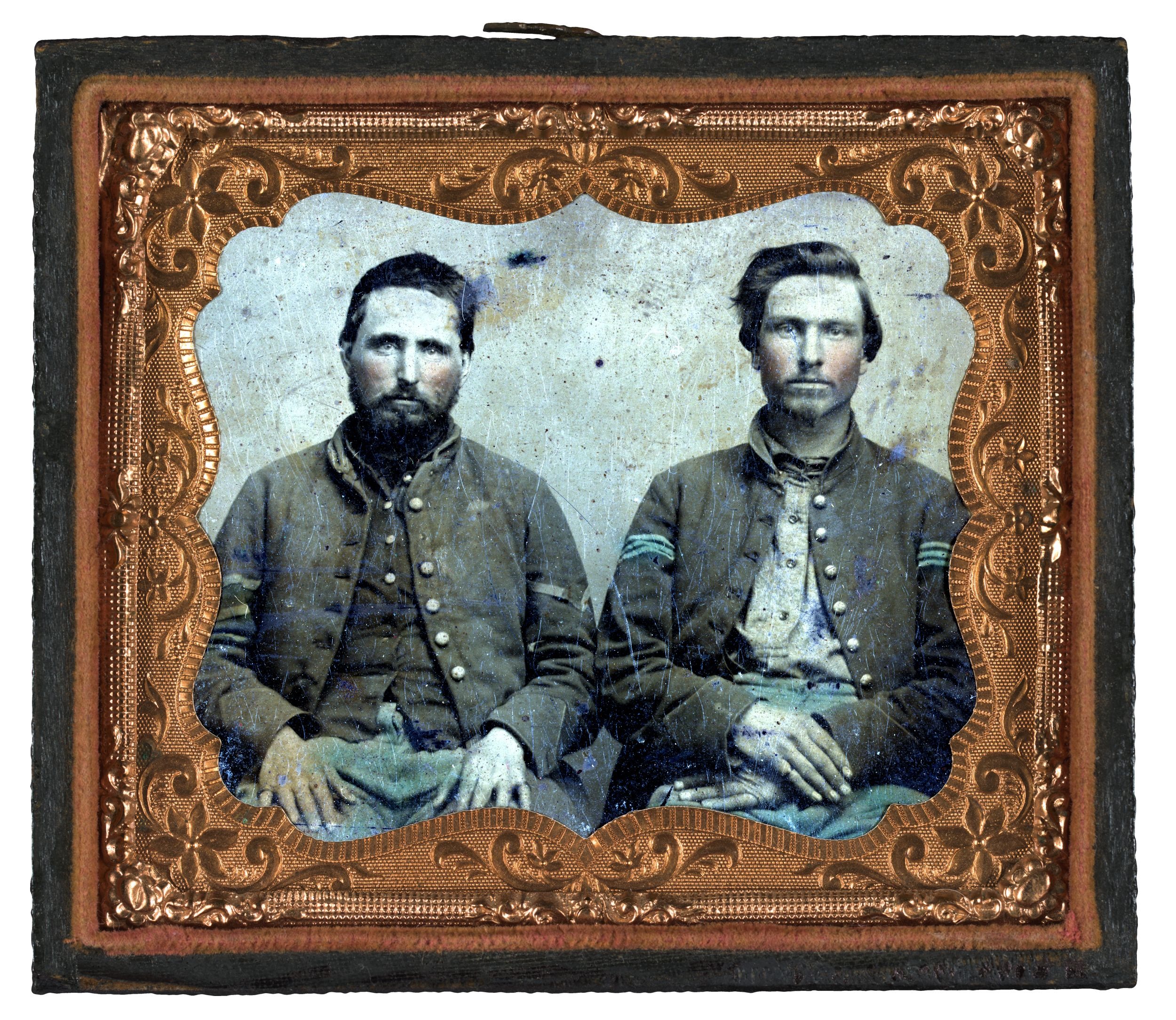
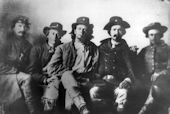
Two unidentified soldiers in Union uniforms.
Library of Congress staff summary: Photograph shows the soldier on the left with a single chevron on his left sleeve and two on his right; they do not appear to be conventional rank insignia and could possibly be service stripes.
__________
Sixth-plate tintype, hand-colored ; 9.4 x 8.1 cm (case)
Liljenquist Family Collection of Civil War Photographs; Ambrotype/Tintype photograph filing series; Library of Congress Prints and Photographs Division.
Record page for image is here.
__________
Two unidentified soldiers in Union uniforms
 Note – This image has been digitally adjusted for one or more of the following:
- fade correction,
- color, contrast, and/or saturation enhancement
- selected spot and/or scratch removal
- cropped for composition and/or to accentuate subject matter
- straighten image
Civil War Portrait 072

by John Beauchamp Jones
OCTOBER 24TH.—To-day we have a cold northwest storm of wind and rain, and we have our first fire in the parlor.
The elections in Ohio and Pennsylvania have gone for the Republican (War) candidates. We rely on ourselves, under God, for independence. It is said Gen. Lee learned that 15,000 Republican voters were sent from Meade’s army into Pennsylvania to vote, and hence he advanced and drove back the Federal army. Yet he says that Meade’s army is more numerous than his. It is not known what our losses have been, but the following dispatch from Lee gives an accurate account of the enemy’s loss in prisoners.
“HEADQUARTERS ARMY NORTHERN VIRGINIA,
“October 23d, 1863.
“GEN. S. COOPER, A. and I. General.
“Gen. Imboden, on the 18th, attacked the garrison at Charlestown, Shenandoah Valley, captured 434 prisoners, with their arms, transportation, and stores. To these, add prisoners already forwarded, makes 2462.
“(Signed) R. E. LEE.
“Official : JOHN WITHERS, A. A. General.”
And Capt. Warner says he is now feeding them.
Gen. Lee writes on the 19th inst., that it is doubtful whether Gen. Meade will remain where he is, behind his fortifications along Bull Run, or make another movement on Richmond. A few days will decide this matter. He says Meade has superior numbers. If he remains, Gen. Lee will advance again, provided he can get quartermaster supplies for his army. But at present, thousands of his men are barefooted, without overcoats, blankets, etc. He says it was the sublimest spectacle of the war to see men in such condition move forward with such cheerfulness and alacrity, in the recent pursuit of the enemy. He deprecates sending any of his regiments to West Virginia and East Tennessee, and thinks Gen. Sam Jones has not evinced sufficient energy and judgment in that quarter. He says it would be better to send reinforcements to Chattanooga, where it is practicable to conduct a winter campaign. He could drive the enemy from the Peninsula, Gloucester Point, Williamsburg, and Yorktown, but to keep them away Lee would have to station an army there. If North Carolina be menaced, he advises that the troops at Richmond and Petersburg be sent thither, and he will replace them with troops from his army. He thinks it the best policy not to disperse troops in Virginia.
From this letter it is easy to perceive that the Secretary of War, in the absence of the President, has been making suggestions to Gen. Lee, none of which does he deem it good policy to adopt, the Secretary not being versed in military matters.
A private note from Gen. Lee, dated the 13th inst., which I saw to-day, informs the Secretary of War that much of the benefits he anticipated from his movement, then in progress, must be lost, from the fact that the enemy had been informed of his purposes. This it was the duty of the government to prevent, but Mr. Seddon, like his predecessors, cannot be convinced that the rogues and cut-throats employed by Gen. Winder as detectives, have it in their power to inflict injury on the cause and the country. The cleaning of the Augean stables here is the work which should engage the attention of the Secretary of War, rather than directing the movements of armies in the field, of which matter he knows nothing whatever.
The Secretary of War wrote a long and rather rebuking letter to-day to Mr. Sheffey, chairman of the Committee on Confederate Relations, of the General Assembly, who communicated a report , and resolutions of the House of Delegates, in relation to details of conscripts, and the employment in civil offices of robust young men capable of military service, and urging the department to appoint men over forty-five years of age to perform such services, and to impress free negroes to do the labor that soldiers are detailed for. The Secretary thinks the Confederate Government knows its duties, and ought not to be meddled with by State Governments. It touched Mr. Seddon nearly.
By the last Northern papers I see President Lincoln has issued a proclamation calling for 300,000 more volunteers, and if they “do not come when he calls for them,” that number will be drafted in January. This is very significant either the draft has already failed, or else about a million of men per annum are concerned in the work of suppressing this ” rebellion.” We find, just at the time fixed for the subjugation of the South, Rosecrans is defeated, and Meade is driven back upon Washington!
October 23, Friday. Only a portion of the Cabinet present and but little done. The Missouri difficulty discussed, etc.
Late this afternoon the Secretary of State made me a formal visit and introduced Mr. Bruzual, who comes to this country as Minister Extraordinary from Venezuela, and the Secretary of the Legation. Mr. Seward proceeded to say that the disturbances in Venezuela prevented our Government from recognizing Mr. B. for the present, but that he would soon be accredited. In the mean time he wishes to purchase a naval vessel for the use of his government. Mr. Seward said Venezuela was at peace with all the world, the purchase therefore would be proper and did not, in any way, compromise our Government, and he wished me to give Mr. B. a letter to Commodore Stribling at the Philadelphia Navy Yard to assist him, or to designate an officer who would. I made a suggestion or two in regard to the propriety of this proceeding, but Mr. Seward, who had to dispose of his as yet unaccredited minister, who is to receive official assistance, said it was all correct, perfectly proper, wrote me the address desired, that there should be no recognition or mention of Mr. B. as minister.
Colonel Lyons.
Stevenson, Ala., Oct. 23, 1863.—How little we know what is before us! We were ordered ten days ago to Battle Creek, on the river above Bridgeport, and a few days afterwards the place was changed to Anderson Cross Roads, way up in the mountain towards Chattanooga. The order came from General Morgan and we were to march when relieved by Gen. Hooker. The General never got ready to relieve us, and so we did not march under that order; but this afternoon the order came from Gen. Thomas, and is peremptory; and so we must go sometime tomorrow.
Adjt. Scott has gone up the railroad to see Ruger. He is at Tullahoma. Rain every day, and mud unfathomable. A nasty time to move, but soldiers must go without grumbling, when ordered.
I was mistaken when I said in my last that Gen Grant was at Gen. Hooker’s quarters. He was in town, and the three major-generals met at the cars, but Grant went on to Bridgeport. Next morning General Hooker came in and asked me to go to his quarters and see Gen. Rosecrans. I went, and was introduced. Gen. Rosecrans immediately said, ‘Gen. Hooker, this is my old Ft. Donelson commander,’ and he spoke very complimentarily of my administration of affairs there. He recollected me in Mississippi, upon my reminding him of one or two incidents that happened there.
The band of the 33d Massachusetts serenaded the generals, and they both made little speeches and both made failures. They can fight, but neither of them can make a speech.
My successor in the command of the post will be Colonel Cobham, of the 111th Pennsylvania. He will assume command in the morning. Come to think, you will want to know where we are going. We are ordered to Nashville. Aren’t you sorry? We go by railroad.
Friday, 23rd—Came on through to Calhoun and six miles below and staid all night. Raining all day and night.
Loudon, October 23d, 1863, 7 p. m.
This has been a dismal day. It reminds me of the day we crossed the Potomac last fall. It began to rain at 5 o’clock this morning, and has rained all day, and there is every prospect of a wet night.
I never think of that fearful night without a thrill of horror. I marched all that day in the pelting rain, soaked to the skin, and when night came, weary as I was, I faced the fierce northern blasts until morning. I date all my suffering from that dreadful night. Although this storm reminds me of that day, and, under similar circumstances would have been quite as unpleasant, yet I have passed it quite comfortably. My comrade and I have a good tent, each of us a blanket and rubber ponchos, which enables us to keep dry and warm. These rubbers are very useful. If overtaken by a storm while on the march, not only is the person kept dry, but his blankets and haversack. At night we spread it on the ground, and no moisture can reach the person.
But this storm; what will be its effect on military operations here? I confess to a feeling of anxiety; I fear we are to be again “stuck in the mud,” as at Fredericksburg. If this is really the beginning of the rainy season, we can do but little more. And so much remains to be done. We must occupy and hold this railroad, or evacuate East Tennessee, and that right speedily. We can get supplies in no other way. There are not mules enough in the United States to haul our supplies over the mountains in the winter. In fact, now, when the roads, are comparatively good, it cannot be done. We have been on half rations ever since we crossed the mountains.
But away with such gloomy thoughts, and let faith and hope prevail. Tomorrow may bring forth light from this pall of darkness.
Dickson Station, Ala., Friday, Oct. 23. Reveille before daylight. Raining very heavy. Orders to march at 7 A. M. We were on the advance of the column, and an order came to hitch up and strike tents before the cooks had breakfast started. The rain was very cold and my fingers were numb before I got my team harnessed and hitched. It was very disagreeable work. “Stand to Horse” was sounded before we were fairly hitched up, and we started out on a trot to pass the regiments as we were behindhand. The road was muddy and rough, the horses all trembling from cold, and the drivers with wet clothes and cold hands, shivering and wishing they could go to the stove and warm—(that is, in Wisconsin). But we moved on lively passing over several ridges, then the valley widened into a very pretty cultivated country. Our road lay along the railroad, the track of which was badly destroyed. All the trestle work burned, and a fire built at the end of each rail crooking it so as to destroy it. The column halted at Dickson Station, a tiny depot building with a fine farming country on each side and extensive buildings. The fence was torn down, and we came into battery in a field of clover. A large fire of rails was started, and we warmed while the General looked for camping ground and water. In half an hour Dillon’s orderly came back and we moved to the right half a mile, and came into camp nearly on the bluffs, unharnessed, tied our horses to the trees and stuck up our tents in the mud, but found boards to floor it and plenty of rye straw to lie on. We built a fire in front of it, and got partly warmed by 1 P. M. I was soon called on guard and I suffered very much from the cold.


