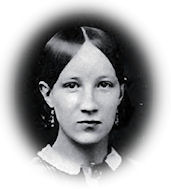
November 22.—We had a delightful visit. Mr Thompson took us up into his den and showed us curios from all over the world and as many pictures as we would find in an art gallery.
Friday, November 22, 2013
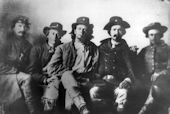
Sunday, 22nd—We remained in Camp.
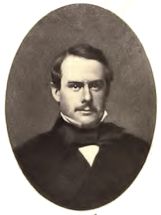
Charles Francis Adams, Jr., to his father
Picket near Warrenton, Va.
November 22, 1863
I infer from this letter that you do not know how we are brigaded, but imagine that this regiment is, or may be, independent, and that outpost duty is done by regiments specially designated therefor. If this is so you are in error. The whole cavalry of this Army belongs in one Corps, which consists of three Divisions and we belong to the 2d, or Gregg’s Division. We are in the 1st Brigade of that Division, and the theory of our cavalry is to cover up the Army on its front and flanks. As a rule Gregg covers the right flank and all regiments do picket duty in turn, the rule generally being a three days tour of duty once in nine days. As another rule, when Gregg is engaged we are, but as for looking for this regiment in the papers — God forbid you should find it! Certain regiments are always in the papers. Such are always very green or make up in lying what they lack in character. We have been much amused lately by meeting tall stories of the 2d Penn. Cavalry, notoriously the greenest regiment in the Division. People at home believe these yarns, but we who know what the work is quietly laugh at the blow-hards. For myself I do not care ever to see my regiment’s or my own name mentioned outside of the official documents of the Army.
I said I was on picket today. You will find us by looking on the map for the turnpike from Warrenton to Sulphur Springs, about two miles from Warrenton. We appear to be picketing against Mosby — at least he is round like a hornet, both within and without our lines. It is laughable the way he dodges round and annoys us, now pouncing here and there worrying us everywhere. Every night there is firing along the line and I count that night lucky which passes without an alarm. Long custom has fortunately made us old hands at it, and we do not lose much sleep however often we are turned out. I go back happy after every tour, in that I have lost no men. I like the work and enjoy its excitement, but three days at a time are quite enough, for, as I am always now in command when I am on duty, by the third day I generally feel as if I had been on the anxious seat long enough. . . .
Meade still seems to be near Culpeper, and yet Burnside is in danger! I cannot express how it weighs on me to see us in this false position. We cannot help Burnside here. Lee knows it and Meade knows it, and Lee knows that Meade knows it. We must cover Washington and we must threaten Richmond; so we rush to the Rapidan and actually hear Lee laugh from the heights beyond. If once the President would shove us onto the south bank of the James Lee would stop laughing. As it is he looks down at us tugging at impossibilities, accepts the issue as we offer it, meets three of us with one of his and sends the rest to crush Burnside. Be assured this Army would be made more efficient if it went down to Norfolk shorn of 25,000 men left for the defense of Washington. What was left could play a bigger part in the great game than the whole does here. . . .
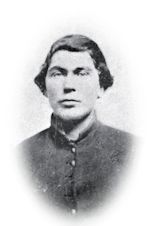
Near Chattanooga, Sunday, Nov. 22. Awoke to find a bright and beautiful morning and the air was as balmy as a May morning in Wisconsin. Did not rain as expected and no indications of it in particular. Preaching announced at 10 A. M. by the Chaplain of the 18th Wisconsin. I thought it was more my duty to write to anxious hearts than attend. Wrote one to sister Hannah and commenced one to brother Thomas, but was called on guard before finishing it. Sherman’s chief of artillery went with Captain Dillon to pick out a road for battery.
3 P. M. Before I came off guard we endeavored to pack everything except our blankets and stow them away. Soon ordered to take up our horses, (which were browsing) clean them off and harness up. Our valises were taken off and blankets strapped instead.
5 P. M. Cogswell’s Battery started out and we soon followed, 12th in the rear. Lieutenant Hubbard of the 3rd Battery came to camp as we left, and I shook hands with him as I drove by. Professor Silsby is also here with his Heavy Battery direct from the State, but I did not see him. Moved toward the river, passed the pontoon train and halted near the river out of sight of the enemy. Unhitched and unharnessed, and ordered to lie down with no noise, no fires to be built.
It is now eight o ‘clock and I am on post. I write by the light of the moon. The Heavy Battery and the 12th are busy at work throwing up earthworks. We are to be thrown across with the first infantry that goes. It is expected by all that it is going to be hot and terrible work. My blood is cold as I contemplate the bloodshed.

Sunday, 22d—This morning when our detail was relieved from picket, we were marched to brigade headquarters and put to target shooting. This is to be done regularly from now on, in order to give the boys practice. To encourage good marksmanship a reward is given; those who hit the bull’s-eye are excused from picket duty, once for every time they hit the mark.

22nd. A bright pleasant morning and day. After breakfast went up to Col. Foster’s. Telegraphed to Garrard whether to go to Command or remain at T. while the train went to the Gap. Ordered to report. Drew rations and moved to Sycamore. Saw the papers at the Col.’s Hdqrs. Talk of the paymaster coming. Burnside thought safe at K. Four men started for K.
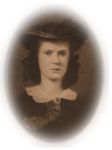
Sunday, November 22d.
A report has just reached us that my poor dear Gibbes has been taken prisoner along with the rest of Hayes’s brigade.
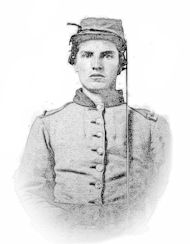
Saturday, 22d.—Detailed at daylight; sent to work another section. Finished in two hours. Clear, cold and windy. Built chimney to our house.
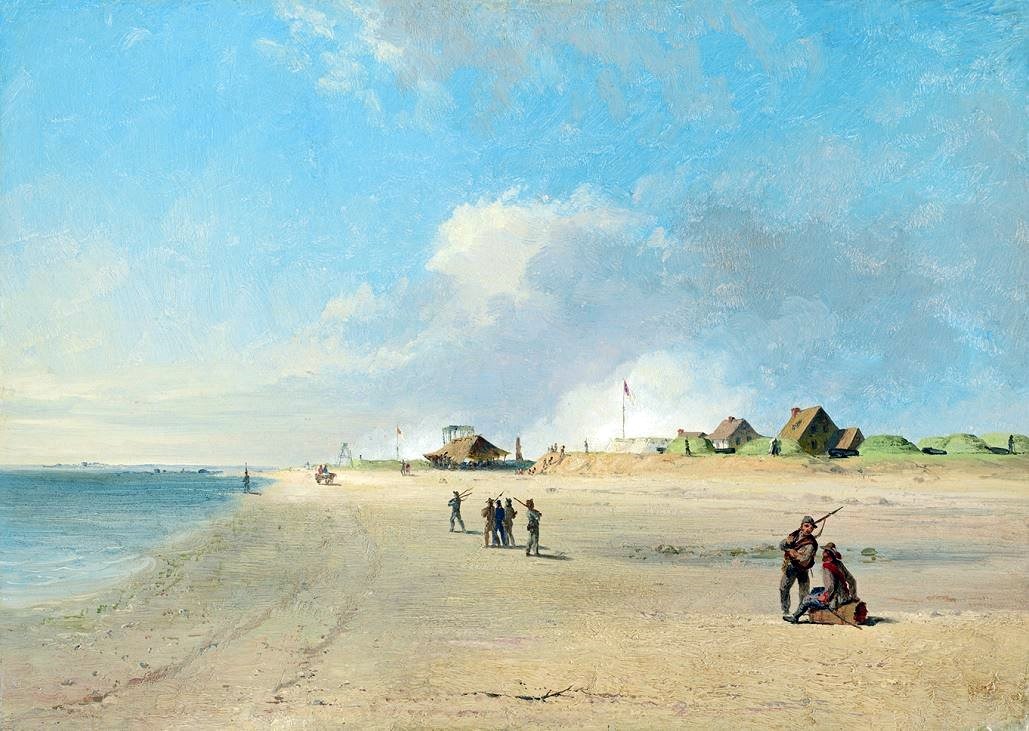
Painting by Conrad Wise Chapman.
“Shows Fort Beauregard, and Fort Moultri in the distance; also the old ‘Moultrie House’ that was being pulled down while the artist was making his sketch. A number of Yankee prisoners can be seen, the Corparal in charge giving an explanation to the Confederate officer.” – Conrad Wise Chapman, 1898
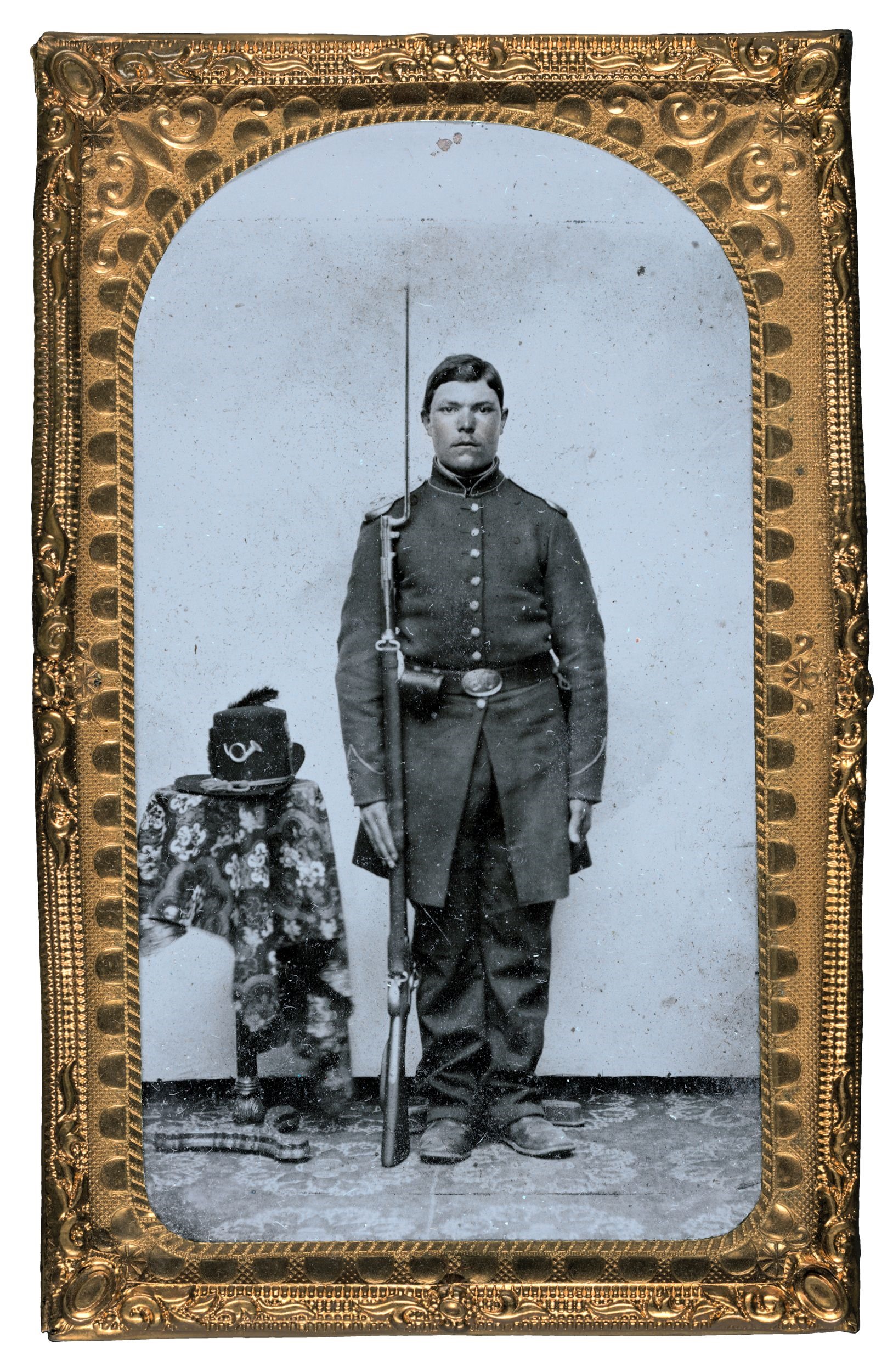
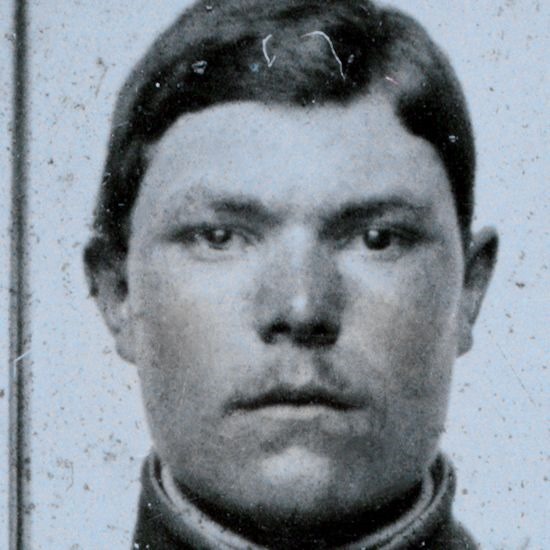
Unidentified soldier in Union frock coat with bayoneted musket next to infantry Hardee hat with plume on table
__________
Close-up crop:
__________
carte de visite-plate tintype, hand-colored ; 8.7 x 5.5 cm (plate)
Liljenquist Family Collection of Civil War Photographs; Ambrotype/Tintype photograph filing series; Library of Congress Prints and Photographs Division.
Record page for image is here.
__________
 Note – This image has been digitally adjusted for one or more of the following:
- fade correction,
- color, contrast, and/or saturation enhancement
- selected spot and/or scratch removal
- cropped for composition and/or to accentuate subject matter
- straighten image
Civil War Portrait 101


