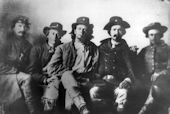
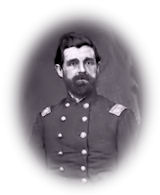
Following the American Civil War Sesquicentennial with day by day writings of the time, currently 1863.

November 2013

November 16 — About the middle of the day we arrived at the battalion camp near the residence of Colonel Willis, one mile south of Orange Court House and half a mile west of the Orange and Alexandria Railroad.

Since we were detached from the battalion ten days ago we marched from Gaines’ Cross Roads in the foothills of the Blue Ridge, by Culpeper Court House and Rapidan Station, to the vicinity of Fredericksburg, passing from the extreme left and beyond the extreme right of our army, a distance of over fifty miles.

Sunday, 16th.—Colonel told us this would probably be our camp for some time, and that we had better build winter quarters.

Bridgeport, Monday, Nov. 16. A beautiful sunny morning. Did not get up till broad daylight, which was a strange thing. The first thing attended to, now that we were in hopes of a few days’ rest, was changing and washing. I changed throughout, and Evie and myself passed to the creek with ax, fire buckets, etc. My washing consisted of a pair pants, shirt, two pairs of socks and towels. Quite a washer-woman. After dinner Cousin Griffith, E. W. E. and myself took a ride down town. I mounted Rodney and off we went. “We failed to find a building but found Bridgeport, which is certainly a city of tents. All of it is in tents. Sutler’s stores and bakeries are plenty, but so crowded by the soldiers that it was impossible to get a hearing anywhere. I tried hard to get a pie, but there were hundreds pressing in for the same, and I gave it up as a bad job. Bought a blank book and started back to a large tent upon a hill with the sign “Army Hotel” which furnished meals for 75 cents.

The Charleston and Memphis Road crosses the river here, but the bridge was destroyed by General Mitchel a year ago, and not yet completed. A day force is at work on it and teams are hauling timber in all directions. It is a patent truss-bridge like those across the Wisconsin, the R. R. on top and wagon road below it. A pontoon bridge is stretched across below it until the bridge is finished. The cars go no further than here, which is the nearest point to Chattanooga, twenty-eight miles by R. R. and forty by land. All supplies are hauled to camp, long way yet, by mule teams and two small steamboats. A large number of artillery horses have been sent back to be fed. Horses and mules look much worse than ours after the march. The 11th and 12th Army Corps under General Hooker are across the river from here, which makes a total of three corps within supporting distance of Chattanooga. Heavy artillery firing could be heard this morning from that vicinity. Stevenson nine miles west of here.

November 16.—The weather is delightful, and our wounded doing a little better.

We had two men die to-day—the first in three weeks. When they were brought in we did not think they would live but a day or two. One, named Patrick Conda, was a member of the Tenth Tennessee Regiment, and was wounded at the late battle. His sufferings were great, and he bore them with much fortitude. He blessed me every time I did any little thing for him. He was a member of the Roman Catholic Church, and died trusting in the atoning blood of his blessed Savior. He was a native of Ireland, but all his relatives live in New York.

The other patient who died is named William G. Elliott; he was a member of the Forty-third or Forty-eighth Alabama Regiment. He died from fever. At the time he was brought in he was deranged, and died in that state.

The youth, Seborn Horton, has just breathed his last. Poor child! I trust he is now at rest in the bosom of his God, secure from woe and sin. He was like many other badly wounded men whom I have seen, deranged a short time before his death. I have written to his mother, who lives in Marshall County, Alabama.

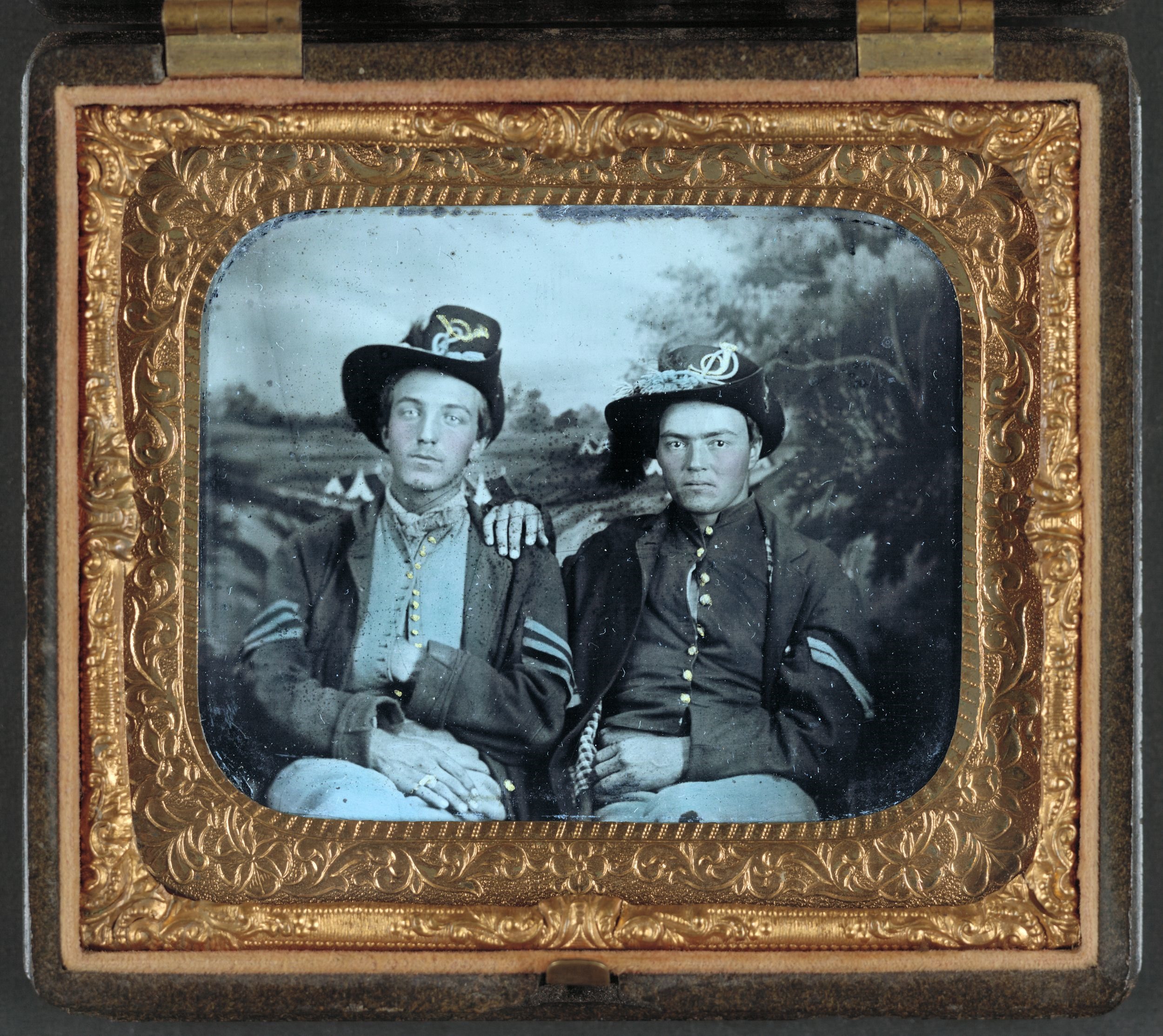
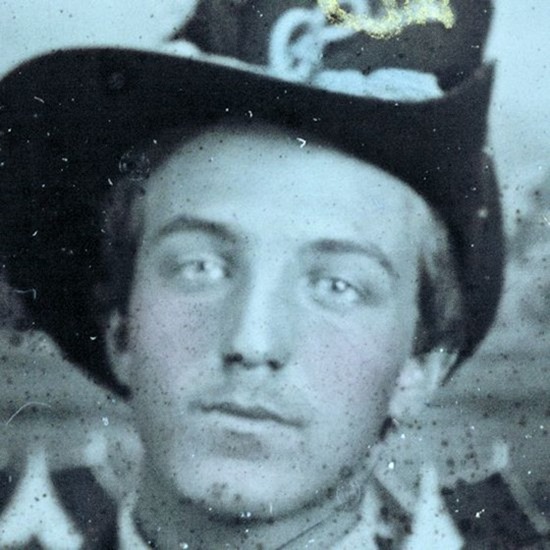
Unidentified sergeant and corporal in Union uniforms-- in frame

Unidentified sergeant and corporal in Union uniforms in front of painted backdrop showing camp scene

__________

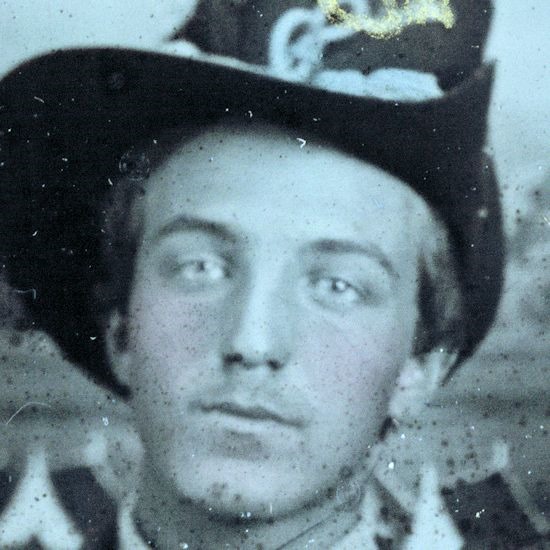
Close-up crops:

Unidentified sergeant and corporal in Union uniforms--right


Unidentified sergeant and corporal in Union uniforms--left

__________

sixth-plate tintype, hand-colored ; 8.3 x 9.3 cm (case)

Liljenquist Family Collection of Civil War Photographs; Ambrotype/Tintype photograph filing series; Library of Congress Prints and Photographs Division.

Record page for image is here.

__________

digital file from original itemNote – This image has been digitally adjusted for one or more of the following:

  • fade correction,
  • color, contrast, and/or saturation enhancement
  • selected spot and/or scratch removal
  • cropped for composition and/or to accentuate subject matter
  • straighten image

Civil War Portrait 095

by John Beauchamp Jones

            NOVEMBER 16TH.—Governor Brown, Georgia, writes the Secretary that he is opposed to impressments, and that the government should pay the market price—whatever that is. And the Rhett politicians of South Carolina are opposed to raising funds to pay with, by taxing land and negroes. So indicates the Mercury.

            We have news to-day of the crossing of the RapidanRiver by Meade’s army. A battle, immediately, seems inevitable.

November 16.—General Burnside retreating on the advance of Longstreet, evacuated Lenoir, Tenn., but fought a battle at Campbell’s Station. The fight lasted for some hours. The Federal troops retreated to the protection of their batteries, which opened upon the rebels with effect, and checked their advance. They fell back to the river; a second battle was fought in the afternoon, which continued until nightfall, Burnside remaining in possession of the ground. Loss of the rebels estimated at one thousand killed and wounded. Lieutenant-Colonel Smith, Twentieth Michigan, was killed.—Doc. 19.

Letter No. XXIII.

Camp Near Louden, East Tennessee,
November 15th, 1863.

My Precious Wife:

I have been deterred from writing to you on account of our continued movement. We left the front of Chattanooga on the 5th of this month; that is, Longstreet’s corps. The remainder of Bragg’s army still lies in line of battle, where they have been for six weeks. We are now in about thirty miles of Knoxville, with-Burnside in front of us or at Knoxville, I do not know which. Think there will be a fight in a day or two, unless the Yanks fall back. If we can whip them we can get in the rear of Chattanooga, and Thomas (Rosecran’s successor) will be compelled to fall back to middle Tennessee or Kentucky, but it is almost impossible to conjecture what will take place, as a single movement of the enemy may change the entire face of affairs in a day.

I wrote to Mrs. Carter about two weeks ago, and also to Judge Devine, giving him my reasons for not being at the January court. J will write to Brother Charles to-day. I saw John Kennedy from Camden, South Carolina, this morning. He is colonel of the Second South Carolina Regiment. I used to help him in his Greek and Latin at school. He is one of the handsomest men in the army, and a good officer. James Villipigue is quartermaster. Frank Gilliard is lieutenant-colonel of the same regiment. Henry Green, our old college sheriff, is their chief cook and bottle washer. I was forcibly reminded of my old college days and times, and have had my happiest moments since I left you in meeting old South Carolina friends. They have been my most congenial associates. The air is so chilly and damp that I shall have to cut my letter short, for there is little satisfaction in writing in the open air.

I am getting quite anxious to see you and the children, and occasionally I am very homesick, and always tired of the war, as is every man in the army, without exception. Nevertheless it may prove a blessing in making us all appreciate home and its blessings. I am satisfied there are few or no occasions which are sufficient causes for war; its horrors will never be dreamed of except by soldiers actually engaged in it. Don’t be uneasy about the children; make them obey your rules, but do not make your rules severe or numerous. Do not have too many rules on any subject, but have one universal rule; you must be obeyed. Then be cautious how and what you order. I often look from my blanket to the stars and think of the childrens’ favorite, “Twinkle, twinkle, little star,” and wonder if Stark has taught it to Mary yet. I want to see them grow up and love each other, and we can look at them and be happier. I feel like I will see you all again after awhile, and even if I do not there is much consolation in the 11th verse of the 59th chapter of Jeremiah. I have time to read a good deal now when we are camped, and have read several interesting books lately; among them is, “Great Expectations.” Oh, how many passages I have read and wished you could enjoy them with me, and we will enjoy them yet.

Give my love to all who love me, and tell the servants to obey you or look out for my ghost. All the Waco boys are well. Billy Dunklin received letters from Frank and the doctor yesterday.

Your husband, faithfully ever,

John C. West.
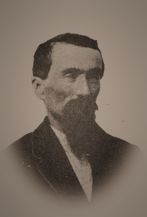
Sunday, 15th—Came on to Van Wert. Jim stopped at Carmichael’s and got his boots. Came on to Mr. Peck’s and to Mr. Somers; stopped and spent Monday.

Colonel Lyons.


Nashville, Tenn., Nov. 15, 1863.—We commence brigade drill tomorrow under General Ward, and are to drill three times a week.