December 7.—The 4th New York Heavy Artillery has orders to move to Fort Ethan Allen, near Washington, and I have orders to return to Canandaigua. I have enjoyed the five weeks very much and as “the soldier” was on parole most of the time I have seen much of interest in the city. Uncle Edward says that he has lived here forty years but has never visited some of the places that we have seen, so he told me when I mentioned climbing to the top of Trinity steeple.
December 2013

Caroline Carson Woolsey to Jane Stuart Woolsey at Fairfax Hospital.
General Meade’s Camp,
Near Brandy Sta., Dec. 7th, ’63.
Dear Jane . .—The train which left at 11 yesterday morning brought me through all right last night, by dark. A telegram from General Williams, sent to the conductor and meeting me on the train, said, in reply to one from me, that the ambulance would meet me at Brandy Station. The conductor had had some difficulty in finding me on the long train, but at the railroad bridge I heard “Woolsey” yelled at the door instead of “Rappahannock Station,”—which proved successful. I find that no movement of importance is on foot, and winter quarters somewhere (not here) confidently looked for this time. I hear a great deal said in justification of General Meade’s retrograde movement. The War Department is entirely responsible for the failure of the last campaign,—having ordered it, but not allowing General Meade to attack in his own way. We might have had a great battle and carried the rebel position with very great loss, but nothing but the position would have been gained. The rebels behind their strong works could have been very little damaged and would have had only to fall back, if we had assaulted.
We are camped in the woods near John M. Botts’ house, and are in this way shielded from the winds. There is no news.
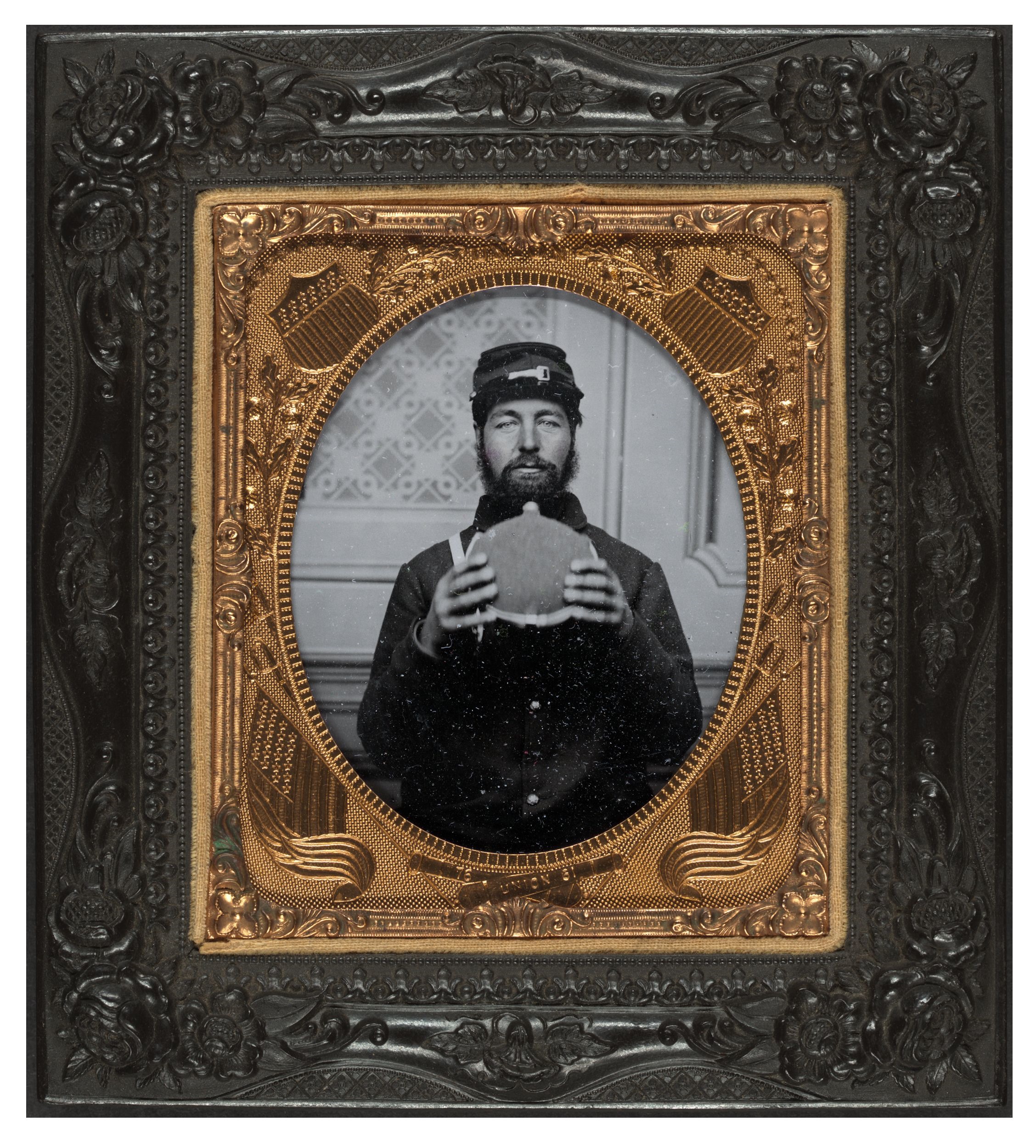
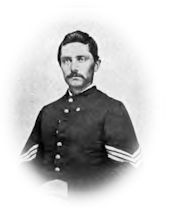
Unidentified soldier in Union uniform with canteen
__________
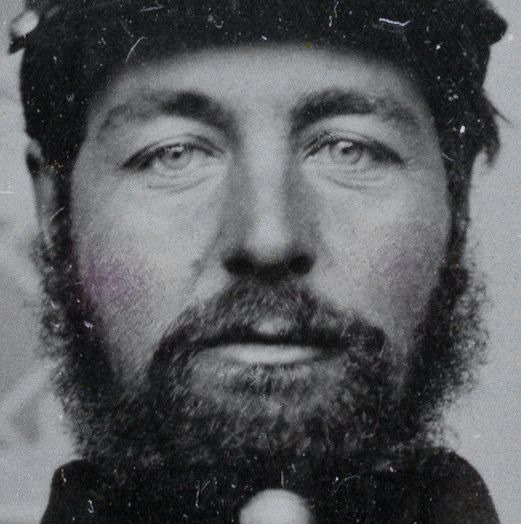
Close-up crop:
__________
Sixth-plate ambrotype, hand-colored ; 12.3 x 11.1 cm (frame)
Liljenquist Family Collection of Civil War Photographs; Ambrotype/Tintype photograph filing series; Library of Congress Prints and Photographs Division.
Record page for image is here.
__________
 Note – This image has been digitally adjusted for one or more of the following:
- fade correction,
- color, contrast, and/or saturation enhancement
- selected spot and/or scratch removal
- cropped for composition and/or to accentuate subject matter
- straighten image
Civil War Portrait 099

by John Beauchamp Jones
DECEMBER 7TH. —Cold and clear. Gen. Longstreet telegraphs to-day from Rutledge, Tenn., some fifty miles northeast of Knoxville, and says he will soon need railroad facilities. He is flying from superior numbers, and may be gathering up supplies.
Governor Vance writes distressfully concerning the scarcity of provisions in certain counties of North Carolina, and the rudeness of impressing agents.
Lieut.-Gen. Hardee telegraphs from Dalton that 5000 cavalry, besides two brigades of Buckner’s command, are with Longstreet, and that other troops ought to be sent him (H.) to compensate for these detachments.
Mr. L. S. White obtained another passport yesterday to go to Maryland, on the recommendation of Col. Gorgas, Chief of Ordnance.
There was a quorum in Congress to-day; but the message was not sent in.
A five-dollar gold piece sold at auction on Saturday for $140—$28 in Confederate notes for one of gold.
December 7.—Major-General Foster, from his headquarters at Tazewell, Tenn., sent the following to the National War Department: “Longstreet is on a full retreat up the valley. Your orders about following with cavalry, shall be carried out. My division of cavalry attacked the enemy’s cavalry in one of the passes of Clinch Mountains, yesterday P.M., and are pushing them vigorously. Couriers from Knoxville arrived last night. The road is clear. Sherman arrived here yesterday.”
—President Lincoln issued the following recommendation for prayer and thanksgiving, for the defeat of the rebels under General Longstreet: “Reliable information having been received that the insurgent force is retreating from East-Tennessee, under circumstances rendering it probable that the Union forces cannot hereafter be dislodged from that important position, and esteeming this to be of high national consequence, I recommend that all loyal people do, on receipt of this information, assemble at their places of worship, and render special homage and gratitude to Almighty God for this great advancement of the national cause.”—A debate on the question of the employment of substitutes in the Southern army was held in the rebel Congress.—The steamer Von Phul, on a trip from New-Orleans to St Louis, was fired into at a point about eight miles above Bayou Sara, and seriously damaged. — Major-General John A. Logan assumed command of the Fifteenth army corps, at Bridgeport, Ala.—The British steamer Ceres was captured off the port of Wilmington, North-Carolina.
—Full and enthusiastic meetings were held in various portions of Indiana. At the capital of the State, General Carrington made a strategical speech, illustrated by maps and diagrams, showing how the rebels could be circumvented.—Jefferson Davis sent a message to the rebel Congress, which was received and read in both houses.—(Doc. 21.)
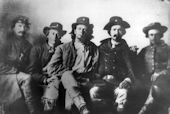
Monday, 7th—Came in this evening to Mr. Dyer’s, found the Yankees all gone, got supper and went down to the Planters, spent two or three hours. Gardner sold them a horse. I must take Miss Kate one. Came out to-night to Mr. Dyer’s, warmed and came on to Lige Jim Henry’s. I passed as a Yankee with Mrs. Henry. Came on to Mr. Holloway’s and to Mr. Bess’s and got dinner.
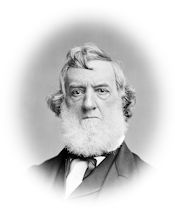
December, 1863. It has been some weeks since I have opened this book. Such time as I could spare from exacting and oppressing current duties at the Department has been devoted to gathering and arranging materials for, and in writing, my Annual Report. Most of this latter labor has been done in the evening, when I was fatigued and exhausted, yet extending often to midnight. Likely the document itself will in style and manner show something of the condition of the author’s mind. In examining, analyzing, and weighing matters, I have sometimes felt discouraged and doubted my ability to do equal and exact justice to all, injustice to none. Every statement and sentence will be scrutinized, criticized, and scanned; politicians, naval men, legislators, statesmen at home and abroad will in this period of war and controversy study what may be said, with a zeal and purpose beyond what is usual. My wish is to do wrong to no one, to present the facts correctly and to serve my country honestly. The two or three friends to whom I have submitted the paper speak encouragingly of it. Mr. Faxon has been most useful to me and assisted me most. Mr. Fox and Mr. Lenthall have made sensible suggestions. I have found Mr. Eames a good critic, and he twice went over the whole with me. When finally printed and I sent off my last proof, I felt relieved and better satisfied with the document than I feared I should be. There is a responsibility and accountability in this class of papers, when faithfully done, vastly greater and more trying than in ordinary authorship. I believe I can substantiate everything I have said to any tribunal, and have omitted nothing which the Congress or the country ought to know. I do not expect, however, to silence the captious, or those who choose to occupy an attitude of hostility. If what I have said shall lead the government to better action or conclusions in any respect, I shall be more than satisfied.
The President requested that each head of Department would prepare a few paragraphs relating to his Department which might, with such modifications as he chose to make, be incorporated into the message. Blair and myself submitted ours first, each about three weeks since; the others were later.
I was invited and strongly urged by the President to attend the ceremonials at Gettysburg, but was compelled to decline, for I could not spare the time. The President returned ill and in a few days it was ascertained he had the varioloid. We were in Cabinet-meeting when he informed us that the physicians had the preceding evening ascertained and pronounced the nature of his complaint. It was in a light form, but yet held on longer than was expected. He would have avoided an interview, but wished to submit and have our views of the message. All were satisfied, and that portion which is his own displays sagacity and wisdom.
The Russian government has thought proper to send its fleets into American waters for the winter. A number of their vessels arrived on the Atlantic seaboard some weeks since, and others in the Pacific have reached San Francisco. It is a politic movement for both Russians and Americans, and somewhat annoying to France and England. I have directed our naval officers to show them all proper courtesy, and the municipal authorities in New York, Boston, and Philadelphia have exhibited the right spirit. Several of the Russian ships arrived and ascended the Potomac about the 1st instant.
On Saturday, the 5th instant, the Admiral and his staff made me an official visit, and on Monday, the 7th, the Secretary of State and myself with Mr. Usher returned the visit. Taking a steamboat at the navy yard, we proceeded down to the anchorage near Alexandria, where we were received with salutes and dined with the officers. On Monday dined with Baron Stoeckel and the Russian officers at Seward’s. Tuesday we were entertained at Stoeckel’s. On Wednesday, the 9th, received and entertained fifty Russian officers, the Cabinet, foreign ministers, and the officers of our own Navy who were in Washington, and all professed to be, and I think were, gratified. It was a question whether some of the legations would attend, but I believe all were present at our party.
Mr. Colfax was elected Speaker, and the House was organized without difficulty. There was an attempt to elect some one else, but it was an abortion. Washburne of Illinois wanted the place, but found few supporters and finally gave up the effort. Blair, to my surprise, went for Washburne, who, though the oldest, is confessedly the meanest man in Congress. Colfax is exceedingly sore over the course of Blair, who, he says, advised him not to compete with Grow, and now, when the field is open and fairly his, goes for W., whom he (C.) knows B. does not like. I not only preferred Colfax, but did not conceal my contempt for Washburne, whose honesty and veracity I know to be worse than indifferent. Blair tells me his opinion of W. is pretty much the same as mine and that he suggested and spoke of him at the instigation of the President, who, while he has not a very high opinion of Washburne, wants confidence in Colfax, whom he considers a little intriguer, — plausible, aspiring beyond his capacity, and not trustworthy.
In the appointment of committees, Colfax avows a desire to do justice to the Departments, which Grow did not in all cases, but placed some men on the Department committees that were positively bad. In no instance did he consult me. There is a practice by some Secretaries, I understand, to call upon the Speaker and influence his selections. The practice is, I think, wrong, yet courtesy and propriety would lead a fair-minded Speaker to appoint fair committees and consult the Departments and not put upon committees any of the class mentioned, objectionable characters who would embarrass the Secretary or be indifferent to their own duties. The conduct of Colfax is, so far as I am concerned, in pleasant contrast with Grow. Not that I do not appreciate Grow, nor that I am not on friendly terms with him. But C. has called and consulted with me, which G. never did. I neither then nor now undertook to select or name individual members, as I know has been done by others. Colfax named or showed me a list of names from which he proposed to make up the Naval Committee. He says Schenck intimates he would like to be chairman, — that when, in Congress twenty years ago, he was on the Naval Committee, the duties were pleasant and familiar to him. There are, however, family rather than public reasons which now influence him. If on the Naval Committee he would expect to legislate and procure favor for his brother. The Schenck family is grasping and pugnacious. I objected to him, and also to H. Winter Davis, who is Du Pont’s adviser, and who is disappointed because he was not made Secretary of the Navy.
In the Senate there is a singular state of things, I hear. Their proceedings are secret, but I am informed the Senators are unanimously opposed to placing John P. Hale on the Naval Committee, where he has been Chairman, but persistently hostile to the Department. The sentiments of Senators, I am told, confounded Hale, who alternately blusters and begs. Some, very likely a majority, want the moral courage to maintain and carry out their honest convictions, for there is not a Senator of any party who does not know he is a nuisance and discredit to the Naval Committee, and that he studies to thwart and embarrass the Department and never tries to aid it. This movement against Hale is spontaneous in the Senate. It certainly has not been prompted by me, for though he is the organ of communication between the Department and the Senate, I have ceased to regard him with respect, and have been silent respecting him. The Senators have failed to pay attention to him, and do well in getting rid of him, if they succeed in resisting his importunities, which, I hear, are very persistent.
. . . The Senators have, in their secret meetings, let [Hale] know their opinion of him, — that their confidence in him has gone. Should they continue him as Chairman of the Naval Committee, he will have no influence, and his fall, which must eventually take place, will be greater. . . .
The interference of Members of Congress in the organization of the navy yards and the employment of workmen is annoying beyond conception. In scarcely a single instance is the public good consulted in their interference, but a demoralized, debauched system of personal and party favoritism has grown up which is pernicious. No person representing a district in which there is a navy yard, ought ever to be placed on the Naval Committee, nor should a Member of Congress meddle with appointments unless requested by the Executive. It is a terrible and increasing evil.
A strange sale of refuse copper took place in September at the Washington Navy Yard. I have had the subject investigated, but the board which I appointed was not thorough in its labors, and did not pursue the subject closely. But the exhibit was such that I have dismissed the Commandant of the Yard, the Naval Storekeeper, and two of the masters, who are implicated, yet I am by no means certain I have reached all, or the worst.
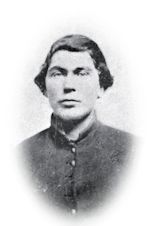
Bridgeport, Sunday, Dec. 6. A beautiful Sabbath day. Air soft and balmy, camp remarkably quiet and still. Two large mails received, I the happy recipient of eight letters. Spent most of the day in writing a letter commenced the 1st to T. L., such is the difficulty of letter-writing in the army. Felt tired and worn out indeed and slept considerable of the day. Osterhaus’s Division came in and went into camp on our left.
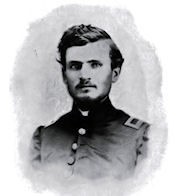
6th. Up at daylight and breakfast in time to move at 7. Cloudy, cleared up in P. M. Moved down near Maynardsville road and halted. Sent for rations. Scare in 2nd Brigade. Some firing. Rebels left Knoxville and on way to Va. Cavalry here in valley. Graham’s Brigade after them. Guess all will get away. Few captured this P. M. Glorious for E. Tenn. Ours forevermore.
Sunday, 6th—I went on patrol guard in the city today, and shall be on guard off and on all night, looking for spies. I attended the evening services of the Baptist church while off duty after a two-hour shift. The weather is nice and warm, as it has been for many days.


