
7th. Made arrangements for 13 men. Went to camp again after making diligent inquiries, and partial agreement.
February 2014

Colonel Lyon’s Letters.
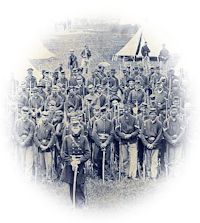
Feb. 7, 1864.—We have received our veterans’ furlough, and expect to leave here for Janesville the last of the week, with between 400 and 500 of the regiment; in which case we shall reach there about the 17th, and get home two or three days later. Jerry and Minerva will go home with us. They will make arrangements for housekeeping.
February 7th, 1864.
I have just returned from attending divine service at the Soldier Chapel, an old, shaky building, without fire. We are to have preaching every Sabbath and prayer meeting every day. The Christian Commission is beginning to make itself felt here. Their agent visits us every day, distributes tracts, papers, writing paper, envelopes, etc., gives good advice, sings patriotic and other airs, prays with and for us, and does it all in such a kindly, benevolent way that he has won all hearts.
Everything is quiet—even rumor is ominously silent. Expectation is on the rack. I would not be surprised at anything but peace and our departure for the North. This hospital is not yet broken up for want of patients—transportation cannot be procured—food must be first attended to. There is but one engine running between here and Loudon. From Chattanooga to Loudon two flatboats make one trip each per week, if there is sufficient water. There are over three thousand sick and wounded soldiers in this city. Stores, taverns, court houses, are all pressed into hospital service. The original population has nearly all left; some have gone south, but the greater portion have gone north. And still they go. Every day “Old Joseph’s” shrill voice may be heard on yonder corner, as he “closes out” some poor unfortunate, who is selling off his household goods to go to some more favored land.
Language cannot describe nor imagination picture the destitution of these people. I see by the Louisville papers the people of the North are much in doubt of our ability to hold Knoxville in case Longstreet again attacks us. I am surprised at the misapprehension of our situation now and during the siege. The Journal says our numerical strength is much reduced. The reverse is the fact. It says we have no supplies. We certainly have as many now as then, with the railroad to Chattanooga nearly completed. Our men have been constantly at work strengthening and perfecting the fortifications. Knoxville can only be taken by siege, and before we could be driven to any great extremity, relief could, and would, reach us from Chattanooga.
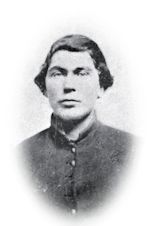
Huntsville, Sunday, Feb. 7. Rough night for the guard. Rainy and cold. The countersign “Vicksburg” which gave rise to musings which aided in forgetting time. Relieved at 9 A. M. Attended church in company with Griff, E. W. and D. J. D. Service was held in the Methodist, Presbyterian and Episcopal churches at the same hour (10 A. M.) Curiosity prompted to attend the latter, an elegant furnished church of unique construction, Gothic style, poorly arranged for sound. The civilians were apparently of the aristocratic class, mostly women, equalling the military in numbers. The white-robed minister was a young intelligent Irishman, I should judge. A good choir with the deep-toned organ opened the service with fitting music, after which prayers were read and ceremonies performed for nearly an hour and a half, which to me was mere mockery of religion, reading their desires to God from an established formula, but careful always to omit the prayer for the President of the U. S. A. It was not worship. Ah no! the heart was cold. It was but Phariseeical affectations. A short sermon on charity was read at the close. Very good, the effect of which was tested by passing the plates which were returned well laden with “soldier greenbacks”. The money of that government they will not pray for is very acceptable. I returned to camp, although not pleased with the exercise, yet I trust, benefited. The solemn notes of the organ had awakened feelings that are too apt to lie dormant in the soldier’s breast, those that raise the mind above the din of common life, and look to a future of immortality, purity, which all hope to obtain ere long. “Heaven is my home”.
Aunt Rachel’s Village,
St. Helena, February 7, 1864.
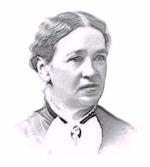
Your nice long letter reached me only to-day. That is the worst of our living here, letters are very long getting to us and come by very uncertain hands, and we never know when a mail is going out. I have to trust to chance for getting our mail to Beaufort. So do not be alarmed if a vessel sails with no word from me, the next one will probably bring double.
I see by your letter that you are quite dissatisfied about my decision to stay till next summer, but I am sure that if you were here you would think as I do and advise my waiting. First place, the voyage. If I go this spring, I cannot ask transportation again in the fall, for our dear, good General is now having perpetual trouble and annoyances by having his passes discredited, or disapproved or complained of because they are so numerous. Yet he is very careful to give furloughs and passes only once a year except in cases of necessity or urgency. Even if I asked and obtained the two leaves of absence, I dread four sea voyages in six months or so. I think I must go home during the next unhealthy season. I cannot stand the trial of it here another year. I am not afraid of being sick myself, but of having to nurse and doctor those who are. I am quite sure that if I go North this spring and am seasick, as I cannot help being, it will make me run the risk of the autumn rather than of the voyage, and so I want to make sure of being away from this place through another such season as the last was. Besides, if I go now, I must run North in a hurry and come back before I have half seen you, my whole time being taken up with preparations for coming back here. But in the summer I will stay three months, have a thorough change and renovation, and have some leisure with you.
I am really ashamed and sorry about writing home for boxes and giving you all so much trouble, taking your time which is so overcrowded. I shall need some dresses in the spring, but there were very pretty things in Beaufort last year, and Susannah can make them up. If they are old-fashioned, no matter, for I shall only see you in the mountains, and down here I shall probably see less company than we used to. I suppose you thought me unconscionable in sending for carpets and household things, but this is my home probably for the rest of my days, and I want to be comfortable in it. I have lived now for two years in the midst of makeshift and discomfort, and have often thought this winter that even servants at home were more nicely provided with domestic conveniences and things to save time and trouble. So I sent for a few things of my own; that is, I wanted them taken from our house, and in the sale or division of our household goods, charged to my account — such as the carpet. Our room is nearly as ill-built and open as a rough country stable. H. ‘s stable is a palace to it, and, our only bit of carpet being on our parlor floor, we have bare boards in our rooms with the air rushing through every crack, and sunlight along every board plainly, visible where the sun shines under the house. This is comfortless and cold as you cannot imagine, who have not had uncarpeted floors since you can remember. When we first came here, and for a time, these things were endurable, but year after year it is hard to live so. Besides, now that things are taking a more permanent form here, everybody’s style of living is improving and we must do as others do. You know what South Carolina fare is. We are just in the oyster hole again, and have nothing else till we are sick of the sight of them. I was going to send home for butter, for we have had neither butter nor milk for some time — so much less than last year; but Mr. Buggles says he will supply us. We had a cow sent to us and were happy, but she was a jumper — and our fence such as you might expect — and she jumped and ran, after our feeding her for three days and getting just one- quart of milk. Her feed, too, was a heartbreak — we are not sure of it from day to day — none to be begged, borrowed or bought, so her escape was a relief.
Living is frightfully high and difficult. Butter — as rancid as possible, when it is to be had at all — is forty-five cents a pound; chickens not to be bought at any price generally, but now and then a tiny specimen for fifty cents; eggs, fifty cents a dozen. But even our rations are hard to get now that we have no gentleman in the house. As for safety, we do not need one. If you remember the village at all, you know Dr. Lukins and the church. Our house is the next one, and a call from our house would be heard even with windows down, by Mr. Lynch and Dr. Hunting. We never were so well protected by neighbors and helpers as now. We have an old man in the yard, to tend our horses and cow, cut our wood, etc., for four dollars a month; then Rina to do our cooking, washing, and housework for five dollars a month, and a girl for scrubbing, waiting on table, errands, fires, etc., for two dollars. This is much higher than before, but low as wages are going. Cooks get here enormous wages — from eight to forty dollars a month. The place is growing fast, and I suppose we shall soon come to Northern rates. It is amusing to see how the able-bodied workers are being coaxed and courted by the leasers of places, like Mr. Fairfield. There are not enough to cultivate the leased places, for it is to be hoped that every family will have its own land and find work enough on that. Except in Mr. Philbrick’s case,[1] white ownership or large owners proved unfortunate for the people last year.
We are getting very much interested in the villagers, particularly in the minister, a certain black or brown man who is certain to make his mark in the world. He is very eloquent and ambitious and makes a great stir in the department by his public speaking. He lives near us and his sister teaches in the school here. He often comes in of an evening, and the other day he found out to his intense horror that I was a Unitarian. But, though he says he expected better things of me, and various other things like that, he is really wonderfully liberal, and, as he will probably fall in with the right kind of people by reason of his eloquence and genius, he will one day perhaps be a Unitarian himself. There are a great many interesting people among these negroes, who are of a higher order than the plantation people.
To-day I have attempted yeast! We have had buckwheat cakes about three times this winter. Think of that, you who eat Mrs. Furness’ breakfasts, which make my mouth and eyes water every time I think of them. Buckwheat cakes spurred me on to the necessary effort, and I have a pot of yeast by the fire, which looks and smells as unlike Kitty’s as possible. Do ask her to tell me just how to make it. I have hops and can get potatoes by paying enormously. Are they necessary? — and does she put in molasses? I wish I had muffin rings and knew how Mrs. Furness makes muffins. How I want some of hers! You will think I am demented about eating, but so is everybody who does not know where to get the next meal. Pork and beans — our ration meats, I do not like, and all other kinds are very precarious.
I am sitting up past ten o’clock and so is Ellen — wicked ones that we are! Good night.
General Saxton is one of our best and truest-hearted men — great in his goodness. I am glad to get my General back.
[1] Mr. Philbrick was at first charged with trying to make a fortune out of the cotton raised by the freed negroes. The event proved that his business ability was of great service to the negroes, and his intentions philanthropic in the best sense.

by John Beauchamp Jones
FEBRUARY 7TH, SUNDAY.— The tocsin is sounding at 9 A.M.
It appears that Gen. Butler is marching up the Peninsula (I have not heard the estimated number of his army) toward Richmond. But, being in the Secretary’s room for a moment, I heard him say to Gen. Elzey that the “local defense men” must be relied on to defend Richmond. These men are mainly clerks and employees of the departments, who have just been insulted by the government, being informed that no increased compensation will be allowed them because they are able to bear arms. In other words, they must famish for subsistence, and their families with them, because they happen to be of fighting age, and have been patriotic enough to volunteer for the defense of the government, and have drilled, and paraded, and marched, until they are pronounced good soldiers. Under these circumstances, the Secretary of War says they must be relied upon to defend the government. In my opinion, many of them are not reliable. Why were they appointed contrary to law? Who is to blame but the Secretaries themselves? Ah! but the Secretaries had pets and relatives of fighting age they must provide for; and these, although not dependent on their salaries, will get the increased compensation, and will also be exempted from aiding in the defense of the city—at least such has been the practice heretofore. These things being known to the proscribed local troops (clerks, etc.), I repeat my doubts of their reliability at any critical moment.
We have good news from the Rappahannock. It is said Gen. Rosser yesterday captured several hundred prisoners, 1200 beeves, 350 mules, wagons of stores, etc. etc.
Nevertheless, there is some uneasiness felt in the city, there being nearly 12,000 prisoners here, and all the veteran troops of Gen. Elzey’s division are being sent to North Carolina.
February 7.—The reconnoissance which was sent out from the army of the Potomac on Friday night and yesterday morning, returned to-day, having ascertained the rebels’ exact position and probable strength. The Second corps (General Warren’s) took to Morton’s Ford at seven A.M. yesterday, under Generals Caldwell, Webb, and Hayes. General Alexander Hayes, commanding the Third division, led the advance in person, fording the river waist-deep, on foot, at the head of General J. T. Owen’s brigade. The rebel sharp-shooters, in rifle-pits, on the other side, kept up a galling fire, while a battery stationed on the hills to the right, and a mile beyond the ford, hotly shelled the advancing column. On reaching the south bank of the Rapidan, a charge was made on the rebel rifle-pits, and twenty-eight men and an officer captured. Much skirmishing ensued, and at midnight Warren recrossed his troops.—(Doc. 104.)
—Great excitement and consternation existed in Richmond, Va., on account of the approach of General Butler’s forces upon that place. Last night the bells of the city were rung, and men were rushing through the streets, crying: “To arms, to arms! the Yankees are coming!” During the remainder of the night there was an intense commotion everywhere visible. The Home Guard was called out, and the tramp of armed men could be heard in all directions. Cannon were being hauled through the streets; women and children were hurrying to and fro, and there was all the evidence of such a panic as had never before been witnessed in Richmond.
This morning there was no abatement in the excitement. The guards were all marched out of the city to the defences, and the armed citizens placed on guard over the prisoners. Horsemen were dashing to and fro, and the excitement among the prisoners to know the cause of all this commotion became intense. It was soon learned that a large cavalry and infantry force, with artillery, had made their appearance on the peninsula at Bottom’s Bridge, within ten miles of the city, a point so famous in McClellan’s peninsula campaign, and that Richmond was actually threatened by the Yankees. The same hurrying of troops, arming of citizens, and excitement among the women and children continued during the morning. At two o’clock in the afternoon, the alarm-bells were again rung with great fury. The rumors that prevailed were conflicting and wild, and it was the impression that eight or ten thousand cavalry would have found but little difficulty in entering the city, liberating the prisoners, destroying the forts and public property, and retiring by the peninsula before any sufficient force to resist them could be brought to the aid of the small garrison left to defend it.—A fight took place at Vidalia, La.—(Doc. 76.)
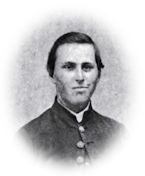
February 6th. Martinsburg, West Virginia. Cloudy, cold. Detailed for picket duty. Located on Charlestown Pike, southeast of town. On post two hours and off four. So I passed the day. Along in the evening, while out on post, was relieved from duty, informed that I had been granted a furlough for ten days, giving to me an opportunity to visit old Connecticut. On my return to camp, found that Edwin White of our company had also received a furlough. After a bath and a change of raiment, we decided to journey together. We left camp about eleven o’clock at night. At the depot was informed that the next train North would leave at 2 A. M., which would be Sunday morning. About midnight we started up town to find something to eat. The town being under martial law, provost guards were at every corner to protect the town and preserve order. I was in possession of the countersign, having received it early in the evening while on picket duty. Did not find anything to eat, had a good time walking around while waiting for the train. Whenever challenged by the guards, I would advance and give the countersign. Few trains were run on the B. & O. R. R. in the night. Shall not be able to get anything to eat until our arrival in Baltimore, where the train is due about 7 A. M. We are very happy over the prospect of seeing home and friends once more, having been in the service for eighteen months.

Saturday, 6th—Our army did not move until in the afternoon, because of having to lay the pontoons across the Pearl river. The rebels had burned the bridges, twenty-eight in all, after crossing. I was detailed this morning as special guard at the Seventeenth Corps headquarters while out on this expedition. Things are quiet in the rear.
6th. In evening went to town to see about assignment. Went to Atheneum. “Hidden Hand,” Miss Sallie St. Clair played her part well—pretty actress.


