Thursday, 9th.—Reported Federals advancing again.
March 2014
9th. Wednesday spent the day at home.. Somewhat rainy. Played chess with Thede and read in “Dutch Republic.” What is more trying to be borne than suspense.
March 9, Wednesday. Went last evening to the Presidential reception. Quite a gathering; very many that are not usually seen at receptions were attracted thither, I presume, from the fact that General Grant was expected to be there. He came about half-past nine. I was near the centre of the reception room, when a stir and buzz attracted attention, and it was whispered that General Grant had arrived. The room was not full, the crowd having passed through to the East Room. I saw some men in uniform standing at the entrance, and one of them, a short, brown, dark-haired man, was talking with the President. There was hesitation, a degree of awkwardness in the General, and embarrassment in that part of the room, and a check or suspension of the moving column. Soon word was passed around for “Mr. Seward.” “General Grant is here,” and Seward, who was just behind me, hurried and took the General by the hand and led him to Mrs. Lincoln, near whom I was standing. The crowd gathered around the circle rapidly, and, it being intimated that it would be necessary the throng should pass on, Seward took the General’s arm and went with him to the East Room. There was clapping of hands in the next room as he passed through, and all in the East Room joined in it as he entered. A cheer or two followed. All of which seemed rowdy and unseemly. An hour later the General and Mr. Seward and Stanton returned. Seward beckoned me and introduced me and my two nieces.
To-day I received a note from the Secretary of State to be at the Executive Mansion quarter before 1 P.M. The Cabinet was all there, and General Grant and his staff with the Secretary of War and General Halleck entered. The President met him and presented to the General his commission (As Lieutenant-General of the United States Army) with remarks, to which the latter responded. Both read their remarks. General Grant was somewhat embarrassed.
A conversation of half an hour followed on various subjects, but chiefly the war and the operations of Sherman.
Wednesday, 9th—It rained all day. We are still on guard at the roundhouse. Troops are on the move, both up and down the river as fast as the transports can carry them. New troops are to garrison Vicksburg from now on. We are glad to leave the place, for we have been in and around Vicksburg for more than fifteen months, and have seen some very hard service in that time. But there is something about Vicksburg, the Gibraltar of the West, that is really fascinating.
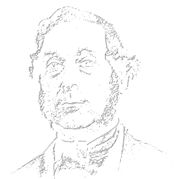
by John Beauchamp Jones
MARCH 9TH.—A frosty morning, with dense fog; subsequently a pretty day.
This is the famine month. Prices of every commodity in the market—up, up, up. Bacon, $10 to $15 per pound; meal, $50 per bushel. But the market-houses are deserted, the meat stalls all closed, only here and there a cart, offering turnips, cabbages, parsnips, carrots, etc., at outrageous prices. However, the superabundant paper money is beginning to flow into the Treasury, and that reflex of the financial tide may produce salutary results a few weeks hence.
March 9.—A fight took place near Suffolk, Virginia, between a force of rebels and a portion of the Second Virginia colored regiment, commanded by Colonel Cole, resulting in a loss of twenty-five rebels, and twenty killed, wounded, and missing of the Nationals.[1]
—Forty of the Thirtieth Pennsylvania cavalry were captured by guerrillas about a mile and a half from Bristoe Station, Virginia. They were surrounded and compelled to surrender. Several of them afterward escaped.
—The steamer Hillman was attacked by a gang of guerrillas, stationed on the Missouri shore opposite Island No. 18 in the Mississippi River, and several persons were killed and wounded.
—President Lincoln this afternoon formally presented to Major-General Grant his commission as Lieutenant-Gcnoral. The ceremony took place in the Cabinet chamber in the presence of many distinguished personages. General Grant having entered the room, the President rose and addressed him thus:
“General Grant: The nation’s appreciation of what you have done, and its reliance upon you for what there remains to do in the existing great struggle, are now presented with this commission constituting you Lieutenant-General in the army of the United States. With this high honor devolves upon you also a corresponding responsibility. As the country herein trusts you, so, under God, it will sustain you. I scarcely need to add that with what I have spoken for the nation, goes my own hearty personal concurrence.”
To which General Grant replied as follows:
“Mr. President: I accept this commission with gratitude for the high honor conferred. With the aid of the noble armies that have fought on so many fields for our common country, it will be my earnest endeavor not to disappoint your expectations. I feel the full weight of the responsibilities now devolving on me, and I know that if they are met, it will be due to those armies, and, above all, to the favor of that Providence which leads both nations and men.”
The President then introduced the General to all the members of the Cabinet, after which the company were seated and about half an hour was spent in conversation.
—Major-general Peck, in general order, issued the following from his headquarters at Newbern, N. C.: “The moment when we are threatened with an advance by the enemy, is the proper time to remind the gallant officers and soldiers of this command of the results of the recent operations in North-Carolina.
“Besides the repulse of General Pickett’s army at Newbern, the following have been captured: Six officers, two hundred and eighty-one prisoners and dangerous rebels, five hundred contrabands, two hundred and fifty arms and accoutrements, one hundred and thirty-eight horses and mules, eleven bales of cotton, one piece of artillery, caisson complete, one flag, many saddles, harnesses, and wagons. Much property of the rebel government has been destroyed from inability to remove it, as appears by a partial list: Two hundred and fifty thousand pounds of pork, eighty barrels of lard, seventy-five barrels of meat, twenty thousand bushels of corn, thirty- two barrels of beef, five hogsheads of sugar, five thousand empty sacks, one corn-mill, ten wagons, one ton of tobacco, eighteen mules, two warehouses of salt, and two extensive salt manufactories. Thousands of deserters have; entered the lines, and resumed their allegiance to the Federal Union with joy and gladness. These valuable services will he appreciated by the Government and the people, and this brief allusion to them should stimulate all to renewed energy in the final campaign against the revolutionists.”
[1] The following Is the Southern version of the story:
Weldon, March 9.—The enemy occupied Suffolk in force on Sunday. We attacked them to-day, and, after a short struggle, drove them in a rout out of the town, killing a number, capturing one piece of artillery and a large quantity of commissary and quartermaster stores. The enemy are flying to Portsmouth, burning bridges, and leaving every thing behind. We pursued them beyond Bernard’s Mills.
M. W. Ransom, Brig.-Gen.
G. E. Pickett, Major-Gen.
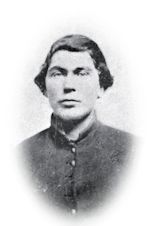
Huntsville, Tuesday, March 8. Rainy. Appearance of bad weather. Henry Robson taken to smallpox camp, having been sick in camp for nearly a week with varioloid. On duty, hauling wood for the cooks both morning and afternoon. Recruits were drilled by Sergeant Sweet. Reports of several court-martials read at dress parade, of artillery men. —— of our Battery, ten days hard labor after twenty in confinement in guard house. News reached us of a terrible calamity having befallen the homeward bound veterans of the 4th Minnesota. Cars running off the track, killing eighteen soldiers, five or six wounded. Having braved many battles, thus to die on the way to see those whom they loved.
8th. Came home on morning train. An hour too early at the depot. Chester called and played three games of chess. Victor. Minnie at home in evening. Played authors. Saw her home. Am quite uneasy yet as to the result of F’s decision. Anyway I will try to be happy myself and to make others happy, be good and do good. God help me.
Wednesday, 8th.—Had good dinner to-day; sent to Company F from the ladies of Crawford County, Ga. Plenty of bread, butter and ham.
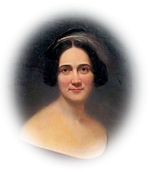
March 8th.—Mrs. Preston’s story. As we walked home, she told me she had just been to see a lady she had known more than twenty years before. She had met her in this wise: One of the chambermaids of the St. Charles Hotel (New Orleans) told Mrs. Preston’s nurse—it was when Mary Preston was a baby—that up among the servants in the garret there was a sick lady and her children. The maid was sure she was a lady, and thought she was hiding from somebody. Mrs. Preston went up, knew the lady, had her brought down into comfortable rooms, and nursed her until she recovered from her delirium and fever. She had run away, indeed, and was hiding herself and her children from a worthless husband. Now, she has one son in a Yankee prison, one mortally wounded, and the last of them dying there under her eyes of consumption. This last had married here in Richmond, not wisely, and too soon, for he was a mere boy; his pay as a private was eleven dollars a month, and his wife’s family charged him three hundred dollars a month for her board; so he had to work double tides, do odd jobs by night and by day, and it killed him by exposure to cold in this bitter climate to which his constitution was unadapted.
They had been in Vicksburg during the siege, and during the bombardment sought refuge in a cave. The roar of the cannon ceasing, they came out gladly for a breath of fresh air. At the moment when they emerged, a bomb burst there, among them, so to speak, struck the son already wounded, and smashed off the arm of a beautiful little grandchild not three years old. There was this poor little girl with her touchingly lovely face, and her arm gone. This mutilated little martyr, Mrs. Preston said, was really to her the crowning touch of the woman’s affliction. Mrs. Preston put up her hand, “Her baby face haunts me.”


