Wednesday, May 18. —I was sent for by General Ledlie at 3 A.M. Saw General L. and General Crittenden. Received orders to move forward into the woods in my front, with the 56th, the 35th Massachusetts acting as the support, and charge the rebel rifle-pits. Moved forward at 4 A. M. When within about 100 yards of the abattis, I ordered a charge, and going on the double-quick we reached the abattis, a very thick one. Here we were under a very heavy cross fire of canister and musketry, and it was impossible to get the men forward. I could not blame them much, for the limbs, and even trees, were cut down like grass, and the place was most decidedly uncomfortable. I sent the sergeant major to General Ledlie with the information that we could not take the works. He returned, but could get no instructions. I ordered the men forward again in vain, and in endeavoring to get up the 35th as a support, they ran away, for which I did not blame them. I then ordered the men to fall back, which they did, forming in front of the rifle-pits. We were ordered into the woods again, and the men ordered to lie down. We were soon ordered into the breastworks again. The 57th Massachusetts and 4th and loth Regulars were ordered in, but got no farther than we did. We lost 37 wounded, 2 killed, and 10 missing. Two officers were wounded, Lieutenants Maylone and Littlefield. Lieutenant McArdle seriously wounded in the head by a sharpshooter. General Crittenden sent for me in the evening and told me to take charge of the corps picket, as we were to withdraw and take up a new position.
May 2014
May 18 — Both armies are still in position facing each other and ready for fight. There was some heavy cannonading at several parts of the line this morning and also some musketry.
On The Sick List.
May 18. Since the affair over on the railroad, I have been on the sick list and have suffered severely with chills and fever and from other onuses. I am not yet able to do much and I fear I shall not be able to go on many more excursions with the boys. The regiment has been out nearly every day, and has suffered a loss of more than 200 men, killed, wounded and prisoners. In the fight at Drury’s Bluff, two mornings ago, we lost heavily, some 150 men being killed, wounded or taken prisoners. Heckman’s brigade was almost annihilated. He was taken prisoner together with Capt. Belger, who lost four pieces of his battery, and Col. Lee, with nearly the whole of the 27th Massachusetts regiment, besides a good many officers and men of the 23d Massachusetts and 9th New Jersey.
Madison Station, Wednesday, May 18. Awoke before daylight, numb with cold. Sought the fire around the ruins. I found the 59th Indiana lying sleeping, having returned at 1 A. M. after travelling twenty-six miles since they started through the rain, and no rations or rest. Skirmished with them two miles, driving them on to the river, but as they had no artillery they had to return. Alexander lost the road, consequently did not meet them. Picked up my breakfast from scraps of hard-tack scattered.
Train went on to Nashville and had to unload the forage. The rebel forces that came in yesterday, under command of Patterson, crossed the river in the night and surprised the post, having them almost surrounded before they were aware of their presence. They estimated fifteen hundred mounted men, four pieces of artillery. The Regiment precipitately made for the woods to escape. Lost everything, clothing, etc. and knapsacks. The affair was no credit to the officers and men of the 13th Illinois. Their time was out on the 24th inst., expecting to go home daily. About thirty of them are now on their way to Southern prisons.
10 A. M. Alexander returned with the troops, having been on a wild goose chase. Marched all night nearly, to find the bird safe. The raiders made good their escape across the Tennessee after having taken four mule teams and wagons, twenty to forty prisoners, a lot of good clothes, “Yankee blue”, supply of blankets, and killing two or three, one sick man shot after surrender, with a loss of sixty-four in our hands. Took his killed and wounded with him. On the other side they fired a salute of defiance.
12 M. Battery started by land for Huntsville. Infantry and the artillery came on train. Arrived at Huntsville 5 P. M., being gone twenty-four hours. Marched thirty-eight miles. Tired and sleepy. All hands enjoyed a hearty supper and a good night’s rest.
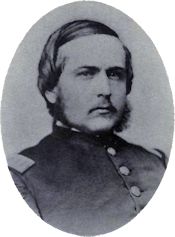
Wednesday, May 18th.
Our battalion was temporarily assigned to Col. J. Howard Kitching’s Brigade of the Reserve Artillery to-day, which lay along the Fredericksburg road, and at daylight we moved to join it, marching to a point near a house called the Harris House, I think. Very soon after our arrival artillery and musketry opened on the right of our army, and it was rumored that in a charge made by the Second Corps, a line of rifle-pits were taken and substantial earthworks unmasked behind them. We are all the time hearing about successful movements by the Second Corps. At night we counter-marched about five miles and camped near our last camp ground.
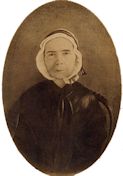
18th.—W. B. certainly captured. I thank God for it, as the least of casualties.
Generals Lee and Grant still fighting.
On the south side, Beauregard has driven Butler to Bermuda Hundreds, where he is under shelter of his gunboats. Oh! when will this fearful state of things end?
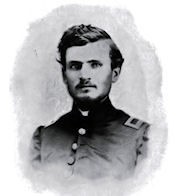
18th. Read Independents and “Night and Morning,” by Charles Leper. Hard fighting today at Spottsylvania, nearly a drawn game. Ours if either.
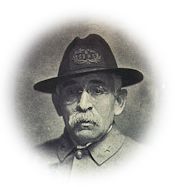
May 18—We are divided in divisions and companies. There is a thousand in each division and one hundred in each company. A sergeant commands each company. We get light bread one day and crackers the other.
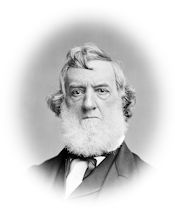
May 18, Wednesday. Selected the Visitors to the Naval Academy, although we have not yet the appropriation bill, but we can no longer delay, if there are to be Visitors. Congress is very dilatory in necessary business, and yet impatient of delay in others.
Mr. Seward called on me this afternoon at a late hour in reference to alleged misconduct of the Marigold, which is charged with firing a gun at a blockade-runner within six hundred yards of Morro Castle. As Temple, Fleet Captain of the East Gulf Squadron, had left me but a few moments previously, I sent for him, there having been no report of the case. While waiting for Temple, Mr. S. informed me that a forged proclamation had been published by sundry papers in New York, among others by the World and Journal of Commerce, imposing a fast on account of the failures of Grant and calling for a draft of 300,000 men. Seward said he at once sent on contradicting it and had ordered the English steamer to be delayed. He then had called on Stanton to know whether such a document had passed over the regular telegraph. Stanton said there had not. He (S.) then ordered that the other line should be at once seized, which was done. Seward then asked if the World and Journal of Commerce had been shut up. Stanton said he knew of their course only a minute before. Seward said the papers had been published a minute too long; and Stanton said if he and the President directed, they should be suspended. Seward thought there should be no delay.
Gold, under the excitement, has gone up ten per cent, and the cotton loan will advance on the arrival of the steamer at Liverpool with the tidings. It seems to have been a cunningly devised scheme, — probably by the Rebels and the gold speculators, as they are called, who are in sympathy with them.
by John Beauchamp Jones
MAY 18TH.—Showers and sunshine, the first preponderating.
Our killed and wounded in Beauregard’s battle amount to some 1500. The enemy lost 1000 prisoners, and perhaps 1500 killed and wounded.
Railroad men report heavy firing this morning near Fredericksburg, and it is believed another battle is in progress.
From the West we have a report, derived from the enemy at Natchez, that Gen. Banks has surrendered to Lieut.-Gen. Smith.
It is rumored likewise that President Lincoln has called for 60,000 militia, to defend Washington.
A fortnight ago, Mr. Benjamin procured passports for one or two of his agents “to pass the lines at will.” They may have procured information, but it did not prevent the enemy from coming.
Attended a funeral (next door to us) ceremony this afternoon at 5 P.M. over the body of Abner Stanfield, a nephew of Mrs. Smith, our next door neighbor, who fell in battle day before yesterday, near Drewry’s Bluff. By the merest accident his relatives here learned of his fall (by the paper we loaned them), and Mr. S. had his body brought to his house, and decently prepared for the grave. His bloody garments were replaced by a fine suit of clothes he had kept with Mr. S.; his mother, etc. live in Northern Virginia, and his cousins, the Misses S., decorated the coffin beautifully with laurels, flowers, etc. He was a handsome young hero, six feet tall, and died bravely in his country’s defense. He was slain by a shell. The ceremony was impressive, and caused many tears to flow. But his glorious death and funeral honor will inspire others with greater resolution to do and to dare, and to die, if necessary, for their country. The minister did him justice, for the hallowed cause in which he fell.


