Following the American Civil War Sesquicentennial with day by day writings of the time, currently 1863.

May 2014

Saturday, May 14th.

About 9 o’clock in the morning we came up with Burnside’s Ninth Corps in full sight of Spottsylvania Court House. During the day the artillery was gotten into position, and at about 7 o’clock P. M. there was some brilliant cannonading by both sides. We were moved up to the rear of the Artillery Brigade near the Nye River, where private Collins was wounded, and remained all night waiting for orders to camp, burrowing in the mud and sleeping under sheets of water, but no such orders came. We traveled about six miles to-day.

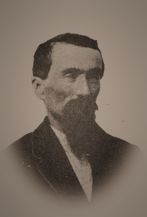
by John Beauchamp Jones

            MAY 14TH.—Warm, with alternate sunshine and showers.

                        With the dawn recommenced the heavy boom of cannon down the river. It was rumored this morning that our right wing at Drewry’s Bluff had been flanked, but no official information has been received of the progress of the fight. I saw a long line of ambulances going in that direction.

            To-day it is understood that the battle of Petersburg will be fought by Beauregard, if he be not withheld from attacking the enemy by orders from Richmond.

            We have been beaten, or rather badly foiled here, by orders from high authority; and it is said Gen. Ransom finds himself merely an instrument in the hands of those who do not know how to use him skillfully.

            The enemy is said to have made a bridge across the James River, either to come on the north side, or to enable the raiders to reach them. They are also planting torpedoes, for our iron rams. They are not yet ready.

            Gen. Lee is prosecuting the defensive policy effectively. Couriers to the press, considered quite reliable, give some details of a most terrific battle in SpottsylvaniaCounty day before yesterday, 12th inst. Our men (with extra muskets) fought behind their breastworks. The host of assailants came on, stimulated by whisky rations, ten deep, and fearful was the slaughter. Their loss is estimated at 20,000; ours, 2000. The enemy were still in front. Grant says he will not recross the Rappahannock as long as he has a man left. Lee seems determined to kill his last man.

            A great deal of time is said to have been consumed in cabinet council, making selections for appointments. It is a harvest for hunters after brigadier and major-generalships. The President is very busy in this business, and Secretary Seddon is sick—neuralgia.

            Last night Custis came home on a furlough of twelve hours. He got a clean shirt, and washed himself—not having had his shoes or clothes off for more than a week. He has not taken cold, though sleeping in the water, and not having dry clothes on him for several days. And his appetite is excellent.  He departed again for camp, four miles off, at 5½ A.M., bringing and taking out his gun, his heavy cartridge-box, and well-filled haversack (on his return).

            Half-past four o’clock P.M. A tremendous cannonade is now distinctly heard down the river, the intonations resembling thunder. No doubt the monitors are engaged with the battery at Drewry’s Bluff. It may be a combined attack.

            Gen. Pemberton has resigned his commission; but the President has conferred on him a lieutenant-colonelcy of artillery. Thus the feelings of all the armies and most of the people are outraged; for, whether justly or not, both Pemberton and Bragg, to whom the President clings with tenacity, are especially obnoxious both to the people and the army. May Heaven shield us! Yet the President may be right.
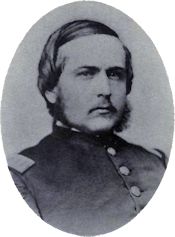

May 14, 1864, Daylight.

We have just been in line and the intention was to charge the Rebel position, but two batteries were discovered in front of us. The skirmishers advanced a little and brought down a heavy fire. A battery is now getting into position in our front, right in front of our company, and when it opens I expect we will have another rain of shell from the Rebels.

Nine thirty-five a.m.—Our battery has opened, but the Rebels cannot reply. Four of their guns are in plain sight of us, but our brigade skirmishers have crawled up so close that not a Rebel dare load one of them. Joke on them! One of my men was struck on the foot while talking to me a few minutes ago. Made a blue spot, but did not break the skin.

Eleven forty-five a.m.—I think our regiment has not had more than six or eight wounded this morning. Very heavy musketry firing is going on on our left. It is the 14th Corps.

Two p.m.—Since 1 p.m. terrific artillery and musketry firing has been going on on our left. The enemy was massing against the 14th A. C. when Thomas attacked them. I think he drove them some distance.

Two thirty p.m.—My company is ordered to be deployed and sent down the hill to support skirmishers. We are in position, very lively firing is going on.

Five p.m.—A splendid artillery duel is going on right over my head. The Rebel battery is just across an open field, not 600 yards, and one of ours is a short 100 yards in my rear. Osterhaus a half mile on our right is playing on the same battery. Thomas is still fighting heavily. He seems to be turning their right or forcing it back. Every time the Rebels fire our skirmishers just more than let them have the bullets. I tell you this is the most exciting show I ever saw. Their battery is right in the edge of the woods, but so masked that we can’t see it, or wouldn’t let them load. I write under cover of a stump which a dead man of the 26th Indiana shares with me.

Eight p.m.—Just relieved; I lost no men. The fighting on the left was Hooker and Howard, and was very heavy.

Monroe County, In Bivouac, May 13, 1864.

Dearest: — We are all right so far. Burned New River Bridge, etc., etc. A most successful campaign. The victory of Cloyd’s Mountain was complete. The Twenty-third and Thirty-sixth and part of Thirty-fourth fought under me. All behaved well. The Twenty-third led the charge over an open meadow to the enemy’s works and carried them with a will. It cost us one hundred and twenty killed and wounded. . . . This is our best fight. [The] Twenty-third captured two cannon and other trophies. General Jenkins and other officers and men captured. — Love to all.

H.

Mrs. Hayes.

Friday, 13 — From Salt Pond Mountain to Peters Mountain. A cold rainy morning. Afternoon, weather good. Bivouacked on east side of Peters Mountain very early. Sun and rest make all happy. Caught a Rebel train and a cannon at the foot of the hill. [At] 3 P. M. ordered to cross Peters Mountain to get forage for animals. A good little march — fifteen miles. Bivouacked at foot of Peters Mountain northeast side.

Henry Adams to Charles Francis Adams, Jr.

London, April 15, 1864

Politically we are silent and expectant. The idea is universal here that our armies are depleted and our last hour coming, while the tone of the sympathisers is more defiant than ever. I am willing to wait and I expect a terrific crash when it does come. No more news about our negotiation. In fact all this is a period of placid quiet just before everything breaks loose again. I expect about a fortnight more of it before the tussle begins that is to do for us one way or the other. Meanwhile existence floats along and time passes, thank God!

May 13, 1864

As for politics, there has been scarcely any time when our hopes stood so low in the opinion of persons in this country. The current is dead against us, and the atmosphere so uncongenial that the idea of the possibility of our success is not admitted. I am not sorry for this state of feeling. If we are defeated, it will be only what is already considered certain. If we conquer, the moral triumph here will be double.

Friday, 13th—I went out as corporal of the picket this evening at 5 o’clock. There was in all a detail of one hundred and twelve sent out from the two regiments, besides the commissioned and non-commissioned officers. The guards are stationed from one to two miles from camp, where the cattle are corralled.

Friday, 13th.—Last night, just before dark, had orders to leave camp; built up big fires at dark and moved out; marched all night in direction of Resacca. Everything indicates a retreat. Some skirmishing back about Dalton. 11 A. M., Federals two miles below Dalton. Formed in line of battle at 12 M., but soon moved on; 4 P. M., formed in line of battle two miles from Resacca. Threw up breast works.

Friday, May 13. — Our men finished building their rifle-pits. Sharpshooters popping away at us all day. About 4 P.M. the enemy fired a volley at us, and another at 9.30 P.M. We were notified that two army corps were to pass in our rear during the night, and form on our left.

May 13 — Last night at two o’clock we received marching orders, and soon afterwards we were on the march through rain and thick darkness. We moved farther to our right and marched to within about two miles of Spottsylvania Court House, and in front of the enemy’s works. Some little sharpshooting along the lines to-day, with now and then a cannon shot mixed in, but no other fighting of any consequence. Our battery did no firing to-day. It rained all last night, the ground is very wet and soft, and the roads very muddy. We bivouacked to-night in front of the enemy’s works, with our guns in battery ready for action.