Following the American Civil War Sesquicentennial with day by day writings of the time, currently 1863.

May 2014

May 5 — We were on the march all last night, moving in the direction of the Wilderness. I was so sleepy this morning just before day that I dozed and came very near falling off my horse. To-day about eleven o’clock we sighted the first new goods of the season in the way of live bluecoats; near the Wilderness we encountered a force of the enemy consisting of cavalry and artillery. They opened fire with their artillery and fired on our cavalry at first sight and right away, without wasting any time or opportunity, and were trying to do some ugly work from the start. We put two of our rifled guns in position and replied to their battery, but they had decidedly the advantage of us, both in position and the number of guns. We had only two guns engaged and the Yanks had eight, yet, as unequal as the first fierce conflict was, they did not budge us from our position with our two pieces. After fighting about an hour they ceased firing and we put in the last word and remained on the field an hour after the firing ceased; then we moved our battery to their left and flanked their position, thereby causing them to retire their guns and wholly abandon their first position. Undoubtedly the Yankee batteries did the best and most accurate firing to-day that I have seen or been around since the war; their shrapnel shot exploded all around and over us, and the everlasting ping and thud of slugs, balls, and fragments of shell filled the air with horrid screams for an hour, and the death-dealing mixture tore and raked up the sod all around us like a raging storm of iron hail. We had three men wounded, two horses killed, and several disabled.

From the way the shell howled closely around me today, if the Yanks keep on handing them around with the same familiarity and accuracy that they did this afternoon I am afraid that they will harvest me before I will be ripe, and gather me in before the season is over and the campaign ended.

The field that we were in was covered with dry broom-sedge about two feet high, and the cowardly Yanks, although they had the best position and eight pieces to our two, attempted to drive us from the field by setting the dry broom-sedge on fire by shooting some kind of a something of the firework family at us, which, from its appearance as it came flying slowly and emitting a thick volume of inky black smoke, and blazing with glaring red fire, looked like a little bunch of hell. It ignited the grass, which burnt rapidly all over the field and right around, and even under our guns, but we stuck to our position and kept up our fire on the Yankee battery.

Late this evening we had a spirited little fight on the banks of the Po, a sluggish little stream and one of the headwaters of the Mattapony; at first we repulsed the enemy and drove them across the Po and back on their infantry. Then and there they made a bold stand and successfully resisted our assault and further advance. We recrossed the little rivulet then and camped for the night. The whole country between here and the Rapidan seems to be full of Yankees, and I expect that there will be some hot work in the fighting business tomorrow. To-day’s operations transpired in the northwestern part of Spottsylvania County just in the edge of the Wilderness. We did our fighting to-day under the supervision of General Rosser and in conjunction with his brigade of cavalry. Our cavalry fought well and stubbornly this afternoon.
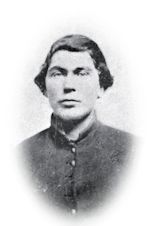
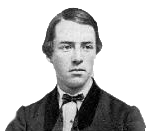
Huntsville, Thursday, May 5. On guard, second relief. Our camp is very nicely located. A pretty brook runs in front of the Battery which the boys have dammed up to make deep enough for a pleasant bath. Water to cook and drink is hauled from the “big spring”. The almost ceaseless rattle of trains keeps us wide awake as yet. Upwards of forty trains passed to-day, the whistle disturbing our slumbers at every hour of the night. 4th Minnesota Veteran Volunteers returned from home. Health very good.

Thursday, May 5. — Started at daybreak and marched 6 miles, when we joined the remainder of the regiment near Germanna Ford. We soon started again, and crossed the river on a pontoon bridge at the ford. Heard that the army met with little opposition here. Saw some of General Grant’s staff, who told us that our army was in position at Mine Run and was to attack this morning. General Grant ordered us to hold the hills and fortifications which command the crossing, which we did. His aide told us that Sherman telegraphed that all looked well, and that he was to attack to-day. Gillmore and Smith attack Petersburg to-day, and we feel of the enemy at Mine Run, where he retreated after the crossing of the army yesterday. Heard cannon and musketry about one o’clock, continuing at intervals during the afternoon. Started about 8 P.M. to march, but were ordered back again. The 10th and 4th Regulars joined us to-day.

May 5.—Our army on the Rapidan is in line of battle. Grant is moving his mighty columns. Where the battle will take place Heaven only knows. I pray that God may be with us, and that the enemy may be driven far from our borders.

We are now attending the prayer-meetings held by the Young Men’s Christian Association, which are very interesting; three of them will be held this week for our dear army, and for the battle now pending.

5th. Orders to march at 4 o’clock. Got up in time for breakfast. Today our forces seem to abandon Brandy Station, and the railroad. Most of the army across the Rapidan and Germania Ford. Reached the ford with 300 cattle at 10. Four companies reported to Gen. Wilcox. Infantry crossing all day, 9th Corps. A very warm day. Dusty roads, faces all crisped. Rapidan a narrow rocky bottom, high banks, rapid stream. Rappahannock narrow and less rapid. Went into camp about a mile from the river, rode out Pike to our pickets. Rebel pickets in sight. Very heavy firing on the left in the 6th Sedgwicks Corps. Quite heavy loss. Rumor that Butler was in Petersburg and Thomas fighting at Dalton. (Beginning of Grant’s attack on Lee and the Campaign of the Wilderness.)

May 5—Moved this morning, feeling for the enemy, and came up to them at noon, five miles from the Run, in the Wilderness. It certainly is a wilderness; it is almost impossible for a man to walk, as the woods are thick with an underbrush growth and all kinds of shrubbery, old logs, grapevines, and goodness knows what. My corps of sharpshooters was ordered to the front. We formed in line and advanced to the enemy. We fought them very hard for three hours, they falling back all the time. Our sharpshooters’ line got mixed up with Gordon’s Brigade, and fought with them. In one charge we got to the most elevated place in the Wilderness. We looked back for our brigade, but saw it not. Just then a Yankee officer came up and we took him prisoner. Some of Gordon’s men took him to the rear. Six of our regiment, sharpshooters, myself included, went to the right to join our regiment, but were picked up by the Yankees and made prisoners. We were run back in their line on the double quick. When we got to their rear we found about 300 of our men were already prisoners. The Yankees lost very heavily in this fight, more than we did. Although we lost heavy enough, but, my Heavens! what an army they have got. It seems to me that there is ten of them to one of us. It looks strange that we could deliver such fearful blows, when, in fact, if numbers counted, they should have killed us two years ago. In going to their rear we passed through four lines of battle and reinforcements still coming up, while we are satisfied with, or at least have no more than one line of battle.

May 5, Thursday. I have written a letter to the President in relation to the Fort Pillow massacre, but it is not satisfactory to me, nor can I make it so without the evidence of what was done, nor am I certain that even then I could come to a conclusion on so grave and important a question. The idea of retaliation, — killing man for man, — which is the popular noisy demand, is barbarous, and I cannot assent to or advise it. The leading officers should be held accountable and punished, but how? The policy of killing negro soldiers after they have surrendered must not be permitted, and the Rebel leaders should be called upon to avow or disavow it. But how is this to be done? Shall we go to Jeff Davis and his government, or apply to General Lee? If they will give us no answer, or declare they will kill the negroes, or justify Forrest, shall we take innocent Rebel officers as hostages? The whole subject is beset with difficulties. I cannot yield to any inhuman scheme of retaliation. Must wait the publication of the testimony.

Early on the morning of the 5th we fell in and marched towards Todd’s tavern, halting in a clearing about nine o’clock, the enemy close at hand on the Wilderness pike. Very hot, and both men and animals suffered much. While halted here, the head of our column was in contact with a strong cavalry force skirmishing with the enemy, in the effort to locate his position. All was excitement and vastly interesting. Very soon after halting we were ordered to countermarch and take position on the Brock road, our right resting near the Orange Court House plank road. Shortly after forming on this road, Frank’s brigade was advanced on our extreme left to watch a road leading into the Cartharpin road, over which the enemy were reported to be advancing. The Brock road runs through a dense wilderness slightly elevated above the ground to the southwest. In rear of our left, the ground was open, and the whole artillery of the corps took position on it. Our line connected on the right with Gibbon, and he with Birney. The right swung back, making a northward curve from the Orange plank road and was prolonged by Warren and Sedgwick.

As soon as the division was in position it began building breastworks alongside the road with logs, etc., and made some slight slashings. In front of us to the southwest was a dense woods, through which at a considerable distance ran an unfinished railroad, almost parallel to the Brock road, where the enemy were supposed to be in position. Frank was directed to march forward, inclining slightly to the right, so as to look up this road and form across it, but for some reason did not go far enough, and so the rebels had a fine place for forming their troops. Hancock, Barlow, and Gibbon, each had their headquarters on the road, which was lined with troops, and for several hours we did nothing but ride up and down this road, awaiting orders to advance. About four o’clock the fighting opened on the right, and immediately the silence of the woods was changed into an uproar indescribable; tremendous volleys of musketry followed each other with such extraordinary rapidity, it seemed that one or another of the armies must be annihilated. Presently we were ordered to move forward and attack through the woods, with two of our brigades, Brooke and Smith. They were soon across the breastworks, struggling with the interminable undergrowth, where it seemed impossible to keep any kind of alignment, yet we did, especially Brooke, who advanced nearly six hundred yards and immediately became engaged with the rebels who lay hid from view in front.

The fighting on the right was severe, and several times reinforcements were sent from our part of the line to assist. Whilst the fighting in the woods in front was in progress, the staff were kept riding between them and the main road, a most difficult, dangerous, and disagreeable duty; not only was it almost impossible to ride a horse through the labyrinth of undergrowth, but one could only keep his direction by the sound of the firing. The woods were full of smoke, in many places on fire, and nothing could be seen twenty yards ahead. On one occasion I should have ridden directly into the enemy’s lines but for Colonel Striker, of the Second Delaware, who saw me in front of his line just in time to call me back. I supposed I was riding in exactly the opposite direction to what I really was. Boots and clothes were torn to pieces and the horses became frantic. Colonel Chapman, of my regiment, happened to be division field officer of the day, and as his duties only commenced with the establishment of the picket line at night, he as was usual rode with the division staff, conspicuous by his sash worn across his shoulder. Riding along the road together in rear of the general, the colonel appeared to me to be unusually depressed and I asked him what was the matter. He said he felt a presentiment that he was going to be killed and could not get over it. I said what I could to dispel his low spirits, but apparently without result. Soon afterwards a tremendous fire opened on Brooke, and Barlow turned to ask some one to ride to the lines and see what was going on, when Chapman instantly volunteered and immediately rode into the woods. In a very few moments some one came out and reported him killed, when Barlow ordered me to go to Brooke, and in the confusion and amidst the terrible firing I forgot all about Chapman, but as soon as I reached the road again, I found the report only too true, and at that time he was dead and had been carried out of the woods. It completely upset me for the time being; we had chatted together constantly during the day, and his low spirits and unhappy appearance made me feel very sorry for him. He was so conspicuously brave and gallant that I have no doubt he felt certain of his death, and yet in face of such forebodings, he instantly proposed to go himself, when it was some one else’s duty and now “he sleeps an iron sleep, slain, fighting for his country.”

Brooke and Smyth succeeded in driving the enemy before them, getting within range of the plank road on ground a little higher than that in rear, and thus improved their position. The staff was never worked harder; both Barlow and Hancock kept the main road, while we were incessantly struggling back and forth through the woods to the fighting lines. Under ordinary circumstances no one would have dreamed of riding a horse into such a place, but now we rode right into it, never thinking of the consequences in the excitement. The rolling of musketry was continuous, the woods retained the sound, and echoed back from line to line the repeated volleys and continuous file firing. An occasional shell tore through the woods, clearing a passage for itself, as neatly as though cut by an axe, and in many places the dry undergrowth was on fire. Fighting continued till dark when it generally ceased, and the dead and wounded were gathered up in front. The losses were heavy, and the result about an even thing. We could not see much of anything, and consequently generally directed our fire by that of the enemy, guessing results by the slackening or increasing of the enemy’s fire. A great many officers fell, amongst them General Alex Hayes, a popular and excellent officer, commanding a brigade in our Second division.

Preparations were made for renewing the attack at four o’clock next morning, and after serving out ammunition, the troops prepared their coffee and ate their first meal for the day. Then slept in their ranks.

by John Beauchamp Jones

            MAY 5TH.—We have many rumors to-day, and nothing authentic, except that some of the enemy’s transports are in the James River, and landing some troops, a puerile demonstration, perhaps. The number landed at West Point, it seems, was insignificant. It may be the armies of the United States are demoralized, and if so, if Grant be beaten, I shall look for a speedy end of the invasion. It is said some of the advanced forces of Grant were at Spottsylvania C. H. last night, and the great battle may occur any hour.

            Gov. Smith is calling for more exemptions (firemen, etc.) than all the governors together.

            Col. Preston asks authority to organize a company of conscripts, Reserve classes, in each congressional district, the President having assigned a general officer to each State to command these classes. The colonel wants to command something.

            The Commissary-General, Col. Northrop, being called on, reports that he can feed the army until fall with the means on hand and attainable. So, troops didn’t starve in thirty days several months ago!

            A Mr. Pond has made a proposition which Mr. Memminger is in favor of accepting, viz.: the government to give him a bill of sale of 10,000 bales of cotton lying in the most exposed places in the West, he to take it away and to take all risks, except destruction by our troops, to ship it from New Orleans to Antwerp, and he will pay, upon receiving said bill of sale, 10 pence sterling per pound. The whole operation will be consummated by the Belgian Consul in New Orleans, and the Danish Vice-Consul in Mobile. It is probable the United States Government, or some members of it, are interested in the speculation. But it will be advantageous to us.

            “A PERTINENT RESOLUTION.—The following was offered recently in the United States Senate, by Mr. Saulsbury, of Delaware:

            `Resolved, That the Chaplain of the Senate be respectfully requested hereafter to pray and supplicate Almighty God in our behalf, and not to lecture Him, informing Him, under pretense of prayer, his, said chaplain’s, opinion in reference to His duty as the Almighty; and that the said Chaplain be further requested, as aforesaid, not, under the form of prayer, to lecture the Senate in relation to questions before the body.'”

Whiteside, May 4, 1864.

The day’s march has been much more pleasant than any of us expected. Most of the dead mules have been buried, and the road much improved, especially through the narrows. We smelled a number of mules, though, after all the improvements. This, Whiteside, is like Bridgeport, a portable town, with canvas covers and clapboard sides.

The boys have been catching some nice fish in a little stream by our camp this evening. Made about 15 miles to-day.