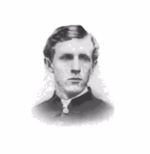
June 16th. [First Assault on Petersburg.] About six A.m. the enemies Artillery opened on us, our batteries were soon in position, and silenced their fire. Built breast works and at six P.M. the whole line moved forward on a charge, we were soon hotly engaged, we gained about half a mile of ground. Co. B had 8 wounded. I was struck by two spent balls.
June 2014
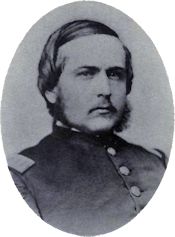
Thursday, June 16th.
At 4 A. M., after having loaded and unloaded boats for two days and two nights, the regiment crossed the river and then halted for some time waiting for an issuance of rations, but none being supplied, we marched on, hoping to overtake the supply train which it was discovered had preceded us, but, failing to overhaul it, we halted at 1 o’clock and the train was ordered to return. The road was extremely dusty and the temperature was 100 degrees in the shade, but at 5 o’clock we moved on to meet the train but missed it, and after marching about fifteen miles in the aggregate, we camped, thoroughly tired out, hot and hungry. We are informed that some of the rebels’ outer works have been taken by the Ninth Corps.
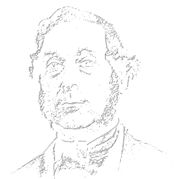
by John Beauchamp Jones
JUNE 16TH—Clear and pleasant weather, but dusty.
The Departmental Battalion marched away, last night, from the Chickahominy (guarding a ford when no enemy was on the other side!) for Chaffin’s Farm, on the James River. They were halted after marching an hour or so, and permitted to rest (sleep) while the rest of the brigade passed on. When Custis awoke he was alone, the battalion having left him; and he was ill, and knew not the road. So he set out for the city, with the intention of going down the river road this morning. But he grew worse after reaching home. Still, he resolved to go; and at 8 A.M., having marched all night nearly, he set out again, and met his sergeant—who had likewise diverged as far as the city—who said if he was really too ill to march, he would deliver the captain a surgeon’s certificate to that effect, which would be a sufficient explanation of his absence. So, Surgeon C. Bell Gibson, upon an examination, pronounced him sick, and certified to the captain that he could not be fit for service for a week or ten days. At 3 P.M. he is in bed with a raging fever.
There was a fight at Malvern Hill yesterday, the enemy being repulsed.
There was also another assault on Petersburg, repulsed three times; but the fourth time our forces, two regiments, were forced back by overwhelming numbers from the outer line of defenses. ,
To-day it is reported that they are fighting again at Petersburg, and great masses of troops are in motion. The war will be determined, perhaps, by the operations of a day or two; and much anxiety is felt by all.
A letter from Hon. G. A. Henry, on the Danville Railroad, saying only 1000 men were there to defend it, with but two cannon without appropiate (sic) ammunition!
Soon after a dispatch came from Col. Withers, at Danville, stating it was reported 10,000 of the enemy were approaching the road, and only thirty-two miles distant. He called for reinforcements, but stated his belief that the number of the enemy was exaggerated.
I delivered these to the Secretary myself, finding him engaged writing a long letter to Gen. Kirby Smith, beyond the Mississippi!
In this moment of doubt and apprehension, I saw Mr. Randolph, formerly Secretary of War, and Mr. G. A. Myers, his law colleague, at the telegraph office eagerly in quest of news.
To-day the President decided that Marylanders here are “residents,” or “alien enemies;” if the former, they must fight—if the latter, be expelled. A righteous judgment.
Last night, as Custis staggered (with debility) upon the pickets at the fortifications of the city, not having a passport, he was refused permission to proceed. He then lay down to rest, when one of the pickets remarked to him that he was not “smart, or he would flank them.” Custis sprang up and thanked him for the hint, and proceeded to put it in practice.
The Examiner to-day says that Col. Dahlgren, a month before his death, was in Richmond, under an assumed name, with a passport signed by Gen. Winder, to go whithersoever he would. I think this probable.
At 3 P.M. the wires cease to work between here and Petersburg, and there are many rumors. But from the direction of the wind, we cannot hear any firing.
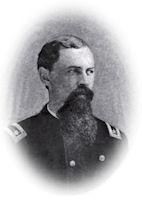
June 16, 1864.
We moved back a mile last night, being relieved by the 17th Corps. Taking it easy again to-day. There has been a lively artillery fight right in front of us to-day. Tell * * * if any of the 31st or 40th Alabama officers report at Johnston’s Island, to give them my compliments. One captain offered me his sword, but I hadn’t time to stop. We wanted that hill, then.
Colonel Lyon’s Letters.
Claysville, Ala., June 16, 1864.—I send this by Lieutenant Balis, who goes to Woodville in the morning with the remains of his brother, who died this afternoon of pneumonia. He was a new recruit, about 35 years old, and leaves a wife and one or two children. He was a frail man and ought not to have gone into the service.
June 15th. Up and early on the march this hot morning. Going up the narrow road over the mountains we make very slow progress. The Rebs and bushwhackers have cut down large trees and fell them across the road. The Pioneer Corps are having hard work to clear the road. As we pass slowly along the bodies of dead Rebs are lying beside the road, having been killed by the advance scouts. They looked frightful, with their long black beards and white faces, in death. The road is very narrow and winding as we go on up the mountains. At the side of the road one can look away down into the valley and ravines. Army wagons can be seen down among the trees. We suppose they must have broken down and been pushed over to get them out of the way. It was cause enough to set the boys talking and to help make them forget their own troubles. A hard, tiresome march over the mountains, stopping for the night between the Peaks of Otter, having marched only fourteen miles. Orders are to keep very quiet and not make any fires. Must go without our coffee for the night.
15th. Moved out on Richmond road, and Malvern Hill road till we encountered the enemy. Six companies of our regiment on extreme left skirmish line—rest in reserve, till the 18 P. V. were driven back in a little disorder; then the six companies were ordered in. So much confusion on part of 18th that we were into the rebs or they into us before we knew it. Then came confusion of orders. Our boys saw rebel infantry. Did them some damage. By order fell back a few rods and then held our line. One of Co. A killed and one of Co. M wounded. After one-half hour ordered to fall back. Nettleton’s Batt. holding the rebs—mounted—2 men wounded and 3 horses killed. Awfulest place for a fight we were ever in. Very thick pine brush and few trees. Woods on fire and smoke almost intolerable. Got out well. Fell back to junction of roads. I dismounted to fight. 2nd Ohio on picket. Co. M. ordered back to Smith’s store where we had fought. Rebs came in rear. Killed Sergt. Edson. One missing. Quiet till morning. Deep sleep. Rations issued. We failed to get any. Oh this is the most fatiguing work we ever did.
Wednesday, 15th—The day has been clear and quite warm. This morning Company E was sent out as sharpshooters. During the night the Eleventh and Sixteenth Regiments had thrown up a new line of rifle pits, about a half mile in advance of the old one, and at noon today moved forward in line of battle into the new trenches. At the same time our skirmish line was ordered to advance on the rebel skirmish line, and it being our company’s turn to go out on the line, we were deployed and advanced, driving in the rebel skirmish line for almost a half mile, pushing them back from their first and second lines of fence rails piled up for their protection. We approached so near to their rifle pits at the foot of Kenesaw mountain as to make it possible for their artillerymen to use grape and canister upon us, killing one man, William Alexander. The rebel skirmishers now received reinforcements, while our skirmishers on the left failing to come up with us, made a gap in our lines and left us in a very hot place for a little while, as it gave the rebels a cross fire on us and we were compelled to fall back, thus losing some of the ground taken. But just then our colonel sent another company in double quick to relieve us, and our lost position was regained. We had become completely used up and lost one man killed, one mortally wounded, seven slightly wounded, and one man taken prisoner.[1] Our stretcher bearers, after the fight, raised the white flag and went to get the body of Alexander for burial.
[1] As was supposed at the time. See note, under June 16th.—Ed.
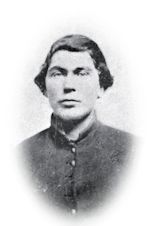
Huntsville, Wednesday, June 15. Weather fine. Health very good. Weight 138. Mounted monthly inspection by Captains Budlong and Dillon at 10 A. M. Green peas for dinner Myself sick. Division concentrating at this place. 63rd Illinois arrived at 4 P. M. Two soldiers, 2nd Brigade, married to girls they found at Scottsboro.
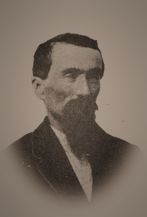
June 15 — Inactive with the first gun to-day, on account of an empty limber chest. Weather pleasant.


