Following the American Civil War Sesquicentennial with day by day writings of the time, currently 1863.

June 2014

June 15. — We lay all day about two miles from the James River, in the same position that we were last night. Day warm. We received orders to be ready to move at 6 P.M., and after issuing four days’ rations of ham and bread, and two of coffee and sugar, we started for the river [James], crossing on a pontoon bridge 2100 feet long. Passed General Meade’s headquarters before crossing the river, and saw Bache.[1]


[1] An aide to General Meade.

June 15th. Set out at 10 A.m. on the Petersburg pike; had gone ten miles when we heard firing; got to the extreme front at 12 M. The negro troops had taken four lines of the enemy’s works.

Wednesday, June 15th.

The Second Corps infantry and several of its batteries of artillery crossed the river to-day and started for Petersburg. About 9 in the morning our regiment was ordered up close to the river bank preparatory to crossing, but was held there all day waiting for an opportunity, the means of crossing being quite inadequate for the Corps. Taking advantage of the delay, I sent one of my men to a sutler to get something for me toothsome to eat, and he returned with what he said was the only can of boned turkey the sutler had, and with that and some hardtack which I had secured from a Commissary, I sat on a log on the banks of the James indulging in the most delightful luncheon I had taken for several weeks, and watching the troops and artillery crossing the river several feet below me. Many amusing scenes were witnessed from my log, perhaps the most amusing one of which was the struggle of two mules apparently to drown each other. They had been pushed off of a ferryboat into the river, and having their harnesses on, and being more or less strapped together, independent action was quite impossible, and so they devoted their energies to climbing over each other, the result of which was that each was alternately above and below the surface of the water until at length some of the teamsters got a rope fastened to one of the harnesses and dragged them ashore none the worse for their aquatic exercise. My company cook, Skinkle, had somwhere during the campaign picked up a wounded mule of great size, and by dint of careful nursing had secured a most useful beast of burden, upon which he hung the heavier cooking utensils of the company, his own knapsack and occasionally the knapsack of some weary comrade. Many other similar “waifs and strays” had been caught and utilized by the foot soldiers in the same way, until it seemed as if these “attached recruits” were more numerous than the regular “rank and file” of their kind. When we reached the James an order was promulgated to the effect that none of these useful animals should be permitted to cross, and when they were turned loose on the plain above the river it was surprising to see what an immense drove there was. Skinkle tried several times to run the guards, but his load of pots and kettles betrayed him and he was finally compelled to abandon the effort. Just at this juncture a bright idea struck “Little Scovil,” the youngest and the smallest man in the company, and coming to me very deferentially, he said that if I would give him “leave of absence” for the afternoon he would guarantee to get the mule across the river, and he appealed to my selfish interest by saying that the beast had carried my own overcoat and blanket many a mile, and would be wanted again for the same service. Upon getting his “leave,” Scovil distributed the motley load of “camp and garrison equipage” among the men of the company, for the mule had many friends, to be taken across by them, and, shedding his uniform, boldly led the beast down on to one of the boats with the mules of a wagon train, and actually safely delivered it to Skinkle on the other side.

by John Beauchamp Jones

            JUNE 15TH.—Clear and cool; warm late in the day.

            It is rumored now that the enemy got to Westtown yesterday, some ten miles below the point on this side occupied by Butler; and to-day he is leaving, either crossing to the south side (probably to cut the railroad), or embarking in his transports for no one knows whither. So, this attempt to take Richmond is as bad a failure as any. Grant has used up nearly a hundred thousand men—to what purpose? We are not injured, after withstanding this blow of the concentrated power of the enemy. It is true some bridges are burned, some railroads have been cut, and the crops in the line of the enemy’s march have been ruined; but our army is intact: Lee’s losses altogether, in killed and wounded, not exceeding a few thousand.

            A report of an officer states that the James River is not fordable anywhere above for forty miles.

            There is a rumor on the street that the head of Ewell’s corps (commanded by Gen. Early) crossed the Rappahannock, yesterday, at United States Ford. If this be so, there must be consternation in Washington; and the government there will issue embarrassing orders to Grant.

            The spirits of the people here are buoyant with the Western news, as well as with the result of Lee’s campaign.

            The death of Gen. Polk, however, is lamented by a good many. The operations of Forrest and Morgan are inspiring.

June 15, 1864.

This has been a star day, and a better feeling lot of men that compose our brigade will be hard to find, for to-night any way. The morning was occupied in cleaning guns, etc. At 11 o’clock the assembly was sounded, and we moved one and one-half miles, which brought us on the left of the whole army. By 1 p.m. we had our line formed running from right to left, 103d Illinois, 6th Iowa, 46th Ohio, 40th Illinois, with the 97th Indiana deployed as skirmishers. We were in about the center of an open lot of plantations, facing a densely-wooded hill of maybe 300 acres. It was a plumb one-third of a mile to it and already the enemy’s sharpshooters were reaching our men from it.

One of Company K’s men was shot here, and one of H’s. At precisely 1 p.m. we started, the men having been notified that they would have to get to that woods as quickly as possible. The Rebels opened pretty lively. Right in front of where I am now writing is a house. On the porch I see 11 children, not over nine years old. All belong to one woman. Haven’t seen her, but from what I have seen in this country, wouldn’t dispute the man who would tell me she was only 20 years old. This is a great stock country. As we started, the boys raised a cheer that was a cheer, and we went down on them regular storm fashion. A hundred yards before we got to the hill we ran into a strong line of rifle pits swarming with Johnnies. They caved and commenced begging. The pit I came to had about 20 in it. They were scared until some of them were blue, and if you ever heard begging for life it was then. Somebody yelled out “Let’s take the hill,” and we left the prisoners and broke. At the foot of the hill we came to a muddy rapid stream, from 10 to 15 feet wide and no crossing, so we plunged in. I got wet to my middle, and many did to their breasts.

The banks were steep and slippery and muddy. Though we all expected a serious fight on the hill, up we went every man for himself, and through to an open field, over which some 200 straggling sandy looking Johnnies were trying to get away, which most of them accomplished, as we were too tired to continue the pursuit fast enough to overtake them. However, the boys shot a lot of them. Well, they call it a gallant thing. We took 542 prisoners, and killed and wounded I suppose 100.

The whole loss in our brigade is not 10 killed and 50 wounded. I only had one man wounded in my company, Corp. E. D. Slater. There were three killed and nine wounded in the regiment.

There were three regiments of Rebels—the 31st, 40th and 54th Alabama. They ought to have killed and wounded at least 500 of us, but we scared them out of it. They shot too high all the time. Osterhaus also had a hard fight to-day, was successful in taking a line of rifle pits. Thomas drove them a mile.
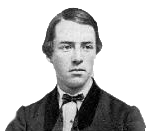
Colonel Lyon’s Letters.


Claysville, Ala., Wed. Eve., June 15, 1864.—I got an order this evening to send four companies to Whitesburg, which is on the river south of Huntsville, and some six miles below our present beat. The Adjutant starts in the morning for Huntsville for more specific instructions; so I improve the opportunity to let you know once more that I am well. I do not expect this order will involve any change in my headquarters. Colonel Chapman, I hear, is at Whitesburg now, waiting for these troops, and he will probably remain there and take care of that end of the route. This will relieve me from a good deal of tramping.

Colonel Lyon’s Letters.

June 14, 1864.—I have been down to the river today. Our pickets exchange shots with the rebels on the other side almost every day. They are few in numbers, and the river is so wide that it is a harmless amusement for both sides.

Colonel Chapman is below on the river somewhere, and I expect him every day. The 18th Wisconsin is on the river below us. I have got the companies all posted now, and intend visiting them as soon as Colonel Chapman gets back.

June 14th. Called up by daylight. This morning a hot one. Must bid farewell to this town. The people will no doubt be pleased to see us leaving. We had a very quiet time here. Roads very dusty. Our scouts report the enemy in all directions. The boys are in good spirits as we go marching along, taking observations, looking for points of interest. Passed within four miles of Virginia Natural Bridge. Was in hopes that we could see it. These are rough, stony roads. After a hard march we reached the town of Buchanon, near high and lofty mountains. Here the enemy had burned the bridge. The Engineer and Pioneer Corps made the ruins strong enough for us to cross. We camp for the night in a wheat field. Thankful to stop for a rest, after marching about twenty-four miles. It looks to us as though we shall be obliged to climb the mountains tomorrow. The road leads in that direction. This is a wild looking country. The scenery grand. Very few people can be seen as we pass through the towns and villages on the line of march, going farther in the enemy’s country, and away from our base of supplies. It makes us feel that we are in for much hard work and marching.

14th. Moved on to Charles City, and drew one-half day’s rations of provisions. Remained saddled till 3 P. M. when we moved back on the Richmond road to the junction of Richmond and Harrison Landing roads. Remained saddled at some church till morning. Hasty breakfast.

Tuesday, June 14th.—Lieutenant-General Polk instantly killed by shell to-day.