
July 14th. Layed in this place all day. At night we moved front and went to tearing down Rebel rifle-pits. Moved back in the morning.
July 2014
July 14, 1864.
Another hot day. We marched down to the river at Roswell and crossed it, and have gone into camp on the bank a mile above town.
This Roswell is a beautiful little town, such splendid trees all through it. Our cavalry four or five days ago destroyed some very large factories here. Judging from the ruins, they were more extensive than anything of the kind I ever before saw. About 1,000 women were employed in them; 700 of them were taken by our folks and sent to Marietta; I don’t know what for. Can’t hear of any enemy here.

by John Beauchamp Jones
JULY 14TH.—The drought continues here; but at some other places there has fallen heavy rain.
The excitement on the news of our successes in Maryland is intense, and a belief prevails that great results will grow out of this invasion of the country held by the enemy. Twice before but little if any benefit resulted from crossing thePotomac.
It is rumored to-day that Longstreet’s corps has marched toMaryland, and that Lee is with it.
Etowah Bridge, Thursday, July 14. All still and dull, the monotony of camp settled down upon us very soon, a few new shebangs and fixing up around quarters. No mail or news found us in this wild mountainous locality. Country people very ignorant.

Thursday, 14th—I am with a large number of sick in a ward over a vacant store building. For the last four days I have had the camp diarrhea, and have become so weak that I have to lie on my cot all the time.[1] But we have a good doctor in this ward.
[1] Mr. Downing has an entry in his diary for every day, but wrote them at a later date, after he was convalescing.—Ed.

Wednesday, July 13. — Heard accounts from Washington. Enemy shelled us from mortars during day. Day warm.
[Every evening the rebs would fire about a dozen mortar-shells at us, about dusk. We could see the lighted fuse going way up in the air, then stopping, and then coming down, and could tell pretty nearly where it was going to fall. Before their shells had reached the ground, our batteries would respond with an equal number, and return the compliment.]
Wednesday, July 13th.
After having been in the field hospital ever since Monday, the 11th, I rejoined my company to-day, feeling somewhat better for the rest and treatment I have had, but still very weak. It continues very hot and the dust is floating in clouds about us, and the deaths from sunstroke continue to be numerous. I found my company still with the infantry on the firing lines in the woods, but was rejoiced to learn that we were, or were to be, transferred to the Siege Train, and a preparatory inspection was had.
13th. Wrote home and to Hugh Beer’s wife. More clothing.
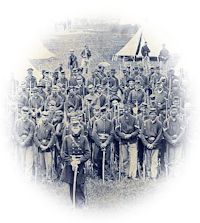
July 13th, 1864.
Another fond letter from my loving wife. Thank God, the way is once more opened. With all the trembling anxiety of her tender, loving heart apparent in every word, she asks, “What will become of you?”
Can you not see, my darling, that He who cares for sparrows has not overlooked your husband? She asks me next if I think I am treated fairly. To this I must reply, no, not quite fairly; not quite honorably. At the beginning of the spring campaign it was decided by the proper authorities that paroles, given on the field of battle, would not be recognized. This was the general rule that was adopted. As a general rule it was a good one, but there must be exceptions to all general rules. And General Burnside was quick to see our case was exceptional. If, then, as he decided, “under the circumstances their parole is good and must be respected,” I do not think it fair or honorable to place us in circumstances that render it impossible to comply with the conditions specified in our parole. Some of the men have become worn out and discouraged by the treatment they have received, and have returned to the ranks. Through the kindness of my officers I am permitted to “run at large” inside the lines, and do the best I can for myself. I did expect to be allowed to go home, as, at least, I have a moral right to do. I still think I may, should this campaign ever close, as it must eventually.
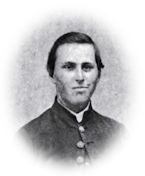
July 13th. Routed out by daylight. After rations, while waiting, wrote a few letters. The mail was most generally looked after by the Chaplain. Marching orders, “Fall in,” came the command, line soon formed. Down through the town we go, out on the Harper’s Ferry Pike. Weather fine. Soon take the route step, an easy gait. We take that step when there is no immediate danger of meeting the enemy. About ten miles out on the road we were surprised to meet our old commander, General Sigel, and staff, with a large escort. He was headed west while we were going east. Nothing important occurred during our march over rough roads. Night coming on, we halt for the night within a few miles of Harper’s Ferry. It is thought we have marched fourteen miles.


