December 30th. Marching orders. Reported the rebel cavalry leader J. E. B. Stuart about to raid into Maryland along the Baltimore and Ohio Railroad. The three companies of our regiment and other troops here are suddenly ordered out on the line of the B. & O. R. R. Left camp tonight in a warm rain storm.
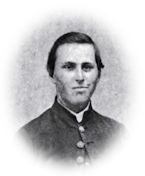
Civil War Diary of Charles H. Lynch, 18th Conn. Vol’s.
December. Much cold rain and snow-storms. Near our camp was a great neighborhood for pigs. They were allowed to roam about, running through our camp. Colonel warned the people to keep them out. It did no good. Colonel shot one, wounding it. Members of our company captured and dressed it. Company C had fresh pork for dinner. The owner tried to collect pay. The Colonel promised if the pigs were kept out of camp for two weeks he would pay. In less than three days the pigs were in camp again.
The routine for each day. Roll call at 6 A. M. Breakfast at 7. Guard mount, 8.30. Company drill, 9 to 11. Dinner, 12. Battalion drill, 2 to 4. Clean up for dress parade at 5 P. M. Supper at 6. Roll-call, 9. Taps, 9.30. On guard duty every other day and night. Much sympathy in this vicinity for the South. Railroads are kept well guarded.
Our duty at Camp Emory was not very laborious. Allowed to visit the city quite often on passes. After Sunday morning inspection no more duty required of us until dress parade. Guard duty must be done all the time.
November. The most important event was our first Thanksgiving in camp. Passed very pleasantly. A good dinner, with games of foot and base-ball. The day closing with dress parade. Many visitors from Baltimore and some from Connecticut. The weather during November was very fine for camp life. Barracks were built for winter quarters to take the place of tents.
October 30th. Camp fires were kept burning very late last night. The boys are singing, dancing, making speeches, and having a very merry old time. All seem happy. This morning the regiment formed in line for our march out of the old fort. When outside of the walls cheering began as the happy boys went marching on.
The regiment made a fine appearance as they marched through Baltimore. Every man seemed to be trying to do his best. Stopping for a rest in one of the streets, a grocer treated us to apples. Citizens cheered us as we marched along. Passed through Baltimore on out to the east side, going into camp near Fort Marshall on Snake Hill. Camp being established it was named Emory in honor of the General. Seven companies sent out for guard duty along the Baltimore & Philadelphia Railroad. Bridges had been set on fire at times. There was much sympathy for the South in Maryland. Companies A, B, and C remained in camp. Regimental headquarters a pleasant location for a camp. Guard duty, drilling, dress parade, with an occasional tramp through the country on skirmish drill was about the daily routine of duty, weather permitting. One of the very pleasant things about camp life was the writing and receiving of letters.
October 29th. Marching orders received. Our last day and night at Fort McHenry. Great rejoicing over the prospect of leaving the old place. Packing up and getting ready for an early start on the morrow. Singing and very happy in camp.
October 1st. I was detailed with twenty members of our company under the command of Lieutenant Merwin to take boats and to row to a long bridge over a branch of the Patapsco River, there to remain on guard duty for ten days. It was about eight miles from the fort. It proved to be a picnic for us. Our duty was to guard the bridge. When off duty we tramped through the country for miles. It was a fine fruit section of Maryland. We bathed in the fine, clear salt water and white sandy beach. The ten days passed quickly when we were relieved and obliged to report to our company at the old fort, when we resumed our duty of various kinds, drilling and guard duty, also keeping the camp clean.
Our rations remained the same from day to day, fresh beef, salt beef, pork, hard-tack, and soft bread. Our supper remained the same every night, a cup of black coffee, a plate of boiled rice with very black molasses, called by the boys coal tar, two slices of soft bread. We became so tired of rice that we could not eat it.
September 1st. The fort was historic ground. The flag flying over it caused Mr. Key to write the song “The Star-spangled Banner,” in 1814. Many British shells and solid shot were piled up in the fort as relics. After the battle of Antietam many rebel prisoners were brought to the fort to remain as prisoners of war until exchanged. Sympathetic friends from Baltimore were allowed to visit them giving them supplies and encouragement.
A camp for sick and wounded Union soldiers was located in the enclosure. No notice was taken of them. That was more than the Connecticut boys could stand for. A raid was made on the Baltimoreans, they were run out of the fort, the supplies confiscated and given to the disabled Union soldiers who were in need of some comforts. Fort McHenry was like being in prison. We were not allowed outside of the walls. We had quite a number of callers from Connecticut. They were always welcome. Citizens were allowed passes to enter the grounds.
August 25th. After a short drill by officers of the 48th Regiment, I was detailed for guard duty. A large number of Confederate prisoners were confined in one of the old buildings near which I was posted. That kind of duty I did not like. It had to be done.
The fort was located on a point of land extending out into the Patapsco Bay. A high stone wall from water to water enclosed it. Company drill during the forenoon, battalion drill and dress parade in the afternoon, and all other duties incident to camp life had to be done as each day came along. By our stopping at the fort we escaped the battle of Antietam, at which time we had to do extra duty and be ready to march at any time, if wanted.
August 24th. Sunday. It was after eight o’clock last night before the train got under way. At midnight we passed through Harrisburg, Penn. The night very dark. Did not get much sleep. A slow, tiresome journey. Passed through York, on over the state line into Maryland. Soldiers are on guard along the railroad. The train moved along very slowly, making many stops. About noon-time arrived in Baltimore. The regiment soon formed in line and marched through the city, stopping at the Soldier’s Rest on Camden Street, where dinner was served, bread, salt-beef, and coffee. Then waited for transportation to Washington. Late in the day orders were received to report at Fort McHenry for duty, and relieve the 48th New York Regiment. A march of four miles. That put our regiment in the 8th Army Corps, Army of the Potomac, General John E. Wool, Commander, Brigadier N. W. Morris, commanding the fort.
August 23d. Very little sleep on board the boat last night. Passing around New York the boat landed at Pier No. 2, North River, at about 6 A. M. The transport steamer Kill-von-Kull was at the pier waiting for us. Marched across the pier on board to the music of the band. When all were on board the Kill-von-Kull, the City of Boston sailed away and with it the band. The last tune we heard the band play was “The Girl I Left Behind Me,” and the strains in the distance coming across the water to us were ” Home, Sweet Home.”
The Kill-von-Kull soon got under way. Reported that we were going to Elizabethport, N. J. It proved to be a very pleasant trip. The weather fine. We were saluted by passing boats and the people along the shores. Late in the day we arrived in Elizabethport, safe and sound. We found a long train of cars waiting for us. All railroad lines leading to Washington were crowded with troops hurrying on in response to the President’s call for three hundred thousand more men.


