Following the American Civil War Sesquicentennial with day by day writings of the time, currently 1863.

Miscellaneous document sources

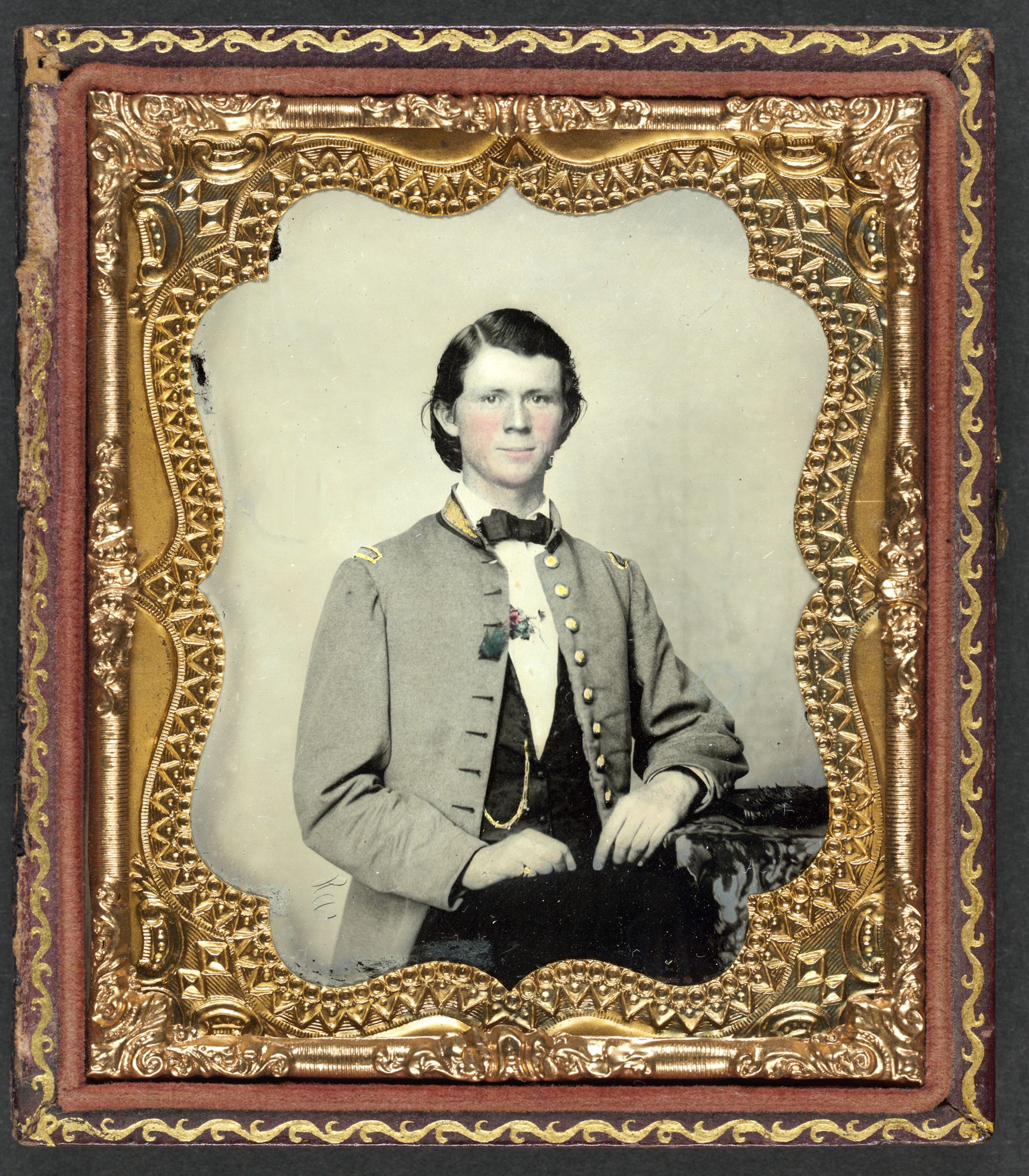
possibly Robert T Willis

Inscription behind photo: Prizeth with my most highly Treasured. Given to me by my Darling Beo [i.e. Beau] Bobbie. Died Oct. 5th 1862. Sept. 28th ’63. (Signed with illegible initials.)

Possible identification is Robert T. Willis of Company I, 32nd Virginia Infantry Regiment, based on research by Nancy Dearing Rossbacher.

Medium: 1 photograph : sixth-plate ambrotype, hand-colored ; 9.4 x 8.3 cm (case)

Donated by Tom Liljenquist; 2012

Liljenquist Family Collection of Civil War Photographs; Ambrotype/Tintype photograph filing series; Library of Congress Prints and Photographs Division.

Record page for image is here.

______________

Note:  This image has been digitally enhanced for fade correction, color enhancement and selected spot removal.

Civil War Portrait 022

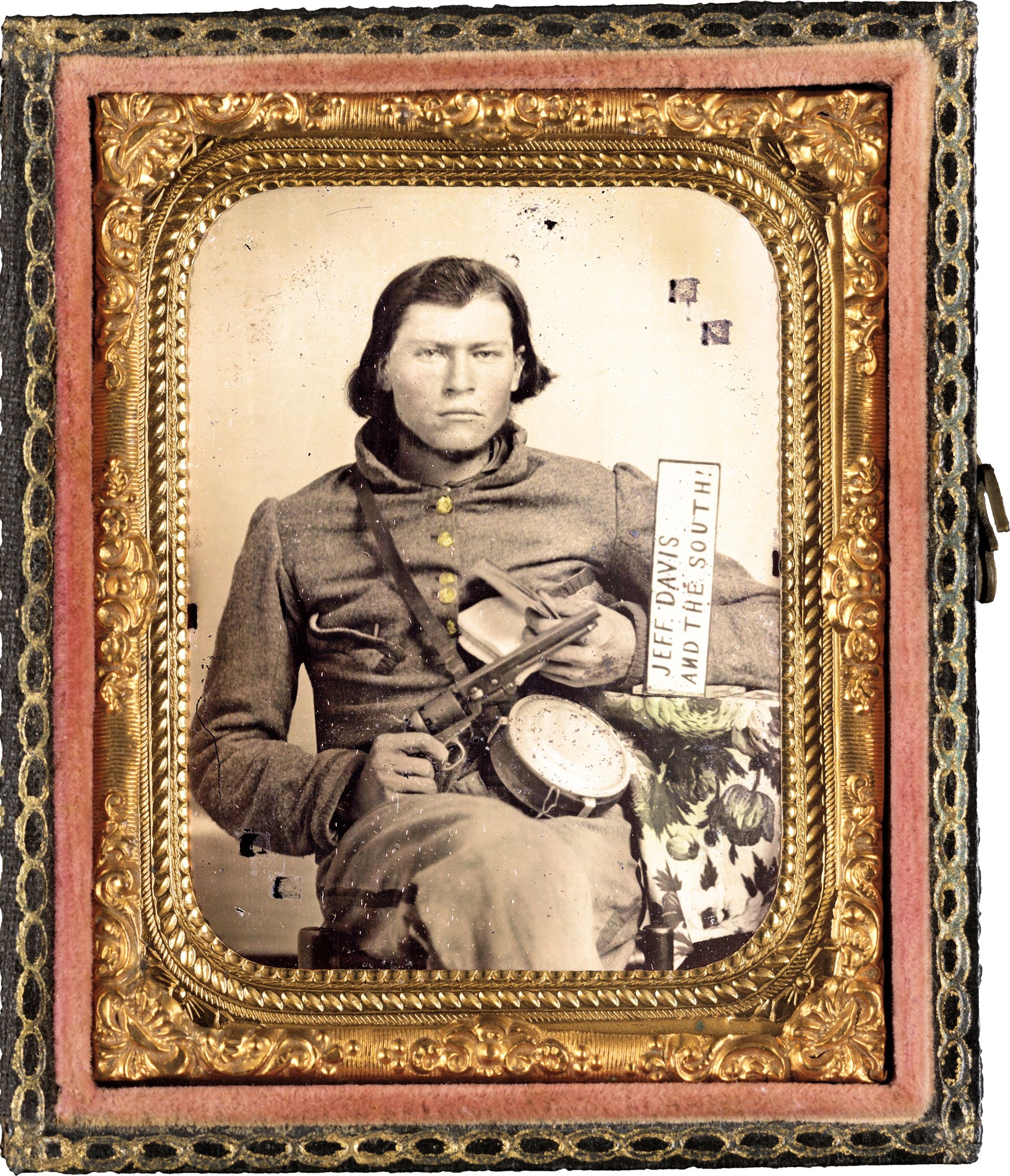
Thomas Isaiah Booker in Confederate uniform with Colt navy revolver, book, tin drum canteen, and sign reading Jeff Davis and the South!

Thomas Isaiah Booker in Confederate uniform with Colt navy revolver, book, tin drum canteen, and sign reading Jeff Davis and the South!

Summary: Photo shows identified soldier from Louisiana from either Co. D, 8th Louisiana Cavalry Regiment; Co. B, 28th Louisiana Infantry Regiment, or Co. B, 29th Louisiana Infantry Regiment.

Soldier identification from great granddaughter Suella Booker Cooper (November 2012)

Medium: 1 photograph : ninth-plate ambrotype, hand-colored ; 7.4 x 6.3 cm (case)

Donated by Tom Liljenquist; 2012

Liljenquist Family Collection of Civil War Photographs; Ambrotype/Tintype photograph filing series; Library of Congress Prints and Photographs Division.

Record page for image is here.

______________

Note:  This image has been digitally enhanced for fade correction, color enhancement and selected spot removal.

Civil War Portrait 021

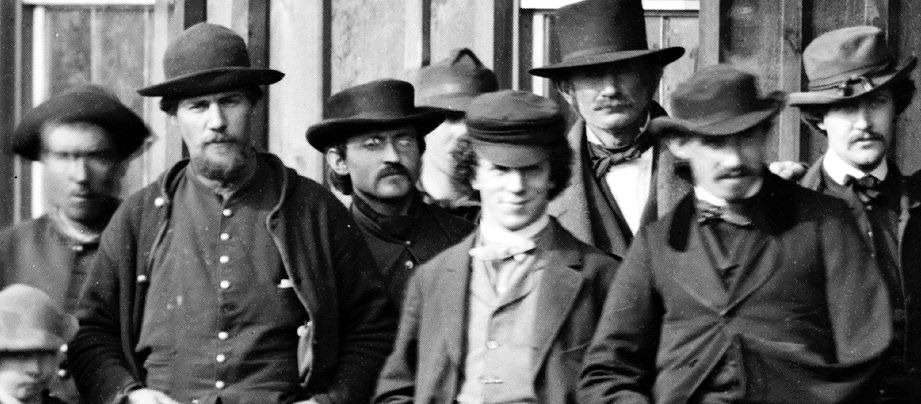
Faces at Aquia Creek Landing, Va


Another closeup cropped from an image I’m working on for February.  These are part of a larger group photographed at Aquia Landing by Alexander Gardner.

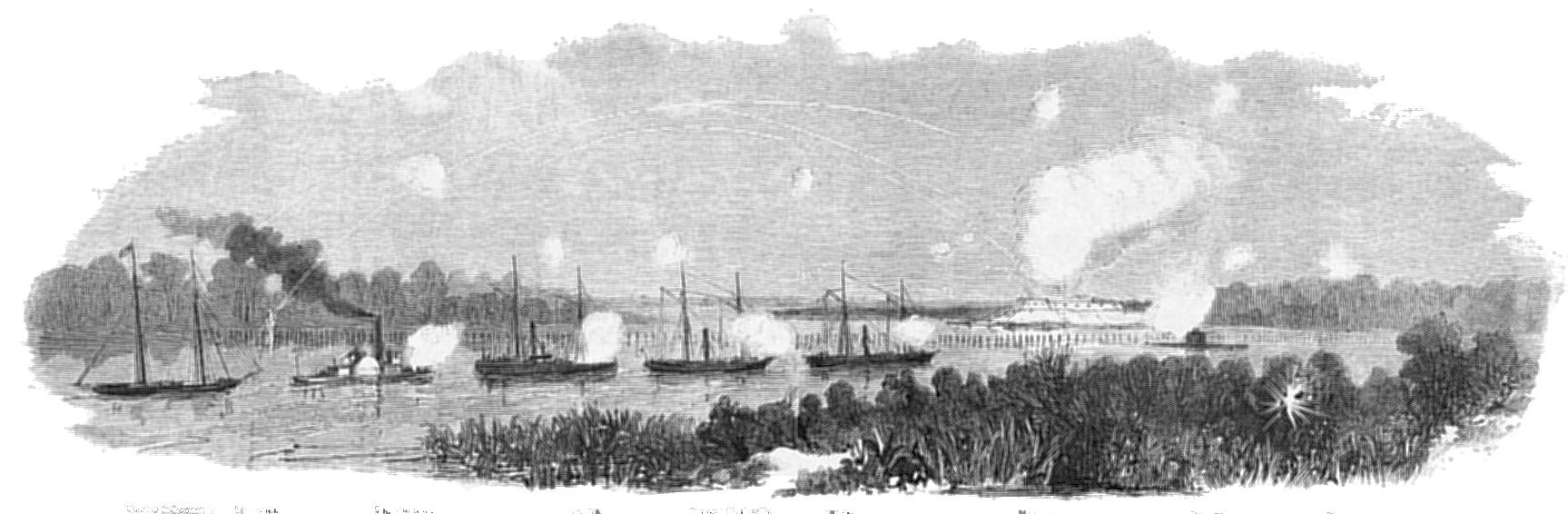
Reconnoissance in the Great Ogeeche River, Near Ossibaw Sound, GA.,

Reconnoissance in the Great Ogeeche River, Near Ossibaw Sound, GA., by the Iron-Clad Monitor Montauk, Capt. Worden, and other Federal Gunboats, January 27 (from sketch by Capt. Baldwin, of the U. S. Steamer Daffodil, published February 28, 1863 in Frank Leslie’s Illustrated Newspaper.)

I’m working on photos and images for February 1863 and I came across one that had some interesting detail that I thought I would share now. (Click on image to see larger version.)

detail

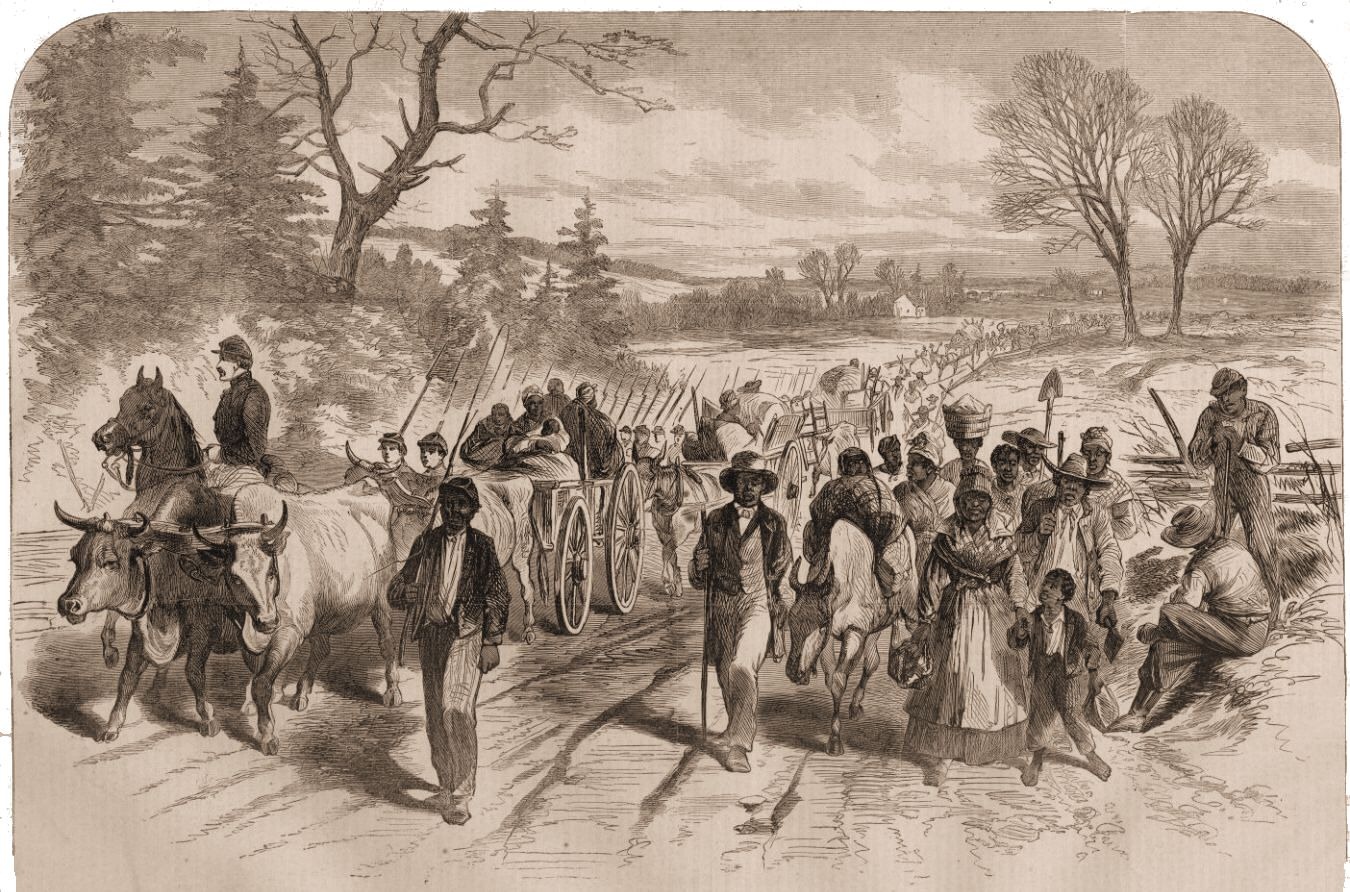
The Effects of the Proclamation -- Freed Negroes coming into Our Lines at Newbern, North Carolina

THOUGH the President’s proclamation of freedom has been so often compared to the Pope’s Bull against the comet, it seems to be producing some substantial fruits. We publish on page 116 an illustration of CONTRABANDS COMING INTO NEWBERN, NORTH CAROLINA, from a sketch sent us by an amateur, who writes as follows:

NEWBERN, NORTH CAROLINA, January 26, 1863.

I inclose a sketch of a very interesting procession which came to Newbern from “up country” a few days ago. It is the first-fruits of the glorious emancipation proclamation in this vicinity, and as such you may deem it worthy of engraving in your illustrated Weekly.

On our late expedition into Greene and Onslow Counties our company (Company C, Fifty-first Massachusetts Regiment) was out on picket duty the night before our return to Newbern, when an old slave came in to us in a drenching rain; and on being informed that he and his friends could come to Newbern with us, he left, and soon the contrabands began to come in, with mule teams, oxen, and in every imaginable style. When morning came we had 120 slaves ready to start with their little all, happy in the thought that their days of bondage were over. They said that it was known far and wide that the President has declared the slaves free.

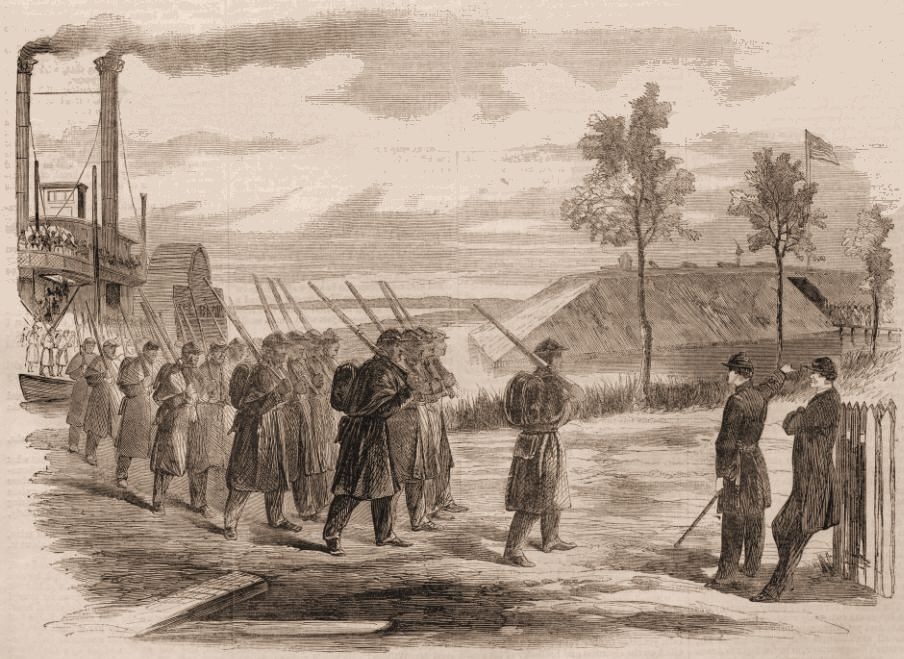
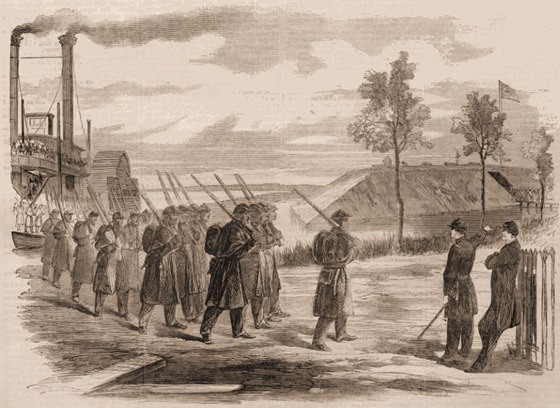
Our Colored Troops at Work—The First Louisiana Native Guards Disembarking at Fort Macombe, Louisiana

WE publish on page 133 two illustrations of THE FIRST LOUISIANA NATIVE GUARDS, from sketches by our special artist, Mr. Hamilton.

It is now some five months since General Butler’s attention was called, by certain free colored men in New Orleans, to the fact that they held commissions from Governor Moore, of Louisiana, as duly enrolled officers of the Confederate army, and requesting to transfer their services to the United States. General Butler, with that keen perception for which he is so remarkable, at once saw the bearings of this important matter, granted the request of his applicants, and issued his order mustering the regiment into our service, under the command of Colonel (then Lieutenant-Colonel) Spencer H. Stafford, one of his aids-de-camp.

Although ready and anxious for a brush with the enemy, that opportunity has not yet been afforded them. They have hitherto been employed down in the Lafourche District, under the command of General Weitzel, guarding the bridges over important bayous, in a circuit of some thirty miles, and forming the base of Weitzel’s late expedition into the Teche District. That affair being over, and the General returned to his encampment at Thibodeaux, the Colonel of the Native Guards reported to the Department Head-quarters for further orders. On the evening of the 21st, pursuant to orders, eight Companies (comprising 800 men), embarked upon the Laurel Hill to join the garrison of Forts Jackson and St. Philip—four Companies to each fort—the remaining two Companies—A and D —being sent to Fort Macombe, on the Chef Menteur Pass, connecting Lakes Borgne and Pontchartrain.

The point selected by our special artist for illustration is the disembarkation from the steamer J. D. Brown, at Fort Macombe. The special New Orleans correspondent of the New York Times tells the following story of these men:

“You see my men can work, Sir, though people say they can’t fight,” said the Colonel, triumphantly. “We don’t trouble our heads much about transportation. Put me down in a forest with those same fellows, and I’ll build you a city; for I have every useful trade represented among them.”

At this moment a Captain came up to the Colonel, saluted him very respectfully, and, after receiving his order, went off.

“I understood you, Colonel,” said I, “that all your line officers were colored men: there goes one, at any rate, who is white.” The Colonel turned to me with a sarcastic smile:

“And do you really think him white? Well you may, Sir; but that man is a ‘negro’—one who carries the so-called curse of African blood in his veins.”

I was literally amazed. Often as my senses had been deceived in this matter, they never had been so completely before. This officer, Captain E. Davis, of Company A [his portrait is given in our group.—Ed.], was a fine-looking young man, not unlike General M’Clellan in mould of features, with light blue eyes, ruddy complexion, soft, silky hair, and a splendid mustache, of a sandy color, nearly approaching red. It would have defied the most consummate expert in Niggerology, by the aid of the moat powerful microscope, to discover the one drop of African blood in that man’s veins. Still there it was upon the record against him.

(Published in Harper’s Weekly, February 28, 1863)
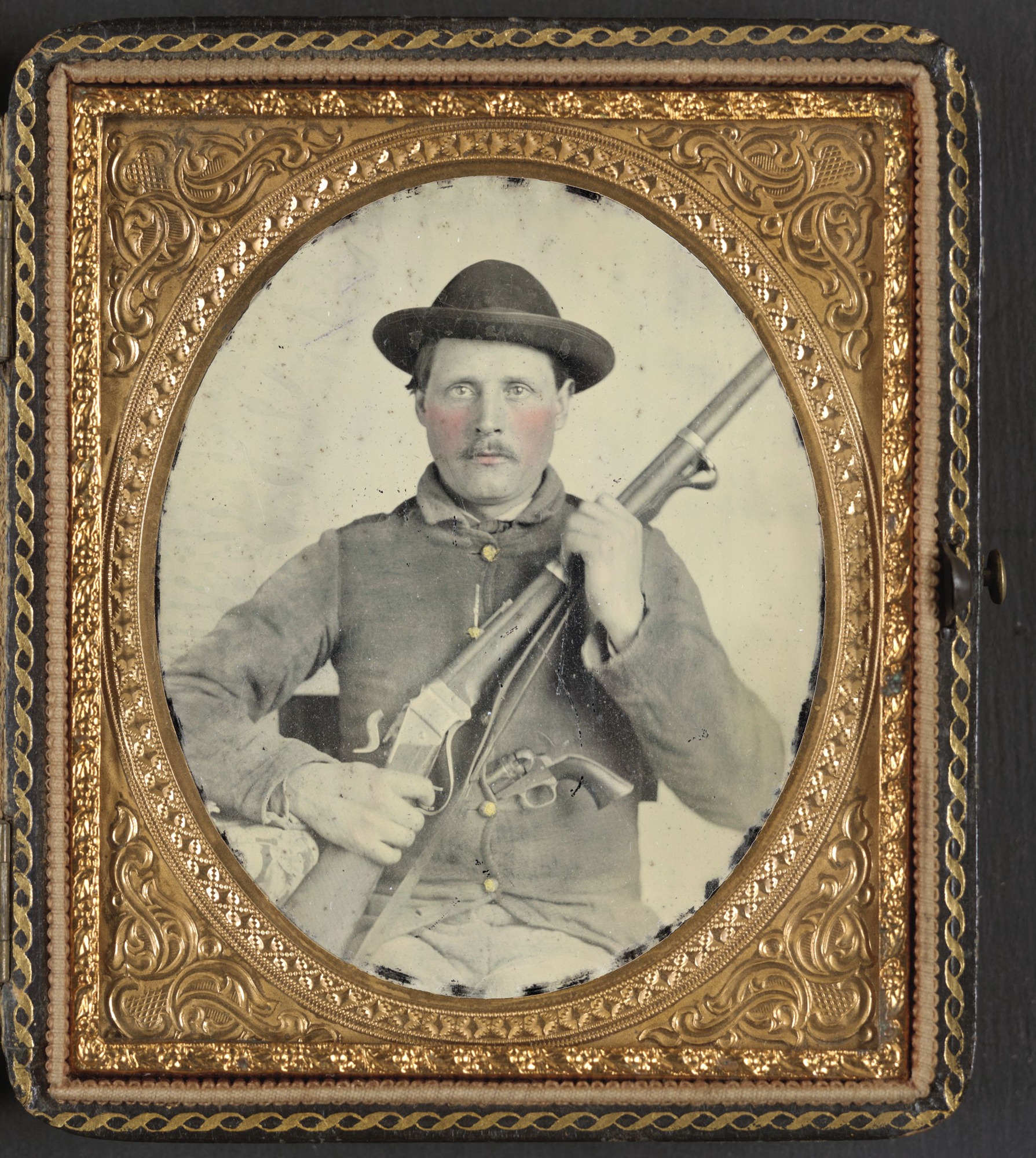
Unidentified soldier in Confederate uniform with Berdan's Sharps rifle and Colt 1862 Police Model pistol

Medium: 1 photograph : sixth-plate ambrotype, hand-colored ; 9.3 x 8.0 cm (case).

Gift; Tom Liljenquist; 2012;

Liljenquist Family Collection of Civil War Photographs; Ambrotype/Tintype photograph filing series; Library of Congress Prints and Photographs Division.

Record page for image is here.

Civil War Portrait 020

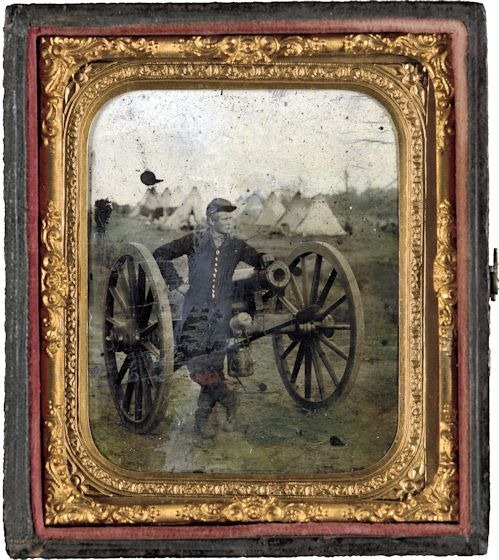
Unidentified soldier standing with Napoleon cannon in front of encampment

Medium: 1 photograph : sixth-plate tintype, hand-colored ; 9.3 x 8.1 cm (case)

Gift; Tom Liljenquist; 2011;

Liljenquist Family Collection of Civil War Photographs; Ambrotype/Tintype photograph filing series; Library of Congress Prints and Photographs Division.

Record page for image is here.

Civil War Portrait 019

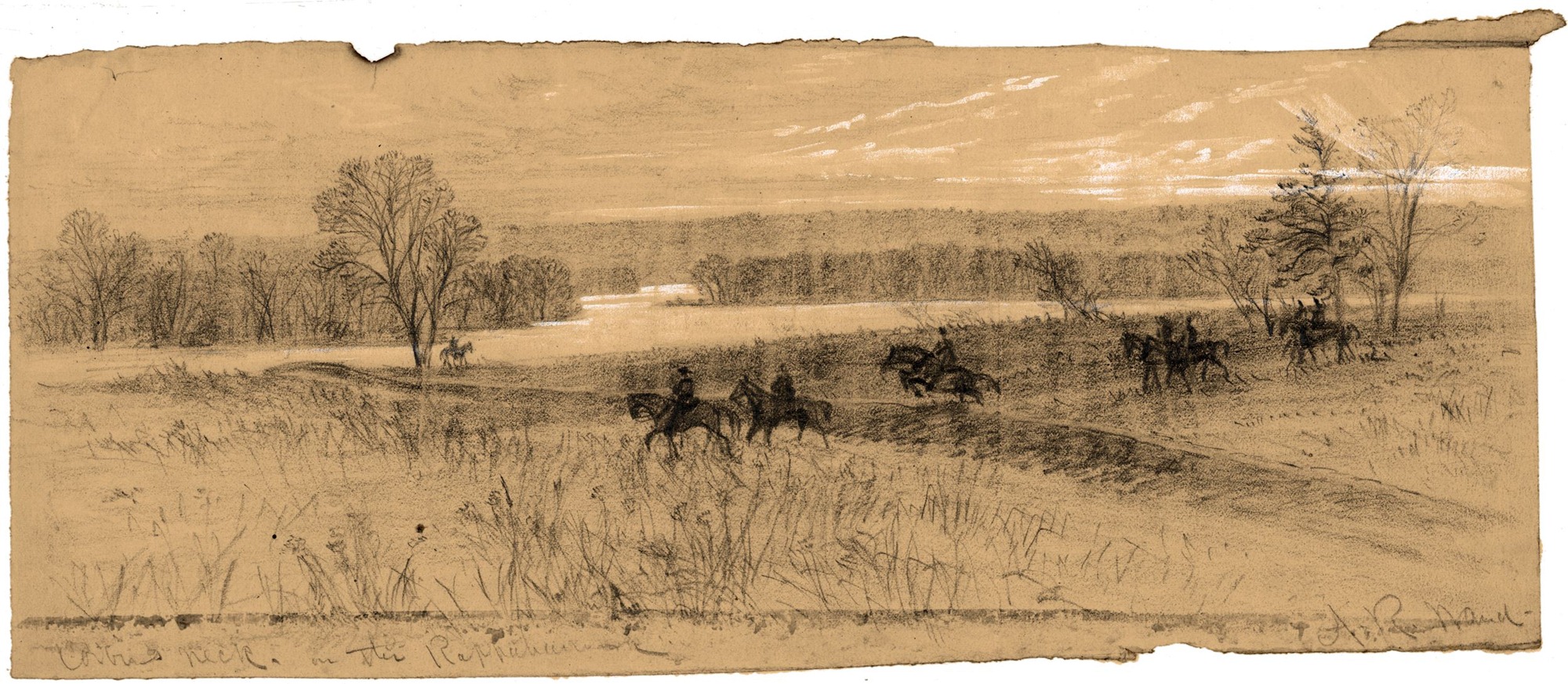
Corbins Neck on the Rappahannock


Medium: 1 drawing on tan paper : pencil and Chinese white ; 12.7 x 31.2 cm. (sheet).


  • Signed lower right: A.R. Waud.
  • Title inscribed lower left.
  • Published in: Harper’s Weekly, February 28, 1863, p. 140.


Library of Congress image.