Following the American Civil War Sesquicentennial with day by day writings of the time, currently 1863.

The American Civil War

Post image for Rebel War Clerk’s diary.—Major John Winder (future commander over Confederate prisons) is applying to be made a general.

JULY 8TH—There is a stout gray-haired old man here from Maryland applying to be made a general. It is Major J. H. Winder, a graduate of West Point, I believe ; and I think he will be successful. He is the son, I believe, of the Gen. Winder whose command in the last war with England unfortunately permitted the City of Washington to fall into the hands of the enemy. I have almost a superstitious faith in lucky generals, and a corresponding prejudice against unlucky ones, and their progeny. But I cannot suppose the President will order this general into the field. He may take the prisoners into his custody—and do other jobs as a sort of head of military police; and this is what I learn he proposes. And the French Prince, Polignac, has been made a colonel; and a great nephew of Kosciusko has been commissioned a lieutenant in the regular army. Well, Washington had his Lafayette—and I like the nativity of these officers better than that of the Northern men, still applying for commissions.

Post image for A Diary of American Events – July 8, 1861

—General Banks, at Baltimore, acting under the direction of authorities at Washington, this morning seized the steamers Mary Washington and George W. Weems, both owned and commanded by the Weems Brothers. These steamers have been running for a number of years between Baltimore and the ports of the Patuxent River, and it is said carried down a number of passengers who joined the Confederate army. The seizure was to prevent their being taken in a similar manner to the St. Nicholas and run into Fredericksburg as prizes. —Baltimore American, July 9.

—To-day orders were received at the headquarters of the army, in New York, to send on to the seat of war at once the company of the First Artillery, part of the Fort Sumter garrison, which remained at Fort Hamilton. Instructions were immediately sent down to the brave fellows, who were under arms for the road in a few moments. The old ensign of Sumter went along with them, as they believe “there would be no luck in the company without it.”—N. Y. World, July 11.

—This day whilst Col. Porter, of the U. S. Army, with a small party of men, was reconnoitering near the lines of the secession army in Virginia, he was approached by a detachment of the Confederate forces, in command of Capt. Taylor, of Kentucky, bearing a flag of truce. Col. Porter, on bringing the detachment to a halt, was informed that Capt. Taylor was the bearer of a sealed letter from Gen. Davis to President Lincoln, which statement was verified by an endorsement to that effect on the back of the letter, written and signed by Gen. Beauregard at Manassas Junction, and requesting that safe conduct might be given to Capt. Taylor.

Col. Porter accordingly sent Capt. Taylor, accompanied by an officer and an orderly, to the head-quarters of Gen. McDowell, at Arlington, where they arrived at seven o’clock in the evening, and were detained there until the visit of Capt. Taylor was made known to Lieut.-General Scott, upon whose order he was conducted to the General’s head-quarters in Washington, where Gen. Scott received the letter of Gen. Davis, and sent it to the President, the bearer of the letter being in the mean time detained at head-quarters.

The President, having read the letter, informed Gen. Scott that he might send the messenger back, and Capt. Taylor immediately took his departure for Arlington, and thence proceeded on his way back to Richmond.

No answer to the letter was given by the President, and it is conjectured that the mission was merely a ruse to get a view of the main works of defence, and ascertain the means at the command of the Government for a forward movement. Certain it is the messenger was not enabled to carry back with him any very encouraging tidings. One object may have been to occupy the attention of our authorities and delay matters for a few days, so as to allow time for aid from Manassas to Johnston at Winchester.—(Doc. 73.)

—Tm following official order appeared today:

“Henceforward the telegraph will convey no despatches concerning the operations of the Army not permitted by the Commanding General.

Winfield Scott”

Department of War, July 8, 1861.

The above order is confirmed.

Simon Cameron, Secretary of War.

—The Second Regiment of Massachusetts Volunteers, Col. George H. Gordon, left Boston for the seat of war at Martinsburg. The regiment consists of one thousand and fifty men. They wear the regulation black felt hat, turned up at teo side. Their coats are made of serviceable blue cloth and their pants of blue flannel. Since the men first went into camp at West Roxbury, they have been put through the most rigid discipline, and are therefore now prepared to meet the enemy under any circumstances. The camp equipage of the regiment, consisting of twenty-five wagons and one hundred horses, left in advance of the troops during the afternoon. Each company is supplied with three thousand ball cartridges and seven days’ rations. The officers seem to have been well chosen. Among those in command of companies are sons of the late Rufus Choate, Thomas G. Gary, and the Hon. Josiah Quincy, Jr. The staff are all well mounted.

—Capt. Thomas, or the “French lady” who a short time previously captured the steamer St. Nicholas on. the Patuxent River, was himself captured by the Baltimore police.—(Doc. 74.)

—The De Kalb Regiment N. Y. S. V., under the command of Colonel Leopold von Gilsa, left New York for the seat of war.—N. Y. Evening Pots, July 8.

July 7th.—Mr. Bigelow invited me to breakfast, to meet Mr. Senator King, Mr. Olmsted, Mr. Thurlow Weed, a Senator from Missouri, a West Point professor, and others. It was indicative of the serious difficulties which embarrass the action of the Government to hear Mr. Wilson, the Chairman of the Military Committee of the Senate, inveigh against the officers of the regular army, and attack West Point itself. Whilst the New York papers were lauding General Scott and his plans to the skies, the Washington politicians were speaking of him as obstructive, obstinate, and prejudiced—unfit for the times and the occasion.

General Scott refused to accept cavalry and artillery at the beginning of the levy, and said that they were not required; now he was calling for both arms most urgently. The officers of the regular army had followed suit. Although they were urgently pressed by the politicians to occupy Harper’s Ferry and Manassas, they refused to do either, and the result is that the enemy have obtained invaluable supplies from the first place, and are now assembled in force in a most formidable position at the second. Everything as yet accomplished has been done by political generals—not by the officers of the regular army. Butler and Banks saved Baltimore in spite of General Scott. There was an attempt made to cry up Lyon in Missouri; but in fact it was Frank Blair, the brother of the Postmaster-General, who had been the soul and body of all the actions in that State. The first step taken by M’Clellan in Western Virginia was atrocious— he talked of slaves in a public document as property. Butler, at Monroe, had dealt with them in a very different spirit, and had used them for State purposes under the name of contraband. One man alone displayed powers of administrative ability, and that was Quarter-master Meigs; and unquestionably from all I heard, the praise was well bestowed. It is plain enough that the political leaders fear the consequences of delay, and that they are urging the military authorities to action, which the latter have too much professional knowledge to take with their present means. These Northern men know nothing of the South, and with them it is omne ignotum pro minimo. The West Point professor listened to them with a quiet smile, and exchanged glances with me now and then, as much as to say, “Did you ever hear such fools in your life?”

But the conviction of ultimate success is not less strong here than it is in the South. The difference between these gentlemen and the Southerners is, that in the South the leaders of the people, soldiers and civilians, are all actually under arms, and are ready to make good their words by exposing their bodies in battle.

I walked home with Mr. N. P. Willis, who is at Washington for the purpose of writing sketches to the little family journal of which he is editor, and giving war “anecdotes;” and with Mr. Olmsted, who is acting as a member of the New York Sanitary Commission, here authorised by the Government to take measures against the reign of dirt and disease in the Federal camp. The Republicans are very much afraid that there is, even at the present moment, a conspiracy against the Union in Washington—nay, in Congress itself; and regard Mr. Breckenridge, Mr. Bayard, Mr. Vallandigham, and others as most dangerous enemies, who should not be permitted to remain in the capital. I attended the Episcopal church and heard a very excellent discourse, free from any political allusion. The service differs little from our own, except that certain euphemisms are introduced in the Litany and elsewhere, and the prayers for Queen and Parliament are offered up nomine mittato for President and Congress.

Post image for Rebel War Clerk’s Diary.—”The President is appointing generals enough, one would suppose. I hope we shall have men for them.”

JULY 7TH—Major Tyler’s health has improved, but I do not perceive a resumption of his old intimate relations with the Secretary. Yet he is doing the heavy epistolary work, being a lawyer; and the correspondence sometimes embracing diverse legal points. My intimacy with the colonel continues. It seems he would do anything in the world for me. He has put Mr. Shepherd to issuing passports to the camps, etc.—the form being dictated by the Secretary. These are the first passports issued by the government. I suggested that they should be granted by and in the name of the Chief of the Bureau of War—and a few were so issued—but the Secretary arrested the proceeding. The Secretary was right, probably, in this matter.

The President is appointing generals enough, one would suppose. I hope we shall have men for them. From five to ten thousand volunteers are daily offered—but not two thousand are accepted. Some have no arms; and others propose to serve only for six or twelve months. Infantry will not fight with hunting rifles or shot-guns; and the department will not accept mounted men, on account of the expense of transportation, etc. Oh, that I had power but for a week! There should then be accepted fifty regiments of cavalry. These are the troops for quick marches, surprises, and captures. And our people, even down to the little boys, are expert riders. If it were to be a short war —or if it were to be a war of invasion on our part—it might be good policy, economically, to discourage cavalry organizations. But we shall want all our men; and many a man would fight in the saddle who could not or would not march in the infantry. And mounted men are content to use the double-barreled shot-gun—one barrel for ball, the other for buck-shot and close quarters.

Post image for Mary Chesnut’s diary—”If our husbands are taken prisoners, what will they do with them? Are they soldiers or traitors?”

July 7th.—This water is making us young again. How these men enjoy the baths. They say Beauregard can stop the way with sixty thousand; that many are coming.

An antique female, with every hair curled and frizzed, said to be a Yankee spy, sits opposite us. Brewster solemnly wondered “with eternity and the judgment to come so near at hand, how she could waste her few remaining minutes curling her hair.” He bade me be very polite, for she would ask me questions. When we were walking away from table, I demanded his approval of my self-control under such trying circumstances. It seems I was not as calm and forbearing as I thought myself. Brewster answered with emphasis: “Do you always carry brickbats like that in your pocket ready for the first word that offends you? You must not do so, when you are with spies from the other side.” I do not feel at all afraid of spies hearing anything through me, for I do not know anything.

But our men could not tarry with us in these cool shades and comfortable quarters, with water unlimited, excellent table, etc. They have gone back to Manassas, and the faithful Brewster with them to bring us the latest news. They left us in excellent spirits, which we shared until they were out of sight. We went with them to Warrenton, and then heard that General Johnston was in full retreat, and that a column was advancing upon Beauregard. So we came back, all forlorn. If our husbands are taken prisoners, what will they do with them? Are they soldiers or traitors ?

Mrs. Ould read us a letter from Richmond. How horrified they are there at Joe Johnston’s retreating. And the enemies of the War Department accuse Walker of not sending General Johnston ammunition in sufficient quantities; say that is the real cause of his retreat. Now will they not make the ears of that slow-coach, the Secretary of War, buzz?

Mrs. Preston’s maid Maria has a way of rushing in— “Don’t you hear the cannon?” We fly to the windows, lean out to our waists, pull all the hair away from our ears, but can not hear it. Lincoln wants four hundred millions of money and men in proportion. Can he get them? He will find us a heavy handful. Midnight. I hear Maria’s guns.

We are always picking up some good thing of the rough Illinoisan’s saying. Lincoln objects to some man— “Oh, he is too interruptious” : that is a horrid style of man or woman, the interruptious. I know the thing, but had no name for it before.

Post image for A Diary of American Events – July 7, 1861

—An infernal machine, designed by the Rebels to blow up the Pawnee and the vessels of the Potomac flotilla, which was set adrift near Acquia Creek, was picked up floating toward the Pawnee. The following description of the article has been sent to the Navy Department: Two large eighty-gallon oil casks, perfectly water-tight, acting as buoys, connected by twenty-five fathoms of 3½-inch rope, buoyed with largo squares of cork, every two feet, secured to casks by iron handles. A heavy bomb of boiler iron, fitted with a brass tap, and filled with powder, is suspended to the casks six feet under water. On top of the cask is a wooden box, with fuze in a gutta-percha tube. In the centre of the cork is a platform with a great length of fuze coiled away occupying the middle of the cask. It was intended by the contrivers of this weapon of civilized warfare, that the shock of a collision should light the fuze. The machine was first discovered by the Pawnee while lying off Acquia Creek, in company with the Freeborn and two or three other vessels. The commander of the former, on seeing the object toward the fleet, sent out a small boat’s crew to make an investigation.—N. Y. Tribune, July 13.

—This morning, at an early hour, a considerable body of Secessionists made their appearance at the Great Falls, above Washington, opposite Major Gerhardt’s command, Eighth German Battalion, of about two hundred men, and commenced firing. Major Gerhardt’s battalion returned the fire, and after the exchange of a few volleys, “nobody hurt,” the rebels retired, but returned again this afternoon about five o’clock with reinforcements comprising a body of cavalry. The firing was kept up with spirit on both sides for several hours, and two men of Major Gerhardt’s command were mortally wounded and have since died—privates George Riggs and Martin Ohl. No other men were wounded on the Union side, but Major Gerhardt’s sharp-shooters emptied several saddles on the other side, and suppose they must have killed at least a dozen before the enemy retired. Gerhardt’s men are anxious to cross the river and meet their enemies hand to hand if they can be found. The firing from the other side was all along the shore from near Dickey’s tavern to above the Falls. Both Riggs and Ohl belonged to Company B, Turner Rifles. Both were married men, and the last words of Ohl was a message to his wife “not to grieve for him; that he died for liberty and his country.”—National Intelligencer, July 9.

—It having been ascertained to the satisfaction of the War Department that Captain Manry, Assistant Adjutant General; Captain Carter L. Stevenson, of the Fifth Infantry; and Second Lieutenant Dillon, of the Sixth Infantry, entertain and have expressed treasonable designs against the Government of the United States, their names, according to General Order No. 87, were stricken from the rolls of the army; and also Major Albert J. Smith, Paymaster, for having deserted his post at Key West, Florida.—Army Order No. 88.

—The Twenty-third Regiment N. Y. S. V., arrived at Washington. It is commanded by Colonel H. C. Hoffman.—National Intelligencer, July 9.

—Mb. Vallandigham, of Ohio, visited, this afternoon, the Ohio encampments in Virginia, and was greeted with the sight of a hanging effigy, bearing the inscription: “Vallandigham, the traitor.” When he approached the Second Ohio Regiment, he was saluted by a discharge of stones, and, on the interposition of the officers, they were also pelted, until it amounted almost to a riot. He was finally released from his unpleasant position.—N. Y. Tribune, July 8.

—Very impressive and interesting services took place in the Church of the Messiah in New York this evening. The exercises were chosen with special reference to their fitness for the first Sunday after National Independence. The services began with Collins’ Requiem of Heroes:

“How sleep the brave who sink to rest,

By all their country’s wishes blest!”

Then followed the xlviith Psalm, slightly modified, the minister rending a verse and the congregation responding with the alternate one. Dr. Osgood made the prayer, and afterward the choir sang the “March of Liberty.” The beginning of this sacred song is:

“No battle-brand shall harm the free,

Led on by Christ our Liberty!*

This was succeeded by Psalm csivii., read by the minister and people; lesson from the Old Testament—the Promised Land—Deut, viii.; chanted Psalm—Cantate Domino; lesson from the New Testament—Christ weeping over Jerusalem—Matt, xxiii.; and Gloria in Excelsis.

The subject of Dr. Osgood’s brief extempore discourse was “God with Nations,” in which he showed that the august feature of modern civilization was the consecration of nationality.

—The New Orleans Picayune published an elaborate article upon the celebration of the Fourth of July, in which it stated that the present rebellion is “based upon the same eternal principles which justified and glorified the patriots of 1776.”—(Doc. 72.)
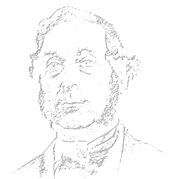
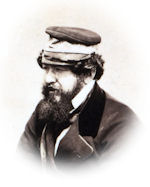
July 6th.—I breakfasted with Mr. Bigelow this morning, to meet General M’Dowell, who commands the army of the Potomac, now so soon to move. He came in without an aide-de-camp, and on foot, from his quarters in the city. He’ is a man about forty years of age, square and powerfully built, but with rather a stout and clumsy figure and limbs, a good head covered with close-cut thick dark hair, small light-blue eyes, short nose, large cheeks and jaw, relieved by an iron-grey tuft somewhat of the French type, and affecting in dress the style of our gallant allies. His manner is frank, simple, and agreeable, and he did not hesitate to speak with great openness of the difficulties he had to contend with, and the imperfection of all the arrangements of the army.

As an officer of the regular army he has a thorough contempt for what he calls “political generals”—the men who use their influence with President and Congress to obtain military rank, which in time of war places them before the public in the front of events, and gives them an appearance of leading in the greatest of all political movements. Nor is General M’Dowell enamoured of volunteers, for he served in Mexico, and has from what he saw there formed rather an unfavourable opinion of their capabilities in the field. He’ is inclined, however, to hold the Southern troops in too little respect; and he told me that the volunteers from the slave states, who entered the field full of exultation and boastings, did not make good their words, and that they suffered especially from sickness and disease, in consequence of their disorderly habits and dissipation. His regard for old associations was evinced in many questions he asked me about Beauregard, with whom he had been a student at West Point, where the Confederate commander was noted for his studious and reserved habits, and his excellence in feats of strength and athletic exercises.

As proof of the low standard established in his army, he mentioned that some officers of considerable rank were more than suspected of selling rations, and of illicit connections with sutlers for purposes of pecuniary advantage. The General walked back with me as far as my lodgings, and I observed that not one of the many soldiers he passed in the streets saluted him, though his rank was indicated by his velvet collar and cuffs, and a gold star on the shoulder strap.

Having written some letters, I walked out with Captain Johnson and one of the attaches of the British Legation, to the lawn at the back of the White House, and listened to the excellent band of the United States Marines, playing on a kind of dais under the large flag recently hoisted by the President himself, in the garden. The occasion was marked by rather an ominous event. As the President pulled the halyards and the flag floated aloft, a branch of a tree caught the bunting and tore it, so that a number of the stars and stripes were detached and hung dangling beneath the rest of the flag, half detached from the staff.

I dined at Captain Johnson’s lodgings next door to mine. Beneath us was a wine and spirit store, and crowds of officers and men flocked indiscriminately to make their purchases, with a good deal of tumult, which increased as the night came on. Later still, there was a great disturbance in the city. A body of New York Zouaves wrecked some houses of bad repute, in one of which a private of the regiment was murdered early this morning. The cavalry patrols were called out and charged the rioters, who were dispersed with difficulty after resistance in which men on both sides were wounded. There is no police, no provost guard. Soldiers wander about the streets, and beg in the fashion of the mendicant in “Gil Blas” for money to get whisky. My coloured gentleman has been led away by the Saturnalia and has taken to gambling in the camps, which are surrounded by hordes of rascally followers and sutlers’ servants, and I find myself on the eve of a campaign, without servant, horse, equipment, or means of transport.

CAMP CHASE, July 6, 1861.

DEAREST:—I have written to John Herron to supply you with what money you need for the present, and I suppose it will be convenient for him to do so out of a loan I made him some time ago. It does not seem like Saturday. The Fourth was like Sunday here. Colonel Matthews and I formed the regiment into a hollow square (rather oblong, in fact). I read the Declaration and he made a short pithy speech and wound up with cheers for the Union; and no more duty during the day. In the evening there were fire-balls and a few fireworks. A little shower this morning laid the dust, a fine thing in our little Sahara.

Colonel Matthews came in last night from Columbus, saying he rode out with the surgeon of the Twenty-sixth—the one intended for us—”and what an escape we have made. He is a green, ignorant young doctor who has all to learn.” I suppose Dr. Joe is getting ready to come; we hear nothing from him; I hope we shall see him soon. I am seeing to his hut which is building today. Uncle is rather better but not decidedly so. We have a lot of Secessionists from Virginia—a good camp sensation. I went in late last night after ball-cartridges, which stirred up the soldiers with its warlike look. I esteem these armed sentinels about as dangerous to friends as to foes. Here is our style of countersign. Done up Know-nothing fashion. Love to all and much for your own dear self.

Affectionately,

R. B. HAYES.

MRS. HAYES.

FAUQUIER WHITE SULPHUR SPRINGS, Va., July 6, 1861.—Mr. Brewster came here with us. The cars were jammed with soldiers to the muzzle. They were very polite and considerate, and we had an agreeable journey, in spite of heat, dust, and crowd. Rev. Robert Barnwell was with us. He means to organize a hospital for sick and wounded. There was not an inch of standingroom even; so dusty, so close, but everybody in tip-top spirits.

Mr. Preston and Mr. Chesnut met us at Warrenton. Saw across the lawn, but did not speak to them, some of Judge Campbell’s family. There they wander disconsolate, just outside the gates of their Paradise: a resigned Judge of the Supreme Court of the United States; resigned, and for a cause that he is hardly more than half in sympathy with, Judge Campbell’s is one of the hardest cases.

Post image for A Diary of American Events – July 6, 1861

—At Washington orders were issued as follows:—”The State of Illinois and the States and territories West of the Mississippi and on this side of the Rocky Mountains, including New Mexico, will, in future, constitute a separate military command, to be known as the Western Department, under the command of Major-General Fremont, of the United States army, head-quarters at St. Louis.”

It having been ascertained to the satisfaction of the War Department, that First Lieutenant John Thomas Goode, of the Fourth Artillery, entertained, and had expressed treasonable designs against the Government of the United States, his name was stricken from the rolls of the army.

Captain John McNab of the Tenth Infantry, having, while in command of Fort Laramie, given satisfactory evidence of his disloyalty to the Government, the President directed that his name be stricken from the roll of the army.

The President also ordered the name of Assistant-Surgeon, Lafayette Gould, of the medical staff, to be stricken from the roll for refusing to renew his oath of allegiance.—N. Y. Commercial, July 6.

—The work of erasing names from the Guion compromise petition lists is in progress. On the fourth of July fifty-six names had been erased, and a large number yesterday and today. It is amusing to note the effectual manner in which the names are erased. In most cases it is impossible to decipher the name—it is out a crossing off, but a complete blotting out. Almost every person who has erased his name says that his signature was obtained under false pretences. One or two say that they were informed that it was a petition to the Common Council for an appropriation for the Central Park, and that it would afford an opportunity for the employment of laborers now out of work!

The story that “some one” (meaning Mr. Galon) had commenced a suit for the arrest of Superintendent Kennedy and Mr. J. B. Taylor, fur false imprisonment may be stated in brief: An application was made to Judge Leonard for an order to arrest these gentlemen, and the Judge promptly refused.—N. Y. Evening Post, July 6.

—Forty-five men of the Third Ohio regiment fell in with an ambuscade of several hundred rebels at Middle Fork Bridge, twelve miles east of Buckhannon, Va. Being surrounded they fought desperately for some time, then cut their way through the enemy and retired, losing only one man and having some wounded.—(Doc. 71.)