FORT SUMTER, S.C., January 21, 1861.
(Received A. G. O., January 24.)
Hon. J. HOLT, Secretary of War:
“In connection with this subject, I deem it not improper respectfully to suggest that his excellency may do an act of humanity and great kindness if he will permit one of the New York steamers to stop with a lighter and take the women and children of this garrison to that city. The confinement within the walls of this work, and the impossibility of my having it in my power to have them furnished with the proper and usual articles of food, will, I fear, soon produce sickness among them.”
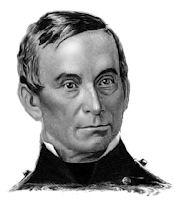
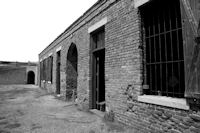
SIR: I have the honor to acknowledge the receipt of your letters, dated the 10th and 19th [16th] instants, and to assure you that I am highly gratified at the unqualified approbation they contain of the course I felt it my duty (under Divine guidance, I trust) to pursue in the unexpectedly perplexing circumstances by which we were surrounded. I shall inclose herewith copies of my correspondence with the officials of this State, and also a copy of the Mercury, which contains an article in reference to supplies for my command. [Mercury article not found.] You will understand at once the reasons for my course, which I hope will meet your approval. So many acts of harshness and of incivility have occurred since my removal from Fort Moultrie, which I have not deemed proper to notice or report, that I cannot accept of any civility which may be considered as a favor or an act of charity. I hope that the Department will approve of my sending (if the governor will permit it) our women and children to New York. They will be in the way here if we should, unfortunately, be engaged in hostilities, and they would embarrass me should I deem it proper to make any sudden move. We are trying daily to strengthen our position. We have now fifty-one guns in position, viz: In barbette, four 42-pounders, three 32-pounders, six 24’s, six 8-inch columbiads, and five 8-inch sea-coast howitzers (24); in casemate, twenty-two 32-pounders and two 42-pounders, (24); and to guard the gateway, which has been nearly closed by a heavy stone wall, three 8-inch sea-coast howitzers; and we are now preparing platforms in the parade for the three 10-inch columbiads, which we are unable to raise to their proper positions. I shall have some of the lower embrasures, in which guns are mounted, closed. This will make our little command more secure. From the perfect isolation of our position here it is impossible for us to ascertain, with any degree of certainty, the character or extent of the preparations which are being made around us. Everything, however, shows that they are exerting all their energies to prevent the entrance of re-enforcements, and to prepare for attacking this work. Saturday night and yesterday (Sunday) they were very actively engaged at work on a battery (commenced Saturday morning) a few hundred yards south of a battery of three guns constructed within the last three weeks in front of Fort Johnson barracks. On Cummings Point, Morris Island, quite an extensive battery or batteries have been constructed within the last week. We think that there may be both mortars and heavy guns at this point. We see them moving heavy timbers, which may be intended for the construction of a bomb-proof. Judging from the great quantity of material which has been landed in that neighborhood, I think it probable that they may have strengthened the battery which fired on the Star of the West. The channel she came in has been closed, pretty effectually I imagine, by four sunken vessels. Sand hills on Morris Island afford such safe positions for batteries that I fear we shall have to waste a great deal of ammunition before we can succeed in dislodging them from its batteries. Several distant shots have been heard from the direction the mouth of Stono Creek. I presume they have closed that by a heavy battery. It is reported that there is a battery guarding the entrance of the Maffitt Channel, and also that there is a battery of heavy guns on Sullivan’s Island (masked from our view by the houses) about three hundred yards to the west of the fort. Fort Moultrie has been greatly strengthened during the last two weeks. Traverses have been erected along the sea front, and merlons, formed of sand bags and earth, constructed between the guns. These merlons, apparently well built, will afford very good protection for the carriages and men, and defilade the parade and greater portion of the quarters from our direct fire. It seems that they have repaired these carriages, and that all the guns are now in position on the sea front. I am, of course, unable to state with any accuracy the character of the armament of their batteries or the number of men they have under arms; we hear that the garrison on Sullivan’s Island, at Fort Johnson, Castle Pinckney (the parapet of which is strengthened by sand bags), and on Morris Island amount to about two thousand men. In reference to my communications with the Department, you must bear it in mind that that matter is entirely under the control of the governor of this State, who may, whenever he deems fit, entirely prohibit my forwarding any letters, or prevent my sending any messenger, to my Government. I shall, however, as long as I can do so, send daily a brief note to the Department, the reception of which will show that the channel is still open, and the failure will indicate that our communication has been cut off.
Trusting in God that He will be pleased to save us from the horrors of a civil war,
I am, very respectfully, your obedient servant,
ROBERT ANDERSON,
Major, First Artillery, Commanding.

[Inclosure No. 1.]

EXECUTIVE OFFICE, DEPARTMENT OF WAR,
Charleston, January 19, 1861.
Maj. ROBERT ANDERSON:
SIR: I am instructed by his excellency the governor to inform you that he has directed an officer of the State to procure and carry over with your mails each day to Fort Sumter such supplies of fresh meat and vegetables as you may indicate.
I am, sir, respectfully yours,
D. F. JAMISON.
[Inclosure No. 2.]
FORT SUMTER, S.C., January 19, 1861.
Hon. D. F. JAMISON,
Executive Office, Department of War:
SIR: I have the honor to acknowledge the receipt of your communication of this date, stating that you are authorized by his excellency the governor to inform me that he has directed an officer of the State to procure and carry over with my mails each day to Fort Sumter such supplies of fresh meat and vegetables as I may indicate. I confess that I am at a loss to understand the latter part of this message, as I have not represented in any quarter that we were in need of such supplies. As commandant of a military post, I can only have my troops furnished with fresh beef in the manner prescribed by law, and I am compelled, therefore, with due thanks to his excellency, respectfully to decline his offer. If his suggestion is based upon a right, then I must procure the meat as we have been in the habit of doing for years, under an unexpired contract with Mr. McSweeney, a Charleston butcher, who would, I presume, if permitted, deliver the meat, &c., at this fort or at Fort Johnson, at the usual periods for such delivery, four times in ten days. If the permission is founded on courtesy and civility, I am compelled respectfully to decline accepting it, with a reiteration of my thanks for having made it. In connection with this subject, I deem it not improper respectfully to suggest that his excellency may do an act of humanity and great kindness if he will permit one of the New York steamers to stop with a lighter and take the women and children of this garrison to that city. The confinement within the walls of this work, and the impossibility of my having it in my power to have them furnished with the proper and usual articles of food, will, I fear, soon produce sickness among them. The compliance with this request will confer a favor upon a class of persons to whom similar indulgences are always granted, even during a siege in time of actual war, and will be duly appreciated by me.
I have the honor to be, very respectfully, your obedient servant,
ROBERT ANDERSON,
Major, First Artillery, Commanding Fort Sumter.
P. S.–I hope that the course I have deemed it my duty to take in reference to the supplies will have a tendency to allay an excitement which, judging from the tenor of the paragraphs in to-day’s paper, I fear they are trying to get up in the city.
[Inclosure No. 3.]
HEADQUARTERS QUARTERMASTER’S DEPARTMENT,
Charleston, January 19, 1861.
Major ANDERSON:
DEAR SIR: Inclosed please find copy of letter from Secretary of War. Not waiting your request, I shall send by the mail-boat in the morning two hundred pounds of beef and a lot of vegetables. I requested Lieutenant Talbot to ask you to let me know this evening what supplies you would wish sent daily.
Very respectfully,
L. M. HATCH,
Quartermaster-General, South Carolina Militia.
[Inclosure No. 4.]
HEADQUARTERS QUARTERMASTER’S DEPARTMENT,
Charleston, January 19, 1861.
Colonel HATCH,
Quartermaster-General:
You are ordered to procure and send down with the mails for Fort Sumter to-morrow a sufficient quantity of fresh meat and vegetables to last the garrison of Fort Sumter for forty-eight hours, and inform Major Anderson that you will purchase and take down every day such provisions from the city market as he may indicate.
D. F. JAMISON.
[Inclosure No. 5.]
FORT SUMTER, S. C., January 20, 1861.
Col. L. M. HATCH,
Quartermaster-General:
DEAR SIR: I have the honor to acknowledge the receipt of your note of the 19th instant, and also to state that as no arrangements have been made by me with your government in reference to supplies for this post, I feel compelled to decline the reception of those supplies. I wrote to the honorable Secretary of War yesterday in reference to this matter.
I am, sir, very respectfully, your obedient servant,
R. ANDERSON,
Major, First U.S. Artillery, Commanding.