Following the American Civil War Sesquicentennial with day by day writings of the time, currently 1863.

The American Civil War

BARRANCAS BARRACKS, FLA.,
January 8, 1861.

SIR: There are rumors that the citizens of Florida and Alabama intend taking possession of the fortifications in this harbor. They have already taken those at Mobile and Savannah. I am stationed with one company (G, First Artillery) at Barrancas Barracks, having also Fort Barrancas in charge. There are no accommodations for troops in the fort. Fort Pickens (unoccupied) commands the harbor, and should that work be taken possession of, our position would be useless as far as any protection to the harbor goes. Please furnish me with orders for my direction in the case before me. I have already telegraphed to the same effect.

……….I am, sir, very respectfully, your most obedient servant,

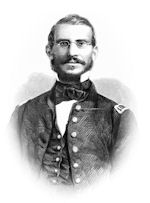
A. J. SLEMMER,
First Lieutenant, First Artillery, Commanding.

Col. S. COOPER, Adjutant-General U. S. Army.

January 8th, 1861.—We are at home again after a day filled to overflowing with excitement and interest. We were in such a hurry to get to town that the convention had not assembled when we reached the Capitol. There were groups of men talking earnestly and there were other men running hither and thither with papers in their hands. Father has a great many friends and I stood quietly beside him while he and they discussed the situation. The ambassador from South Carolina had evidently made an impression on his audience of yesterday and somebody had been busy last night, for in every direction could be seen Palmetto cockades, fastened with a blue ribbon; there were hundreds of them. When at last the hall of representatives was opened and Father and I took our seats, Judge Gwynn came in and pinned a cockade on Father and one on me. Oh, I was so proud.

Judge McGeehee is Father’s friend and he shook hands with us as he entered the hall.

The members of the convention took their seats and Mr. Blake, our dear Mr. Blake, whom we love so well, opened the day’s session with prayer; such a beautiful prayer. I had never seen a convention until Father brought me here and it is strange to me. I wish I could tell all I heard today but the language the members used is not familiar to me and some of the things they talk about are just as new. Then, too, I am just a little girl. A message was read on the floor of the convention, from Governor Brown of Georgia, to Governor Milton. As near as I can remember it was this way: “Georgia will certainly secede. Has Florida occupied the fort?”

Mr. Sanderson was very interesting. He recounted the rights which the states retained when they delegated other rights to the general government in the Constitution. He made it so perfectly clear that all and every state had the right to withdraw from the Union, if her rights and liberty were threatened. He said the Committee on Ordinances had carefully examined into the question and they could find no reason why Florida should not exercise her right to withdraw from a compact, which now threatened her with such dire disaster. I cannot understand all the work assigned to the different committees; perhaps I am not old enough; people grow wiser as they grow older; so aunt Robinson says. I am going again tomorrow. My palmetto cockade lies on the table beside me.

—A variety of plans for capturing Fort Sumter have been devised, but as yet none have been put in practice. One man thought it might be taken by floating down to the fort rafts piled with burning tar-barrels, thus attempting to smoke the American troops out as you would smoke a rabbit out of a hollow. Another was for filling bombs with prussic acid and giving each of the United States soldiers a smell. Still another supposed that the fort might be taken without bloodshed by offering to each soldier ten dollars and a speaking to. And still another thought that by erecting a barricade of cotton bales, and arming it with cannon, a floating battery might be made, which, with the aid of Forts Moultrie and Johnson, and Castle Pinckney, together with redoubts thrown up on Morris’ and Jones’ Islands, and with further assistance of an armed fleet, an attack might be made on the fort, and at some convenient point a party of sharpshooters might be stationed, who would pick off the garrison, man by man, thus giving an opportunity to a party of infantry to scale the walls of the fort. Such a storming, however, could only be accomplished by an immense sacrifice of life; and the only practicable mode of taking the fort would seem to be by a protracted siege, and by the unchristian mode of starving them.—South Carolinian.

—Major Anderson’s course was sustained in the House of Representatives to-day, by the following resolution, offered by Mr. Adrian, of New Jersey:

Resolved, That we fully approve the bold and patriotic act of Major Anderson in withdrawing from Fort Moultrie to Fort Sumter, and the determination of the President to maintain that fearless officer in his present condition; and we will support the President in all constitutional measures to enforce the laws and preserve the Union.

—To-day the arrest of Senators Toombs and Wigfall, on the charges of treason, for sending dispatches to the South recommending the seizure of the forts, was spoken of in the Cabinet “jocularly.”

—The Alabama Convention organized at Montgomery, William M. Brooks in the chair. —Times, Jan. 8.

—The Mississippi Convention organized at Jacksonville, A. J. Barry, of Lowndes, in the chair. It was resolved that a committee of fifteen be appointed by the president, with instructions to prepare and report, as speedily as possible, an ordinance of secession, providing for the immediate withdrawal of Mississippi from the Federal Union, with a view of establishing a new Confederacy, to be composed of the seceding States.—Mobile Advertiser.

—The Governor of Virginia, in a message to the Legislature, in special session, condemns the hasty action of South Carolina, but opposes and says that “he will regard the attempt of the Federal troops to pass across Virginia for the purpose of coercing a Southern State, as an act of invasion which must be repelled.”—Times, Jan. 8.
WASHINGTON, Tuesday morning, January 8, 1861.

His Excellency F. W. PICKENS,
Governor of South Carolina, Charleston, S.C.:

The Star of the West sailed from New York on Sunday with Government troops and provisions. It is said her destination is Charleston. If so, she may be hourly expected off the harbor of Charleston.

LOUIS T. WIGFALL.


January 7th, 1861.—I am so glad it is not raining today. I am really going and, little diary, I will tell you all about the day when we get home.

8:30 p. m. We have just finished supper. Mother would not let me write until we had eaten, now she says I can only have one hour because I am going again tomorrow and must have a good sleep.

The convention was assembling in the hall of representatives when we entered the Capitol, and soon everybody was in place and Dr. DuBose made a very fine prayer. I like Dr. DuBose and perhaps I ought not to write this about him, but nobody will see my diary and really I do not mean any harm, but he has such a convincing way of praying; like he was determined the Lord should grant all he asks. It is very comforting.

After the preliminaries were disposed of a communication from the Governor was read and the first thing I knew Aunt Mary, who was sitting next caught me by the hand and said, “Look, there is the ambassador from South Carolina.” A small man very erect and slender was being introduced by Mr. Villepigue as Mr. Leonidas Spratt of South Carolina. Mr. Spratt bowed gravely and looking around upon the audience with a pair of brilliant, beautiful eyes, he began somewhat in this manner, though I probably will not get it quite right.

He said he felt some delicacy in appearing before this convention, coming as he did from a foreign power, but the heart of South Carolina was filled with love and sympathy for Florida, who now was standing where Carolina had so lately stood. Then he read aloud a communication from his state, recounting the grievances, which had led her to sever the ties which bound her to the Union. You never heard such cheers and shouts as rent the air, and it lasted so long. When quiet was restored Mr. Villepigue introduced Colonel Bulloch, of Alabama, and I found that he was the same Col. Bulloch who had taken part in the mock trial in the ball room at Montvale Springs. He made a fine address but a short one. Said his own state was now deliberating as to what course she should pursue and had sent him to assure Florida of her cordial good-will. He sat down amid cheers for “Bulloch and Alabama.”

Mr. Edmund Ruffin, of Virginia, was introduced and said he came to tell us that Virginia was with her Southern sisters in feeling and, if the worse came to the worst, she would be with them, heart and soul. He is a splendid looking man, quite old and yet he is perfectly erect and only his snow-white hair shows his age. He reminds me very much of dear Grandpa, who is taking such a warm interest in these proceedings, though he is so far away. I believe it will break his heart if North Carolina does not secede.

When the speaking was over and a few resolutions had been passed the convention adjourned and we came home. We left a noisy crowd behind us. As far as we could hear there were cheers for South Carolina; cheers for Mississippi; cheers for Alabama and for Florida. Never before have I seen such excitement. It even throws the horse races in the shade. What will tomorrow bring?

—A meeting of citizens, irrespective of party, was held at Chicago, Ill., this evening. The resolutions adopted express love for the Union; regard every attempt to rend it as the basest treason and most insane folly; regard the Constitution of the United States as forming a union between the people of the several States, and intended to be perpetual; and every attempt by a State to secede or annul the laws of the United States, is not only usurping the powers of the general Government, but aggression upon the equal rights of the other States; that peaceable secession, if possible, must necessarily be a matter of agreement between the States, and until such agreement is made, the existing Government has no choice but to enforce the law and protect the property of the nation; that in view of what is now transpiring in the Southern States, of threats to prevent the inauguration of a President, constitutionally elected, it is incumbent upon the loyal people of the several States to be prepared to render all their aid, military and otherwise, to the enforcement of the Federal laws; that Major Anderson deserves the thanks of the country for the course pursued by him.—Evening Post, Jan. 8.

—A company of marines was put into Fort Washington, on the Potomac, 14 miles south of Washington city.

—Forty tons of shot, shell, and powder, were forwarded from New York city by Adams’ express for New Orleans; reported to be destined for Mexico, but believed to be for Louisiana.

—Several volunteer companies of Washington were on parade, and upon dismissal were directed to carry their guns to their homes with forty rounds of ball-cartridges each.

—The Alabama and Mississippi delegations in Washington held a conference, and telegraphed to the Conventions of their respective States, to advise immediate secession, as they consider that there is no prospect of a satisfactory adjustment. A caucus of Southern senators at Washington advocated separate and immediate secession.—Times, Jan. 7.

FORT SUMTER, S.C., January 6, 1861.

Col. S. COOPER, Adjutant-General:

COLONEL: Through the courtesy of Governor Pickens I am enabled to make this communication, which will be taken to Washington by my brother, Larz Anderson, esq. I have the honor to report my command in excellent health and in fine spirits. We are daily adding to the strength of our position by closing up embrasures which we shall not use, mounting guns, &c. The South Carolinians are also very active in erecting batteries and preparing for a conflict, which I pray God may not occur. Batteries have been constructed bearing upon and, I presume, commanding the entrance to the harbor. They are also to-day busily at work on a battery at Fort Johnson, intended to fire against me. My position will, should there be no treachery among the workmen, whom we are compelled to retain for the present, enable me to hold this fort against any force which can be brought against me, and it would enable me, in the event of a war, to annoy the South Carolinians by preventing them from throwing supplies into their new posts except by the out-of-the-way passage through Stono River. At present, it would be dangerous and difficult for a vessel from without to enter the harbor, in consequence of the batteries which are already erected and being erected. I shall not ask for any increase of my command, because I do not know what the ulterior views of the Government are. We are now, or soon will be, cut off from all communication, unless by means of a powerful fleet, which shall have the ability to carry the batteries at the mouth of this harbor.

Trusting in God that nothing will occur to army a greater number of States than have already taken ground against the General Government,

I am, colonel, respectfully, your obedient servant,

ROBERT ANDERSON,

Major, First Artillery, Commanding.

January 6th, 1861.—This morning we went to Mount Zion to hear Mr. Blake preach. It is a treat to listen to his sermons, he uses such beautiful language and he explains the passages of Scripture he reads, so clearly that it really stays in our minds and we remember. All ministers do not do this. Today he spoke so earnestly of the representatives of the people of Florida, now in convention assembled in Tallahassee. He spoke of the heavy responsibility resting on them; of the high compliment paid them by the people of Florida, in trusting them with an issue of such paramount importance. He said we, none of us knew which way was best; we must trust in God and do good. We must remember that our strength cometh from on high and the way to gain that strength is to pray to the Lord, for He has said “knock and it shall be opened unto you. Ask and ye shall receive.” Of course I cannot tell it as he spoke it, but it made every one feel solemn and as if some share of the responsibility rested on each one of us.

Mr. Blake took dinner with us and Eddie came with him. He is just the shyest little boy. When the company were all gone Father told me to ask Lulu to get me ready to go with him to town next morning. He said he was going to show me what a convention was like. I was so happy at the thought of going and my heart fell when Mother said: “Surely, Dr. Bradford, you are not going to take the child away from school?” (Mother does not like us to miss any time) but Father said, “Yes, I am going to take her with me in the morning, this is history in the making, she will learn more than she can get out of books and what she hears in this way she will never forget.” I am so glad. I am so excited I cannot hold my pencil steady but I must write this down.

—A large meeting was held at Norfolk, Va., this evening. Strong speeches were made, urging the citizens to arm themselves and place themselves in a state of defence for any emergency, which were loudly cheered.

Resolutions recommending the Legislature to organize thoroughly the military power of the State, and prepare for civil war should it occur; scorning coercion; and preparing to resist invasion, were unanimously adopted.—National Intelligencer, Jan. 7.

—Apprehensions of an attack on Washington are subsiding, in consequence of the measures already taken. General Carrington, of that city, has issued a call for a military organization for its defence.—(Doc. 15.)

—In the State Convention of Florida, assembled at Tallahassee, resolutions were offered declaring the right of Florida to secede, and the duty of the State to prepare for secession, made special order for the 7th.

Resolution was unanimously adopted in the Missouri Senate, instructing the Committee on Federal Relations to report a bill calling a State Convention.— Times.

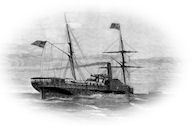
—Steamship Star of the West, Captain McGowan, cleared at New York for Havana and New Orleans. Two hundred and fifty artillerists and marines, with stores and ammunition, were put on board in the lower bay by steam-tug, and in the night the ship went to sea, supposed to be destined for Charleston.

—The South Carolina Convention adjourned this morning, subject to the call of the president—Evening Post, Jan. 5.

WASHINGTON,
January
5, 1861.

JOSEPH FINEGAN, Esq., or

Col. GEO. W. CALL [Tallahassee, Fla.]:

MY DEAR SIR: The immediately important thing to be done is the occupation of the forts and arsenal in Florida. The naval station and forts at Pensacola are first in consequence. For this a force is necessary. I have conversed with Mr. Toombs upon the subject. He will start this week for Georgia, and says if the convention of sov’y [sovereignty] will ask Governor Brown, of Georgia, for a force he will immediately send on sufficient force and take the navy-yard and forts. The occupation of the navy-yard will give us a good supply of ordnance and make the capture of the forts easier. Major Chase built the forts and will know all about them. Lose no time, for, my opinion is, troops will be very soon dispatched to re-enforce and strengthen the forts in Florida. The arsenal at Chattahoochee should be looked to, and that at once, to prevent removal of arms.

I think that by 4th March all the Southern States will be out, except perhaps Kentucky and Missouri, and they will soon have to follow.

What is advisable is the earliest possible organization of a Southern Confederacy and of a Southern Army. The North is rapidly consolidating against us upon the plan of force. A strong Government, as eight States will make, promptly organized, and a strong Army, with Jeff. Davis for General-in-Chief, will bring them to a reasonable sense of the gravity of the crisis.

Have a Southern Government as soon as possible, adopting the present Federal Constitution for the time, and a Southern Army. I repeat this because it is the important policy.

Virginia, Maryland, and Tennessee are rapidly coming up to the work.

God speed you.

I shall give the enemy a shot next week before retiring. I say enemy! Yes, I am theirs, and they are mine. I am willing to be their masters, but not their brothers.

Yours, in haste,

D. L. YULEE.

Lose no time about the navy-yard and forts at Pensacola.