Following the American Civil War Sesquicentennial with day by day writings of the time, currently 1863.

The American Civil War

—Great excitement prevailed at Norfolk, Va., in consequence of the report that four companies of soldiers at Fortress Monroe had been ordered to Charleston.—Balt. Sun.

—It is stated in Washington, on the authority of a member of the Georgia delegation, that the United States revenue cutter Dolphin was fired upon and seized to-day, by the secessionists at Savannah. Upon the same statement in Georgia, the Governor issued an order for her release.—Times, Jan. 5.

—The South Carolina Convention appointed Hons. T. J. Withers, L. M. Keitt, W. W. Boyce, James Chesnut, Jr., R. B. Rhett, Jr., R. W. Barnwell, and C. G. Memminger, delegates to the General Congress of the seceding States.

—The United States arsenal at Mobile was taken by the secessionists at daylight this morning. It contained six stand of arms, 1,500 barrels of powder, 300,000 rounds of musket-cartridges, and other munitions of war. There was no defence.—Evening Post, Jan. 7.

—An appeal to the people of Florida, by the Charleston Mercury, to seize the forts and other defences at Pensacola and Key West, threatens the capture of the California treasure ships by letters of marque and privateers.—(Doc. 13.)

—Fast-day throughout the United States, by proclamation of the President. It is generally observed.—(Doc. 14.)

—Fort Morgan, at the entrance of Mobile Bay, was taken this morning by Alabama troops, and is now garrisoned by two hundred men.—The Press, Jan. 5.

—This evening a workingmen’s meeting was held at Cincinnati, Ohio. Speeches were made, and resolutions adopted, declaring that the Union must be preserved in its integrity by the enforcement of the laws in every part of the Union, by whatever means may be necessary; that the remedy for all grievances can be had under the constitution, and that the only way to safety and peace is the maintenance of it.—Troy Times.

—At Schenectady a salute was fired in honor of Major Anderson and his brave men. National airs were performed amid cheers for Major Anderson and Secretaries Holt and Stanton.—Albany Journal.

—A meeting was held at Westchester, Pa., to enrol volunteers in the regiment of Chester county, to offer their services to the Government to maintain the constitution and enforce the laws.—Evening Post. Jan. 5.

—The following notice is served on residents of Charleston, indiscriminately:

Beat No 1, 16th Regiment, Regimental Parade.

Sir: You are hereby summoned to be and appear at the Citadel Square, properly armed and accoutred, according to law, on Wednesday next, at 1 o’clock P. M., precisely. An inspection of arms will take place at each parade. If you appear in pantaloons, blue or black coat and black hat, arms and accoutrements in complete order will be furnished you at each parade on the ground; if not, the law compels you to furnish yourself with a musket, bayonet, cartridge-box, bayonet-scabbard, with cross-belts, all in good order and fit for service, on one dollar fine for each defect.

Every person subject to military duty in this regiment, who removed from one beat to another, is required to report himself to the captains of the beats from which and to which he has removed, or be fined five dollars, besides all fines for the non-performance of military duty in both beats.

Court-martial held on defaulters at the Military Hall, Wentworth street, on the third Monday of December, at 12 o’clock IL By order of captain.

S. Vale Mallins, Corporal.
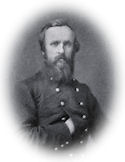
January 4, 1861.—South Carolina has passed a secession ordinance, and Federal laws are set at naught in the State. Overt acts enough have been committed. Forts and arsenal taken, a revenue cutter seized, and Major Anderson besieged in Fort Sumter. Other cotton States are about to follow. Disunion and civil war are at hand; and yet I fear disunion and war less than compromise. We can recover from them. The free States alone, if we must go on alone, will make a glorious nation. Twenty millions in the temperate zone, stretching from the Atlantic to the Pacific, full of vigor, industry, inventive genius, educated, and moral; increasing by immigration rapidly, and, above all, free—all free—will form a confederacy of twenty States scarcely inferior in real power to the unfortunate Union of thirty-three States which we had on the first of November. I do not even feel gloomy when I look forward. The reality is less frightful than the apprehension which we have all had these many years. Let us be temperate, calm, and just, but firm and resolute. Crittenden’s compromise!¹

Windham speaking of the rumor that Bonaparte was about to invade England said: “The danger of invasion is by no means equal to that of peace. A man may escape a pistol however near his head, but not a dose of poison.”

_______

¹Hayes’s disapproval of the Crittenden Compromise is indicated by the exclamation point. The venerable John J. Crittenden, Senator from Kentucky, sought by eloquent appeals to induce Congress to submit to the States for approval an amendment to the Constitution forbidding Congress to abolish slavery in the District of Columbia so long as it existed in Virginia or Maryland, or to abolish it in national territory south of latitude 360 30’—the southern line of Kansas. This was to be irrepealable by any subsequent amendment, as were also certain existing paragraphs in the Constitution relating to slavery. Further, Mr. Crittenden wished Congress to strengthen the Fugitive Slave Law and to appeal to the States and to the people for its thorough enforcement.

.

NEW YORK, January 4, 1861.

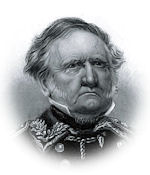
Lieut. Gen. WINFIELD SCOTT,

Washington, D. C.:

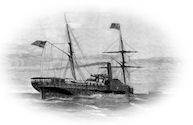
DEAR GENERAL: I had an interview with Mr. Schultz at 8 o’clock last evening, and found him to be, as you supposed, the commission, and together we visited Mr. M O. Roberts. The latter looks exclusively to the dollars, whilst Mr. S. is acting for the good of his country. Mr. R. required $1,500 per day for ten days, besides the cost of 300 tons of coal, which I declined; but, after a long conversation, I became satisfied that the movement could be made with his vessel, the Star of the West, without exciting suspicion. I finally chartered her at $1,250 per day. She is running on the New Orleans route, and will clear for that port; but no notice will be put in the papers, and persons seeing the ship moving from the dock will suppose she is on her regular trip. Major Eaton, commissary of subsistence, fully enters into my views. He will see Mr. Roberts, hand him a list of the supplies with the places where they may be procured, and the purchases will be made on the ship’s account. In this way no public machinery will be used.

To-night I pass over to Governor’s Island to do what is necessary, i.e., have 300 stand of arms and ammunition on the wharf, and 200 men ready to march on board Mr. Schultz’s steam-tugs about nightfall to-morrow, to go to the steamer, passing very slowly down the bay. I shall cut off all communication between the island and the cities until Tuesday morning, when I expect the steamer will be safely moored at Fort Sumter.

I have seen and conversed with Colonel Scott, and also saw your daughter at your house. After leaving you, I obtained the key of the outer door of the office, but could nowhere find the key of your door or of mine, so failed to get the chart. This is of little moment, as the captain of the steamer is perfectly familiar with the entrance of Charleston.

I telegraphed you this morning, as follows:

Arrangements made as proposed; to leave to-morrow evening; send map.

I will now leave the office, where I am writing, to proceed to the island.

Very sincerely, General, your obedient servant,

L. THOMAS,

Assistant Adjutant-General.

_____

HEADQUARTERS OF THE ARMY,
New York, January 5, 1861.

Maj. T. H. HOLMES,
Eighth Infantry,
Superintendent Recruiting Service, Fort Columbus:

SIR: By direction of the General-in-Chief, you will detach this evening two hundred of the best-instructed men at Fort Columbus, by the steamship Star of the West, to re-enforce the garrison at Fort Sumter, South Carolina.

They will be furnished with arms, and, if possible, one hundred rounds of ammunition per man. Orders will be given to the proper officers of the staff department to furnish one hundred stand of spare arms and subsistence for three months.

The officers assigned to duty with the detachment are Lieuts. C. R. Woods, Ninth Infantry; W. A. Webb, Fifth Infantry; C. W. Thomas, First Infantry, and Asst. Surg. P. G. S. Ten Broeck, Medical Department, all of whom will report for duty to Major Anderson, commanding Fort Sumter.

Yours,

L. THOMAS.

_____

HEADQUARTERS, January 5, 1861.

First Lieut. CHARLES R. WOODS,
Ninth Infantry, Fort Columbus:

SIR: The steamship Star of the West has been chartered to take two hundred recruits from Fort Columbus to Fort Sumter, South Carolina, to re-enforce the garrison at that post. You are placed in command of the detachment, assisted by Lieuts. W. A. Webb, Fifth Infantry; C. W. Thomas, First Infantry, and Asst. Surg. P. G. S. Ten Broeck, Medical Department. Arms and ammunition for your men will be placed on the steamer and three months’ supply of subsistence.

The duty upon which you are now placed by direction of the General-in-Chief will require great care and energy on your part to execute it successfully, for it is important that all your movements be kept as secret as possible. Accordingly, on approaching the Charleston bar, you will place below decks your entire force, in order that only the ordinary crew may be seen by persons from the shore or on boarding the vessel. Every precaution must be resorted to to prevent being fired upon by batteries erected on either Sullivan’s or James Island.

Yours,

L. THOMAS.

_____

HEADQUARTERS OF THE ARMY, New York,
January 5, 1861.

Maj. ROBERT ANDERSON,
First Artillery, Commanding Fort Sumter :

SIR: In accordance with the Instructions of the General-in-Chief, I yesterday chartered the steamship Star of the West to re-enforce your small garrison with two hundred well-instructed recruits from Fort Columbus, under First Lieut. C. R. Woods, Ninth Infantry, assisted by Lieuts. W. A. Webb, Fifth Infantry; C. W. Thomas, First Infantry, and Asst. Surg. P. G. S. Ten Broeck, Medical Department, all of whom you will retain until further orders. Besides arms for the men, one hundred spare arms and all the cartridges in the arsenal on Governor’s Island will be sent; likewise, three months’ subsistence for the detachment and six months’ desiccated and fresh vegetables, with three or four days’ fresh beef for your entire force. Further re-enforcements will be sent if necessary.

Should a fire, likely to prove injurious, be opened upon any vessel bringing re-enforcements or supplies, or upon tow-boats within the reach of your guns, they may be employed to silence such fire; and you may act in like manner in case a fire is opened upon Fort Sumter itself.

The General-in-Chief desires me to communicate the fact that your conduct meets with the emphatic approbation of the highest in authority.

You are warned to be upon your guard against all telegrams, as false ones may be attempted to be passed upon you. Measures will soon be taken to enable you to correspond with the Government by sea and Wilmington, N. C.

You will send to Fort Columbus by the return of the steamer all your sick, otherwise inefficient officers and enlisted men. Fill up the two companies with the recruits now sent, and muster the residue as a detachment.

I am, sir, very respectfully, your obedient servant,

L. THOMAS,

Assistant Adjutant-General.

—The order for the removal of guns from the Allegheny arsenal to southern forts is revoked by the War Department, under a decision of the Cabinet.

—Fort Pulaski, at Savannah, Ga., is taken possession of by State troops, by order of the Governor.

—A book is opened in New York city, for the enrolment of volunteers to meet any demand which may be made by the Governor of the State for troops to aid in preserving the Union.—Times, Jan. 4.

—The Florida State Convention assembled at Tallahassee.

—Hon. H. Dickenson, Commissioner from Mississippi, addresses both Houses of the Delaware Legislature, inviting Delaware to join a Southern Confederacy. The House, having heard him, passed unanimously the following resolution, in which the Senate concurred:

Resolved, That, having extended to Hon. H Dickenson, Commissioner from Mississippi, the courtesy due him as a representative of a sovereign State of the Confederacy, as well as to the State he represents, we deem it proper and due to ourselves and the people of Delaware to express our unqualified disapproval of the remedy for the existing difficulties suggested by the resolutions of the Legislature of Mississippi.—Philadelphia Ledger.

—The South Carolina Commissioners left Washington for Charleston, upon the President’s declination to receive any further communication from them. They consider the abrupt termination of their business by the President an insult to themselves and their State, and treat it as a declaration of war.—(Doc.12.)

—In Washington, reports that armed bands were organizing to take possession of the capital before the votes for President and Vice President are counted, meet with general credence. General Scott is actively engaged in the preparations to put down this mob.

(Private.)

New York, Jan. 3, 1861.

My Dear Sir,—I have been so pressed with outside business during the last ten days (trying to save the Union) that I have been unable to write to you.

The first time we began to breathe freely was when Mr. Holt took Governor Floyd’s place in the War Department. The feeling here is strong and undivided in regard to sustaining the administration in its determination to stand by Major Anderson, to protect the public property, and to enforce the revenue laws. On these points the people of the Northern States are as one man; and I am satisfied the President will have with him the conservative men of all sections of the country.

I have been very busy corresponding with prominent men in and out of Congress. We must preserve the Union. Congress should do what is right, and the rest will be easy. Why cannot enabling acts be passed admitting Kansas and New Mexico, and like enabling acts dividing the residue of our territory by 36° 30′, and admitting two more States, at once, with no other restriction than that of ‘a republican form of government,’ which Congress under the Constitution is bound to guaranty? This will dispose of the whole territorial question; and all may support it without surrender of principle. What if New Mexico has a very small population ? This fact should weigh nothing against restoration of harmony and preservation of the Union.

Do not things look better? Let me hear from you.

Yours very truly,

John A. Dix.

Hon. Horatio King.

WAR DEPARTMENT,
Washington, January 3, 1861.

Hon. DAVID CLOPTON, House of Representatives:

SIR : I have the honor to acknowledge the receipt of your letter of the 15th ultimo, asking for the plat and plan of the magazines at Mount Vernon Arsenal, Alabama. In reply, I have to say that I would cheerfully comply with your request did not the interests of the service in the present condition of affairs forbid the publication of information of that description.

…………Very respectfully, your obedient servant,

J. HOLT,
Secretary of War ad interim.

WEDNESDAY 2

Matters look more hopeful for the Country today. It is now known that the President refused to acknowledge the Commissioners as being anything more than distinguished citizens from the State of S.C. Their last communication to him yesterday was returned to them unanswered. It struck them like a bomshell it was so unexpected. They and their secession friends here were in great consternation. The “Embasendors!!” left for home immediately, and now that the Prest has taken a stand. Every body feels better altho a war is ahead. The weather is cold and unpleasant today.

______

The three diary manuscript volumes, Washington during the Civil War: The Diary of Horatio Nelson Taft, 1861-1865, are available online at The Library of  Congress.

—The steam frigate Brooklyn and another vessel at Norfolk are ordered to be in readiness for immediate departure to Charleston. The secession leaders discovered the intention to start these vessels, and notified their sympathizers at Norfolk to have minute-men ready to seize them if they attempted to go to sea. The Administration is on the watch to prevent it.—Commercial Advertiser.

A letter received in Washington from Alabama, states the secession sentiment to be utterly uncontrollable; and says that, in the event of the firing of a single gun in opposition to disunion, “Mr Lincoln’s life will not be worth a week’s purchase.”—Boston Courier.

—Captain Charles Stone, upon the recommendation of General Scott., is appointed to organize the militia of the District of Columbia. Captain Stone graduated at West Point at the head of his class, went into the Ordnance Corps, was a lieutenant in command of a battery at the siege of Vera Cruz; was brevetted for gallant conduct at Molina del Rey, and served on the entire line of operations from Vera Cruz to the city of Mexico, directly under the eye of General Scott, who expresses the highest confidence in his genius for command.—Tribune.

—Intelligence is received in Washington that Fort Sumter is besieged; that all Major Anderson’s communications are cut off; that Fort Moultrie has been completely repaired and the guns remounted; and that every thing is in readiness to open a fire on Major Anderson. New batteries are being erected around him by the secessionists.—N. Y. Times.

—In New York city an assembly of the people in the City Hall Park fire 100 guns in honor of Major Anderson.

—Five thousand citizens of Baltimore have signed a letter addressed to Governor Hicks, of Maryland, approving his course in refusing to convene the Legislature of that State. The list is headed by John P. Kennedy, Mr. Fillmore’s Secretary of the Navy, and comprises the names of nine-tenths of the business men of the city. Calls for public meetings to sustain the Governor are now being issued all over the State.—Baltimore American.

—Governor Ellis, of North Carolina, dispatched troops to seize upon Fort Macon, at Beaufort, the forts at Wilmington, and the United States arsenal at Fayetteville.—Times, Jan. 3.

HEADQUARTERS OF THE ARMY,
Washington, January 2, 1861.

Memorandum of arrangements¹

Telegram sent to Mr. A. H. Schultz, 64 Cedar street, P.O. box 3462, New York City, that his propositions are entertained, and that a staff officer will be in the city to-morrow evening to conclude arrangements.

Lieutenant-Colonel Thomas is directed, first, to satisfy himself that Mr. Schultz’s agency is reliable, then to cause the steamer to be prepared for sea as soon as practicable, provided the terms be reasonable; then to cause two hundred well instructed men with, say, three officers, to be embarked from Governor’s Island, with three months’ subsistence, including fresh beef and vegetables, and ample ammunition; also, one hundred extra stand of arms. Instructions to be sent by Colonel Thomas in writing to Major Anderson that should a fire likely to prove injurious be opened upon any vessel bringing re-enforcements or supplies, or upon her boats, from any battery in the harbor, the guns of Fort Sumter may be employed to silence such fire, and the same in case of like firing upon Fort Sumter itself.

The orders to the steamer and the troops on board will strictly enjoin Complete concealment of the presence of the latter when approaching the bay; Major Anderson to be warned to stand on his guard against all telegrams, and to be informed that measures will soon be taken to enable him to correspond with the Government by sea and Wilmington, N.C.

Colonel Thomas is further directed to inform Major Anderson that his conduct meets with the emphatic approbation of the highest in authority; Major Anderson to be also informed that further re enforcements will be sent him if necessary.

Lieut. Col. LORENZO THOMAS,

Assistant Adjutant-General, Washington, D.C.

__________

¹In the handwriting of General Scott.

Washington D.C.

TUESDAY, JANUARY 1, 1861.

The old year passed away in gloom and sadness and the new one opens today without affording one hopeful ray of light in regard to the future. There seems to be a determination on the part of nearly the whole south to break up the Government. The Comrs from S.C. are still here and little is known in the City about what is taking place betwen them and the President & Cabinet. The “receptions” today as well as the “Calls” were few and rather solemn affairs. Pleasant day, just freezing.

______

The three diary manuscript volumes, Washington during the Civil War: The Diary of Horatio Nelson Taft, 1861-1865, are available online at The Library of  Congress.