Following the American Civil War Sesquicentennial with day by day writings of the time, currently 1863.

The American Civil War

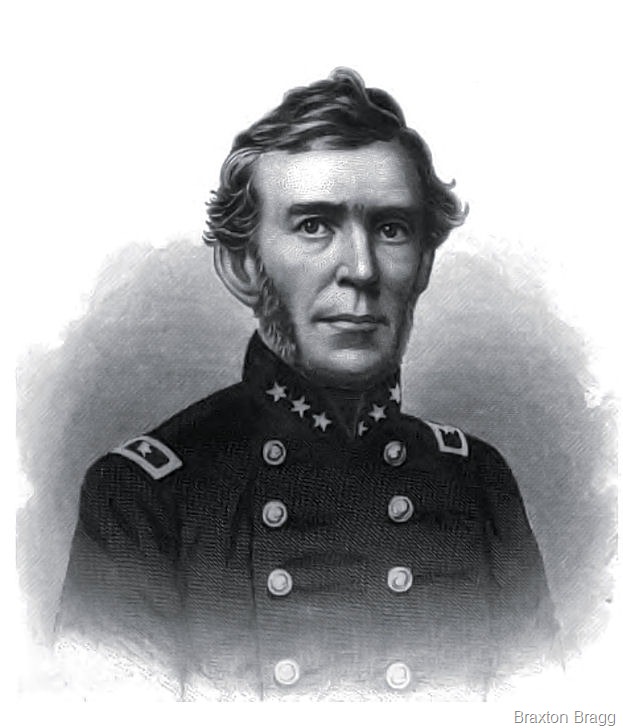
Braxton Bragg

September 3.—At a meeting of the National War Committee at New-York City, a resolution was passed that Generals Fremont and Mitchel be requested, with the consent of the Government, to organize, in the State of New-York, without delay, a corps of fifty thousand men, and in case the general Government refused consent, then application should be made to the State Government.

—The Seventeenth regiment of Connecticut volunteers, under the command of Colonel Noble, left New-York for the seat of war. Elias Howe, Jr., the inventor of the sewing-machine needle, was a private in this regiment.—New- York Evening Post, September 4.

—Hutchinson, Minn., was attacked by a party of one hundred Indians, who, after a fight of more than two hours, were repulsed with considerable loss. Forest City was also attacked, but the Indians were driven off.—St. Peter Press, Sept. 4.

—At New-York this morning, on the receipt of Southern news, a bulletin was posted in front of the Journal of Commerce office, stating that the rebels were advancing on Baltimore by the way of Leesburgh. A crowd gathered in front of the board, and the probabilities of the truth of the rumor were noisily discussed. General McClellan and his movements were loudly criticised and defended by persons of different political views. The crowd continued to increase till the street was quite blockaded, when a squad of police appeared and the bulletin was removed, to prevent further disturbance.—The Ninth Massachusetts battery left Boston this afternoon for the seat of war.

—Major Kemper, of the Tenth New-York cavalry, made a reconnoissance in the immediate vicinity of Centreville, Va., capturing four rebel soldiers. One of them stated that there were only about twenty thousand rebel troops under General Longstreet, the rest having gone off with Jackson in some direction unknown to him.

A cavalry reconnoissance made in the vicinity of Vienna and Langley, Va., revealed the fact that the rebel cavalry, lately in those neighborhoods, were no longer hovering about there.— Washington Star, September 4.

—Winchester Va., was evacuated by the National troops under the command of General White. Yesterday afternoon at three o’clock, orders were received from General Pope to evacuate the town and retreat on Harper’s Ferry, M(L, and this morning at one o’clock the rear-guard of Maryland cavalry, under the command of Captain Russell, left the place, having first set fire to the buildings containing the quartermaster’s stores, and magazines.—The schooner N. Berry of Camden, Me., having on board A. J. Hamilton, a member of Congress, and other refugees from Texas, was overhauled near the South-West Pass of the Mississippi river, by the United States brig Bohio.—Boston Journal.

—The steamer W. B. Terry, with two Dahlgren howitzers on board, while aground in the Tennessee River at Duck Shoals, was captured by a body of rebel guerrillas. The rebels also captured three free negroes, and sold them at once into slavery.

—A skirmish took place near Slaughterville, Ky., between a force of Union troops under Lieut.-Col. Foster, and a body of rebel guerrilla cavalry, resulting in the defeat of the latter, who had three of their number killed, two wounded, twenty-five taken prisoners, including their horses and arms.—Lieutenant Foster’s Report.

—Colonel Shackelford, in command of a numerically inferior force of Union troops, attacked a body of six hundred rebel guerrillas, under Colonel Johnson, encamped near Grieger’s Lake, Ky., and routed them. Afterwards they rallied on the opposite side of the Lake and attacked the Unionists. A severe engagement followed, lasting two hours, when, the ammunition of the Union troops becoming exhausted, they retreated, closely followed by the rebels, whereupon Colonel Shackelford ordered a charge, and again routed the enemy. After burning the rebel camp and removing the guns, the retreat was renewed without molestation.


Braxton Bragg (March 22, 1817 – September 27, 1876) was a career United States Army officer, and then a general in the Confederate States Army—a principal commander in the Western Theater of the American Civil War and later the military adviser to Confederate President Jefferson Davis. (Wikipedia)
September 2.—The following order was issued from the War Department at Washington:

“By direction of the President, Major-General McClellan will have command of the fortifications at Washington, and of all the troops for the defence of the capital.”—Gen. Wright, commanding Department of the Ohio, issued an order from his headquarters at Louisville, Ky., proclaiming Jefferson County in that State, to be under martial law.

—The greatest excitement existed in the cities of Cincinnati, Ohio, Covington and Newport, Ky., in consequence of the reported approach of the rebel army under Gen. E. Kirby Smith. General Wallace assumed command, and issued a proclamation declaring those cities to be under martial law. All business was suspended. Saloons were closed and liquor of all kinds was forbidden to be sold. The ferry-boats were stopped. The inhabitants, including judges and clergymen, met in public places, formed themselves into companies, and began to drill in readiness for military duty. A large force was being gathered together by Gen. Wallace with which to meet the enemy should he make his appearance.

—The Thirty-sixth regiment of Massachusetts volunteers, under the command of Colonel Henry Bowman, left Worcester for the seat of war.—The rebel sloop John Thompson, was captured by the United States bark Restless, Lieut. Edward Conroy commanding.

—This morning at four o’clock a train of one hundred wagons, with commissary stores, was intercepted by the rebels between Fairfax and Centreville, Va., and driven off toward Manassas before the party could be overtaken. They secured the entire train. So soon as this raid in the rear of the National army at Centreville was known, the necessity of guarding that direction became apparent, and at noon the whole army of Virginia abandoned Centreville, and massed northeast of Fairfax Court-IIouse. At noon they again took up the line of march, and this evening the advance was in sight of Munson’s Hill. The enemy’s cavalry followed them in the distance, but made no attack, and the entire movement was being accomplished in excellent order. (Doc. 104.)

—A large force of rebel cavalry under General Scott, entered and occupied Versailles, Ky.— Louisville Journal, September 1.

—A fight took place at Morganfield, Ky., between a force of Union troops under command of Col. Shackleford, Eighth Kentucky cavalry, and a body of rebel guerrillas under Col. A. R. Johnson, resulting in a rout of the latter with considerable loss.

—A. S. Paddock, Acting Governor of the Territory of Nebraska, apprehending an attack by the hostile Indians on the frontier settlements of that territory, issued a proclamation calling upon the citizens of the organized counties of the territory to enroll themselves in accordance with previous instructions, and that all organized companies should meet as often as practicable to perfect themselves in drill, that they might be prepared for any emergency.

—The chiefs of the Wisconsin Chippewa Indians, Naw-gaw-nub and Shin-gwack, sent a letter to Gov. Ramsey of Minnesota, offering their services in putting down the hostile Sioux Indians, who had risen against the whites in the frontier settlements of the latter State.

—A fight took place near Plymouth, N. C, between a force of Union troops under Orderly Sergeant Green of Hawkins’s Zouaves, aided by a portion of the inhabitants of Plymouth, and a large force of rebels under the command of Col. Garrett, resulting in a rout of the latter with a loss of thirty killed and forty taken prisoners, among whom were Colonel Garrett and several of his officers.—(Doc. 201.)

September 1.—A severe fight took place at Britton’s Lane, near Denmark, Tenn., between a force of Union troops, numbering about eight hundred men, under the command of Col. Dennis, Thirtieth Illinois, and a large body of rebels, under General Armstrong, resulting, after an engagement of four hours’ duration, in the retreat of the rebels, who left one hundred and seventy-nine of their dead on the field. The total rebel loss in this affair was over four hundred, that of the Nationals was only sixty.—(Doc. 198.)

—The New-York Tribune’s report of the second battle of Bull Run produced the greatest excitement in Philadelphia, Pa., on being posted on the bulletin-boards. In some cases altercations occurred between the excited friends and opponents of Gen. McClellan. About noon the Tribunes despatches were torn from the boards on information being received that the Government had ordered the Tribune office to be closed.— Charles J. Ingersoll was discharged from arrest by order of Secretary Stanton.—The One Hundred and Twenty-second regiment N.Y.S.V. left Syracuse for the seat of war. It was commanded by Colonel Silas Titus.—Paris, Ky., was evacuated by the National troops, who fell back on Cynthiana.

—Great excitement existed in Louisville, Ky., in consequence of the approach of the rebel army under Gen. E. Kirby Smith. The Governor of the State issued a proclamation authorizing Col. Gibson to organize and bring into the field all the able-bodied men in the county of Jefferson and city of Louisville, and the Mayor called upon the citizens to come forward and enroll themselves for the immediate defence of their city. The public archives were removed from Frankfort to Louisville, and the Legislature adjourned to the same place.

—Lexington, Ky., was entered and occupied by the rebel forces under Gen. E. Kirby Smith. The Union troops evacuated the place a few hours previous, and fell back to Covington.—Natchez, Miss., was shelled by the Union gunboats.

—Yesterday the rebels commenced an attack upon the National forces at Stevenson, Ala., which continued until to-day, when the rebels retired with a severe loss. The fight was brought on by the National forces, which had just evacuated Huntsville, and were on their way to Nashville, Tenn. The batteries engaged were Simonton’s Ohio and one section of Loomis’s Michigan regiments. They were supported by the Tenth Wisconsin and Thirteenth Michigan regiments.—Cincinnati Times, September 6.

—A severe engagement took place at Chantilly, near Fairfax Court-House, Va., between the Union army under Gen. Pope, and the rebel forces under Generals Jackson, Ewell and Hill. The battle lasted for nearly an hour, the rebels being driven back at all points with great loss. Among the killed on the side of the Nationals, were Major-Gen. Kearny and Brig.-Gen. Stevens.—(Docs. 104 and 200.)

—The Secretary of the Navy officially promulgated the section of the law concerning the navy, which stopped the spirit ration of the sailors, and gave notice that it would be rigidly enforced. The section reads as follows:

Section 4. And be it further enacted. That from and after the first day of September, 1862, the spirit ration in the navy of the United States shall forever cease, and thereafter no distilled spirituous liquors shall be admitted on board vessels of war except as medical stores, and upon the order and under the control of the medical officers of such vessels, and to be used only for medical purposes. From and after the said first day of September next there shall be allowed and paid to each person in the navy now entitled to the spirit ration five cents per day in commutation and lieu thereof, which shall be in addition to the present pay.”

—Poindexter, the notorious leader of guerrilla bands in Missouri, was caught twenty miles from Hudson, Mo., on the Hannibal and Missouri Railroad.

August 31.—Fredericksburgh, Va., was evacuated by the Union army under Gen. Burnside.— The three bridges over the Rappahannock constructed by the army, the railroad buildings, including the offices of Commissary and Quartermaster, containing a quantity of army stores, and the machine-shop and foundry, were burned before the army left.

—The One Hundred and Twenty-fifth and the One Hundred and Twenty-first regiments, New York State volunteers, commanded by Colonels S. L. Willard and Richard Franchet, passed through New-York on the way to the seat of war. —Huntsville, Ala., was evacuated by the Union army under General Buell.

—Yesterday and to-day the greatest excitement existed in Boston, Mass., caused by the disaster to the Union army under General Pope. Gov. Andrew having requested contributions of linen, etc., for the wounded soldiers, the churches were converted into depots for their reception, and immense quantities of almost every thing required for the sick and wounded came rapidly in, until, at five o’clock, nine freight-cars were despatched, accompanied by six surgeons, for Washton—(Doc. 197.)

—The railway-guard at Medon Station, on the Mississippi Central Railroad, Tenn., was attacked by a superior force of rebel cavalry belonging to General Armstrong’s command, but were met by such determined resistance that they retreated, suffering great loss.—(Doc. 198.)

—Yesterday and to-day great excitement existed in Wheeling, Va., caused by the intelligence that Buckhannon had been captured, and that Weston and Clarksburgh were threatened by strong forces of rebel guerrillas. To-day a militia regiment left for Clarksburgh to reenforce the garrison already there.— Wheeling Intelligencer, September 1.

—William A. Hammond, Surgeon-General of the army, issued the following to the loyal women and children of the United States: “The supply of lint in the market is nearly exhausted. The brave men wounded in defence of their country will soon be in want of it. I appeal to you to come to our aid in supplying us with this necessary article. There is scarcely a woman or child who cannot scrape lint, and there is no way in which their assistance can be more usefully given than in furnishing us the means to dress the wounds of those who fall in defence of their rights and their homes.”

—General Maxey’s brigade, under the command of Colonel McKinstry, of the Thirty-second Alabama regiment, attacked the Yankees, one thousand two hundred strong, infantry, artillery, and cavalry, at Stevenson, Ala., at eleven o’clock to-day. After four hours’ shelling, the enemy evacuated their fortifications, leaving on the Nashville trains, common roads and through the woods. A large amount of ammunition and stores was captured. The confederate command met with the most cordial reception from the citizens, the ladies urging them not to stop till they had killed or captured the entire Yankee force. The joy of the citizens was unbounded at once more beholding the “stars and bars.” The confederates had engaged the Thirty-second Alabama, Forty-first Alabama, Twenty-fifth Tennessee, Major Gunter’s dismounted partisans, Capt Rice’s cavalry, and Freeman and Durr’s battery, the whole numbering nine hundred men. The loss was two wounded, none killed. The Yankee loss unknown.—Richmond Dispatch, Sept. 2.

—The steamer Emma, while going down the Savannah River, grounded, and was discovered by the Yankees. She was fired to prevent her from falling into their hands. She had on board seven hundred and forty bales of cotton and some turpentine.—Savannah Republican, September 1.

August 30.—To-day three battles were fought in the vicinity of Richmond, Ky., between the Union forces, under Gen. Manson, and a numerically superior body of rebel troops, under Gen. E. Kirby Smith, resulting on each occasion in a defeat of the Nationals. The Unionists fought the third battle under the command of Gen. Nelson, but it ended in their retreat—(Doc. 107.)

—The United States War Department issued the following order: “Gen. Burnside commands his own corps, except those that have been temporarily detached and assigned to General Pope. General McClellan commands that portion of the army of the Potomac that has not been sent forward to Gen. Pope’s command. General Pope commands the army of Virginia, and all the forces temporarily attached to it. All the forces are under the command of Major-Gen. Halleck, General-in-Chief.”

—A severe fight took place at Bolivar, Tenn., between a body of Union troops, under the command of Col. Leggett, Seventy-eighth Ohio, and a greatly superior force of rebels, under Gen. Armstrong, resulting, after a contest which lasted for more than seven hours, in a rout of the rebels, with great loss. The loss of the Nationals in this engagement was five killed, among whom was Lieut.-Col. Hogg, of the Second Illinois cavalry, eighteen wounded, and sixty-four missing. — (Doc. 195.)

—Buckhannon, Va., was this day entered by a force of rebel guerrillas, and plundered of a large amount of military stores, fire-arms, ammunition, etc. Private property was respected. Before entering the town a skirmish took place between the loyal inhabitants and the rebels, but the latter being superior in numbers, the Unionists had to give way.— Wheeling Intelligencer, Sept. 4.

—On the twenty-seventh June last, the rebel Governor, Letcher, of Virginia, issued a proclamation, calling upon the State for a force of ten thousand men, to be commanded by Gen. John B. Floyd, to be employed in the defence of West Virginia; but the men not being forthcoming, the Governor issued another proclamation under this date, emphatically calling upon all officers of the State, civil and military, to give the necessary aid to expedite the raising of the required troops, and to contribute whatever might be proper to render them effective.

— A fight took place in the vicinity of McMinnville, Tenn., between a body of Union troops, under the command of Col. Fyffe, Twenty-sixth Ohio, and a superior force of rebel cavalry, under General Forrest, resulting in a rout of the latter, with considerable loss.—(Doc. 196.)

—The battle at Bull Run, Va., was renewed this day, and General Pope, after a desperate engagement, was compelled to retreat to Centreville, Va.— (Doc. 104.)

August 29.—The battle of Groveton, in the vicinity of Bull Run, was fought by the Union army, under Gen. Pope, and two divisions of the rebel forces, under Generals Jackson and Longstreet. The engagement commenced early in the morning, and terminated only at night, the rebels being driven from the field with great loss.—(Doc 104 and Supplement.)

—Twelve officers of the Seventy-first regiment of Ohio volunteers having published a card, stating that they advised Colonel R. Mason, who had been cashiered for cowardice, to surrender Clarksville, Tenn., to the rebel forces, were, by direction of the President, dismissed from the service of the United States.

—At Wilmington, Del., an enthusiastic meeting was held, at which resolutions were adopted denouncing Governor Burton as a rebel and a tool of Bayard, and appointing a committee to lay the proceedings of the meeting before the President and Secretary of War. Resolutions were also adopted expressing a determination to resist the draft as made by the Governor.

—Brig.-Gen. W. F. Barry, late Chief of Artillery, under Gen. McClellan, was assigned to duty as Inspector-General of Artillery, and ordered to report to the Chief of Ordnance.

—The Secretary of War issued an order directing that the Seventy-first regiment New-York State militia be sent to New-York on the thirty-first instant, and then mustered out of the United States service, the time for which they volunteered having expired.—Lieut Godfrey Weitzel, of the Engineer Corps, was this day appointed a Brigadier-General.—A meeting called twelve miles south-east of Memphis, Tenn., to organize a guerrilla band, was surrounded and eighteen prisoners were captured by a company of National troops.

— A skirmish took place near Manchester, Tenn., between a small force of Union infantry, under the command of Captain Miller, Eighteenth Ohio, and a force of rebel cavalry, under General Forrest, resulting in the retreat of the latter, with very heavy loss.—Cincinnati Commercial.

—A reconnoitring expedition, consisting of two companies of infantry, a battery of two guns, and a small troop of cavalry, under the command of Col. Thomas, Eighth Vermont, left St Charles Court-House, La., and proceeded to Bonnet Carré, where they dispersed, after a short skirmish, a force of rebel guerrillas, and captured over fifteen head of oxen, horses, and mules, which were designed for the use of the rebel army. The expedition was entirely successful, and returned without losing a man.—N. O. Delta, Sept. 1.

—The Union gunboat Anglo-American, under the command of Captain Riley, left New-Orleans and proceeded up the Mississippi River on a reconnoitring expedition, as far as Vicksburgh. When opposite Port Hudson the Anglo-American received the fire of twenty-two guns. She was hit sixty or seventy times, but though completely riddled, proceeded on her course. The result of the reconnoissance was entirely successful.

August 28.—A fight took place at Readyville, Tenn., between the Twenty-third Kentucky infantry under the command of Col. Mundy, and a large force of rebel cavalry under Gen. Forrest, resulting in a rout of the latter with heavy loss. —Cincinnati Times.

—General Schofield at St. Louis, Mo., issued an order assessing five hundred thousand dollars upon secessionists and Southern sympathizers in St Louis County — the money to be collected without delay, and used in clothing, arming and subsisting the enrolled militia while in active service, and in providing for the support of such families of militiamen as might be left destitute.

—A severe fight took place at a point six miles west of Centreville, Va., between the National forces under Generals Sigel and McDowell, and the rebels under the command of Gen. Jackson, who was driven back at all points, with a loss of a large number of prisoners.—(Docs. 104 and 199.)

— City Point, on the James River, Va., was completely destroyed by the National gunboats under Commodore Wilkes. For some time the rebels had been firing into the transports passing up and down the river, and Commodore Wilkes sent them word that if it was not discontinued, he would destroy their rendezvous. To-day the rebels brought down to City Point eight cannon and about two hundred riflemen, and attacked the Federal flotilla, which at the time was abreast of the place, whereupon the gunboats opened fire upon them, demolished every building in the town, and dispersed the rebel force.

—Twenty men of the Second (Union) Virginia cavalry, under the command of Lieutenant Montgomery, attacked seventy-five rebel cavalry at Shady Springs, ten miles from Raleigh Court-House, Va., and completely routed them, taking five prisoners.—The Union troops occupied Hernando, Miss.

—The Secretary of the Treasury issued an order establishing regulations concerning internal and coastwise commercial intercourse, with the purpose of preventing the conveyance of arms, munitions of war, and other supplies to the insurrectionary districts, and the Secretaries of War and the Navy issued orders directing all officers of the army and navy to render such aid as might be necessary in carrying out said regulations.

August 27. — The British schooner Anna Sophia was captured by the United States gunboat R, R. Cuyler, while endeavoring to run the blockade of Wilmington, N. C.—The draft was postponed in Pennsylvania until September fifteenth.

—James M. Graham, Assistant Adjutant-General, sent the following despatch from Leavenworth, Kansas, to the War Department at Washington:

“Major Champion Vaughan, of General Blunt’s staff, has arrived at these headquarters with despatches. Gen. Blunt marched with one thousand five hundred men from Fort Scott, August seventeenth, and followed the rebels as far north as Lone Jack. The enemy declined an engagement and commenced a retreat. They were hotly pursued by Gen. Blunt, and driven in utter confusion across the Osage, with the loss of all their transportation and equipments, besides numerous arms, prisoners, etc.

“It is considered that the expedition saved the Missouri towns and the western border from devastation, besides striking terror into the hearts of the enemy as far as the Arkansas line. Gen. Blunt’s column returned to Fort Scott on the twenty-second, having marched nearly three hundred miles in six days. Col. Cloud was left to continue the pursuit, and it is not improbable that the main force of the rebels will be forced to surrender.”

—A party of rebel cavalry, under the command of Captain White, entered Waterford, Va., early this morning, and captured a large portion of a company of National cavalry under Capt. Means. Capt. Means escaped.—The Nineteenth regiment of Maine volunteers, under the command of Col. Frederick D. Sewall, left Bath for the seat of war. —An enthusiastic war meeting was held at Boston, Mass., at which speeches were made by Gov. Andrew, Edward Everett, Robert C. Winthrop, Senator McDougal of California, and others.— Battle Creek, Ala., was evacuated by the Union army under General Buell.

—The battle of Kettle Run, near Bristow Station, Va., was this day fought by the Union forces under Gen. Hooker, and a division of the rebel army of Gen. Jackson, under Gen. Ewell. The engagement lasted for several hours, terminating only at dark, the rebels retreating with great loss.—(Doc. 104.)

—A great war meeting was held in the city of New-York, at which speeches were made by Generals Mitchel, Foster, Sickles, Walbridge, Corcoran, and Busteed; Mr. Arnold of Illinois, Mr. Wright, of New-Jersey, Col. Nugent, and others.

August 26.—A fight took place near Madisonville, Ky., between a Union force under Lieut. Col. Foster and a large body of rebel guerrillas, resulting in the retreat of the latter with considerable loss.—Lieut.-Col. Foster’s Report.

— The One Hundred and Twenty-sixth regiment of New-York volunteers, left Geneva, for Washington, D. C. The regiment was commanded by Colonel Sherrill—The Ninth regiment of New-Hampshire volunteers, Col. Enoch Q. FelIows, passed through New-York City for the seat of war. It left Concord, N. H., yesterday morning.

— A skirmish took place near Fort Donelson, Tenn., between a force of Union troops under command of Col. Lowe, Fifth Iowa cavalry, and a body of rebel guerrillas under Col. Woodward, resulting in the retreat of the latter with the loss of their artillery. The Nationals had two men killed and eighteen wounded.—(Doc. 191.)

— Brigadier-general Lloyd Tilghman, in accordance with a special order issued by General Bragg, August 16th, assumed command “of all abolition and confederate officers and soldiers in the vicinity of Vicksburgh, Miss., for the purpose of being exchanged or paroled,” and ordered them to report immediately at headquarters at Jackson, Miss. ,

—A large force of Gen. Stuart’s rebel cavalry, led by Fitz-Hugh Lee, entered Manassas, Va., and, after scattering a small body of Union troops stationed there, destroyed a railway train, several buildings, a large quantity of government stores, and other property.—(Doc. 194.)

August 25.—Seven men of the Bath County (Ky.) home guards, under Captain Warren, surprised and captured near Mount Sterling, Ky., eighteen rebel guerrillas with their horses and arms.—S. C. Pomeroy, Senator of the United States from Kansas, issued an address to the free colored people of the United States, suggesting the organization of emigration parties of such people for settlement in Central America.

—Major Lippert, Thirteenth Illinois cavalry, with one hundred and thirty men, was attacked by a force of rebel guerrillas, three hundred and fifty strong, under Colonel Hicks, thirty-six miles beyond Bloomfield, Mo. The rebels were totally routed, twenty of them being killed, many wounded, and a number taken prisoners.

—Colonel Woodward, with a strong force of rebel guerrillas, attacked Fort Donelson, Tenn., and was repulsed with heavy loss.—(Doc. 191.)

—After fighting the Sioux Indians during the two preceding days, and finally routing them, the whole population, including the garrison under command of Capt Flaudrau, of New-Ulm, Minn., evacuated that place this day.—(Doc. 192.)

—The Eleventh New-Jersey regiment of volunteers, under the command of Col. Robert McAllister, left for Washington.—The One Hundred and Twentieth regiment, New-York State volunteers, left Rondout for the seat of war, under the command of Col. George H. Sharp.—The Fourteenth regiment of Connecticut left Hartford for Washington. It was commanded by Col. Dwight Morris.—Two hundred guerrillas, encamped on Shelby farm, six miles from Danville, Ky., were surprised by a party of the Harrodsburgh and Danville home guards, who succeeded in killing three and wounding several of them, besides capturing a number of horses.—(Doc. 193.)