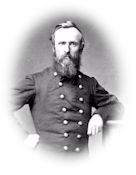
Tuesday, December 13, 1864. — Snow still on the ground; very cold. Sleigh-ride with Captain McKinley to Winchester Depot. Run against hay team. Hastings improving decidedly. News from Sherman encouraging but meagre. Hood as he was, before Nashville. Early gone.

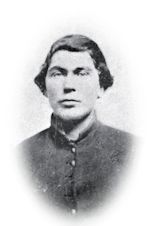
Fort Gillem, Tuesday, Dec. 13. On guard. The icy frost that encased everything has been wholly removed, and we can now move around without “slipping up”. But it is getting very wet and muddy. Our horses are having a bad time of it. They all grow poor fast without stables. Firing on the picket line is once more heard, at times very briskly. Fort Negley indulged in a few shots this evening. The cavalry have gone into camp inside the line, three divisions of them.
A big mail arrived 4 P. M., the first in five days. I received one from home. It brought commissions to Alba and S. Sweet as second lieutenants in 6th Battery, merited promotion—and ratified by all the boys who will now have two temperate officers at least.
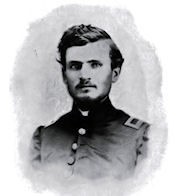
13th. Notice of appointment from Adj. Gen’l of Ohio as captain came. Went over to muster. No success. Several promotions.
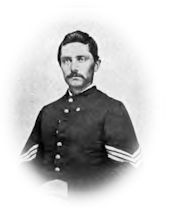
Tuesday, 13th—We lay in bivouac all day. Our rations ran out today and no more can be issued until we open up communications with the fleet. To do that we shall have to open a way to the coast. Our men have foraged everything to be found. The only thing that we can get now is rice, of which there is a great deal in stacks, besides thousands of bushels threshed out, but not hulled, and stored away in granaries. The Thirty-second Illinois went with a train from our brigade to forage. Fort McAllister was captured late this afternoon by a detachment of the Fifteenth Corps, General Hazen’s Division. Our cracker line is open once more and there is great cheering in camp over the news.
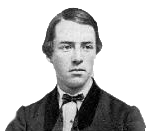
Monday, December 12. — We are fairly on our way. Started with a fair wind and a clear sky about 8 A.M. Bumped on the bar three or four times. Wind was from the west, so that we had all our sails set. Passed Frying-Pan Shoals this evening.
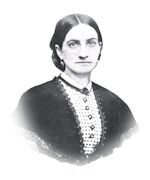
Sunday, September 11.[1]—The alarm-bell rang early this morning—a sure sign that the enemy had come this time.” All the home guards turned out, with them the “burly British Guard,” and their “venerable” Captain Wheeler. In the guard are a few more “venerables,” one being a paternal relative of mine. The women folks went to church, but I know that their thoughts often wandered to the intrenchments.
It has been one of the coldest days we have experienced this season. About 10 P. M. one of the “venerables” came from the intrenchments, and informed us that it was another “wolf” alarm. So “Richard is himself again”—”till next time.”
[1] Note: This entry is dated Sunday, September 11 in the book, but appears after the December 12 entry. December 11 and September 11 were both on a Sunday. To preserve the book sequencing in the blog, the entry appears on the 12th of December 2014, after the entry for December 12, 1864. – Mike Goad, September 30, 2013.
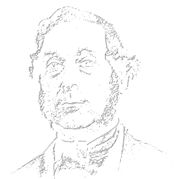
December 12th.—Clear and cold. Ice half an inch thick.
Gen. Longstreet is again in the old lines on this side of the river. The reconnoissance, however, is said to have been successful. Only a few were killed and wounded on either side.
And Grant’s column was turned back from Meherrin bridge. Results of the movement unimportant, and the supposition is that both armies will now go into winter quarters, after a taste of this rigorous weather.
It is rumored and believed (though I have seen no dispatch to that effect) that Sherman has beaten and out-manœuvred our generals, and got into communication with the Federal fleet.
I read President Lincoln’s message carefully last night. By its commissions and omissions on Mexican affairs, I think he means to menace Louis Napoleon, who may speak out January 1st, 1865. Lincoln says:
“Mexico continues to be a theater of civil war. While our political relations with that country have undergone no change, we have at the same time strictly maintained neutrality between the belligerents.”
And his reference to England is so equivocal, and his grouping of the Central and South American Republics so prominent, and the boastful allusion to the “inexhaustible” resources of the United States, may be considered as a premeditated threat to Great Britain.
A “confidential” letter came in to-day from Mr. Benjamin to the Secretary of War.
Dr. Powell has sent us a dozen ruta baga turnips, and a couple of quarts of excellent persimmons, which the family enjoys most thankfully.
Dispatches from Lee:
.
“Headquarters Army Northern Virginia,
“December 10th, 1864.
“Hon. James A. Seddon, Secretary Of War.
“Gen. Hampton, after driving the enemy’s cavalry upon his infantry, on the afternoon of the 8th, recrossed the Nottoway and reached Bellfield at daylight yesterday.
“In the afternoon the enemy attacked the position, but were successfully resisted. This morning the enemy is reported retiring and Hampton following.
“The bridge over the Meherrin was saved. Our loss, as far as known, was small. The garrison, under Garnett, and the reserves, behaved well. R. E. Lee.”
.
“Headquarters Army Northern Virginia,
“December 10th, 1864.
“Hon. James A. Seddon, Secretary Of War,
“About noon yesterday the first division of the Second Corps of the enemy, supporting their cavalry, forced back our cavalry pickets on the Vaughan Road, south of the Appomattox, and advanced toward Dinwiddie Court House.
“To-day our cavalry, reinforced by infantry, drove them back across Hatcher’s Run, capturing a few prisoners and re-establishing our lines. R. E. Lee.”
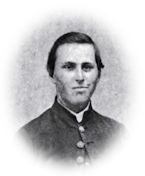
December 12th. Report comes this morning that guerillas crossed Sheridan’s railroad last night and captured a train on the Baltimore & Ohio Railroad, near Duffield Station. They passed near our picket posts. Did not molest us, as we did not see or hear anything of them. Trains with passengers, mail, and supplies pass over this road. The rebs no doubt read Sheridan’s notice, for many of them have homes in this vicinity.
Camp Russell, Virginia, December 12, 1864.
Dear Uncle: — The snow is at least eight inches deep. A fierce northwester has been blowing for the last fifteen hours and the cold is intense. I fear that men on the picket line will perish of cold. We probably notice severe weather more when living as we are in rather poor tents, but I certainly have seen nothing worse than this even on the shore of the lake.
The campaign in the Valley has closed. The Rebel infantry has all been withdrawn. Our own is leaving rapidly. It goes to Grant. The destination of Crook’s command is not yet known. It probably waits news from Sherman.
I shall ask for a leave of absence as soon as we get orders to go into winter quarters, which may come any day.
I have been promoted to brigadier-general. The honor is no great things, it having been conferred, particularly at the first part of the war, on all sorts of men for all sorts of reasons; but I am a good deal gratified, nevertheless. It is made on the recommendation of General Crook, approved by Sheridan. This at the close of such a bloody campaign is something; besides, I am pleased that it seems so well received by officers and men of the command. It has not yet been officially announced, and will not be for perhaps a week or so.
I am very glad Governor Chase is Chief Justice. I had almost given up his appointment. I received letters from Swayne’s friends urging me to write in his behalf. I heard nothing of the kind from the friends of Governor Chase. I suppose they felt safe. I replied to Perry and others that I was for Governor Chase.
It seems I have a place at West Point at my disposal. It is quite encouraging to know that my district abounds in young Napoleons. I hear of a new one almost every mail. The claim of one is based largely on the fact that he has two brothers in the service. I happen to know that they (both officers) have been so successful in finding soft places in the rear that neither of them after more than three years’ service, has ever been in a battle!
I begin to feel very anxious about Sherman. His failure would be a great calamity in itself. Besides, it would bring into favor the old-fogy, anaconda style of warfare. Boldness and enterprise would be at a discount. If he has made a mistake, it is in not moving with more celerity.
We ought to have another draft without delay — or rather another call for troops, to be followed by a draft if volunteering failed to produce the required number within a reasonable period.
Sincerely,
R. B. Hayes.
S. Birchard.
Monday, 12. — A bright, cold day, less wind. Miss Hastings and Miss Defendrefer came out with Captain Hastings’ nurse (Miss Wilber) in a sleigh. Their first visit to a winter camp. I give them wine and warm up. A pleasant call, the first from ladies.


