Following the American Civil War Sesquicentennial with day by day writings of the time, currently 1863.

November 2010

Fort MOULTRIE, S. C., November 5, 1860.

Col. H. K. CRAIG,
Chief of Ordnance, U. S. Army, Washington, D.C.:

COLONEL: Your communication of 1st instant, with its inclosure, in reference to placing forty muskets in the hands of the Engineer officer in charge of Fort Sumter as a precautionary measure proper to this time of excitement, is received. My views are asked on two, or rather three points:

1st. On that which forms the condition of the Secretary’s approval of the issue, namely, that I concur in its expediency;

2d. On the “propriety” of placing the arms in the hands of hired men for the purpose indicated; and,

3d. On the “expediency” of doing so.

To the first I reply that I have already said in effect, on my post return for last month, that while I do not apprehend that any attempt upon the United States works here will receive the countenance of the State or city authority, it is by some thought that a tumultuary force may be incited by the feeling of the time, and invited by the present disordered condition of the works to make such an attempt without it, and that this possibility makes it incumbent on me to provide as far I may against it, and forty additional musketeers would then be desirable.

As to the “propriety” of the issue I see no objection. The arms need not be delivered to the men selected by the Engineer officer till the occasion should actually obtain. The workmen in charge of the property are bound on principles of common law to defend it against purloiners, to say nothing of the 96th Article of War, applicable to all “persons whatsoever receiving pay from the United States.”

The “expediency” of the measure is quite another question of less obvious features.

There are one hundred and nine men at Fort Sumter, most of them laborers of foreign nativity, of whom it is prudent to be somewhat suspicious, for I am just informed that on some of them being questioned (as is the wont of the times) on the point of their proclivity in the event of secession, replied to the effect that they were indifferent, and intimated that the largest bribe would determine their action, and they can, you know, discharge themselves of their public obligations at any moment, and thus be free to choose sides.

Now, forty muskets in the hands of the faithful among them might control the rest, but certainly not on a close push from outside. The Engineer officer can, he says, keep the arms beyond the physical possibility of being taken from him by the untrustworthy, and he can cut off all communication peremptorily with citizens. Now, unless some such precaution be taken, this large body of laborers may, in the possible event in question, unrestrainedly deliver up the post and its contents on a bribe or demand. Meanwhile they cannot be removed outside of that isolated island post, which has not a foot of ground beyond the walls of the fort. In this connection I may add that at this post too (Fort Moultrie) we have about fifty laborers of like description with known secession propensities, as they are residents permanently of this quarter.

On the point of expediency, then, I am constrained to say that the only proper precaution–that which has no objection–is to fill these two companies with drilled recruits (say fifty men) at once, and send two companies from Old Point Comfort to occupy respectively Fort Sumter and Castle Pinckney.

I am, colonel, yours respectfully,

JNO. L. GARDNER,

Brevet Colonel, U. S. Army.

[Indorsement.]

ORDNANCE OFFICE, November 8, 1860.

Respectfully submitted to the Secretary of War, with the remark that as the issue of forty muskets, approved by him 31st ultimo, was contingent on the approval of Colonel Gardner, it is probable that the issue has not and will not be made without further orders.

H. K. CRAIG,
Colonel of Ordnance.
November 4, 1860

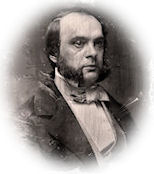
Fellow Citizens,—In thanking you for the honor which you have conferred upon me, I cannot refrain from addressing you a few brief remarks at this critical juncture of our political affairs.

In less than four days you will be called upon to record your votes at an election, upon the result of which depends not only the preservation of your property, and the prosperity of your native city, but also the very existence of this great and vast Republic.

Whatever the Republican leaders may say to the contrary, I fear that the election of Mr. Lincoln to the presidential chair must prove the forerunner of a dissolution of this confederacy amid all the horrors of civil strife and bloodshed.

I know that Mr. Lincoln’s friends claim for him sentiments of patriotic and conservative attachment to the Union. But of what avail can these sentiments be, even if they do exist, from the moment that he consents to become the standard-bearer of a sectional party holding principles incompatible with the sacred obligations of the Constitution, and arrayed in open and unrelenting hostility against the property and the institutions of the fairest portion of our common country.

But, my friends and fellow-laborers in the cause of the Union, with God’s blessing we must not give our opponents a chance to carry out their fair promises, or their boasting taunts.

I do not believe the great State of New York, which under the beneficent influences of our institutions has grown up to a mighty empire in herself, will ever give her casting vote in favor of fanatical sectionalism.

I will not believe that the City of New York, which owes her proud position as the first commercial emporium of the world to the blessings of our Union, can ever be unmindful of her duty to the Union. I have an abiding faith in the unflinching courage of our indomitable Democracy, which has carried its victorious banner through many a hard-fought battle. And last, though not least, my friends, I place implicit trust in the energetic co-operation of those patriotic and conservative men, the members of the time-honored Whig party, who, forgetting all past differences, and only mindful of their unwavering attachment to the Union, have united with us to fight the common enemy.

When in 1850 the hydra of sectionalism and disunion first raised her hideous head, we saw the great statesmen of the Republic lay aside all differences on minor topics of internal or foreign policy, and by one united effort crush the treasonable monster. Then the immortal Webster stood side by side with the eloquent and Union-loving Henry S. Foote; then the patriot and statesman, John Bell, fought shoulder to shoulder with the honored veteran of Democracy, Lewis Cass; and the cherished idol of the American heart, the great Henry Clay, was linked hand in hand with the unflinching and patriotic champion of the Constitution, Stephen A. Douglas.

The work then so nobly begun by our great leaders is now to be completed by the united efforts of the American people. From the snow-clad hills of the far North to the blooming savannahs of the sunny South, from the rolling waves of the Atlantic to the golden shores of our empire on the Pacific, the hopes and fears of every American patriot are centred at this moment in New York. Will you allow these hopes to be disappointed ? No ! before another week shall have passed away I trust that the mighty Empire State will have redeemed herself from Republican misrule, and preserved the Union from the calamities of a sectional administration.

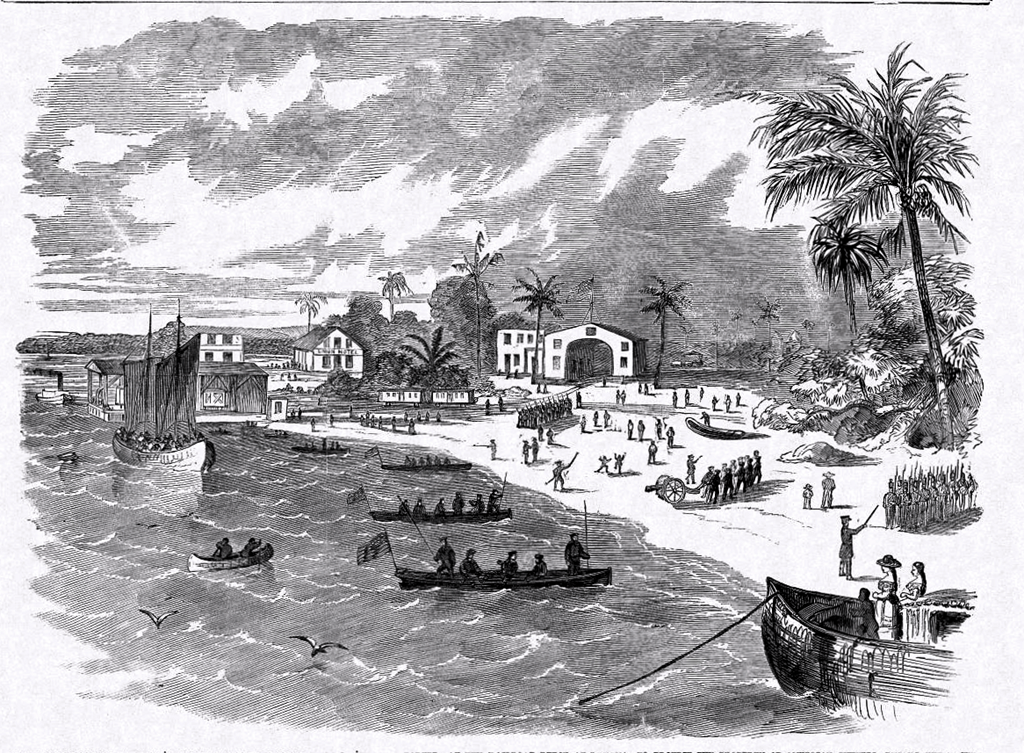
Frank Leslie’s Illustrated Newspaper, November 3, 1860

The landing of the St. Mary’s Forces, under the command of W. D. Porter, at the railroad depot at Panama, to protect the property of American citizens, during the recent extensive negro insurrection, Sept. 27, 1860 – From a sketch by W.G. Overend, U.S.N.

image

New York Times, November 2, 1860

Correspondence of the Louisville Democrat.

LAMAR Co., Texas, Sept., 1860.

Seeing that the many Rumors and reports which were circulated through our State a few months since, as to Abolition emissaries, insurrections, etc., are being published and accredited by many of the papers in the older States, I desire, through the columns of your paper, to say to my friends in Kentucky, and to the public generally, that all such rumors are altogether unfounded. It is true, that during the exceedingly hot and dry weather of the past Summer, there were many destructive fires in the State of Texas. The town of Henderson was nearly destroyed – that of Dallas greatly damaged, and some houses burned in other towns in different parts of the State. But the origin of these fires, as far as yet ascertained, was either from the ignition of matches or some other accidental cause. I have not been able to learn of a single instance in which there was the slightest evidence that it was the work of an Abolition emissary – in fact, I don’t believe there is one in the State, though there are some characters nearly as bad.

As to the reports that poison had been found in the possession of negroes in various and sundry parts of the country, and in wells, &c., they are all false, as far as I have been able to learn. I have not met with a single man who knows of an authenticated instance. Yet these reports were published by all the papers in the State, and accredited by many, and the people in many parts were excited almost to desperation. Who originated these reports, and for what purpose, are the questions that have perplexed the good citizens of our State for some time past. Such reports are certainly calculated to injure the State, and keep away such emigrants as desire to come. Why, then, should the people of Texas circulate and give credit to them?

It is the opinion of many of our best citizens, after mature deliberation and thorough investigation of the subject, that these reports had their origin in the minds of scheming politicians, and are a part of that great plan concocted and being put in execution to “nerve the Southern arm and excite the Southern mind, preparatory to precipitating the cotton States into a revolution.” R.B.D.

ORDNANCE OFFICE, WAR DEPARTMENT,
Washington, November 1, 1860.

Col. J. L. GARDNER,
Commanding Fort Moultrie, Charleston, S.C.:

SIR: I transmit herewith a copy of a letter addressed by me to the Secretary of War, which has been approved by him, and which I submit to you for your views as to the expediency or propriety of placing arms in the hands of hired men for the purpose indicated.

Should you approve the measure I will thank you to request Military Storekeeper Humphreys to make the issue indicated in said letter, and to report the fact to this office that it may be covered by an order for supplies.

Respectfully, &c.,

H. K. CRAIG,
Colonel of Ordnance.

[Inclosure.]

ORDNANCE OFFICE, WASHINGTON, D. C.,
October 31, 1860.

Hon. J. B. FLOYD,
Secretary of War:

SIR: There is at Fort Sumter, Charleston Harbor, now in course of construction, besides a part of its armament, a considerable quantity of  ammunition, &c., and it has been suggested by the Engineer officer in charge of the work that a few small-arms placed in the hands of his workmen for the protection of the Government property there might be a useful precaution. If the measure should, on being communicated, meet with the concurrence of the commanding officer of the troops in the harbor, I recommend that I may be authorized to issue forty muskets to the Engineer officer.

With much respect,

H. K. CRAIG,

Colonel of Ordnance.
[Indorsement.]

WAR DEPARTMENT,
October 31, 1860.

Approved:

J. B. FLOYD,
Secretary of War.

ADJUTANT-GENERAL’S OFFICE,
Washington, D. C., November 1, 1860.

Lieut. Gen. WINFIELD SCOTT, General-in-Chief U. S. Army:

GENERAL: The Secretary of War requests that you will please give the necessary orders for the company of Second Artillery now at Fort Hamilton, N. Y., to proceed to Fayetteville, N. C., and take post at the North Carolina Arsenal.

…………I am, sir, very respectfully, your obedient servant,

S. COOPER,
Adjutant-General.