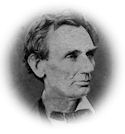
![Hon. Abraham Lincoln, Born in Kentucky, February 12, 1809. -- [Photographed by Brady] Harper's Weekly Front Page, 11-10-1860](https://dotcw.com/wp-content/uploads/2010/11/image10.png "Hon. Abraham Lincoln, Born in Kentucky, February 12, 1809. -- [Photographed by Brady] Harper's Weekly Front Page, 11-10-1860")
Click on image to view larger version
Click on image to view larger version
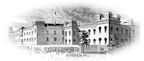
CHARLESTON ARSENAL, S. C.,
November 10, 1860.
Col. H. K. CRAIG,
Chief of Ordnance, U. S. A., Washington, D. C. :
SIR: On the 7th instant I received an order from Colonel Gardner, commanding troops in the harbor, to issue to him all of the fixed ammunition for small-arms (percussion caps, primers, &c.) at this arsenal, such a step being advisable, in his estimation, for the better protection of the property in view of the excitement now existing in this city and State. Being allowed no discretion in the matter, his order being peremptory, I proceeded to obey it on the afternoon of the 8th. Captain Seymour having come up from Fort Moultrie, with a detachment of men and schooner, for the purpose of removing the stores, the shipment of them was interfered with by the owner of the wharf until the city authorities could be notified, and there were but three or four cart-loads on board. I considered it best that they should be reconveyed to the magazine until something definite should be determined upon, which was done. Not having heard anything further from Colonel Gardner relative to this matter, I conceive it my duty to report the facts in the case, which I respectfully submit.
Very respectfully, I am, sir, your most obedient servant,
F. C. HUMPHREYS,
Military Storekeeper Ordnance, Commanding.
[Indorsements.]
ORDNANCE OFFICE, November 13, 1860.
Respectfully referred to the Adjutant-General for the information of the Secretary of War, with the remark that I am not aware by what authority Colonel Gardner undertook to give such an order.
H. K. CRAIG,
Colonel of Ordnance.
—A dispatch from Springfield, Ill, speaking of Lincoln’s visit to the polls to vote on Tuesday, says:
‘Mr. Lincoln advanced as rapidly as possible to the voting table, and handed in his ticket, upon which, it is hardly necessary to say, all the names were Republicans. The only alteration he made was the cutting off of his own name at the top, where it had been printed.–As he emerged, after voting, from the temporary enclosure, the manifestations of enthusiasm were frequent, and Mr. Lincoln, removing his hat, bowed in acknowledgment.’
CHARLESTON, S. C, November 8, I860.—Yesterday on the train, just before we reached Fernandina, a woman called out: “That settles the hash.” Tanny touched me on the shoulder and said: “Lincoln’s elected.” “How do you know?” “The man over there has a telegram.”
The excitement was very great. Everybody was talking at the same time. One, a little more moved than the others, stood up and said despondently: “The die is cast; no more vain regrets; sad forebodings are useless; the stake is life or death.” “Did you ever!” was the prevailing exclamation, and some one cried out: “Now that the black radical Republicans have the power I suppose they will Brown¹ us all.” No doubt of it.
I have always kept a journal after a fashion of my own, with dates and a line of poetry or prose, mere quotations, which I understood and no one else, and I have kept letters and extracts from the papers. From to-day forward I will tell the story in my own way. I now wish I had a chronicle of the two delightful and eventful years that have just passed. Those delights have fled and one’s breath is taken away to think what events have since crowded in. Like the woman’s record in her journal, we have had “earthquakes, as usual”—daily shocks.
At Fernandina I saw young men running up a Palmetto flag, and shouting a little prematurely, “South Carolina has seceded!” I was overjoyed to find Florida so sympathetic, but Tanny told me the young men were Gadsdens, Porchers, and Gourdins,² names as inevitably South Carolinian as Moses and Lazarus are Jewish.
From my window I can hear a grand and mighty flow of eloquence. Bartow and a delegation from Savannah are having a supper given to them in the dining-room below. The noise of the speaking and cheering is pretty hard on a tired traveler. Suddenly I found myself listening with pleasure. Voice, tone, temper, sentiment, language, all were perfect. I sent Tanny to see who it was that spoke. He came back saying, “Mr. Alfred Huger, the old postmaster.” He may not have been the wisest or wittiest man there, but he certainly made the best aftersupper speech.

¹ A reference to John Brown of Harper’s Ferry.
² This and other French names to be met with in this Diary are of Huguenot origin.
Washington, November 7, 1860.
My Dear Sir,—The die is cast, and Lincoln is elected.
Shall we now fan the flame of disunion, or shall we exert our influence toward calming the already excited sentiment of the South?
What course should we, here in the District of Columbia, pursue ? Should we join hands with the disunionists and help on the storm, or should we not rather pour oil on the troubled waters ? . . .
My own will illustrate the condition of thousands in this district. With us everything depends on the Union being preserved.
What, then, was my indignation on learning that men holding office here under your administration were parading the streets here this morning with disunion cockades on their hats! and the leading article of the ‘Constitution’ to-day can have no other effect than to encourage and fan the flame of disunion, both here and at the South.
You will bear me witness that I have never intruded myself upon your counsels. But may I not, in the most respectful yet in the most earnest manner, now appeal to you—for if you are silent your enemies will, I am sure, attempt to hold you responsible for these things—to use your power in at once checking this dread spirit of disunion here in our midst?
With great respect,
Very sincerely your friend,
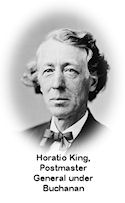
Horatio King.
His Excellency, James Buchanan.

The editorial article of the Constitution referred to in the preceding letter concludes as follows :
“We can understand the effect that will be produced in every Southern mind when he reads the news that he is now called on to decide for himself, his children, and his children’s children, whether he will submit tamely to the rule of one elected on account of his hostility to him and his, or whether he will make a struggle to defend his rights, his inheritance, and his honor.”
November 6, 1860

It is universally conceded that the vote of New-York to-day decides the Presidential question. Every other Northern State is surrendered to LINCOLN. The great West will pronounce for him by enormous majorities. No one has a moment’s doubt about any NewEngland State, and the vote of last month rendered it absolutely certain that Pennsylvania will vote for him by at least 30,000 majority. The decision of the question, therefore, rests with New-York; — and so certain is the vote of the whole interior, that nothing less than forty or fifty thousand against him in the City can cast a shadow of doubt on the result in the State at large.
The most remarkable feature of the canvass has been the fact that the Republicans are the only organized party in the field. Theirs is the only platform of principles and the only candidate for which any citizen has a chance to vote. The Opposition to LINCOLN are united upon no candidate, nor do they agree upon any political principle. No man can tell what would follow their success, — what principles would come into the ascendant, — what man would take the guidance of public affairs. Indeed the only result of electing the Fusion ticket would be to throw everything into greater confusion than ever. Instead of ending the Presidential contest it would only be just commenced. The agitation throughout the country would be greater, more violent and more ruinous to business than ever before, and we might look forward to a Winter of political turmoil, business stagnation and commercial disaster. Business men in this City begin to see this tendency and dread the result. If the defeat of LINCOLN would end the contest, or put the matter in the way of a peaceful solution; — if it would elect anybody else or settle the principles and policy of the Administration, there would be some show of excuse for pressing it with so much zeal. But no such result is anticipated, or even claimed by his opponents.
The simple truth is, the political parties — and especially the Douglas Democrats, — have been made to play a purely subordinate part in this whole Fusion movement. The active leaders of the whole crusade have been a firm of dry goods merchants in this City, — who have cared far more about advertising their business at the South than about saving the Union or defeating LINCOLN. And the expiring faction of Know-Nothings, and the ultra Pro-Slavery Hards, saw at the outset that their only chance of salvation lay in fastening themselves upon the Democratic Party and being kept from utter extinction by its strength. If the Douglas Democrats had run a ticket of their own, with their own candate and upon their own platform, they would have had at least 20,000 more votes than the Fusion ticket will get, and would have held the organization, the strength and the prestige of the party after the contest was over. As it is, even if the Fusion ticket should succeed, half the victory inures to their copartners, and they themselves become powerless. For the Douglas Democrats, Fusion is the gravest mistake a political party ever committed.
The attitude of the Republican Party is eminently national and conservative, — and its success will do more to suppress the sectional agitation of the Slavery question than any other result. It seeks no interference with Slavery, — but aims only to check its increase. Its candidate is an eminently just, upright and conservative statesman, — pledged by his opinions, his declarations and his life against any invasion of Southern rights and any denial of Southern justice. The whole country has confidence in his honor and his fidelity to the Constitution; — and that confidence will not be misplaced or betrayed.
November 6, 1860.—Election day. Had a birthday feast in honor of Birch’s 7th birthday (Sunday 4th) today. Aunty and Uncle Warren both present. Boys delighted with their presents.
The Southern States are uneasy at the prospect of Lincoln’s election today. The ultra South threatens disunion, and it now looks as if South Carolina and possibly two or three others would go out of the Union. Will they? And if so, what is to be the result? Will other slave States gradually be drawn after them, or will the influence of the conservative States draw back into the Union or hold in the Union the ultra States? I think the latter. But at all events, I feel as if the time had come to test this question. If the threats are meant, then it is time the Union was dissolved or the traitors crushed out. I hope Lincoln goes in. All now depends on New York. The October elections settled Pennsylvania and the other doubtful States.
OUR young friend of the diary is not going to school this summer; the days are long and hot and the political fight which is on is much hotter than the weather.
Two years before this time Mr. Hopkins, the “Uncle Arvah” of the diary, had brought from his old home, Ithica, New York, a nephew who wished to come South and engage in business. Mr. Hopkins was par excellence, the merchant prince of Tallahassee; his income was large and his heart was ever open to the call of any who wished assistance. He carried a stock of goods which in richness and elegance surpassed anything ever seen in Tallahassee before or since. His home “Goodwood” was a model of beauty and comfort and was the centre of all social activities. Mrs. Hopkins was the youngest daughter of Governor John Branch and had been a belle in Washington society. She had a delightful voice and was an accomplished performer on the piano, the harp and the guitar. Her husband had a splendid baritone voice and the music they made was worth going far to hear.
This young nephew they brought south was fresh from the typical small farm of the North. He had a part to play in the life of that farm and the change, to him, was great. He entered the store of A. Hopkins & Co., and under the tutelage of his accomplished relatives he took on a polish which was more than “skin deep.” Polite, accommodating, always on the lookout for an opportunity to serve, he soon became a general favorite. You will hear more of him later on.
Storm clouds hung heavy over our land and yet we did not realize to what we were drifting. The year of Eighteen Hundred and Sixty was a most momentous year—it held in its grasp the fate of the Nation—it behooved the people of this great country to gather their wits about them, to move slowly and with caution, to bear, with patience the recriminations which continually passed between the two sections. To hold fast to that Constitution, which, at its first conception, had threatened to be drawn up in blood of the people, who it seemed at first, were unable to agree to the provisions of this, the greatest political document ever known to the world. Now an insistant voice from the Northland, ever increasing in volume, sought to set aside this Constitution; to install in its place a “Higher Law.”
The advocates of this higher law did not seem, themselves to know just what it was they were insisting upon. Freedom for the negro came first; freedom from matrimonial bonds; then freedom from the constraint laid by the Holy Bible upon the passions of human-kind. The Commandments were relegated to the background; the rights secured by the Constitution to all citizens of this great and growing nation, were set aside and a wholesale system of stealing was inaugurated in the effort to bring about negro freedom.
These slaves had been bought and paid for by the Southern planters; often these slaves had been bought from Northern owners, who felt no qualms of conscience in accepting from his Southern brother the full value of the aforesaid slaves. The stealing of his property naturally roused the ire of the owner. It is our belief that if the United States had offered a fair price for these slaves and fixed the time for freeing them in such a manner as to make it gradual, in this way each slave as he reached the age of twenty-five to be automatically free, nine-tenths of the Southern slave-holders would have been glad to accept. The life of the master, and more especially the mistress of slaves was not an enviable position. It entailed great responsibility; it brought with it many cares; there was a certain pleasure accompanying the cares, to be sure. It was a pleasure to look around on a well-ordered plantation, on healthy, happy laborers whom we loved and who returned that love; to see little children, with their engaging ways and to pet them as we would so many playful kittens, only with a deeper feeling; for white children are not the only children who are interesting.
Naturally the Southerner did not relish the idea of having his property stolen. This campaign of 186o came on a people heated almost to the boiling point by Harriet Beecher Stowe and other writers of that ilk. At the North a fanatical determination to carry their point; at the South an equally firm determination to stand up for State’s Rights and to abide by the Constitution of our fathers.
It was like two brothers who held different views and each, feeling he was right, held fast his determination. Rapidly the months passed. At the Democratic Convention in Charleston, South Carolina, the ultra Southern ticket was nomiated; Breckinridge and Lane were the candidates. In Richmond, Va., another Convention was held; this did not accomplish much and still another was held in Baltimore. The Democratic party after its usual manner failed to agree and the result was two, or perhaps you might say three tickets in the field. The pity of it! For now defeat stared them in the face. The Republican party nominated as their candidates Abraham Lincoln and Hannibal Hamlin and though, at first their chances were slim enough, the stubborn stand made by the Democratic party, virtually gave to the “black Republicans” the victory.
Never before, not even in the days of “Tippecanoe and Tyler too” was there so much excitement and unrepressed ill-feeling. Breckinridge and Lane were the most popular of the candidates put forward by the Democrats. Stephen A. Douglass and Herschel V. Johnston, former Governor of Georgia, were more conservative and were not so enthusiastically greeted in the running. John Bell, of Tennessee, was not, strictly speaking, a Whig, Edward Everett, of Massachusetts, was his mate on the ticket. There were some Old Line Whigs, who were not satisfied with these, but nevertheless they voted the ticket when the election took place.
At the North the excitement was great also. The conservative element saw danger ahead; the Northern Democrats had an intense jealousy of their Southern brethren; the Republicans (the black Republicans) were true to their name and harped continually on the one string of negro freedom. Lincoln at first, expressed himself freely as being opposed to this, but later he found it more expedient to lull conscience to sleep and adopt the views of those who had brought him into the limelight.
So the situation rested. The straight-out Democrats stood for State’s Rights and the Constitution of our fathers, the negro meant little or nothing to them. The conservative Democrats were more prudent; they saw probable loss in the event of a split in the Union, none of them really believed war would be the outcome. This loss, in their minds would, in the event of secession, confine slavery to strictly southern territory and thus it could never spread. The Whigs, too, were conservative and slow. To them, secession was obnoxious and they fought it bitterly to the end. Not, however, after it was un fait accompli then with one accord every true son of the South, casting politics to the winds, cast in his fortunes with his state and later with the Confederacy, and the result was the finest body of soldiery the sun ever shone upon. But all this came later.
The die was cast, the election was over and the black Republicans would come into power the succeeding March. South Carolina spoke up at once to express her sentiments. She hoisted the banner of a palmetto with a coiled rattlesnake and the motto: “Don’t tread on me,” and we who knew South Carolina fully recognized the fact that she was dangerous.
Florida was wild to follow South Carolina’s lead; Mississippi was just as ready and the other states had the question under discussion. The Legislature of South Carolina was in session when Lincoln was declared elected and they promptly called a convention to discuss the situation.
November 5, 1860
Senator SEWARD, in his speech on Friday night, declared the whole aim and duty of the Republican Party to be to leave Slavery just where it is. They do not seek to abolish or disturb it; but they do propose to prevent its extension or increase. It is not easy to see what objection any rational man can make to such a policy. The whole disturbance which prevails through the country has been caused by the efforts of the South to increase Slavery. They have pursued this policy steadily for some years past, covering its purpose by charging its opponents with designing to interfere with it where it now exists.
Senator SEWARD’s declaration on this point ought to have weight with candid and fair-minded men. He has always been regarded as among the most advanced of the Anti-Slavery Republicans. If any one had designs upon Slavery in the South, he was supposed to be the man. But his disclaimer on this point is direct and complete. All he aims at is to have Slavery left where it is, – and this is all the Republican Party proposes to do about it.
The Charleston Mercury not long ago declared that the success of the Republican Party would put an end to the slavery agitation as a sectional question. “It will cease to be a contest between the North and South,” said the Mercury, and will be transferred to the Southern States.” Is not that precisely where it belongs? Has it not been a standing reproach for years that we were meddling with a subject which did not concern us, – that we were stirring up a sectional agitation, – that the question of Slavery belonged exclusively to the South, and should be left for the South to manage? Yet this is precisely the result which the Charleston Mercury dreads and deprecates as the result of a Republican victory.
We venture the prediction that, in less than one year after the incoming of a Republican Administration, that party will be generally recognized as the most truly national and conservative party in the Union. It proposes the settlement of the Slavery question on the only possible basis, – that of checking the increase of the evil, and leaving it to the operation of natural causes and the laws of social economy.
November 5, 1860

A warrant was issued yesterday by Justice QUACKENBUSH for the arrest of GEORGE K. COOKE, the Democratic member of the Board of Registry for the Eighth District of the Fifteenth Ward, on a charge of having violated the Registry law. An affidavit has been made to the effect that COOKE, while acting as Registrar on the 17th ult., caused his name to be placed on the list of voters for that District, giving No. 308 Bowery as his place of residence. It was subsequently ascertained, however, that he resided at No 373 Fourth-street, which is not in the Eighth District, and that he had also been to the registering-place of the Ninth District, of the same Ward, and had his name registered there. NAPOLEON B. HOBBS, a clerk for LORD & TAYLOR, is also charged with an offence similar to the one of which COOK is accused. On the 30th inst. he caused his name to be registered as a legal voter in the Eighth District of the Fifteenth Ward, and went off boasting that he should vote for “The Union, the Constitution, and the enforcement of the laws.” As, however, he had not lived in this State one year, having come here from Baltimore, Md., in March last, he was unqualified for voting at all, and his arrest was effected on the ground that he had willfully violated the law. Justice QUACKENBUSH required him to funish bail in $500 to answer. The penalty, upon conviction of the offences charged, is not less than one year’s imprisonment in the State Prison.
 Follow on facebook
 RSS
RSS email
email