
Saturday, 8th—The boys are in fine spirits because we have orders to leave. All are at work getting ready—some are mending their shirts, pants or coats, others their socks or shoes, or anything which needs fixing up before leaving for the South.
March 2012
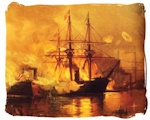
March 8th. This afternoon the Brooklyn made an attempt to cross the bar, being led by a gunboat, but the Brooklyn grounded, and after persevering with commendable zeal gave it up for the day. The men are grinding their cutlasses, and making other preparations of a warlike character.
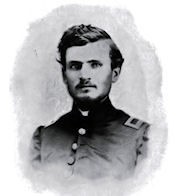
8th. Struck tents and were ready to march at 7 A. M. Enjoyed a ride of thirty miles to Butler, the burnt and deserted county seat of Butler County, once a thriving town, now but a few poor houses remaining.
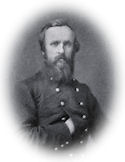
Saturday, March 8. — Ground frozen; sun came out bright and warm, speedily thawing all snow. Company C and four wagons carry all the “plunder” of the company and the adjutant’s office to Raleigh.
P. M. A glorious ride to the scenery of New River at and about Long Point; a rapid ride back; Doctors McCurdy, Twenty-third, and Potter, Thirtieth, Lieutenant-Colonel Jones, and Adjutant-General Hunter for companions. How the blood leaps and thrills through the veins as we race over the hills! Physical enjoyments of this sort are worth a war. How the manly, generous, brave side of our people is growing! With all its evils war has its glorious compensations.
News by telegraph this evening very meagre. A fine, affectionate letter from my dear wife, written last Sunday. She is so distressed at my absence but would not have me do otherwise.

8th.—The family of Captain _____, of the navy, just arrived. They have been “refugeeing” in Warrenton; but now that there is danger of our army falling back from the Potomac to the Rappahannock, they must leave Warrenton, and are on their way to Danville. Their sweet home is utterly destroyed; the house burned, etc. Like ourselves, they feel as though their future was very dark.
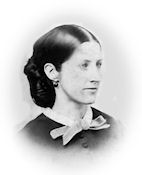
Eliza‘s journal.
 [1] Mr. Robert S. Hone to Eliza Woolsey Howland.
Saturday, March 8th.
The item this morning is that Colonel Davies was confirmed yesterday by the Senate as Brigadier General, so J. is now Colonel of the 16th by unanimous choice of the officers, and will take command at once.[1] He writes by the orderly that he has been with General Slocum to see the regiment pitch their new tents in the valley of Four Mile Run.
[1] Mr. Robert S. Hone to Eliza Woolsey Howland.
New York, March, 1862.
Dear Mrs. Howland: Mr. Russell has just been in my office and wishes me to say that he has just left Governor Morgan, who informed him that he had to-day signed Joe’s commission as Colonel of the 16th Regiment, and that he was delighted to hear the very high terms in which the Governor spoke of Joe.
With congratulations, I am, etc
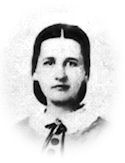
March 8th, 1862.—I do not like Dr. Cleveland. I wonder how much longer he is going to stay? This morning while we were sitting at the breakfast table he was contending with Mother about the “sweet-briar.” It seems he has spent much time in England, perhaps he is an Englishman, but he insists that there has never been any “sweet briar,” or as he says, any “true Eglantine” in America. I think it is rude of him to be so positive with Mother, but Father says, “all scientific men love to dispute with the laity.” At last, when we were rising from the table Mother said, “Sue, show Dr. Cleveland the sweet briar by the school room.”
We went down the walk to the frame where it grew and I pointed it out to him. Now this happened to be the very tangle of vines into which I threw my algebra, on that memorable day when Miss Darner made me pick it up. The vines are all thorns and they scratched me dreadfully. Dr. Cleveland inspected the vine, pinched a leaf, smelled it, sniffing loudly and then he said, “This is the true Eglantine.”
“Mother told you it was,” I replied.
He took from his pocket a small sketch-book and pencil and proceeded to make a picture of it, not a finished drawing but just a sketch. He replaced the book and pencil in his pocket and, trying to speak very pleasantly, he said: “When I get to my drawing materials I shall make and send you a pretty picture of this Eglantine, it is very rare.”
“Do not trouble to do that, please, I have no pleasant associations with that thorny tangle,” I answered, and we returned to the house.
The mail had arrived in our absence and the family were gathered around the library table; aunt Robinson handed me a letter from Brother Junius, saying as she did so, “Here is another birthday gift for you.”
Dr. Cleveland, who was apologizing awkwardly to Mother for contradicting her so flatly as to the sweet briar, turned to Father and asked, “Her birthday, is it, how old?” “Sixteen,” said Father. “Indeed—” went on the talkative man of science, “I should never have imagined it—there is none of the `beaute du diable,’ which we naturally associate with that age.” “No,” said Father, “and I am glad of it, I do not want my baby to grow up too fast.”
Then the whole crowd proceeded to discuss me as calmly as if I had been one of my own dolls. It was embarrassing but I found out what they thought of me. Among other things, I learned that I was bluntly truthful and would have to learn that Madam de Geniis’ “Palace of Truth” was not practical and a white lie could sometimes be used to advantage. Mother’s constant teaching of the Ten Commandments will, I think, make even white lies difficult for me, though I do try to be polite.
I had some pretty presents even if it is war times, and I got a nice letter from Brother Junius, written two days ago so I would get it today. Brother Amos is here and Sister Mag is happy, we are too, for all love our jolly soldier boy, he has been at home for ten days and he has only two weeks furlough. It will be hard for Sister Mag to let him go.
There is something I have never told you, my Diary; ever since that day in August of last year, when we went to the depot to see the Howell Guards off to Virginia, Sister Mag has never failed to lock herself in her room for awhile every day to pray for her husband. I did not know just at first what she was doing, but I heard her tell him she never let a day pass without asking God to take care of him and he might know, wherever he might be, that her thoughts and her prayers were following him.
I felt real mean to have overheard this, for it was never intended for my ears, but I had sung Eddie to sleep and was holding him in my arms in the dark, waiting for Nellie to come for him, and they were talking on the porch just outside.
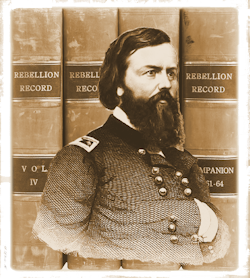
March 8.—This day, about one o’clock in the afternoon, an attack was made upon a foraging party of the Fourth Ohio cavalry, Mitchell’s division, five miles south of Nashville, Tennessee, by Morgan’s rebel cavalry, which resulted in their taking eighteen of the National wagons, teamsters, and mules, and burning one wagon. The rebels took Capt. Braden, of Gen. Dumont’s staff, prisoner. At three o’clock P.M., the Fourth Ohio cavalry and Loomis’s battery pursued the rebels, capturing four men, killing four, and retaking all the wagons and prisoners. Morgan escaped with two men. A sergeant of the Thirty-seventh Indiana regiment, of Col. Turchin’s brigade, was shot in the arm.—Louisville Journal, March 12.
—Two companies of the Massachusetts Twenty-sixth regiment, under the command of Col. E. F. Jones, made a reconnoissance from Ship Island, to Mississippi City, La., where they were attacked by a body of rebel cavalry, and compelled to retreat to their boats.—(Doc. 80.)
—The Memphis Argus of this date has the following: “Major-Gen. Bragg’s ‘General Order No. 2,’ transferred to our columns from the Jackson Whig of yesterday, announces that martial law is to be established in Memphis. The establishment of martial law seems to be a favorite movement of Gen. Bragg’s, and, however much the people may dislike its provisions, or fail to discover the necessity for their enforcement, it is the duty of all good citizens to bear the inconveniences they entail. Soldiers from the army, as we understand, are to be detailed for the purpose, and we trust a provost- marshal will be drawn from the same source. Martial law is virtually subjecting the people to the will of one man, who can exercise his powers arbitrarily or with moderation. It is not every citizen unacquainted with military matters, who should be vested with the almost autocratic powers of a provost-marshal in a time like this, for certainly no man is fitted to learn its duties and enforce them at the same time. If we must live under martial law, let its enforcement be by a regular army officer, a stranger to our people, who, knowing his duty thoroughly, performs it because it is his duty, having neither friends among our citizens to shield nor enemies to punish. It is only by a thorough knowledge of duty and the strictest impartiality in its discharge, that martial law can be borne without a murmur by the people.”
—The rebel troops, composed of three Texan, one Georgia, and one Mississippi regiment, and the Hampton Legion, formerly encamped back of and below Occoquan, Va., evacuated that place, destroying everything they could not carry on their backs. The National troops took possession, and were welcomed by a part of the inhabitants with great joy. Every boat in the vicinity, and anything that would float, was destroyed. The rebels told the villagers they were going to fall back to the Rappahannock.
—Last night, Col. Geary left Lovettsville, Va., with his whole command, and marched through Wheatland and Waterford, taking prisoners at both places, and putting the scattered forces of the rebels to flight.Shortly after sunrise, this morning, he took possession of Fort Johnston at Leesburg, which was christened by the officers Fort Geary. He then entered the town, with flags flying and bayonets fixed.
The rebel troops, who had thought this one of their greatest strongholds, could be discerned through a glass retreating. Gen. Hill, the rebel officer in command, fell back on Middleburg.
The command took many prisoners and stores, and are in possession of the bank, post-office, and public buildings. Forts Beauregard and Evans were also taken.
—The battle of Pea Ridge, Arkansas, was ended after three days’ severe fighting, between the Unionists under Gen. Curtis, and the rebels led by Ben. McCulloch.
On Thursday, the sixth, the rebels commenced the attack on Gen. Curtis’s right wing, assailing and pursuing the rear-guard of a detachment under Gen. Franz Sigel, to the Union main lines on Sugar Creek Hollow, but withdrew and ceased action, at about four o’clock in the afternoon, when the Union reinforcements came up. During the night Gen. Curtis became convinced that the enemy had moved on so as to attack his right or rear. He, therefore, early on the next morning, ordered a change of front to the right, his right, which then became his left, still resting on Sugar Creek Hollow. This placed his line across Pea Ridge, with his new right resting on the head of Big Sugar Creek. He also ordered an immediate advance of his cavalry and light artillery, under the command of Col. Osterhaus, with orders to attack and break the lines of the enemy. This movement was in progress, when the rebels at eleven o’clock in the morning commenced an attack on the right of the Union lines. The fight continued mainly at these points during the day, the enemy having gained the point held by the command of Col. Carr, at the head of Big Sugar Creek, but was entirely repulsed with the fall of the commander, McCulloch, in the centre, by the forces under Col. Davis. The plan of attack on the centre was gallantly carried forward by Col. Osterhaus, who was immediately sustained and supported by Col. Davis’s entire division, supported also by General Sigel’s command, which had remained till near the close of the day on the left. Col. Carr’s division held the right, under a galling, continuous fire, all day. In the evening, firing having entirely ceased in the centre, and the right being now on the left, Gen. Curtis reenforced the right by a portion of the second division, under General Asboth.
Before the day closed, Gen. Curtis, being convinced that the rebels had concentrated in main force on the right, commenced another change of front, forward, so as to face the enemy where he had deployed on the Union right flank.
This change had only been partially effected, but was in full progress, when at sunrise today, firing was renewed by the centre and right of Curtis’s troops, which was immediately answered by the rebels with renewed energy along the whole extent of their line. The left of the Union troops, under the command of Gen. Sigel, moved close to the hills occupied by the enemy, driving him from the heights and advancing steadily toward the head of the hollows. Here Gen. Curtis ordered the centre and right wing forward, the right turning the left of the enemy and the Nationals firing on his centre. This final position of the rebels was in the arc of a circle. A charge of infantry extending throughout the whole line, completely routed the entire rebel force and they fled in confusion, but in comparative safety, through the deep and almost impassable defiles of Big Sugar Creek. The Union loss in this battle amounted to two hundred and twelve killed, nine hundred and twenty-six wounded, and one hundred and seventy-four missing, in all one thousand three hundred and twelve. The rebel loss was very large, but it is probable that its exact extent will never be known.—(Doc. 81.)
—By President Lincoln’s War Order No. 2, he has ordered the Army of the Potomac to be divided into army corps, to be commanded by commanders of corps, selected according to seniority of rank, as follows:
First corps, consisting of four divisions, to be commanded by Major-Gen. Sumner.
Second corps, consisting of three divisions, to be commanded by Major-Gen. McDowell.
Third corps, consisting of three divisions, to be commanded by Brig.-Gen. Heintzelman.
Fourth corps, consisting of three divisions, to be commanded by Brig.-Gen. Keyes.
Fifth—Gen. Banks’s and Gen. Shields’s commands, the latter late Gen. Lander’s, to be a fifth corps, to be commanded by Major-Gen. Banks.
—Capt Bell, of the Third Pennsylvania cavalry, was promoted to Major of the Third Illinois cavalry, now in Gen. Halleck’s department
—Gen. Beauregard, from his headquarters at Jackson, Term., issued an order calling upon the planters of the South to send their plantation-bells to the nearest railroad depot, to be melted into cannon for the defence of their plantations.— (Doc. 90.)
7th.—Just returned from the hospital. Several severe cases of typhoid fever require constant attention. Our little Alabamian seems better, but so weak! I left them for a few moments to go to see Bishop Meade; he sent for me to his room. I was glad to see him looking better, and quite cheerful. Bishops Wilmer and Elliott came in, and my visit was very pleasant. I returned to my post by the bedside of the soldiers. Some of them are very fond of hearing the Bible read; and I am yet to see the first soldier who has not received with apparent interest any proposition of being read to from the Bible. To-day, while reading, an elderly man of strong, intelligent face sat on the side of the bed, listening with interest. I read of the wars of the Israelites and Philistines. He presently said, “I know why you read that chapter; it is to encourage us, because the Yankee armies are so much bigger than ours; do you believe that God will help us because we are weak?” “No,” said I, “but I believe that if we pray in faith, as the Israelites did, that God will hear us.” “Yes,” he replied, “but the Philistines didn’t pray, and the Yankees do; and though I can’t bear the Yankees, I believe some of them are Christians, and pray as hard as we do; [“Monstrous few on ’em,” grunted out a man lying near him;] and if we pray for one thing, and they pray for another, I don’t know what to think of our prayers clashing.” “Well, but what do you think of the justice of our cause? don’t you believe that God will hear us for the justice of our cause?” “Our cause,” he exclaimed, “yes, it is just; God knows it is just. I never thought of looking at it that way before, and I was mighty uneasy about the Yankee prayers. I am mightily obleeged to you for telling me.” “Where are you from?” I asked. “From Georgia.” “Are you not over forty-five?” “Oh, yes, I am turned of fifty, but you see I am monstrous strong and well; nobody can beat me with a rifle, and my four boys were a-coming. My wife is dead, and my girls are married; and so I rented out my land, and came too; the country hasn’t got men enough, and we mustn’t stand back on account of age, if we are hearty.” And truly he has the determined countenance, and bone and sinew, which make a dangerous foe on the battle-field. I wish we had 50,000 such men. He reminds me of having met with a very plain-looking woman in a store the other day. She was buying Confederate gray cloth, at what seemed a high price. I asked her why she did not apply to the quartermaster, and get it cheaper. “Well,” she replied, “I knows all about that, for my three sons is in the army; they gets their clothes thar; but you see this is for my old man, and I don’t think it would be fair to get his clothes from thar, because he ain’t never done nothing for the country as yet—he’s just gwine in the army.” “Is he not very old to go into the army?” “Well, he’s fifty-four years old, but he’s well and hearty like, and ought to do something for his country. So he says to me, says he, ‘The country wants men; I wonder if I could stand marching; I’ve a great mind to try.’ Says I, ‘Old man, I don’t think you could, you would break down; but I tell you what you can do—you can drive a wagon in the place of a young man that’s driving, and the young man can fight.’ Says he, ‘So I will—and he’s agwine just as soon as I gits these clothes ready, and that won’t be long.'” “But won’t you be very uneasy about him?” said I. “Yes, indeed; but you know he ought to go—them wretches must be drove away.” “Did you want your sons to go?” “Want ’em to go!” she exclaimed; “yes; if they hadn’t agone, they shouldn’t a-staid whar I was. But they wanted to go, my sons did.” Two days ago, I met her again in a baker’s shop; she was filling her basket with cakes and pies. “Well,” said I, “has your husband gone?” “No, but he’s agwine tomorrow, and I’m getting something for him now.” “Don’t you feel sorry as the time approaches for him to go?” “Oh, yes, I shall miss him mightily; but I ain’t never cried about it; I never shed a tear for the old man, nor for the boys neither, and I ain’t agwine to. Them Yankees must not come a-nigh to Richmond; if they does, I will fight them myself. The women must fight, for they shan’t cross Mayo’s Bridge; they shan’t git to Richmond.” I said to her, “You are a patriot.” “Yes, honey—ain’t you? Ain’t everybody?” I was sorry to leave this heroine in homespun, but she was too busy buying cakes, etc., for the “old man,” to be interrupted any longer.
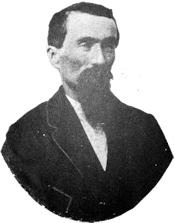
March 7 — About three o’clock this afternoon we heard the boom of a cannon in the direction of Bunker’s Hill. Events of a startling character are crowding around the threshold of the near future. Little before sunset we got orders to march out on the Martinsburg road, as the Yankees were advancing on Winchester, and that their advance guard was within five miles of town; but before we proceeded far on the Martinsburg road we learned that Ashby’s Cavalry met and repulsed the enemy’s advance guard and drove it back to Bunker’s Hill. Jackson’s men were out under marching orders, standing in ranks, ready for fight at a moment’s notice. We returned to our camp on the Berryville road after dark. Our tents are folded and on the wagon, consequently we are camping to-night without shelter. The cannon we heard to-day were some of Pendleton’s battery firing at the enemy down on the Martinsburg road.


