Following the American Civil War Sesquicentennial with day by day writings of the time, currently 1863.

January 2013

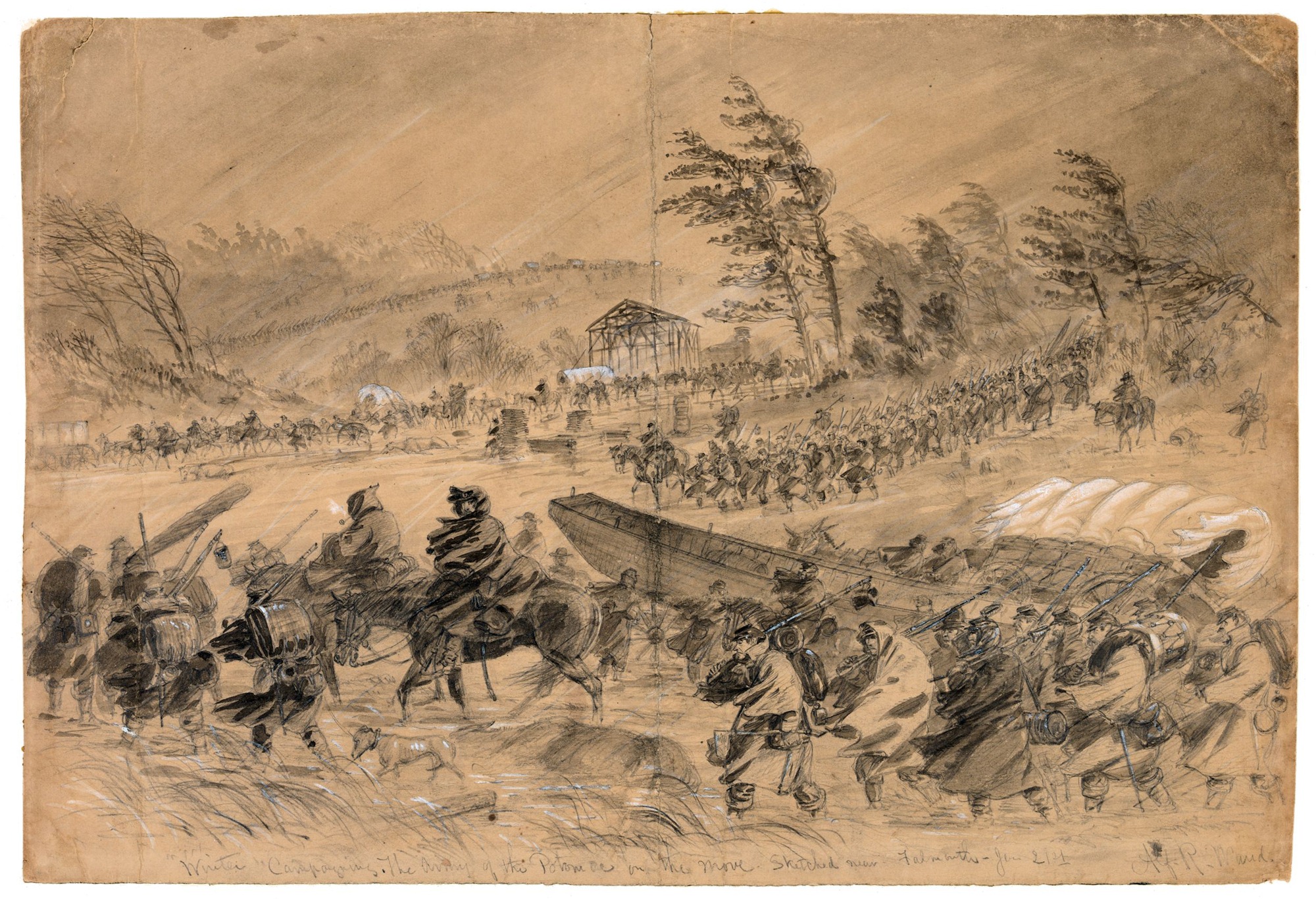
Winter Campaigning. The Army of the Potomac on the move. Sketched near Falmouth--Jan

Summary: Exhibit caption: Alfred R. Waud depicts Union forces coping with the challenge of winter weather in 1863 as they advanced toward the Rappahannock River. He skillfully delineates formations of soldiers, wagons, and animals traversing the foreground, middle ground, and background of the scene and vividly captures the impact of blustery winter wind and snow in their bent and bowed forms. The British-born Waud won wide acclaim for his visual reportage of Civil War battles and soldiers’ living conditions because he incorporated impressive amounts of accurately observed details into compositions that convey strong expressive effects. More than 1,200 sketches he created for Harper’s Weekly are preserved in the Prints & Photographs Division.  (January 21, 1863. Library of Congress image.)

The New York Times correspondent wrote of the night depicted in the image:

It was a wild Walpurgus night, such as Goethe paints in the “Faust” while the demons held revel in the forest of the Brocken. All hopes that it would be a “mere shower” were presently blasted. It was evident we were in for a regular northeaster, and among the roughest of that rough type. Yet was there hard work done that fearful night. One hundred and fifty pieces of artillery were to be planted in the position selected for them by General Hunt, Chief of Artillery—a man of rare energy and of a high order of professional skill. The pontoons, also, were drawn down nearer toward the river, but it was dreadful work; the roads under the influence of the rain were becoming shocking; and by daylight, when the boats should all have been on the banks, ready to slide down into the water, but fifteen had been gotten up—not enough for one bridge, and five were wanted!

The night operations had not escaped the attention of the wary rebels. Early in the morning a signal-gun was fired opposite the ford, reminding one of that other signal-gun fired by them on the morning of Thursday the 11th December, when we began laying the pontoon opposite Fredericksburg, and which was the token for the concentration of the whole force at that point. It was indispensable that we should secure all the advantages of a surprise; and though our intention was thus blown to their ears early on Wednesday morning, we were, nevertheless, forty-eight hours ahead of them, and with favorable conditions should have been able to carry our position before they could possibly concentrate.

Accordingly a desperate effort was made by the Commanding General to get ready the bridges. It was obvious, however, that, even if completed, it would be impossible for us, in the then condition of the ground, to get a single piece of artillery up the opposite declivity. It would be necessary to rely wholly upon the infantry—indeed, wholly on the bayonet. Happily, if the rebels should prove to be in strong force, the country is too thickly wooded to admit of much generalship, and it was hoped that our superior weight of metal would carry the day.

Early in the forenoon I rode up to the head-quarters of Generals Hooker and Franklin, about two miles from Banks’s Ford. The night’s rain had made deplorable havoc with the roads. The nature of the upper geologic deposits of this region affords unequaled elements for bad roads. The sand makes the soil pliable, the clay makes it sticky, and the two together form a road out of which, when it rains, the bottom drops, but which is at the same time so tenacious that extrication from its clutch is all but impossible.

The utmost effort was put forth to get pontoons enough into position to construct a bridge or two. Double and triple teams of horses and mules were harnessed to each pontoon-boat. It was in vain. Long, powerful ropes were then attached to the teams, and a hundred and fifty men were put to the task on each boat. The effort was but little more successful. They would flounder through the mire for a few feet—the gang of Liliputians with their huge-ribbed Gulliver—and then give up breathless. Night arrived, but the pontoons could not be got up. The rebels had discovered what was up, and the pickets on the opposite bank called over to ours that they “would come over to-morrow and help us build the bridge.”

That night the troops again bivouacked in the same position in the woods they had held the night before. You can imagine it must have been a desperate experience—and yet not by any means as bad as might be supposed. The men were in the woods, which afforded them some shelter from the wind and rain, and gave them a comparatively dry bottom to sleep on. Many had brought their shelter-tents; and making a flooring of spruce, hemlock, or cedar boughs, and lighting huge camp fires, they enjoyed themselves as well as the circumstances would permit. On the following morning a whisky ration, provided by the judicious forethought of General Burnside, was on hand for them.

Thursday morning saw the light struggling through an opaque envelop of mist, and dawned upon another day of storm and rain. It was a curious sight presented by the army as we rode over the ground; miles in extent, occupied by it. One might fancy some new geologic cataclysm had o’ertaken the world; and that he saw around him the elemental wrecks left by another Deluge. An indescribable chaos of pontoons, wagons, and artillery encumbered the road down to the river—supply-wagons upset by the road-side—artillery “stalled” in the mud—ammunition. trains mired by the way. Horses and mules dropped down dead, exhausted with the effort to move their loads through the hideous medium. A hundred and fifty dead animals, many of them buried in the liquid muck, were counted in the course of a morning’s ride. And the muddle was still further increased by the bad arrangements—or rather the failure to execute the arrangements that had been made. It was designed that Franklin’s column should advance by one road and hooker’s by another. But, by mistake, a portion of the troops of the Left, Grand Division debouched into the road assigned to the centre, and cutting in between two divisions of one of Hooker’s corps, threw every thing into confusion. In consequence, the woods and roads have for the past two days been filled with stragglers, though very many of them were involuntary stragglers, and were evidently honestly seeking to rejoin their regiments. It was now no longer a question of how to go on; it was a question of how to get back.
 

Washington Tuesday Jan’y 20th 1863

A cold raw wind all day. But Capt Swan and myself started about noon for Fort Gaines and vicinity, which we visited and returned to the City about 5 o’ck. I saw a number of Lyons people attached to the 138th. Fort Gaines is a very small affair but is situated on quite a commanding eminence mounting five guns (32 pounders). As we could not get a conveyance back from Tenallytown as we expected we walked back to Georgetown having rode up there in the “Bus.” We walked altogether at least 5 miles. I think I shall sleep well tonight. A thousand rumors are afloat in reference to the movements of the Army of the Potomac. But nothing is public or reliable in reference to any movement as yet. But something is going on. We shall know what soon. We did not see Maj E. P. Taft or lady as they started for Lyons today. He on furlough of thirty days. Capt Swan goes back to his Regt on Thursday next. Geo. Vanderhoff does not read tonight as I expected but tomorrow night. I was in at Willards awhile, officers of the Army quite scarce. The Hotel is full of strangers who come and go all the time so that it is full of new faces almost every day. It is decidedly the Hotel of Washington. It is said that the Proprietors make $1200 pr day from six to eight hundred guests, who pay upon an average at least four dollars pr day. It is inclined to storm tonight. I think we will have a snow storm tomorrow.

January 20.—Arrived in Mobile last evening, about 10 o’clock P.M.; left Mr. and Mrs. B. in Montgomery; I left the latter place on the cars, in company with a friend of theirs, Mr. Weaver of Chattanooga. We took a very nice breakfast at Evergreen, a station on the road, and had a delightful cup of coffee, for which we paid two dollars and fifty cents each.

Arrived at home quite unexpectedly to the home folks. Mr. B. telegraphed from Montgomery that I was coming, but, as usual with that well-conducted department, the dispatch did not reach here until today.

Home is such a contrast to that I have just left, and when I think of the men in camp I can not keep from feeling sad. I have met some soldiers here, members of Fowler’s battery, from Tuscaloosa, Alabama. One Mr. Crochell played the violin beautifully, and I have no doubt with it serves to beguile many a weary hour in camp.

Headquarters Outpost.
First Brigade, Second Kanawha Division,

January 20, 1863.

Sir: — I am instructed by General Scammon to inform Major General Jones through you that he regards his sending two flags of truce at the same time by different routes to our outposts upon the same business, viz., the admission of ladies into our lines, as using the flag for a purpose as obvious as it is improper, and that such an abuse of it is not to be permitted.

Not to subject the lady in your charge to hardship, she will be admitted into our lines on the representation of Lieutenant Norvell that she is the wife of a citizen loyal to the United States.

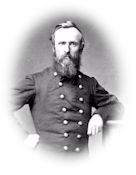
R. B. Hayes,
Colonel Twenty-third Regiment, O. V. I.

Potomac Run, Va.
January 20, 1863

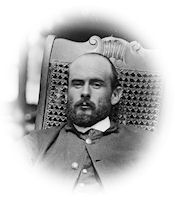
I see a great deal of Buchanan now and find him extremely pleasant and most unexpectedly kind and disposed to assist me. Did n’t we formerly consider Buchanan a little pompous? And were not we a little disposed to laugh at him? If we did a most surprising change has come over him, for he certainly is in his own quarters and in his intercourse with younger men by all odds the most genial and pleasant officer of rank I have ever met. You know he has been very badly used and bears it like a man. General Sumner alone of all the Army officers in this Department ranked him when the war began and now Lieutenants and Captains of his regiment are Brigadiers and Major Generals and he is still a Lieutenant Colonel commanding the 1st Brigade of Regulars. Yet he is universally respected as one of our best officers and most reliable men; as a soldier none stand higher and scarcely one would be trusted in a tight place as soon as he. He has been recommended for promotion over and over again and no man in the army doubts his loyalty. But Wilson does and he has not yet succeeded in working his way through the Military Committee of the Senate. Now he is coming up and will soon get what he most desires, the office of Inspector General. At any rate he is a good friend of mine, and I count his rise as in a good degree my own. I contrive to get over and see him very frequently and he advises me to leave this regiment and go into a staff….

79th Regiment,

Camp Near Falmouth, Va.,

Jan. 20th, 1863.

My dear Mother:

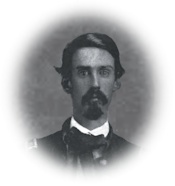
Yesterday I wrote Walter and was not a little despondent; to-day we are told that the auspicious moment has arrived. To-morrow we are once more to meet the enemy. All gloomy forebodings engendered by the idleness of camp-life, have vanished before the prospect of impending action. My heart is as light as a feather. Hope is dominant, and I can think only of the glorious result if we are victorious. The gloom that now rests on our country will be lifted, and I already hear citizens repeating with joyous lips: “We are victorious. Not in vain have been our sacrifices. We are proud of the army we have created.” Let then all tongues be hushed that cannot join in the glad paeans of victory. I will not think of defeat. If God is gracious, and granteth success to our arms, let the voice of selfishness be hushed, let there be no house of mourning. Let even mothers say we have given gladly the dearest thing we possessed to win the Nation’s rest. I have borne, dear mother, a charmed life heretofore. Even when conversing with comrades on the battlefield, death has singled them out, and left me unscathed, left me to witness the peril of the nation. What, then, if now the charm be broken, and my last moments be cheered with the thought of the Nation saved? Then let my mother and those that love me rejoice as I would in the full tide of victory. But should we triumph, and I live to see the end, think of the rapture we all would feel to think that to a poor worm like me had been vouchsafed the terrors of death, and at this cheap price been spared to view the glories of salvation to our country. Then think how sweet would be mother’s or sister’s kiss, or the glad welcome of trusted friends. But living, or fallen among the chosen, I trust if the tidings of victory be heard, all who love me will wear their gayest colors and cheeriest smiles, in the joy at the success of the cause in which the loved one rejoiced to risk his all. With such parting words I can go without a tremor into battle, and fear nothing where God ruleth Supreme.

You remember a year ago I wrote you I had had my likeness taken. Yesterday the impression reached me. I enclose you one now, and will send you by a convenient opportunity quite a number more. I have grown a good deal older since then, but you must take that for granted until I can find an opportunity to show you how the latest edition of your son looks. I will send likewise some views of the battlefield of Antietam, concerning which I will have strange stories to tell when the war is closed, and peace fairly, honorably won.

Affec’y., Will.

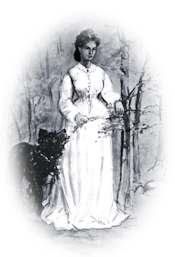
January 20th [1863]. Wrote letters to-day to Claude and Mrs. Chilton by persons going out. My heart felt so like breaking to feel so far off from all, that I was forced to relieve it by crying before I could go on.

Mr. Hill has just stopped in. He says that the Yankees will not hold this city much longer. Although I have heard this so often, it gives me a gleam of comfort every time I hear it. Oh, to break our prison bonds here, to be able to go once more where and when we pleased, to send comfort to those who are sick away from us and to be able to write a letter without thinking that some ruffian with epaulettes may read it, and perhaps send an orderly for us for not making it respectful enough to our jailers. Just had an offer for Greenville place; don’t know yet how it will turn out. Mr. Randolph called with fresh negotiations for the Greenville place. He advises us not to sell, as all property has been depreciated by the war and that in a few years a house like ours with three acres attached, lying on the Carrollton railroad, will be very valuable. He told us much war news. Banks has gone to Baton Rouge, it is said, to quell a mutiny among the soldiers. They say openly here that they do not want to fight us and they will seize the first opportunity to be paroled by being made prisoners. Others again hate us, and preach openly to the negroes to arise and kill us. Why they have done nothing except rob and steal, is a wonder. If they were not negroes we would have had another bloody revolution among us, but the African must shed several skins and pass through various stages before his red tide can mount at the words, “Give me liberty or give me death.” Almost daily encounters pass between white men and black, and the white man is always punished. Colonel French, however, has issued an order that no negro shall go out at night without a pass from his master; many arrests have been made; even the Yankee police hate them, and have been treated so badly by them that they are glad to rid the streets of them. A white policeman was beaten to death by negro soldiers in United States uniform—no punishment for the soldiers.

20th. Tuesday. Got my pass and started in the rain. Called and told Libbie all ready. At 1 P. M. left with her for home. How good it seemed! Could hardly wait for the slow cars. Pleasant company. At home at 8:30. W. N. and D. R. at depot. Found Minnie and John at our house. What a blessing to be home again.

What the children played in those days is shown by the following little letter:

Little May Howland to Georgeanna.

NEW YORK, January, 1863.

Dear Aunty: Did you get my letter I wrote you from Moremamma’s? You must come home now and nurse me, I have the chicken pox. . . . The children play that one is you, and the other Aunt Jane, and they play that the logs of wood are the soldiers. They get bits of ribbons for cravats. I am going to crochet a pair of slippers for the soldiers. I may as well scratch out that I have the chicken pox, for the doctor has just been here and said that I can go out. . . .

Tuesday, 20th—Another cold, wet day. We completed loading our regimental supplies about noon, and at 4 o’clock started for Vicksburg. We tied up for the night about forty miles below Memphis. The boats are overcrowded, and because of the cold weather there is much suffering.1


1 Starting on this trip ended seventy-nine days of campaigning; in northern Mississippi and western Tennessee. For suffering from exposure, part of the time no tents at night, nearly all the time on half rations or less, for forty-nine days no change of clothing, and more than sixty cloudy days with rain or snow, this campaign proved to be one of the most laborious campaigns during our four years’ service.— A. G. D.