
January 19th [1863]. Mary Waugh spent the evening; talked about ghosts and goblins until Jake, the little darky, was afraid to go to bed. Mrs. Norton said “nonsense” and “how can people be so silly?” to each veracious tale unfolded, but presently fell to telling the most wonderful spiritual visitation that I ever heard of, which had come under her own experience. She also quoted the spiritual accidents which happened in John Wesley’s family—people whom she could not doubt, being a fervent Methodist. These are the only ghosts she believes in; she says all the others are “lies and nonsense.”
January 2013
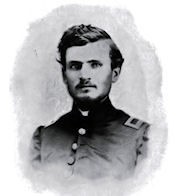
19th. Monday. Went to work early and got rations issued by noon. But I could not get my pass signed so as to leave. Got memoranda of all stores received and accounts at bakery and .compared all accounts, which proved correct.
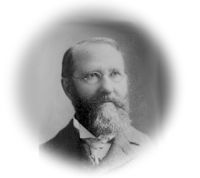
Jan. 19.—One by one, all the phases of military life are passing before me. Camp and transport life I know,—picket and guard duty, and the routine of drill. For a month, this has been our life, — a tedious and uneventful season, whose incidents it is idle to record. The battle-field, so far, has kept aloof with its bloody terrors; but now I am face to face with a chapter of the soldier’s life, less hideous than the battle-field perhaps, yet full of sadness. Suddenly I come to see hospital-service; and, as I feel to-night, it is quite possible I may see much of it: for while there is so much sickness in the regiment, and I continue well, perhaps I can best employ myself in nursing. I am writing here at ten at night, in what the doctor calls my “ward;” a pleasant, airy chamber belonging to the officers of our company, who, however, with great kindness, have given it up to Ed. and Sergeant Grosvenor, who are here sick of fever. I snatch the intervals between the calls of my two patients to write. Two of our men sleep here on the floor, who are to watch part of the night. It will be an hour or two before I go to bed; and I may have an opportunity to write a good deal.
My first visit to the hospital put me face to face with its gloomiest spectacles. A mail had come, and it fell to me .to distribute to the patients their letters. I had been giving letters to well men, had my own pocket full, was happy myself, and had come from among men happy as men ever are; for I have discovered the secret of happiness to be hidden in mail-bags. I rushed up the stairs leading to the second story of the building, the rooms of which are used as part of the hospital. Two or three doors were before me. I opened the first, and found myself alone in the presence of a corpse. It was the body of a man who had died the night before. He lay in full soldier’s dress, decently brushed coat with military buttons,—his “martial cloak around him,” — and with a white cloth covering the face. He was buried in the afternoon; the regiment drawn up in a hollow square, solemnly silent, while the service was performed; then standing reverently while the body and its escort with the muffled drum moved to the burial. I have heard of the “wail” of the fife, but never made it real to myself until then, when across the parade-ground, down the street, then from the distance, came the notes of the “Dead March.”
In the next room to the one in which lay the corpse, the floor was covered with pale, sick men. Now they have rough bedsteads, “bunks;” but then there was nothing but the mattress under them, and sometimes only the blankets. One or two attendants, as many as could be spared from the regiment, had the care of the whole; but they were far too few. One poor man was in a sad way, with inflammatory rheumatism, which made it very painful for him to stir; and, at the same time, with dysentery, so that he required to be lifted every few minutes. Pale, forlorn men, away from friends, tended by nurses who have no special interest in them, and are overworked, —crouching, wrapped up in blankets over the fire, or stretched out on a floor. God pity the world if it has sights in it more melancholy than a military hospital!
The hospital of our regiment is only in part located in these rooms, of which I have been writing. Most of the patients (I am sorry to write, they are very numerous) are in a larger building, once a hotel, which lies a few rods outside the lines. Well do I know the road thither now, by night or day, by storm or sunshine; for, after the doctor’s visits, it is my work to go to the hospital-steward after the medicines and comforts for my sick men. How many times already have I climbed the steep clay bank of the parapet, then slid down into the ditch outside! — a hill of difficulty in bad weather, when one’s feet slip from under him in the slimy soil. The old bar-room of the hotel is now the hospital-kitchen and head-quarters of the surgeon and steward. Above the bar is a flaring gilt sign, “Rainbow Saloon;” and below it, along the shelves which once held the liquors, are arranged the apothecary stores of the regiment. The steward is constantly busy, — one of the hardest-worked men in the regiment, I believe; for he prepares pills and powders by the thousand, and the rattle of his pestle is almost constant.
In the rooms above lie the sick men, and in one apartment the surgeon is quartered. Every morning, just at light, “surgeon’s call” is beaten; and from each company a sergeant marches off at the head of a long line of sick men to be prescribed for. These are men unwell, but not so badly off as to be obliged to leave their ordinary quarters for the accommodations of the hospital.
Let us go up stairs into this second story. At the head of the staircase, the door of a room is ajar; and I see the bed on which generally is lying one of the sickest patients of the hospital, some man near to death, — a comfortable, canopied bed, a death-bed for numbers. To-night, poor Paine, of our company, who died a little while ago, has just been laid out there. An entry runs north and south, from which, on each side, open the doors of other sick-rooms, where men with fever and dysentery, with agues, and racking, lung-shattering coughs, lie stretched on mattresses. Here is one with ghastly fever-light in his eyes; there, one pale and hollow-cheeked. Wrapped to the chin in blankets, some are; some parched with the fire of disease,— their buttons and gay dress-coats, the finery in which they used to appear at dress-parade, hanging forlornly overhead.
The nurses, too, look jaded and worn: and no wonder; for, with a dismal contagion, the torpor and weariness in the faces about will communicate itself to the attendants and visitors, and the most cheerful countenance can hardly help becoming forlorn. Our chaplain and colonel (both good, energetic, and useful men) make it part of their daily duty to go to every couch, and befriend the poor fellows lying there; and their visits are the golden hours of the day at the hospital, — waited and prayed for. The doctor’s apartment is large. In one corner are piled up the “stretchers,” the cots with handles (half-bed, half-bier), which are meant to carry wounded men off the field. At daybreak, each day, this room is filled with the procession which answers the surgean’s call.
Now I am a nurse in the hospital; though in the room, my “ward,” I have only two patients, and can make things more comfortable than in most of the rooms. Only two patients: but they both have this terrible fever; and I fear (God knows how much!) for this young brother. Yet I must veil my apprehension. To-night, a letter must be sent North. My heart is sinking; but I must counterfeit light-heartedness, lest they take alarm.
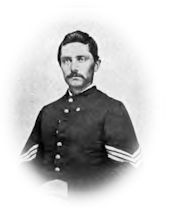
Monday, 19th—We worked all day loading our supplies on the transports. The Ninety-fifth Illinois finished their loading today and are now lying in waiting. The river is quite wide here, one and one-half miles, and is fast rising. There are four mortar boats and one gunboat here, besides a large fleet of transports, some of which are loaded with troops to go down the river, while others are coming from the North with fresh troops. The rebel gunboat, “General Bragg,” has just been captured here.

19th.—Colonel Bradley Johnson has been with us for some days. He is nephew to Bishop J., and as bright and agreeable in private as he is bold and dashing in the field. Our little cottage has many pleasant visitors, and I think we are as cheerful a family circle as the Confederacy can boast. We are very much occupied by our Sunday-schools—white in the morning, and coloured in the afternoon. In the week we are often busy, like the “cotter’s” wife, in making “auld claes look amaist as weel as new.” “New claes” are not attainable at present high prices ; we are therefore likely to become very ingenious in fixing up “auld anes.” My friend who lately arrived from Washington looked on very wonderingly when she saw us all ready for church. “Why, how genteel you look!” at last broke from her; “I had no idea of it. We all thought of you as suffering in every respect.” I told her that the Southern women were as ingenious as the men were brave; and while we cared little for dress during such anxious times, yet when our husbands and sons returned from the field we preferred that their homes should be made attractive, and that they should not be pained by the indifferent appearance of their wives, sisters, and mothers. She was still more surprised by the neatly fitting, prettily made dresses of Southern manufacture. “Are they of Virginia cloth?” she asked. No, poor old Virginia has no time or opportunity for improving her manufactures, while almost her whole surface is scarred and furrowed by armies; but Georgia and North Carolina are doing much towards clothing the first ladies in the land. Sister M. has just improved my wardrobe by sending me a black alpaca dress, bought from a Potomac blockade-runner. We, ever and anon, are assisted in that way: sometimes a pound of tea, sometimes a pair of gloves, is snugged away in a friendly pocket, and after many dangers reaches us, and meets a hearty welcome; and what is more important still, medicine is brought in the same way, having escaped the eagle eyes of Federal watchers. A lady in Richmond said laughingly to a friend who was about to make an effort to go to Baltimore, “Bring me a pound of tea and a hoop-skirt;” and after a very short absence he appeared before her, with the tea in one hand and the skirt in the other. It is pleasant to see how cheerfully the girls fall into habits of economy, and occupy themselves in a way of which we never dreamed before.
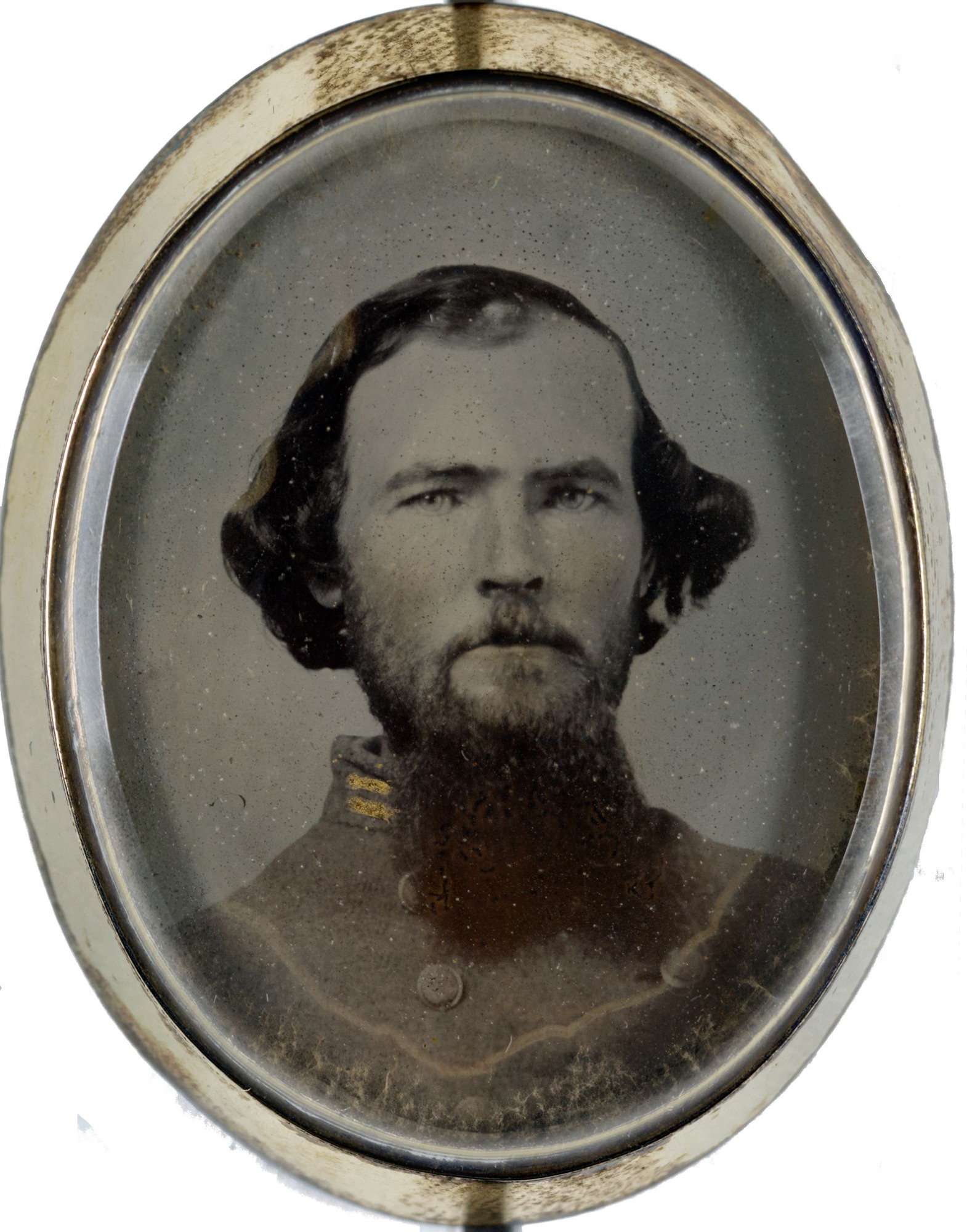
Medium: 1 photograph : ambrotype, hand-colored ; 5.0 x 3.7 cm (brooch)
Gift; Tom Liljenquist; 2012;
Liljenquist Family Collection of Civil War Photographs; Ambrotype/Tintype photograph filing series; Library of Congress Prints and Photographs Division.
Record page for image is here.
Civil War Portrait 018

by John Beauchamp Jones
JANUARY 19TH.—We have rumors of fighting this morning on the Rappahannock; perhaps the enemy is making another advance upon Richmond.
There was a grand funeral to-day,—Gen. D. R. Jones’s; he died of heart disease.
Gen. Bragg dispatches that Brig.-Gen. Wheeler, with his cavalry, got in the rear of Rosecrans a few days ago, and burned a railroad bridge. He then penetrated to the Cumberland River, and destroyed three large transports and bonded a fourth, which took off his paroled prisoners. After this he captured and destroyed a gun-boat and its armament sent in quest of him.
We have taken Springfield, Missouri.
Rosecrans sends our officers, taken at Murfreesborough, to Alton, Ill., to retaliate on us for the doom pronounced in our President’s proclamation, and one of his generals has given notice that if we burn a railroad bridge (in our own country) all private property within a mile of it shall be destroyed. The black flag next. We have no news from North Carolina.
Mr. Caperton was elected C. S. Senator by the Virginia Legislature on Saturday, in place of Mr. Preston, deceased.
An intercepted letter from a Mr. Sloane, Charlotte, N. C., to A. T. Stewart & Co., New York, was laid before the Secretary of War yesterday. He urged the New York merchant, who has contributed funds for our subjugation, to send merchandise to the South, now destitute, and he would act as salesman. The Secretary indorsed “conscript him,” and yet the Assistant Secretary has given instructions to Col. Godwin, in the border counties, to wink at the smugglers. This is consistency! And the Assistant Secretary writes “by order of the Secretary of War!”
January 19.—President Lincoln addressed a letter to the workingmen of Manchester, England, acknowledging the receipt of an address and resolutions adopted by them at a meeting held at Manchester on the 31st of December, 1862. In closing his letter the President said: “I do not doubt that the sentiments you have expressed will be sustained by your great nation; and, on the other hand, I have no hesitation in assuring you that they will excite admiration, esteem, and the most reciprocal feelings of friendship among the American people. I hail this interchange of sentiment, therefore, as an augury that, whatever else may happen, whatever misfortune may befall your country or my own, the peace and friendship which now exist between the two nations will be, as it shall be my desire to make them, perpetual.”—(Doc. 119.)
—The Third battalion of the Fifth Pennsylvania cavalry, commanded by Major Wm. G. McCandless, made a reconnoissance in the direction of Barnesville, Va., thoroughly scouting all the roads branching from the Williamsburgh and Richmond turnpike. Two companies which remained on the turnpike, under the command of Captain Cameron, having been sent forward as an advance-guard, Lieutenant H. A. Vezin, with eighteen men, detained twelve as a reserve, and ordered Sergeant Anderson, with six men, to march two hundred yards in advance of the column, to act as videttes, and if attacked by a superior force, to fall back on the column. Thus the squadron marched to within one mile of “Burnt Ordinary,” when a party of seventy or eighty mounted rebels appeared, drawn up in line across the Richmond road. Sergeant Anderson ordered his men to fall back, but immediately in his rear appeared some twenty rebels drawn up in line, cutting off the Sergeant and his party, and capturing the whole advance. Seeing his critical position, he put spurs to his horse and succeeded in cutting his way back to Lieutenant Vezin and his reserve, giving that officer the alarm, who immediately ordered his twelve men to draw sabre, charge and give the rebels the cold steel. Here was daring with scarce a parallel in the war. One Lieutenant, one sergeant, and twelve men charging nearly a hundred rebels drawn up in line of battle. Dashing forward, they broke the rebel ranks, and captured all their companions but one, together with four rebels and five horses fully equipped.
—This afternoon, in lat. 23° 50′, long. 84° 17′, tho brig Estelle was captured and burned by the rebel privateer Oreto (Florida) under the command of Captain J. N. Maffit.—The army of the Potomae, under the command of General Burnside, broke camp and began to move down to the fords on the Rappahannock, for the purpose of crossing to the south bank of that river, and attacking the rebel army under General Lee.— (Doc. 110.)
—A debate took place in the rebel House of Representatives on President Lincoln’s emancipation proclamation, and the proposition of Jefferson Davis to execute Federal officers in retaliation. On this occasion Mr. Foote of Mississippi, said he preferred, in lieu of retaliatory measures, as suggested by the resolutions, that an attempt should be made to stop the shedding of blood by a movement to bring about peace. It would strengthen the friends of peace at the North, and perhaps have the effect of producing a state of things so much desired, notwithstanding the opposition of the abolition party. He signified his intention to offer a resolution hereafter—not for the purpose of yielding one inch of ground to the North, but to throw the entire responsibility upon the Federal government, if these scenes of blood were to continue. Mr. Dargan, of Alabama, took the ground that powers at war must retaliate. The resolutions contemplated the turning over of captured officers to the State governments and to let them be punished according to their laws. He did not think that was correct, but suggested that the government should take the responsibility itself. Mr. Lyons, of Virginia, said the government had no power to turn captured officers over to the States. Nor was there any necessity for the resolutions, since the (rebel) President said in his message that he would do it, unless prevented by Congress. He favored the passage of a law prohibiting such a course, and to repose the power of retaliation entirely in the hands of the government. When an officer was captured, if there should be any cause for retaliation, we might retaliate upon him; if not, we were bound to exchange him. He could not, by any law of nations, when captured by one government, be turned over to another government for trial. He would prefer that any officer captured in any State after the promulgation of the emancipation proclamation should be instantly hanged, and not subject him to the uncertainties of a trial by jury.— Mr. Kenner, of Louisiana, moved that the House go into secret session to receive the report on this subject of the Committee of Ways and Means. The motion was agreed to, and the House went into secret session.
Buntyn Station, Monday, Jan. 19. Rainy and disagreeable. Logan’s Division passed on the R. R. going towards Memphis. Rec’d three letters, four newspapers.
Washington Sunday Jan’y 18th 1863
A fine cold winter morning, ground hard frozen. Attended religious Services in the Capitol, heard Mr Stockton (the Chaplain). Took a look at Leutzes picture of the “Emigrants.” The more I look at it the more I admire it. Miss Rumsey always sings with one other female and three male singers at the Hall of the “House” Sundays. She is a public singer at concerts and other places, particularly at the Hospitals for the soldiers. She and her intended husband Mr spend about all their time for the soldiers. They have raised a Library for them of several hundred Vols. I visited the Ascension Hospital, it is again full of Patients and Chas is as busy as ever. I spent an hour or two in their rooms after he left the Hospital, took tea with them, held the baby while it went to sleep sucking its thumb. I was a little surprised when he asked me to stay & play a game of Chess. I do not play any game Sunday or Sunday evening, told him so. I suppose it is from habit for I do not think I have any too much respect for the Sabbath as a holy day. It may be from respect to the habit and teaching of my Father. But then He kept Saturday night and not Sunday night, “so there I am again.” When I was a boy in N England Sunday began at sundown Saturday & ended at sundown Sunday. Called at A B Williamss and spent an hour and then to my room. Williams intends to sell his property in Lyons and live here altogether. That may suit him but it would not suit me were I in his place.


