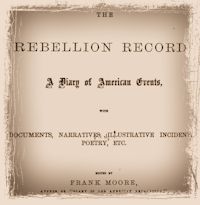
January 15.—Mound City, Arkansas, was burned by a detachment of National troops, the place having long been the resort of guerrillas.— The bill authorizing the issue of one hundred million dollars in United States legal tender notes, was signed and became a law.—A detachment of the Twenty-second Wisconsin regiment, carrying despatches from Helena to Clarendon, Ark., were attacked by a body of rebels, who succeeded in capturing seventeen of their number. In the skirmish a rebel lieutenant and six men were killed and wounded.—Chicago Tribune.
January 2013
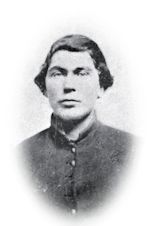
Buntyn Station, Thursday, Jan. 15. The rain of the day before has turned into snow during the night, and I awoke to find the ground all white, my head imbedded in a snow drift. Looked out to see the 4th Platoon boys crawling out from under the snow, their tent having given way under the weight and rolled aside. It was a little the hardest sight seen during my campaign, but there was no murmur, all were jovial and contented. We had to take the horses, who were trembling at the rack, out to exercise to the race course, against a blinding storm of snow from the west. In the afternoon it stopped snowing, leaving about a foot deep on the ground. Many of the boys gone to Memphis.
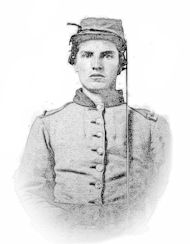
Wednesday, 14th.—Marched two miles and camped on the banks of Tom Big Bee River.
Hi all,
 I got a bit behind on some of the diary posts – I’m just about caught up now. I am done publishing material from 1862 (unless I come across some new and interesting diary or journal).
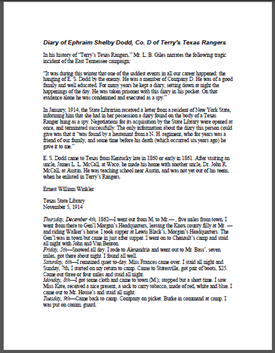
One of the diaries I was behind on was a new one, the Diary of Ephraim Shelby Dodd, Co. D of Terry’s Texas Rangers.
Dodd was taken prisoner and the diary was found in his pocket. He was condemned and hung as a spy.
I’ve saved all of the Dodd diary entries prior to January 14, 1863 as a pdf for those who may be interested in reading them without backtracking through the blog. Just click on the image above.
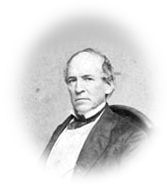
Washington Wednesday January 14th 1863.
As gloomy and as dark as two years ago are the days now. When we look into the future for our Country Dark days were those, and it looks dark now for the preservation of our Union. Our vast armies seem to be lying idle or baffled everywhere by our alert enimies. But worse than all there are indications of mutiny among ourselves. The weakness and imbecility of the Govt manifested in the Management of the War has raised a storm in the north and west that looks dark and threatening. People are tired and sick of the war, and now the Political leaders say, and the mass of the people believe, that the object of the war is now not what it was (to preserve the Union). But, to free the Negroes (an abolition War) and they hate abolitionists as well as the Negroes. Under present circumstances no Union or re-construction can take place. Nothing in fact but crushing the rebels, entirely subdueing them, can bring Peace. It dont now look as though we were able to do that, and in any case the South say they will accept No Terms short of their Independence. Well, the War must Continue for a long while yet. (Gold today 147). Got letters from home & one from Lieut Belden from Lyons. Called and spent an hour with Mr Haws on I St. I consider him a rising man. He certainly is a thriving one. There is no news in particular, quite a financial panic. If this miserable Congress does not adopt Mr Chases measures, we shall go to ruin soon.

January 14.—We have received a box of oranges from Mobile, and some money from my friend. Mr. M.
Had a very nice ride to-day with Mrs. Newsom. We went on a foraging expedition, in search of milk, and found a woman who would sell us a quantity of buttermilk—a treat for the patients. We went round by the river part of the road. It was the wildest scenery I ever beheld. In one moment we were in a ravine so deep as almost to exclude from view the blue of heaven (a nice haunt for bogles and witches), and at another time I trembled lest my horse might stumble and cast me into the ravine below.
Mrs. N. rode on as fearlessly as any knight of old, or one of our own cavalry. I believe the latter are the best horsemen in the world, the Indians not excepted.
In a letter received from my father and my friend Mr. M., both are much elated that the state of Alabama has been able to pay off the interest of her state debt in gold. The British war steamer Vesuvius came and took it away. My father was indignant at a telegram which Lord Lyons had dispatched from Washington, ordering the captain not to take the money, as it would be a breach of international law. The dispatch did not arrive until the steamer had left. I wonder if they are as particular in regard to their dealings with the Federals? From what we hear on the subject I think not.
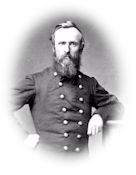
Tuesday, [January] 14. — A warm, pleasant day. Sent three companies late last night to Tompkins Farm under Captain Sperry; a dark, muddy march — just out of good quarters too. Colonel Hatfield of [the] Eighty-ninth Regiment makes a singular point as to my rank compared with his. He was appointed colonel about December 1, and has a commission of that date; that is, at the bottom are the words “issued this day of December” and also sealed, etc., this day of December. My commission in like manner was of November 1. Colonel Hatfield was major before and acted as second in command until he received his commission. But his commission in the body of it has a clause to take rank from October 2, 1862, which is twelve days earlier than mine. He claims this is the date of his commission. Not so, the date is at the bottom as above. A note dated December 1 with interest from October 2 is still a note of December 1. But what is the effect of the clause or order in the body of the commission? I say nothing. The governor of a State has no power to give rank in the army of the United States prior to either appointment or actual service in such rank. If he could confer rank two months prior to appointment or service, he could two years. He could now appoint civilians to outrank all officers of same grade now in service from Ohio or from any other State. But this is absurd. A commission being merely evidence of appointment, the governor may perhaps date it back to the time of actual appointment or service. The President of the United States, as Commander-in-Chief of [the] United States army, can, perhaps, give rank independent of service or actual appointment. But if a state governor is authorized to do so, the Act of Congress or lawful order for it can be shown. Let us see it.
The President’s power to appoint and to discharge officers embraces all power. It is supreme. But the governor has no power of removal. He can only appoint according to the terms of his authority from Congress or the War Department. What is that authority?
The appointments are often made long before the issuing of commissions. The commission may then well specify the date from which rank shall begin. But I conclude there can be no rank given by a governor prior to either commission, appointment, or actual service. Else a citizen could now be appointed colonel to outrank every other colonel in the United States, and be entitled to pay for an indefinite period in the past, which is absurd.
The governor has no authority to put a junior over a senior of the same grade. He may promote or rather appoint the junior out of order, because the power to appoint is given him. But to assign rank among officers of [the] same grade is no part of his duties. Why is such a clause put in commissions? (i) Because appointments are often made (always so at the beginning of the war) long before the commissions issue. (2) In recruiting also, the appointment is conditional on the enlistment of the requisite number of men. Of course the rank dates from the appointment and actual service.
But the great difficulty lies here. Is not this clause the highest evidence — conclusive evidence — of the date of the appointment? Can we go behind it? I say no, for so to hold is to give the governor the power to determine rank between officers of [the] same grade after appointment.
The order of appointment is highest (see Regulations). The governor’s order may be written, as Governor Dennison’s were, or verbal as Governor Tod’s are — to be proved in one case by the order, in the other verbally.
February 14 — We moved camp to-day, down the Valley, to Edenburg, and are camped this evening half mile south of Edenburg, and about a quarter mile from the North Fork of the Shenandoah.

From Mrs. Lyon’s Diary
Fort Henry, Tenn., Jan. 14, 1863.—A party of twenty of us went to Fort Donelson, returning the same day. While going there the carriage in which I rode broke down, upset and rolled us all out in the road in fine confusion. Except a few slight bruises nobody was injured. Mrs. Stanton fainted away and we had to take her into a house. Here we saw for the first time the filthy habit of dipping. They take a small stick and chew the end of it into a brush, then stick it into Scotch snuff and rub it all around their teeth.
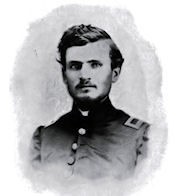
14th. Wednesday. Met D. R. in the morning. Gave me a letter from Ella Clark. Went over to Co. H. and read it to the boys. The best I ever received from her, I think. The boys seemed pleased and surely I was.


