Following the American Civil War Sesquicentennial with day by day writings of the time, currently 1863.

Sunday, March 3, 2013

[Diary] March 3.

This morning Mrs. Wells came to our school to demand that the children from her plantation should not be allowed to come to us. We told her we had already recommended their going to her instead of to us, but that they said she did not keep school half the time and never did more than hear them a little reading-lesson, while they wanted to learn to write and cipher. She said then that they might do as they liked — she did n’t want them and did n’t care what they did. We told her that we had refused them admittance more than once and wished now to know from herself whether she would teach them, for if she would not, we would; but if she would, we did not wish them, our school being large already. She said with temper that she did n’t care what they did or where they went, and went away in ill-humor. The children say that often when they “bog” across the creek, she will send them back without a lesson, and she herself does not pretend to keep a regular school, but only to let them read to her when they come. The case is the same with Miss Ruggles’s scholars, though she has a school for a week or two at a time pretty regularly, and then perhaps a week or two no school; a schooner coming in with goods, or something of a domestic character, demanding her time.

Stoneman, March 3, 1863.

Dear Cousin L.:—

I can never forgive myself for writing such a letter to you as I did last week. How it must have jarred on your already overwrought feelings, but, L., I did not, I could not, have guessed that the reason I did not receive my usual letter was that your baby’s cradle was empty. It grieves me beyond measure to think that I should have written anything that would add a sorrow by my thoughtlessness, when you had already all you could bear. I can only ask you to forgive my haste. If I caused you pain, believe me it was unintentionally done. I have read your letter again and again, and every time I have laid it down feeling that I could not understand it. Something of that feeling of loneliness I can understand. I know how ten thousand times in the day something reminds you of the lost, and how, as you move about the house lost in thought, your mother’s chair might almost seem to be occupied again, or you would listen as though you heard the little cry that told you baby’s awake, and then, as you felt the delusion and knew it never more could be, it seems to me I know something of that desolation that would creep into your heart, but that does not seem to be the main thought in your letter. There is a sweet and quiet joy, I might almost say, that I cannot understand. I can sympathize with you in your double bereavement, but in that consolation so precious to you I have no share.

I have asked myself again and again what is this mysterious power of religion that so wonderfully supports its possessor in times like this? How can she, while the earth is yet fresh above the coffin of her only child, and before the first blade of grass has sprung on her mother’s grave, so far forget her own sorrow and bereavement as to feel such an interest in me, a person almost a stranger in comparison with these? Oh, L., I believe I need your sympathy more than you mine. I cannot tell you just how I feel. I would be a Christian but I cannot. I mean there is a vague longing for that happiness I know must be there, but an unwillingness to do my part to secure it. I cannot even yet desire to be a Christian so much that I am willing to try. I wonder at myself and you will wonder, too, but that is only too true.

You say “we all have idols.” What is mine? If God should take my sister or my brother or my father I could not bear it as you have borne your loss, but I do not think they are idols. I hope I shall not wait to be driven home, but I’m afraid I shall.

If you cannot understand this confusion of ideas, this mixture of regret and stubbornness, you are no worse off than myself. I cannot understand my own heart. Your letters have aroused some latent sparks of tenderness, but I cannot see that that stubborn unconcern is gone—I only wish I could.

As yet all is quiet here in the army. It is just one week earlier than the time we started last year, but I hardly think we can move so early this spring. In fact it has seemed to me that no attempt would be made to take Richmond with this army. Two of the six corps have been entirely removed, and what remains is not strong enough to gain much except by strategy. Ah, well, I cannot see what we are coming to. If I had your faith I should be a better soldier.

Remember me in kindness to your husband, and, if I did not know you would do so unasked, I would say—remember me in your prayers.
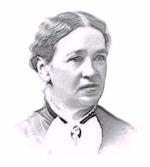
Mrs. Lyon’s Diary.

March 3, 1863.—William was telegraphing with General Rosecrans until ten o’clock respecting Van Dorn. We are threatened with an attack. We are getting quite used to this now.

Tuesday, 3d—Everything is quiet. I went down town again this afternoon. Our men have pulled a steam tug up on the bank and the engineers have a force of a thousand men re-calking it.

Washington Tuesday March 3rd 1863.

A delightful morning but a Snow Storm in the afternoon attended with lightning and thunder. This evening it is all Clear again. No startling news. One of our Gun Boats the Indianola captured by the rebels near Vicksburgh and the “Jacob Bell,” a rich China Ship laden with Tea, has been taken by the Florida, one of the Rebel piratical Vessels which has been furnished them by the English. Wrote home today, enclosed Draft for $50.00, think I shall go Myself in a week or two. I have been this evening down to VanMasters Room and spent an hour or two with him, he is as busy as ever and making money fast. Was in at Willards awhile, met my old friend G H Corliss of Providence R.I. No one that comes to Washington comes better dressed or bears himself more like a Gentleman than the Engine builder. The present Congress is about expiring. It has passed nearly all the very important Bills before it. The Country Banks were almost too much for the friends of Mr Chases Finance Bill. Their opposition is considered very Selfish and unpatriotic, and from New England too. But I think that Mr Chase will succeed in his measures notwithstanding. Soldiers call upon me every day for clothing &c. I go down to the NY Relief rooms with them very frequently for flannels, dried fruits, jellies &c

On the Mississippi, Tuesday, March 3. Raw and cold on the boat. Laid at the wharf all the forenoon, waiting for the word. 2 P. M. the fleet “tied loose” and headed down stream, the “Campbell” being fourth in the procession. It was an interesting spectacle, fourteen boats all laden with troops and munition and ammunition of war, leaving the clayey bluffs of Memphis on one side, and the blackened ruins of Hopefield on the other to plan the final destruction of all that harbour the enemys of our country. But notwithstanding, it was a sad thought to me as I looked to the distant North, where there are anxious hearts for me, and I was still going farther, and I may never again return. The river was very high, nothing but water in sight, the willows putting on their garb of green. The “Campbell” soon took the lead and arrived at Helena by 9 P. M. ninety miles distant. Tied up till 2:30 A. M.

3rd. The Convention of Govs. took place. I was too lame to venture out. It stormed awfully, snow and rain, and the boys suffered considerably. 2nd Ohio out en masse, as escort. No letter from Fannie. Finished her letter and wrote to Lucy Randall. Played checkers with McAulis.

Tuesday, 3rd—Company went on scout. Unshod horses did not go, so I staid.

MARCH 3D.—We like our new quarters and the three Samaritan widows, without children. They lend us many articles indispensable for our comfort. It is probable they will leave us soon in the sole occupancy of the house. There is ground enough for a good many vegetables—and meat is likely to be scarce enough. Bacon is now $1.37 ½cts. per pound, and flour $30 per barrel. The shadow of the gaunt form of famine is upon us! But the pestilence of small-pox is abating.

We have now fine March weather; but the floods of late have damaged the railroad bridges between this and Fredericksburg. The Secretary of War requested the editors, yesterday, to say nothing of this. We have no news from the West or from the Southeast—but we shall soon have enough.

The United States Congress has passed the Conscription Act. We shall see the effect of it in the North; I predict civil war there; and that will be our “aid and comfort.”

Gen. Toombs has resigned; and it is said Pryor has been made a major-general. Thus we go up and down. The President has issued a proclamation for prayer, fasting, etc., on the twenty-seventh of this month. There will certainly be fasting—and prayer also. And God has helped us, or we should have been destroyed ere this.

March 3.—Fort McAllister, on the Great Ogeechee River, Ga., was this day bombarded by a fleet of iron-clad monitors and mortar-schooners, under the command of Captain Drayton; but, after an almost incessant fire of eight hours’ duration, they failed to reduce it—(Doc. 129.)

—John Maginnis, late editor of the New-Orleans True Delta, died this day.—A grand review of the rebel forces at Mobile, Ala., took place this day, by Major-Generals Withers and Buckner, and Brigadier-Generals Slaughter and Cummins. After the review, four pieces of artillery captured at Murfreesboro, were presented by General Withers, on behalf of the Alabamians and Tennesseeans in the army of the Tennessee, to the army of Mobile. Each piece was inscribed with the names of Alabamians who fell in that battle.—Mobile Advertiser.

—First Lieutenant Gilbert S. Lawrence was dismissed the service of the United States for saying in the presence of officers and civilians, “I have no confidence in General Hooker. Burnside was stuck in the mud, and he will be stuck worse;” and also for publicly declaring: “I want to get out of the service. I don’t believe we will succeed. I am dissatisfied generally. Nobody but McClellan can command this army.”—New- York Tribune.

—The schooner Kingfisher was captured and burned by the rebel privateer Alabama in latitude 1° 20′, longitude 26° 20′.—The Spanish sloop Relampago was captured at Charlotte Harbor, Fla., by the National blockading schooner, James S. Chambers.—The Southern Union, a journal published in Georgia, having proposed to reconstruct the old Union of the States, was reprimanded by the Atlanta Confederacy, which asserted that “there are fewer abolitionists in Massachusetts than reconstructionists in Georgia.”