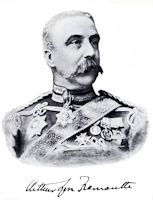
2d March 1863.—I left England in the royal mail steamer Atrato, and arrived at St Thomas on the 17th.
March 2013

MARCH 2D.—The enemy burnt the steamship Nashville on Saturday near Savannah. She was employed taking provisions to FortMcAlister. I think it was destroyed by an incendiary shell.
There is a rumor to-day of the burning of railroad bridges between this and Fredericksburg.
I signed an agreement to-day with Mr. Malsby to publish my new “Wild Western Scenes.” He is to print 10,000 copies, which are to retail at $2; on this he pays me 12 per cent. or 25 cents for every copy sold; $2500 if the whole are sold. He will not be able to get it out before May.
We moved into the west end of Clay Street to-day, and like the change. There are no children here except our own. The house is a brick one, and more comfortable than the frame shell we abandoned.
March 2.—The brigade of regulars from General Rosecrans’s division went out on a foraging expedition from Murfreesboro, Tenn., this morning, and encountered the rebels posted in force, about sixteen miles distant on the Salem Pike. The Union forces consisted of one battalion of the Fifteenth infantry, Captain Keteltas; one battalion of the Sixteenth, Captain Crofton; two battalions of the Eighteenth, Captains Douglas and Fetterman; and one battalion of the Nineteenth— the whole under command of Colonel Shepherd, Fifteenth United States infantry. A section of Guenther’s battery accompanied the infantry. The expedition moved out from Murfreesboro at seven A.M., and proceeded without interruption to the vicinity of Eagleville. Here it was ascertained that a strong body of the rebel cavalry were awaiting the National approach. Colonel Shepherd instantly ordered his force to take the proper positions, and, with a strong line of skirmishers thrown to front and flank, advanced steadily and cautiously upon the rebel position. In a few moments the National skirmishers engaged the enemy’s outposts, and immediately thereafter the rebels moved quickly to the front and advanced across the front line of the skirmishers. A hot engagement ensued, and lasted for about ten minutes, when the enemy, unable to endure the galling fire of the regulars, broke and fled. They were shortly afterward got into a second line of battle, and, with heavy reinforcements, ventured a movement on the Union right, with the evident intention of assailing them by flank and rear. This design also failed, and the National forces repulsed the assailants a second time. They did not again make a stand, but made a hurried retreat, even leaving behind their dead, of whom there were several. The Unionists took no prisoners, but the enemy’s loss in killed and wounded was considerable.—Chicago Times.
— A Union Club was organized in Boston, Mass., and Edward Everett was elected to its presidency.—A slight cavalry fight took place near Petersburgh, Tenn., between a party of rebels and bushwhackers, and two hundred loyal Tennesseeans, under the command of Lieutenant-Colonel Brownlow, in which the rebels were routed, with twelve killed and twenty wounded.— Captain Schultze, with a company of Union cavalry, surprised Mosby’s rebel guerrillas at a point near Aldie, Va., and succeeded in capturing thirty of them, without any loss on the National side.
— Thirty-three commissioned officers of the United States army having been found guilty of various charges by general Court-Martial, the details of the several cases being contained in General Orders No. 13, dated February eighteenth, 1S63, and the sentence having been approved by the Commanding General, were this day dismissed the service.—Four guerrillas were captured at the house of one Lisle, on the Nashville turnpike, three miles from Russellville, Ky.—Union meetings were held at Harrodsburgh, Lebanon, and Taylorsville, Ky.—Louisville Journal.
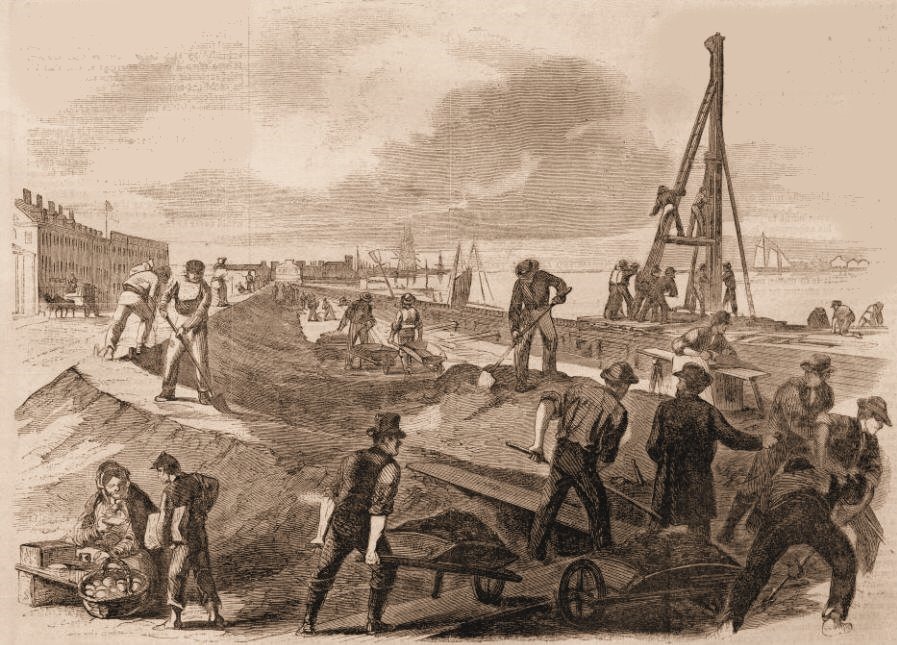
Repairing the Levee at New Orleans at the Expense of the United States Government.—sketched by an occasional correspondent.
______
WE publish on page 181 an illustration which represents the work of REPAIRING THE LEVEE AT NEW ORLEANS. Our picture shows a force of four or five hundred workmen, all Union men, employed by direction of the military authorities.
They are building new bulk-heads to protect this portion of the city front from the danger of inundation, threatened by the steady encroachments of the Mississippi, the current sweeping into the sharp curve with great velocity, gradually wearing away and undermining the levee. The new levee, the process of construction of which is shown in the sketch, is probably but temporary, as a new one will be erected against the new bulk-head when the flood has subsided sufficiently to permit it. The large Gothic building in the back-ground is in an unfinished condition. Built for charitable purposes from a fund bequeathed for that object by a citizen of New Orleans named Touro, from whom it derives its name, “Touro Building,” it is used at present as the head-quarters of the Fourth Louisiana Native Guard (colored), which regiment is in process of formation.
____
Published in Harper’s Weekly, March 21, 1863
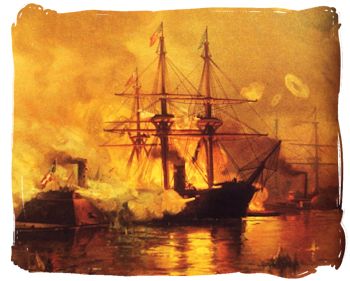
March 1st. This morning, at ten thirty, had public worship on the quarter-deck, after which a general muster of the crew took place. Weather clear and pleasant.

March 1st [1863]. Beautifully clear—rather cold; trees all in bud and the squares opposite emerald green and glittering. Mary Harrison, Ella, Sissie and Ally, their brother, called on their way to church. Didn’t go with them. Stopped on their way back and waited for the car—told us of the welcome to Confederates in Lexington, Ky., and showed us a likeness of Kirby Smith, which had arrived in a letter from that city. Smith looks like the earnest, brave and pious soldier which report speaks him. This likeness is somewhat faded, having been sunk on the Ella Warley on her way from New York and recovered. Two bags of letters have been fished up. We, Ginnie and I, cannot help hoping that the one granting a power of attorney to the Campos family, which will enable them to pay us, is amongst the rescued. It seems that the common thread must mingle with that which Lachesis lengthens and Atropos severs. What life and life interests must have gone down on the Ella Warley. Mrs. Roselius came in the evening with Mr. Denman, a Yankee, but a Southern one. Butler’s arrival in New York, he says, created no sensation. His arrival was not published. The flaming accounts we had read here of his magnificent reception, were little more than advertisements of a non-existing greatness, paid for by Butler himself. This wretch, it seems, is in favor with none but the vile Abolitionists. They continuously talk of sending him to Charleston, or back to this city. Charleston is not taken yet—never will be—and we don’t believe Butler would risk meeting the 290 on his way here. I was sorry when I heard he had been made much of at the North. For I am humanitarian enough, and Christian enough, I hope, to wish to see a respect for right, purity and justice even among enemies. No man who had respect for himself, honesty, truthfulness, bravery or kindness to women would take Butler by the hand. The cause of humanity is served, I think, when such brutes meet their deserts—universal contempt.
The Federal army is rich in brutes and brute force. Mr. Denman gave a description of a visit of Stafford (the general of the negroes) to the bank last summer. He came in with a shinplaster, and with a horrible oath told one of the bank gentlemen to pay the amount in gold. On being told that there was no gold, but that small notes would be issued soon, he swore terribly, drew his sword and flourished it in the wildest manner, threatening to cut their heads off. Mr. D____ owned that he was as afraid of him as he would be of a horned devil. “I’se got your Mayor down to Fort Jackson,” said Stafford, grinding his teeth, “where I hope the mosquitoes will eat out his d____d heart.” And more of this sort. The banker looked at the note and found it one of the coffee-house issues, with which the city last spring was flooded, and which Butler (very properly) had ordered to be redeemed, said he: “This is not our note; we have nothing to do with it,” whereupon, Stafford took it up and turned round upon a crowd of women and children who had followed him into the bank, flourishing his sword over them and swearing at them. This creature is below the city, having in command 1,400 negroes, armed and equipped, wearing the leather belt which other soldiers wear, having the letters U. S. in brass upon it. The once honored “Stars and Stripes” can be borne by such hands as these. Many of the negroes in camp having yielded to temptation, and been beguiled by Yankee falsehoods into running away from their masters, now that they realize their position, wish to return to them. But Stafford refuses to allow them to go home. We, against whom these poor creatures are arrayed, have no fear of them, at least as soldiers. They will fly at the first fire. Stafford, with his band, have been committing depredations in the country, but their gallant efforts have been confined to house-breaking, house-burning, chicken, horse and cattle stealing, and impudence to white people. Nothing more clearly defines the subordinate position, or the real justice of their position, more than their total want of social virtues. They are never true to each other, either in friendship or love. And even the maternal tie is not strong with them. Last spring, when the Yankees came, and even before then, many persons had gone into the country with their house servants, very often leaving behind husbands or wives in the Confederacy. I know of many instances where such interest was taken by their owners that they have written or sent for servants so situated, but in not one case have I known one to go. A life of lounging round the streets, feeding at the expense of the United States Government, has proved more enticing than the memories of wife or child. They have mostly gotten new mates. Mrs. Norton, in letters from her family and friends, is often charged with messages to servants who do not even wish to hear from those that are gone. I was once an Abolitionist, and resented for this race’s sake their position in the awful scale of humanity. But, I verily believe, that negroes are not now developed creatures. What they may be sometime I can not prognosticate, but I do believe in the law of progress. I call to mind the age when Britons wore skins, and hope for all things.
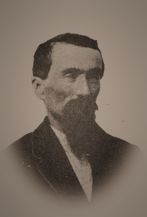
March 1 — Last night we cooked three days’ rations, and were ordered to be ready to march by daylight this morning. At daybreak we had everything packed and on our wagons ready for the word forward. Little after daylight we moved down to Narrow Passage Hill with the battery and awaited the approach of the enemy. We remained there until noon, then returned to our old camp again. The enemy that was expected to do some tall advancing to-day fell back to Winchester.

Sunday, March 1.—I have been very busy all day, too much so to go to church. Mrs. W. is quite well again. She is a member of the Methodist Church, a devout Christian, and is the means of doing much good; I think, as much as any chaplain possibly could. She is greatly beloved by all; the patients look up to her as they would to a kind, sympathizing mother.
Miss Groom is helping Mrs. Snow; she has been quite sick.
Rev. Mr. Denniston visited the sick today.
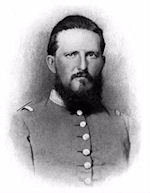
Camp Winder, Caroline Co., Va., March 1, 1863.
Your very welcome letter of Feby. 23 reached me day before yesterday, and I am very happy to hear that you are all well at home. Very happy, too, my dear wife, to know that I am missed, and that even little Frank remembers me, if no other way than associated with the candy which coaxed him into my lap. You have had bad weather for farm work, and we have had as bad for our comfort. But it must come to an end. The war may last, but winter cannot. We will soon have weather when you farmers can get to ploughing and we soldiers to fighting.
Since writing this much of my letter, I have been to church. We have a chapel built of logs, not so comfortable as some churches I have seen, but still much better than the open air in winter weather. I was much pleased with the appearance of my men. They look clean and comfortably dressed, and were attentive to the sermon. We have, it is true, many bad men in the army; but, as a whole, I would not expect to find better men in any community than I have in my brigade. I never saw them in better health or spirits; and, what is so gratifying to me, Love, they give me every evidence of their affection and good-will. Winning this, I feel, is the proudest and happiest achievement of my life. May God give me strength, in sharing their danger and providing for their comfort, to merit it.

Sunday, 1st—We had regimental inspection by the colonel at 2 o’clock, and our regiment showed itself in good trim. Boats are passing daily, loaded with troops for Vicksburg. I was on camp guard and the evening seemed to be very long and lonesome. It put me in mind of the long evenings just before the battle of Shiloh, and I thought how soon there might be another such a battle.


