Following the American Civil War Sesquicentennial with day by day writings of the time, currently 1863.

July 2013

July 7, Tuesday. The President said this morning, with a countenance indicating sadness and despondency, that Meade still lingered at Gettysburg, when he should have been at Hagerstown or near the Potomac, to cut off the retreating army of Lee. While unwilling to complain and willing and anxious to give all praise to the general and army for the great battle and victory, he feared the old idea of driving the Rebels out of Pennsylvania and Maryland, instead of capturing them, was still prevalent among the officers. He hoped this was not so, said he had spoken to Halleck and urged that the right tone and spirit should be infused into officers and men, and that General Meade especially should be reminded of his (the President’s) wishes and expectations. But General Halleck gave him a short and curt reply, showing that he did not participate and sympathize in this feeling, and, said the President, “I drop the subject.”

This is the President’s error. His own convictions and conclusions are infinitely superior to Halleck’s, — even in military operations more sensible and more correct always, — but yet he says, ” It being strictly a military question, it is proper I should defer to Halleck, whom I have called here to counsel, advise, and direct in these matters, where he is an expert.” I question whether he should be considered an expert. I look upon Halleck as a pretty good scholarly critic of other men’s deeds and acts, but as incapable of originating or directing military operations.

When I returned from the Cabinet council I found a delegation from Maine at the Department, consisting of Vice-President Hamlin, the two Senators from that State, and Senator Wilson of Massachusetts. These gentlemen had first waited on the President in regard to the coast defenses and protection of the fishermen, and were referred by him to me instead of the army, which claims to defend the harbors. At the moment of receiving this delegation I was handed a dispatch from Admiral Porter, communicating the fall of Vicksburg on the fourth of July. Excusing myself to the delegation, I immediately returned to the Executive Mansion. The President was detailing certain points relative to Grant’s movements on the map to Chase and two or three others, when I gave him the tidings. Putting down the map, he rose at once, said we would drop these topics, and “I myself will telegraph this news to General Meade.” He seized his hat, but suddenly stopped, his countenance beaming with joy; he caught my hand, and, throwing his arm around me, exclaimed: “What can we do for the Secretary of the Navy for this glorious intelligence? He is always giving us good news. I cannot, in words, tell you my joy over this result. It is great, Mr. Welles, it is great!”

We walked across the lawn together. “This,” said he, “will relieve Banks. It will inspire me.” The opportunity I thought a good one to request him to insist upon his own views, to enforce them, not only on Meade but on Halleck.

July 7.— Started at 8.15 A.M. for Frederick, and met at the Relay House Mr. Donaldson. I was glad to see him, and to find that his family were all well. He got out at Ellicott Mills. We passed on our way some ten trains loaded with troops for Harper’s Ferry. Headquarters reached Frederick a few minutes after we did. They were at the United States Hotel, and here General Meade received a dispatch saying that Vicksburg had fallen. Some ladies came in to see General Meade, giving him bouquets, and insisted on kissing him. I saw the performance through the window. I found our mail ambulance here, and rode out to our wagon train, about a mile out from Frederick. I found that my mare had not been returned, and accordingly sent James out after her. He found her after hunting four hours. It rained heavily this evening, and during the night.

Vicksburg, Tuesday, July 7. As we did not move to-day, we spent the day amongst the prisoners who are by far the most numerous. Never has such lenity been shown to prisoners of war before. They are allowed to go anywhere within the lines and guard, their officers riding out in full regimentals, sash and swords, with orderlies. And groups of both parties are seen on every hand talking the matter over in a friendly way. A much better effect will result from this than if they were strict and kept them under guard. It opens their eyes to facts that before they were ignorant of, and many will be induced never again to raise arms against the stars and stripes. A brisk trade is going on. They sell their scrip for ten cents on the dollar. Canteens traded, coffee etc. given them freely. The best good feelings prevail. All are anxious to go home, where they will stay if possible.

July 7 — A great many Yankee prisoners passed us to-day, marching for Dixieland. About the middle of the day we were ordered to Williamsport, to have our horses shod. Camped to-night near Williamsport, on the Conicageague, a small stream that empties into the Potomac at Williamsport.

July 8 — Rain fell in torrents all last night. Early this morning found us on the march again. We went near Hagerstown, then moved across the fields to the National Road, then marched down toward Boonesboro. We passed through Funkstown, a small village on the National Road, two miles below Hagerstown; it is situated on the Antietam, and contains about six hundred inhabitants. At about eleven o’clock we encountered the Yanks near Boonesboro, and opened fire on them immediately and at first sight, and they promptly opened a battery on us and returned our fire with a business-like energy. For a while the cannonading was spirited and lively, which proved to be an introduction and preliminary remarks to a fight that lasted till nearly night. Soon after we opened fire the cavalry on both sides commenced sharpshooting and fighting and kept up a desultory fire all afternoon. We drove the enemy back slowly, from the time the fight commenced until nearly night, but they fought stubbornly all afternoon and contested every inch of ground we gained. Late this evening the Yankee cavalry was reinforced by infantry, and then they in turn drove us back about a mile, and to the same position we had when the fight commenced. Sometimes during the day the artillery fire was heavy for a small fight, for the enemy had ten pieces of artillery engaged and our side had about a like number in the fight.

Nightfall ended the fray, and we moved back near Funkstown and camped for the night. Boonesboro is eight miles from Hagerstown.

Headquarters Delaware Department,

Wilmington, Del., July 7th, 1863.

Dear, dear Cousin Lou:

I said I would write you so soon as the full purport of the good news was ascertained. And now that it has all broken upon us, although my heels are where my head ought to be, I will try and fulfil my engagement as coherently as possible. We have had the dark hour. The dawn has broken, and the collapsed confederacy has no place where it can hide its head. Bells are ringing wildly all over the city. Citizens grin at one another with fairly idiotic delight. One is on the top of his house frantically swinging a dinner bell, contributing thus his share of patriotic clamor to the general ding-dong. Bully for him! How I envy the heroes of Meade’s Army. It would be worth while to die, in order that one’s friends might say, “He died at Gettysburg.” But to live to hear all the good news, and now to learn that Vicksburg has surrendered, is a little too much happiness for poor mortal men. I can laugh, I can cry with joy. All hysterical nonsense is pardonable now. Manassas, twice repeated, Fredericksburg and Chickahominy! Bless them as the cruel training that has made us learn our duties to our country. Slavery has fallen, and I believe Heaven as well as earth rejoices. Providence has tenderly removed that grand old hero, Jackson, before the blow came, that the one good, earnest, misguided man might be spared the sight of the downfall of a cause fanaticism led him to believe was right. Slink away, ye copperheads to your native slime, and there await until in Hell is ready the place your master has prepared for you! There, Oh Fernando, go reign in torment to all eternity! These enthusiastic citizens of Wilmington, not content with bell-ringing, have taken to firing cannon, and the boys, to help matters, are discharging pistols into empty barrels. The people in a little semi-slaveholding State, when not downright traitors, are noisily, obstreperously loyal, to a degree that New England can hardly conceive of. My letter must be short and jubilant, I cannot do anything long to-day.

Just dance through the house for me, and kiss every one you meet. So I feel now. Good-bye.

Affec’y.,

Will.

July 7.—The Richmond Enquirer, speculating upon the probabilities and terms of a peace, continues:

“The confederate States, when victorious and about to propose terms of peace, will have nothing more to demand than they would have proposed before the fall of Sumtcr, except indemnification for those outrages committed by the enemy against every law of civilized warfare.

“The acknowledgment of the independence of every State now in the Confederacy, and the free choice of the people of Maryland to determine whether they will elect the Confederacy or the United States, will form the first of the ‘conditions.’ Kentucky and Missouri are already members of the Confederacy, and, upon the hypothesis of confederate success, must remain members of the Confederacy unless their people determine otherwise. With their future destiny the United States can have nothing whatever to do, and will not be permitted to exercise any authority or exert any influence upon their people.

“The navigation of the Mississippi, though lost to the United States by the trial of battle, may yet be theirs by the ‘conditions of peace.’ Its advantages are reciprocal, and will be readily yielded to the United States.

“The return of all negroes deported by the Yankees, or payment of their value, will be another of the ‘conditions of peace.’ The laws of war were violated in letter and spirit by the running off of these negroes, and the destruction of the property of private, unarmed citizens—payment will be a condition of peace.

“Trade relations will also form a part of these conditions—what their nature or character may be it is impossible to speculate upon. But as they are mutual in their advantages, and exist by treaty between all nations, they will doubtless arise, despite the animosity engendered by the war.

“With such conditions of peace accepted by the United States, in what particular will they have sustained damages by separation which justified this war?

“The people of the United States have been kept in ignorance of the real demands of the confederate States; they have been taught to believe a pro-slavery propaganda, involving the conquest and conversion to slavery of the States of the Union, to be the purpose and designs of the Confederacy.

“The conditions of peace that the victorious confederates will propose are simple, and we believe will, in the course of time, prove advantageous to both nations.

“The people of the confederate States believe that their future destiny can be better accomplished in separate nationality than under the Federal Union.

“To attest the honesty of this belief, they have maintained a war which has desolated much of their territory, sacrificed many of the bravest and best of their people, and endured all the privations and cruelties inflicted by the enemy. They have demonstrated their determination never again to live in union with the people of the United States; and they have illustrated their power to defy the enemy’s efforts by a series of victories unparalleled in the annals of war. Their conditions of peace will involve no humiliation of the enemy; no loss of power except such as is incidental to our separate nationality.

“If the enemy are unwilling to accept these conditions of peace, so let it be. The war is and will remain in Pennsylvania, and further North.”

—The ship Sunrise, commanded by Captain Richard Luce, was captured and bonded by the privateer Florida, in lat. 40° N., long. 68° W.

—A cavalry expedition sent from Newbern, N. C., on the third inst., under Colonel Lewis of the Third New-York cavalry, returned to that point, having successfully accomplished their mission without loss. They destroyed (twisting rails, etc., by General Haupt’s plan) two miles of the railroad at Warsaw; also, for five miles more, all the culverts, as well as the telegraph. At Kenansville, an armory was destroyed; large quantities of small-arms and quantities of commissary and quartermaster stores were burnt. About one hundred and fifty animals, and thirty prisoners, were captured by them; and some one hundred men and about three hundred women and children, negroes, followed them in.—General Foster’s Report.

—The Twenty-seventh regiment of Maine volunteers, Colonel Wentworth, passed through Boston, Mass., on their return from the seat of war.—The steamers Alice Dean, and J. S. McCombs, were captured by a party of rebels, at Brandenburgh, Kentucky. — Colonel William Burney opened an office in Baltimore, lid., for the recruiting of negro troops.—At Washington, the victories at Gettysburgh and Yicksburgh were celebrated with great enthusiasm. Speeches were made by President Lincoln, Secretaries Stanton and Seward, General Halleck, Senator Wilson of Massachusetts, and Representatives E. B. Washburne and Arnold, of Illinois.

—The expedition sent out from White House, Va., by General Dix, on the first instant, returned. — Colonel Roddy, with eleven companies of rebel cavalry, made an attack upon a “corral for convalescent horses and mules,” near Corinth, Tenn., and succeeded in carrying off over six hundred animals. The “corral” was guarded by one company of the Thirty-ninth Iowa, under Captain Loomis. The attack was made just at daylight, and the picket was captured after a slight resistance. The rest of the company made a stout defence, until they were surrounded, when some escaped; the captain and twenty of his men were taken prisoners. The rebel loss was two killed; the National, one slightly wound ed.—The Sixth regular cavalry, under Captain Chaflant, made a reconnoissance near Boonsboro, Md., and had a sharp fight, in which they lost eight or nine men.—(Doc. 32.)

—A battle took place near Fort Halleck, Idaho Territory, between a party of Ute Indians and Union soldiers belonging to the Fort, under the command of Lieutenants Brundley and Williams, of the Seventh Kansas volunteers. The battle lasted two hours, when the Nationals, led by Lieutenant Williams, charged upon the Indians, who fled to the mountains, and gave up the contest. The Nationals lost one killed and several wounded, while the Indians’ loss was twenty-one killed, and thirty-nine wounded.— Salutes were fired, and celebrations were held throughout the loyal States, in honor of the victories at Vicksburgh and Gettysburgh. — The rebel army of the Tennessee, under the command of General Bragg, on its retreat before the army of General Rosecrans, reached Lookout Mountain, near Chattanooga, Tenn.
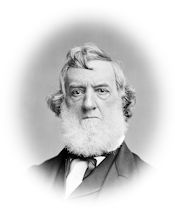
July 7.—My brother came to see me to-day, and I could scarcely repress the tears. He looked so badly, I could hardly believe he was the same I had seen ten days ago. He met the army near Tullahoma, and has been on the move ever since. He had a horse, and was much better off than many others. He says the retreat from Kentucky was nothing to this one, and said, “If Bragg had only let us fight, I would not grumble, as I know we would have whipped them.” I have been told the same by many others of the men; all seemed eager for the fight; but General Bragg knows best what to do.

It is again rumored that Vicksburg has fallen; but I will wait for more proof before believing it. I observe, at a time like this, that our people always get low spirited, and are ready to believe all the bad news they hear.

I had a visit from Captain Goldston of Morgan’s squadron. He had just come from Kentucky and had seen Mr. Speaker’s mother and sisters. Mrs. W. had given Captain G. a lock of Mr. S.’s hair; he had given it to them, and they sent us their thanks for our attention to him.

July 7th. The miniature army steamer Bee (General Banks’s despatch boat,) came down from Bayou Sara, at 12 o’clock midnight, bringing the cheering news of the fall of Vicksburg, which she had previously received from the steamer Gen. Sterling Price, just arrived from Vicksburg, and now lying aground off Point Coupée, opposite Bayou Sara. General Pemberton of the C. S. A., in command of the forces at Vicksburg, surrendered that city to General U. S. Grant (or, as he is more familiarly known, “Unconditional Surrender Grant”), in command of the Union forces, at ten o’clock on the morning of the glorious Fourth of July. An armistice between both armies had taken place on the evening previous. At eight A. M., steamers Gen. Price and Empire Parish came down the river—the former with despatches and a mail for us. Lieutenant Watson started for General Banks’s headquarters, and Ensign Hazeltine for the lower fleet, with the news of the surrender of Vicksburg. From twelve noon until one thirty P. M., heavy cannonading at Port Hudson, on the left and right wings of the army; between the hours of five and six o’clock, the steamer General Price, with our mail on board, left for Vicksburg.

Tuesday, 7th.—Signing paroles to-day. Reported that there has been some fighting between here and Jackson.

Tuesday. 7th—Came cross the mountain through Hamburg, got dinner there at Mrs. Reeves and came on to Camp within one and a half miles of Trenton.