
3rd. Mail came in afternoon. Merely a paper and note through Lu. The Proclamation also by Ampt. Shows a mean spirit, considerable wit. In the evening orders came to be saddled. Stood all night. Two detachments went out. One under Seward and another under a Ky. officer. Co. B in quite an engagement at Columbia. Lt. Bills slightly wounded, one man wounded in hip, another missing and one killed. Morgan across at Burksville with 4000, advancing seemingly towards Lebanon. Expecting orders. (This was the start of Gen. John Morgan’s ill-fated raid through Ky., Ind. and Ohio.)
July 2013
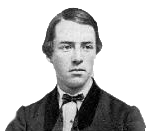
Continental Hotel, Philadelphia, July 3, 1863.
Dear Father, — I arrived here last night from Gettysburg with General Reynolds’s body. Three other of his aides also came on with the body.
On the morning of July 1st we started from Moritz’s Tavern on the road from Emmetsburg to Gettysburg, and distant 7 miles from the latter place. The general was two miles in advance of his troops, and as he entered Gettysburg, he heard that the enemy were driving in our cavalry pickets, posted about a mile and a half from the town. He instantly rode out there on a gallop until he came in to General Buford, who commanded the cavalry. Here he found out that the enemy were advancing in strong force from Cashtown. The position in which our cavalry were posted was a very strong one, being a range of hills back of the town, and whoever held this range commanded the town and the country round about. Therefore it was very important for us to get there, but as the enemy were much nearer them than we were, and were advancing rapidly, the general was afraid he could not get there in time to hold them. He galloped back towards our troops about 2 miles off, and on the way asked me if my horse was in good condition. As I had travelled 30 miles the day before, I said that she was not, but that I would go anywhere with her that he wished me to. He told me to ride as quickly as possible to General Meade and tell him that the enemy were advancing in strong force on the town, and that he was afraid they would get there before he did, but that he would fight them all the way through the town, and keep them back as long as possible. General Meade was at Taneytown, 14 miles distant. I started off on a gallop and got there in an hour and twenty minutes, very good time considering that my horse was so used up. I delivered the message to General Meade, and started back, and on my way back met General Reynolds’s body in an ambulance. I was very much shocked and felt very badly about it. The general, it seems, hurried his troops up and was getting them in position on this range I spoke of, when the enemy opened on them; and while the general was rallying some of his men, he was shot in the back of his head, killing him almost instantly. A braver man or a better soldier than General R. never lived. He was a very reserved man, but still a kind one, and one for whom I had the utmost respect and regard. His kindness to me I shall never forget.
At the time he was shot, the general had command of the three Corps, the First, Eleventh, and Third. The First was coming on to the ground, the Eleventh near at hand, and the Third some ten miles distant. I offered my services to General Howard, who took command, and was sent by him to General Schurz, to see how he was getting on. Just before I got to him the rebels got into the town and began firing. As I passed by a board fence along the road, I could hear the bullets come crashing through, making an unpleasant noise about one’s ears. I found our men running back, the enemy having flanked us, and General Schurz was riding up the street, when I saw him. I had seen this rebel regiment approaching the town, and was sent both to see General S. and to find out what troops these were. I had good evidence that they were rebels. I reported then to General Howard. Our troops were now falling back in some confusion, having been flanked on both sides from the rebel line overlapping ours, from mere superiority in numbers. We took position, however, on a high hill on the south side of the town, where there was a cemetery, and along a stone wall in front our men were posted, with the batteries behind them. The rebels pushed out a few skirmishers against us, but these were soon driven back, and soon we drove the rebels out of the town again. So affairs stood at nine P.M., when I left with Major Riddle to catch up with the general’s body, which had gone ahead. We rode about 30 miles, to Westminster, where we met the body, and took the cars for Baltimore. To-morrow morning we go to Lancaster to the funeral, and on Monday I expect to start for the army again. I shall try to get on to General Sedgwick’s staff, but if I do not succeed, I shall go to my regiment. . . .
July 3. — Started from the hotel this morning with Mitchell, and ordered a pair of trousers, to be finished to-morrow, as we go to the general’s funeral then. In the afternoon I dined with Rosengarten, and then proceeded to make some calls. I first went to Mr. Furness’s, but found him the only one at home, as the three boys had gone to the war. In the evening I met Milton at the hotel, and called with him on Hallowell and Parkman Blake.[1] I met Frank Haseltine[2] at Blake’s, and was of course delighted to see him.
[1] S. Parkman Blake, Harvard 1855.
[2] My classmate.

Friday, 3d—We received orders to be ready to march at a moment’s warning. Getting the orders we started about 10 o’clock at night for Messenger’s ford on the lower Big Black river, about four miles from our bivouac, and reached the ford at midnight. We are to stop Johnston from crossing the river, as it is thought he is making an effort to cross at the ford to strike Sherman’s right flank.
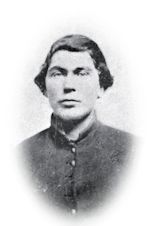
Before Vicksburg, Friday, July 3. 9 A. M. A flag of truce appeared opposite Smith’s Division, accompanied by General Bowen and Colonel Montgomery, who were taken to Grant’s headquarters, blindfolded. 12 M. General Pemberton met U. S. Grant under a large tree on the road to Vicksburg, to our right, with their staff on the outside of their respective works. The parley was continued until dark, when they withdrew. Orders issued not to fire until further orders. A strange day to us, so quiet and calm.
But a gloom was cast on the 6th Battery notwithstanding the hopeful indications of the truce. After the flag had appeared on the left and firing had ceased on both sides, and the men carelessly exposed themselves to view, a miscreant, yes, a brute in human form, took advantage of the opportunity to deprive one at least of his life, now, when unguarded, when under other circumstances he would have failed. Alvah B. Page, gunner of the second piece, was shot in the left ear, while sitting on the piece, instantly killing a noble life and good soldier, much loved and respected by all, and one of the best shots in the Battery. Many a time had he planted his missiles where they carried terror to the enemy’s heart. His last words were the hopeful ones “I guess they are gone up”. He lived to sight the last gun fired at the enemy’s stronghold. A siege gun was to be given him the very morning he was buried in a soldier’s grave, 2 P. M.
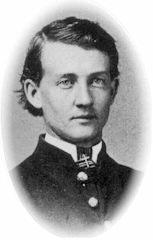
JULY 3D.—Uncle Sam’s cashier has arrived at last, and we have been paid for two months’ service. The married men are quite anxious to send their money home to their wives and little ones. It is risky sending money North from here, yet, to some, more dangerous to keep it. I saw two boys sitting on a log, today, playing poker at five cents a game. Five cent currency is paid in a sheet, and, as either lost the game, a five cent piece was torn off.
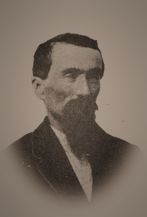
July 3 — Last night an alarm reached camp that the Yankees were pressing General Imboden’s brigade of cavalry, which was about ten miles in our front. We were ordered to march at once, which was at about one o’clock last night. We marched down the Baltimore pike, and when we drew near where Imboden’s men were camped we learned that the report which reached us last night was false, as there were no enemy near General Imboden. His command was camped on the western slope of the Blue Ridge. We passed it and pressed on toward Gettysburg.
This morning just before day we passed through Fayetteville, a little village at the western foot of the Blue Ridge. As we passed through there were two men chopping down a large flagpole that stood in the center of the little town. We crossed the Blue Ridge and moved down the pike toward Gettysburg, as far as Cashtown, a small village eight miles from Gettysburg. We halted at Cashtown about two hours, cooked and ate our breakfast, and while we were eating our morning meal a furious battle was raging in the direction of Gettysburg, apparently some five or six miles distant. From the way the artillery howled and thundered the conflict must have been fierce, furious, and sanguinary. At one o’clock this afternoon we were ordered, with Jones’ Cavalry, to the right of our army. We moved round on a road that passes through a little village named Fairfield. At one point of the road from a high hill we had a distant view of the battle-field, yet we saw nothing but a vast bank of thick battle smoke, with thousands of shell exploding above the surface of the white, smoking sea. The sight was grand beyond description and awe-inspiring in the extreme. Our line looked to me from our point of observation to be about three miles long and enveloped in thick smoke, from which came a fearful roar and clash of musketry accompanied with a deep continuous roll of booming artillery, such as an American soldier never heard before on this continent. The artillery fire at one time was so heavy that the hills shook and the air trembled, and the deep thunder rolled through the sky in one incessant roar like as if the giants of war were hurling thunderbolts at each other in the clouds and rushing their war chariots across the trembling, sounding welkin. On our way we encountered the Sixth Regiment of United States regular cavalry on the road, between Cashtown and Fairfield.
The regiment had flanked around the right of our army and were already in the rear of General Lee’s line, and just ready to capture or destroy some of our wagon train when we met them. The enemy instantly perceived that they were checkmated in their undertaking, and commenced firing on us and our cavalry, instead of destroying wagons and frightening teamsters. We immediately put our guns in battery and opened on them, and our cavalry also opened with small arms, and for a while the conflict was fierce and hot. The old regulars fought stubbornly and well, but our cavalry completely frustrated their design, and almost demolished the regiment, killing and wounding many of them and capturing about two hundred prisoners.
After the fight we moved to Fairfield, a small village on the Cashtown road, and remained there till nearly night, when we moved a mile from Fairfield and camped for the night.
In the fight to-day we had our guns in position in a wheat field where the wheat was standing thick, and nearly as high as my head, and dead ripe. It looked like a shame to have war in such a field of wheat.
[Diary] July 3.
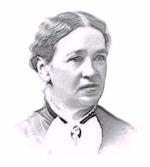
Mr. Pierce here. We are busy making white rosettes with a tri-colored button, for the Fourth, for our whole school to wear. Our children sing “The Star Spangled Banner” well. All the schools met in the church to practise yesterday. The poor smallpox convalescents were so disappointed when I told them they ought not to come.
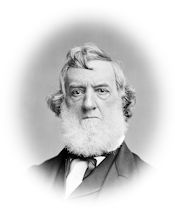
July 3, Friday. I met the President and Seward at the War Department this morning. A dispatch from General Meade, dated 3 P.M. yesterday, is in very good tone. The Sixth Army Corps, he says, was just arriving entire but exhausted, having been on the march from 9 P.M. of the preceding evening. In order that they may rest and recruit, he will not attack, but is momentarily expecting an onset from the Rebels.
They were concentrating for a fight, and, unless Meade is greatly deceived, there will be a battle in the neighborhood of Gettysburg. I hope our friends are not deceived so that the Rebel trains with their plunder can escape through the valley.
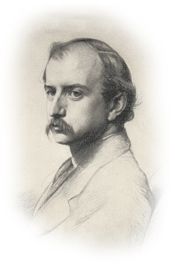
Henry Adams to Charles Francis Adams, Jr.
July 3, 1863
We too have had our excitements this week, as it was the time of the regular annual motion for recognition by the English copper-heads. There was a hot debate in Parliament, but the Southern spokesman succeeded in tripping himself up, and inflicting upon himself and his party a vigorous punishment that they will remember as long as they live. He has triumphantly seated himself as umpire over a dusky chaos in which Napoleon, the English Government, our own country and the rest of the world, are promiscuously calling each other to account for something somebody said or did n’t say, or did, or did n’t do. Mr. Roebuck’s decisions certainly do more embroil the fray. What is however or more consequence to us is that he has drawn public attention entirely from the question of intervention, and substituted a question of veracity between himself and the Emperor, a question of dignity between Parliament and the Emperor, a question of honor between the Ministry and the Emperor, and any quantity of other side questions, upon which public curiosity is greatly excited. But so far as our affair is concerned, Mr. Roebuck has done us more good than all our friends. . . .
I think unless the American news is highly disastrous, we shall again sink into placid rest here. The Alexandra is postponed till Autumn and will probably have to come before the House of Lords as final appeal next year. Parliament will adjourn by the end of this month, it is supposed. Everybody is to leave town on the 15th and we expect to get away as soon as Parliament does. Lord Palmerston is ill with gout, and, as I think, breaking up. I doubt if he’ll have strength to stand another session. Everything promises unusual political quiet for the autumn, but the elements of confusion on the continent are so awkward that I rather expect trouble next year. . . .


