Following the American Civil War Sesquicentennial with day by day writings of the time, currently 1863.

July 2013

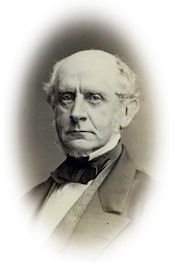
Charles Francis Adams to His Son

London, July 3, 1863

Matters go on here in the usual way. There has been a new discussion of our affairs in Parliament, which has ended by no means to our disadvantage. Mr. Roebuck has chosen to speak in very plain English what he thinks and feels about us. Other people who really agree with him in their hearts are ashamed to acknowledge it as he does, and so they retreat into silence. Mr. Roebuck moreover has assumed the post of representative of the French Emperor, and has talked to the House of Commons in a French sense. This is a pretty sure way to set the genuine sons of John Bull against every thing he may say. Moreover, Mr. Roebuck has had the bad luck to be practically disavowed by the sovereign whom he was assuming to serve, which exposes him to ridicule and contempt. The end is, to spoil his game. The rebel cause cannot be restored this season by any action had in its favor on this side of the water. It may yet be helped by events on the other, should their last desperate enterprise be crowned with any success. . . .

July 3—When under a very heavy fire, we were ordered on Culps Hill, to the support of Gen. A. Johnson. Here we stayed all day—no, here, I may say, we melted away. We were on the brow of one hill, the enemy on the brow of another. We charged on them several times, but of course, running down our hill, and then to get to them was impossible, and every time we attempted it we came back leaving some of our comrades behind. Here our Lieutenant Belt lost his arm. We have now in our company a captain. All of our lieutenants are wounded. We fought here until 7 P.M., when what was left of us was withdrawn and taken to the first day’s battlefield. At the commencement of this fight our Brigade was the strongest in our division, but she is not now. We lost the most men, for we were in the fight all the time, and I have it from Colonel Owens that our regiment lost the most in the Brigade. I know that our company went in the fight with 60 men. When we left Culps Hill there were 16 of us that answered to the roll call. The balance were all killed and wounded. There were 12 sharpshooters in our company and now John Cochran and myself are the only ones that are left. This day none will forget, that participated in the fight. It was truly awful how fast, how very fast, did our poor boys fall by our sides—almost as fast as the leaves that fell as cannon and musket balls hit them, as they flew on their deadly errand. You could see one with his head shot off, others cut in two, then one with his brain oozing out, one with his leg off, others shot through the heart. Then you would hear some poor friend or foe crying for water, or for “God’s sake” to kill him. You would see some of your comrades, shot through the leg, lying between the lines, asking his friends to take him out, but no one could get to his relief, and you would have to leave him there, perhaps to die, or, at best, to become a prisoner. Our brigade was the only one that was sent to Culps Hill to support General Johnson. In our rapid firing today my gun became so hot that the ramrod would not come out, so I shot it at the Yankees, and picked up a gun from the ground, a gun that some poor comrade dropped after being shot. I wonder if it hit a Yankee; if so, I pity him. Our regiment was in a very exposed position at one time to-day, and our General Daniels ordered a courier of his to bring us from the hill. He was killed before he got to us. The General sent another. He was also killed before he reached us. Then General Daniels would not order any one, but called for volunteers. Capt. Ed. Stitt, of Charlotte, one of his aides, responded, and he took us out of the exposed position.

July 3.—We have just received news that Bragg and his whole army will be here in a day or two, and that there is a race between him and Rosecrans as to who will get here first.

We had an Englishman die to-day, by the name of Head, in Dr. Hopping’s ward. He was fully seventy years of age; was a prisoner, and said to be a bushwhacker. He denied it to the last. I did feel so sorry to see so old a man die in such a place.

Mrs. W. talked a great deal to him, and is confident he was innocent. He seemed to be religious, and prayed to the last; he was a large, fine-looking man; lived in Tennessee at the time of his arrest. He had been ten years in this country.

We have had a room filled with that class of men. One who had killed his captain looked as if he was crazy, and was manacled, hands and feet. It was heartbreaking to look at him when he died. Poor fellow! perhaps his captain provoked him to commit the deed.

We have another (I think he is a Frenchman), who was General Bragg’s orderly. They say he stole the general’s uniform. The poor fellow is deranged, or acts as if he was.

There is a Mr. Bears, who is under arrest for desertion, who seems to be one of the nicest kind of men, and a good Christian. He says when he left his regiment he had no idea of deserting—only went to see his wife. I do not think that is any excuse for his crime; still, we can not help feeling sorry for him. It is bad enough to see men suffer who are under no ban, but when they are here as those men are, it is distressing indeed.

Mrs. McFarland, a very nice lady from Mobile, has come to assist us. She will take charge of the convalescents, and see that their diet is properly prepared. This is a very important department in a hospital, but few persons seem to think so. All that this class of men require is good diet and a change from camp life. We get plenty of all kinds of vegetables, much more than we are able to cook in the utensils we have.

One day I called on the quartermaster, and asked him to give me a very nice stove he had. He refused, saying we had stoves enough. The next time I saw Dr. Stout I told him, so he gave me an order to get it right away.

Dr. S. says he wishes the hospitals under his care to be better supplied than any hotel in the Confederacy, and every dollar we receive from the government spent. Dr. Hunter has one great fault; he is loth to spend the money, and seems to think he is saving for the government. I do not think so, as the men are sent here from the army to recruit, and a change of diet is the main thing they need.

The assistant surgeons do all in their power to have the men well cared for, and they could not be more attentive than they are. There is not a day passes that I do not hear the patients speak in their praise. We have six; Dr. Hopping, a Georgian, is one of the kindest and best of men; he is a gentleman in the full sense of the term, and is much beloved by all.

Dr. Soles is one of those men who have no enemies. He takes the world easy; and, as the old saying, like master like man, all of his nurses take after him. We have more scolding to do in his ward than any of the others. When we tell the nurses about keeping their ward clean, they seem to think it is nonsense. But Dr. S.’s patients are all well cared for.

Dr. Burt is always in a good humor, and leads one to believe that there is such a thing in the world as constant sunshine. His patients have many a time told me, that the sight of him almost makes them well. His ward is his hobby; I call him “my ward;” it is always in perfect order. His ward has two bath-rooms, in which is a bathing-tub and shower-bath.

The other three surgeons I do not know much about, as the largest part of their wards are across the street; but I know they are most attentive to the patients. One of them, Dr. Nichol, is Dr. B.’s rival in the “ward” line, but there is a good deal of rivalry between all in that respect. Dr. N. was very cross one day, and found fault with Mrs. W. and myself, and said we did not visit his ward enough. We both make it a rule not to visit the wards when the surgeons are in them, and Dr. N. took it for granted we did not visit his at all, and told me one day he thought his patients would fare badly if he did not have good nurses, as Mrs. W. and myself did not attend them. I answered him, that I thought they would, if they waited for us to nurse them, as it is as much as we can do to see that the nurses do their duty. It is too bad to accuse Mrs. W. of neglect, when she has actually starved herself many a time to give food to the soldiers. There is no doctor who need feel at all flattered if we pay more attention to his sick than the others, as we have made a compact that where we see the surgeon at all neglectful we will devote the most care on that ward.

I have already mentioned Dr. Hunter very frequently. His hobby is, that he was the first to solve a problem, which was finding out that ladies are of service in the hospitals; this he prides himself on.

I see by a Mobile paper that General Pemberton has issued an order to his men, telling them that he has heard that he is called a traitor, and that he is determined to die in the trenches rather than surrender Vicksburg. It is also said that the garrison is well supplied with provisions, and can hold out many a day yet. The enemy seem to have put forth all their energy to take it. God grant that they never may.

July 3rd, 1863.—Another telegram brings more news from Gettysburg—such awful news—death and destruction and perhaps defeat. God help our poor country. Holding my breath I listen and tears come, though I try to be calm. So many of our brave men, who went forward can never come back. Oh, this horrible, horrible WAR!

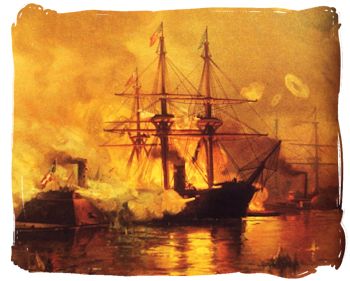
July 3d. At seven A. M., sent some ammunition ashore to our naval battery; at ten thirty, Mr. Jas. B. Kimball, chief-engineer, left the ship, being detached and ordered North; at three P. M., steamer Bee came down from Bayou Sara and communicated with us. Firing in rear of Port Hudson still going on.

Friday, 3.—Firing ceased, except the mortars over the river; we have orders not to fire any more until further orders. Don’t know what it is for, but think the city will be surrendered soon. 3 p. M., firing began again and continued until 5 P. M. when it again ceased. Issued some mule beef to us this evening. Did not relish it, of course. Think of old, poor mules that had been starving during the siege, until they could hardly stand—and very likely many of them could not—being eaten’; I think I would rather eat my old shoes.

Friday, 3rd—I waited until our wagons came up and put my luggage on them and rolled on. Came to foot of Mountain tonight.

July 3.—The scarcity of blank-books, and tne very high prices, make them unattainable to me; therefore I have determined to begin another volume of my Diary on some nice wrapping-paper which I happen to have; and though not very pleasant to write on, yet it is one of the least of my privations.

We are still worried by reports that the Yankees are very near us, and we are constantly expecting them to raid upon Ashland. We have a good force at “The Junction,” and at the bridge just above us, which they may respect, as they are dreadfully afraid of our forces.

Spent yesterday in the hospital; the wounded are getting on well. The city was put into a blaze of excitement by the report that General Dix was marching on it from the White House. I dare say they think that General Lee has left it. undefended, in which surmise they are vastly mistaken. Our troops seem to be walking over Pennsylvania without let or hindrance. They have taken possession of Chambersburg, Carlisle, and other smaller towns. They surrendered without firing a gun. I am glad to see that General Lee orders his soldiers to respect private property; but it will be difficult to make an incensed soldiery, whose houses have in many instances been burned, crops wantonly destroyed, horses stolen, negroes persuaded off, hogs and sheep shot down and left in the field in warm weather—it will be difficult to make such sufferers remember the Christian precept of returning good for evil. The soldiers in the hospital seem to think that many a private torch will be applied “just for revenge.” It was in vain that I quoted to them, “Vengeance is mine; I will repay, saith the Lord.” One stoutly maintained that he would like to go North “just to burn two good houses: one in return for my own house on Mississippi River; the other for that of my brother-in-law, both of which they burned just after landing from their boat, with no pretence at an excuse for it; and when I think of my wife and children homeless, I feel as if I could set all Yankeedom in a blaze.” Poor fellow! he became so excited that he arose in his bed, as if impatient to be off and at his work of vengeance. I am glad to hear that quantities of horses and fat cattle are driven into Virginia.

July 3 — Things are rocking along as usual this morning. 10 o’clock General Pemberton sent out a flag of truce requesting General Grant to cease firing on our hospital. All was quiet up until 1 o’clock p.m. — 3 o’clock p.m. Heavy cannonading along the river. 6 o’clock p.m. — Pemberton now sends out another flag of truce trying to make a compromise preparatory for a surrender. 7 o’clock we now go to the trenches. All is very quiet now. WRC

July 3.—The following “commendable appeal” to the foreign residents of Richmond, Va., appeared in the Enquirer, published in that city, to-day:

To British Subjects:

Fellow-countrymen : If you desire to protect your homes, and the homes of your friends, from the touch of the ruthless invader; if you believe, as we do, in the justice of the Southern cause, and desire its success; if you have interests here to defend, then it is manifestly your duty, as brave and chivalrous men, to take up arms at this crisis. The history of our past precludes the possibility of our being cowards; but let us here, and now, in this righteous struggle for constitutional law and liberty, add another laurel to our ancestral history.

Those of you who are willing to offer yourselves, for either temporary or permanent duty, should report at once to the undersigned: Sydney II. Davis, Lieutenant H. B. M., Sixteenth regiment, Arlington House. F. L. Buxton, Lieutenant Royal Berks volunteers, Mrs. Duval’s, corner Fourteenth and Ross streets.

—At Vicksburgh, Miss., at eight o’clock this morning, flags of truce appeared before A. J. Smith’s front, when the rebels, Major-General Bowen and Colonel Montgomery, were led blindfolded into the Union lines. They bore a communication from General Pemberton, of the following purport:

“Although I feel confident of my ability to resist your arms indefinitely, in order to stop the further effusion of blood, I propose that you appoint three commissioners, to meet three whom I shall select, to arrange such terms as may best accomplish the result.”

General Grant replied in these words:

“The appointment of commissioners is unnecessary. While I should be glad to stop any unnecessary effusion of blood, the only terms which I can entertain are those of unconditional surrender. At the same time, myself and men, and officers of this army, are ready to testify to the distinguished gallantry with which the defence of Vicksburgh has been conducted.”

At eleven o’clock the messengers returned. This afternoon General Grant met General Pemberton between the lines, and after an hour’s consultation settled the surrender of the place. —(Docs. 25, 36, and 146.)

—The National Guards, Colonel “Wright commanding, composed of the most substantial citizens of Newbern, N. C., received their arms and equipments and entered upon duty at the garrison of that place.

—Major-general French sent a force toward Williamsport, Md., which was successful in capturing and destroying the pontoon train of the rebels. The guard, consisting of a lieutenant and only thirteen men, were taken.—General French’s Despatch.

—The following orders were issued at New Orleans, La., by Brigadier-General Emory: “Hereafter no public assemblages, except for public worship under a regular, commissioned priest, will be allowed in this city for any purpose or on any pretence whatever, by white or black, without the written consent of the Commander of the defences of New-Orleans ; and no more than three persons will be allowed to assemble or congregate together upon the streets of the city. Whenever more than that number are found together by the patrol, they shall be ordered to disperse, and failing to do so, the offenders shall be placed in arrest.

“All bar-rooms, coffee-houses, stores, and shops of every description, will be closed at nine o’clock P.M.

“All club-rooms and gambling-houses are hereby closed until further orders.

“No citizens or other persons, except the police and officers in the United States service, or soldiers on duty or with passes, are to be allowed in the streets after nine o’clock P.M.”—

The United States transport boat Zephyr was fired into, at a point six miles below Donaldsonville, La, and two men were wounded.—A fight occurred at Fairfield, Pa., between the Sixth United States cavalry, under Major Samuel H. Starr, and two brigades of rebel cavalry, under Generals Robinson and Jones.— Philadelphia Enquirer.

—The battle of Gettysburgh was concluded this day. Repulsed at every point, General Lee withdrew in the night, leaving General Meade master of the field.—(Docs. 20 and 118.)

—Suffolk, Va., was evacuated by the Union troops.—A circular letter was issued from the Treasury Department by Secretary Chase, regulating the disposition of abandoned, captured and confiscable property in the rebel districts.